

 Posts
PostsAbandoning payment leader Wise, what future did Peter Thiel see?

By | Sleepy.txt
Edited by | Kaori
In a sense, the previous generation of FinTech may already be dead.
In early July, Valar Ventures, the top-tier Silicon Valley angel investor under Peter Thiel, sold all of its 4.8 million shares in Wise at £10.30 per share, totaling nearly £50 million. This venture capital firm was one of Wise's earliest and most core supporters, having participated in its early-stage investment in 2013 and accompanying it through a complete entrepreneurial cycle until its listing on the London Stock Exchange in 2021.
Now, this relationship has ended in a single quiet transaction.
This is certainly not a panicked exit, nor is it merely a cash-out after paper profits.
Many decisions in the financial world do not immediately reveal their significance. Whether it's investing or exiting, the implications may not be clear at the time, but in hindsight, a clear path emerges—those choices were already pointing toward another future.
Peter Thiel and his fund Valar Ventures were among the most radical believers in FinTech. They believed that the gaps in the banking system held overlooked efficiency dividends, and they bet on entrepreneurs who sought to bypass regulations and reshape payment pathways with technology. These companies rose in the cracks of the era, telling one story after another of challenging the traditional order.
But every technological revolution ages. Paths are replicated, growth stabilizes, and the original rebels begin to conform. Those who placed the bets are often the first to sense this change.
To truly understand the meaning of this exit, we must go back twelve years, when Peter Thiel first decided to bet on Wise. At that time, the banking system was still slowly recovering from the 2008 financial crisis, while a group of entrepreneurs who called themselves "hackers" were trying to use technology to break through the closed fences of traditional finance.
Peter Thiel was among the first to believe in them.
From TransferWise to Wise: FinTech's Golden Decade
In 2013, Wise was still called TransferWise, just an inconspicuous small venture in a shared office building in East London. The team was small, with one founder from Skype and another who had worked as a consultant at Deloitte.
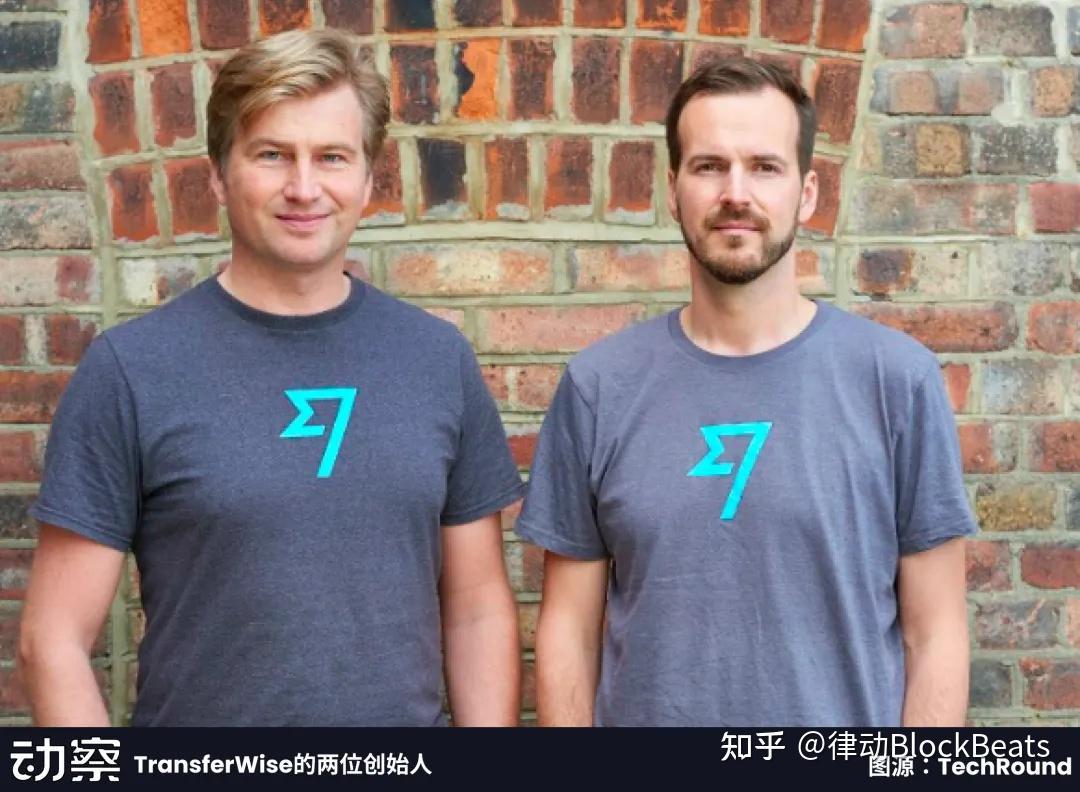
The problem they aimed to solve was not new—cross-border transfers were too costly and slow—but their approach was unconventional. Instead of seeking licenses or partnering with banks, TransferWise designed a currency-matching mechanism that allowed funds to flow without actually crossing borders.
The model was simple, the path clear, and it didn't rely on financial institutions. This was precisely what caught Peter Thiel's attention.
Peter Thiel has never been a fan of the mainstream.
He has long been Silicon Valley's most prominent libertarian, wary of governments, regulations, and centralized organizations, and thus more willing to bet on systemic improvements that bypass the established order and emphasize individual efficiency. TransferWise fit this logic perfectly—it didn't rely on permits, circumvented institutions, and achieved currency pricing through direct user matching, with a self-consistent product logic and a clear growth path.
In this company, Peter Thiel saw his long-held "Zero to One" model—using structural design to dominate a niche market, achieving micro-monopoly through efficiency advantages, and then expanding along logical boundaries. TransferWise's currency-matching mechanism was exactly the kind of systemic entry point he always focused on.
In 2013, Peter Thiel's Valar Ventures led a new round of funding for TransferWise. That was a year when social media, cloud computing, and mobile internet took turns dominating the discourse, and yet he made a completely different choice.
In the following years, TransferWise's unusual growth curve proved Peter Thiel's foresight.
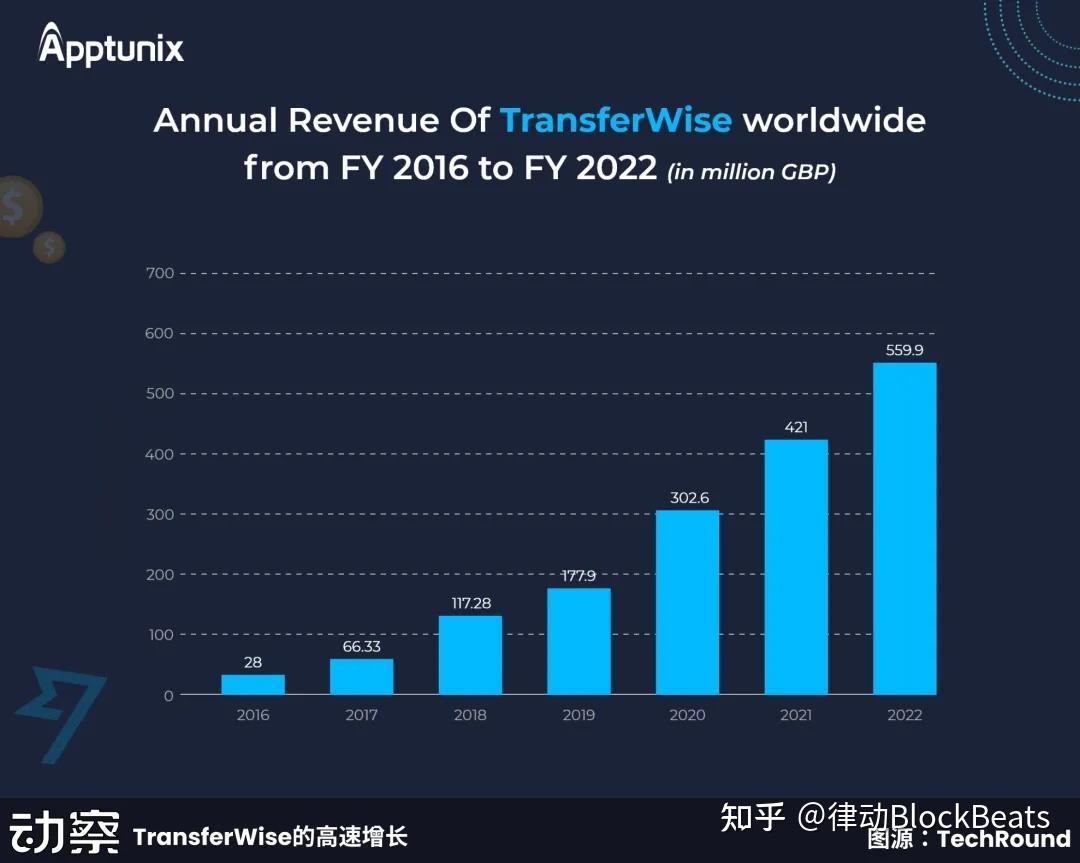
By 2017, TransferWise's monthly clearing and settlement had exceeded £1 billion, and it achieved operational profitability for the first time, with revenue growing by over 150% year-on-year. By 2020, its annual transaction volume had risen to £67 billion, with cross-border transactions accounting for about £42 billion, and its valuation reached $5 billion, making it one of Europe's fastest-growing FinTech companies at the time.
In 2021, TransferWise officially renamed itself Wise and went public on the London Stock Exchange via a direct listing, with a valuation of £8.75 billion (approximately $11 billion). On its first trading day, Wise's stock rose by 10%, becoming one of the most-watched tech stocks in London that year. Valar Ventures, as an early investor, held over 10% of the shares at the time, making it one of the biggest winners in this IPO.
Wise's rise almost became the template for FinTech success stories in the 2010s—breaking bank monopolies, winning through efficiency, and leading with ideas. It didn't rely on complex financial engineering or attempt to rebuild the entire monetary system but instead found efficiency gaps in the existing system, using product advantages to replace some bank functions.
The decade of Valar Ventures and Wise indeed reflected the peak of this model.
But every hero's story has its curtain call. FinTech's golden age is over.
The Old FinTech Story No Longer Holds
Once, it was synonymous with "new finance"—disintermediated, technology-driven, user-experience-first, using a lighter model to nibble at the heavy-asset system of traditional finance. In its early decade, FinTech companies repeatedly replicated that classic path, prying open cracks at the edges of the traditional system, breaking down banks' profit models into APIs, fees, and UX combinations.
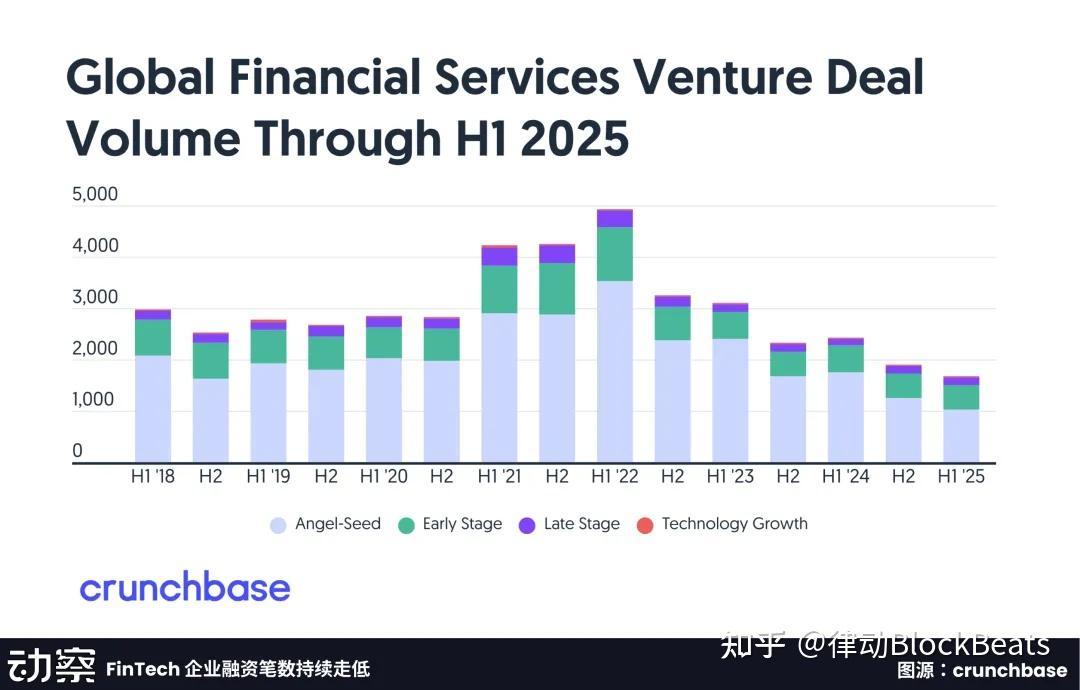
But by 2025, this path has clearly stalled, and venture capital interest in FinTech is cooling.
Crunchbase statistics show that global FinTech financing deals numbered only 1,805, a drop of over 30% year-on-year; a year earlier, this figure was 2,633. The contraction in numbers is not surprising, but the speed of decline is much faster than expected.
The first to feel the chill were retail financial services close to consumers. PitchBook data shows that in Q1 2025, retail FinTech funding fell by 37.8% quarter-on-quarter. By Q2, even the relatively recession-resistant enterprise FinTech sector was not spared, with deal volume down about 13% year-on-year.
The old FinTech thrived by working at the edges of the traditional financial system, using lighter models to tap into higher efficiency points. But once all the easily optimized segments had been transformed, what remained were increasingly heavy compliance obligations, rising customer acquisition costs, and shrinking growth opportunities.
Wise is a prime example.
Over the past year, not only has its stock price fallen more than 20% from its 2024 peak, but it has also faced multiple regulatory inquiries. In June of this year, the U.S. Financial Crimes Enforcement Network (FinCEN) fined it $9 million for serious anti-money laundering compliance failures. Meanwhile, UK regulators have begun re-examining its risk control mechanisms. Wise's once-proud light-asset compliance model is being dismantled by reality.
On the business front, new pressures are also spreading from the Crypto sector.
Stablecoins' on-chain payments, real-time clearing, and settlement paths have begun eroding the profit margins of traditional cross-border transfers. Compared to Wise's intermediary-style transfer solutions, more companies are considering deploying on-chain settlement channels directly, bypassing the complex coordination systems between banks and payment platforms.
Under mounting pressure, Wise has also begun preparing for a U.S. listing, considering an ADR format to tap into higher liquidity and valuation expectations in the American capital markets without changing its corporate structure.
This move, officially described as a "valuation optimization," is actually a rescue attempt—a deep-seated unease about whether the old FinTech narrative can still sustain another capital cycle.
The old FinTech model did indeed give rise to a number of outstanding companies. But as Crypto rewrites clearing and account systems, the "optimization" path itself is losing its footing.
This revolution has finally hit its ceiling.
Looking back, Valar Ventures' 2013 bet was a direct response to the high costs and inefficiencies of the banking system; its 2025 divestment is a clear farewell to the old model of financial innovation.
New Protocols Are Devouring the Old System
Today, Crypto is becoming FinTech 2.0.
If the previous generation of FinTech was an add-on to the banking system, the new generation of Crypto protocols is trying to skip banks altogether and rewrite the system itself.
This is not just an idealistic narrative—it has become a visible reality.
Stablecoins' daily on-chain settlement volume has long exceeded billions of dollars, becoming the default path for many companies' cross-border fund flows. It doesn't rely on SWIFT or traditional bank accounts—just an address, and global settlement can be completed in minutes.
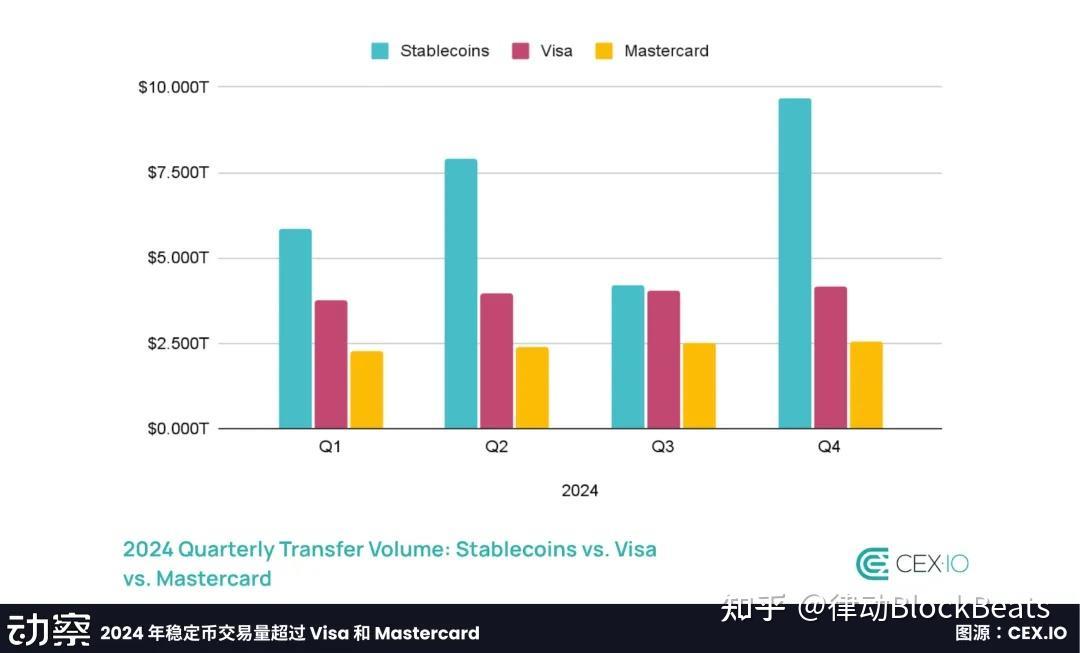
A deeper transformation is happening at the backend. Clearing paths are being rebuilt on-chain, identity verification no longer depends on financial institutions, and interest rates and asset pricing logic have broken free from central banks and commercial banks. Modules once on the fringes of the mainstream are becoming core components of a parallel financial system.
This is forcing a fundamental shift in FinTech's value-capture logic.
The previous generation of FinTech innovations mostly focused on the presentation layer—account systems, payment channels, UX design. They were more like a friendlier shell wrapped around the old financial system, essentially improving banks' usability rather than replacing them.
Crypto, or FinTech 2.0, bets on the protocol layer, the settlement layer—components that operate independently of banks. It is building an entire system of clearing paths and identity systems that bypass the original financial architecture from the ground up.
When value shifts from front-end interfaces to back-end structures, investors naturally turn their attention to the system's foundation, where the real leverage to disrupt the order lies. Peter Thiel is a keen hunter—he targets projects that can rebuild the financial order at its base, as they have the potential to shake the established rules at the structural level.
Under this investment logic, the divestment from Wise takes on its true meaning.
From serving the front end to building the back end; from connecting banks to bypassing them; from optimizing reality to rewriting it.
Turning Toward a New World
Peter Thiel has never left the FinTech table.
Beyond Valar Ventures, which backed Wise, Peter Thiel has another, more strategically focused fund: Founders Fund. This institution was among the earliest investors in SpaceX and Meta and managed over $12 billion in assets by 2023.
Compared to Valar's focus on early-stage growth companies, Founders Fund prefers direct participation in system-level, infrastructure-building projects. In recent years, this fund has gradually withdrawn from traditional tech sectors, concentrating its investments in Crypto infrastructure—stablecoins, on-chain clearing, and on-chain banking systems—to construct the framework of future finance.
From late summer to early fall 2023, Founders Fund bought $200 million worth of Bitcoin and Ethereum, split evenly. Thiel's fund had already invested in Bitcoin as early as 2014 and cashed out before the 2022 market peak, profiting about $1.8 billion. This time, they're back at the table, but the stance and context are entirely different.
Peter Thiel's renewed bet on Crypto is aimed at shaping the future financial order—building his own financial empire, from assets to protocols.
In his portfolio, Bullish is the front-end trading scenarios, connecting users and liquidity; Paxos provides compliant stablecoin issuance; Ubyx builds clearing protocols for on-chain fund and asset flows; Erebor attempts to construct an on-chain banking system, acting as the Visa + Swift of on-chain finance; and CoinDesk, one of Crypto's largest media platforms, was acquired by Bullish in 2023, becoming the narrative outlet for the entire system.
These investments together piece together a hidden but complete financial infrastructure, controlling asset anchoring, clearing paths, and information dissemination—effectively a "shadow central bank" for the Crypto era.
Peter Thiel never intended to bet on just one platform company. He wants to build a new financial machine that maintains credit, liquidity, and regulatory order independently of traditional institutions.
This thread, at its core, is still guided by Peter Thiel's investment philosophy. He bets on futures that the market hasn't yet accepted—sometimes futures that don't even have names yet. He funds seasteading experiments, cryonics research, and defense tech. Many of his investments seem fantastical and far ahead of their time.
For him, waiting is a waste. Betting is how the future is made.
Peter Thiel once famously said: "We wanted flying cars, instead we got 140 characters."

This was a jab at how so-called "technological innovation" in recent years has ultimately just optimized ad targeting, extended user engagement, and created more information bubbles. People used all their ingenuity to craft tweets with higher click-through rates but didn't move an inch closer to the future.
Peter Thiel isn't satisfied with optimizing within existing systems. He seeks starting points that can rewrite systems at their foundations—from energy and healthcare to space exploration and now Crypto.
His projects can be eccentric, their progress slow, but every step must march toward that world of flying cars.
A decade ago, he bet on Wise because it could improve efficiency in the cracks of the traditional financial system; today, he bets on Crypto because he wants to rebuild the financial system from the ground up.
From optimization in the gaps to reconstruction at the base. Peter Thiel is moving his chips from the end of one old consensus to the beginning of a new one.
And so he exits Wise, turning toward a world much farther away.
The copyright of this article belongs to the original author/organization.
The views expressed herein are solely those of the author and do not reflect the stance of the platform. The content is intended for investment reference purposes only and shall not be considered as investment advice. Please contact us if you have any questions or suggestions regarding the content services provided by the platform.
