

Dairy giants compete in the B2B market: Mengniu and Yili ignite a battle for a 100-billion-yuan market.

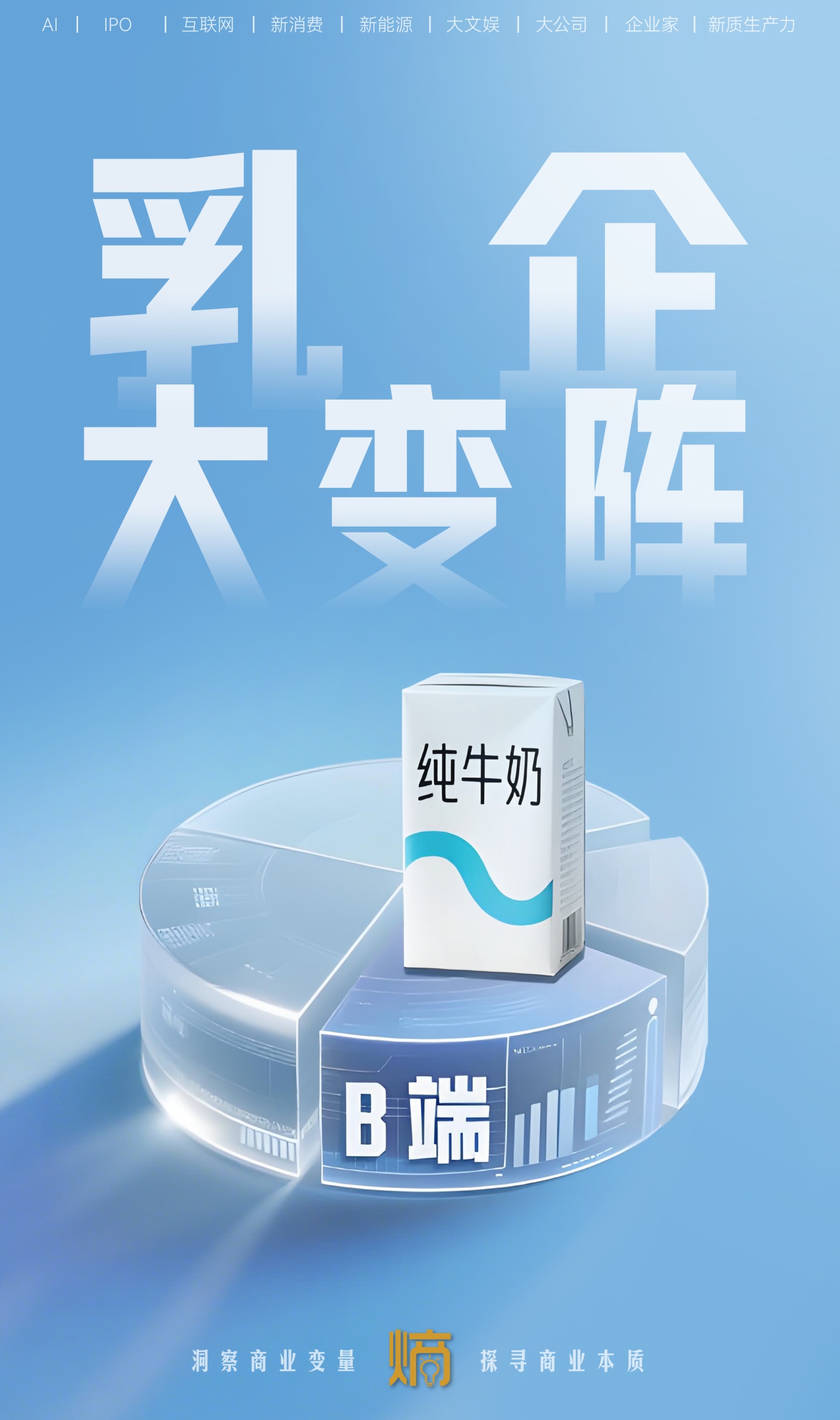
The Chinese dairy industry is undergoing a profound strategic transformation, characterized by a shift from the previous "scale expansion" model relying on market penetration and capacity expansion to a "value enhancement" model centered on technological innovation, product differentiation, and value chain extension.
Original ⓒ New Entropy New Consumption Group
Author | Siyuan Editor | Yingmu, Jiuli
The Chinese dairy industry is undergoing a profound strategic transformation, characterized by a shift from the previous "scale expansion" model relying on market penetration and capacity expansion to a "value enhancement" model centered on technological innovation, product differentiation, and value chain extension.
Behind this transformation are multiple factors such as global supply chain adjustments, continuous consumption upgrades, and temporary domestic milk source surplus. Under such a backdrop, the dairy market landscape is quietly changing.
For a long time, the C-end market has been the main battlefield for dairy companies, with competition already fierce and the market gradually saturating. The competitive methods of major dairy companies in the C-end market are increasingly homogenized, with price wars and advertising wars occurring in turn, leading to continuous compression of corporate profit margins.
In contrast, the B-end dairy market, with its huge growth potential, is gradually becoming a new growth point for the industry, attracting the attention of dairy giants like Mengniu and Yili. These leading companies are adjusting their strategic layouts, shifting their focus towards B-end catering channels, and a fierce competition to divide the B-end cake has already begun.
B-end Dairy Products Enter the Era of Localization
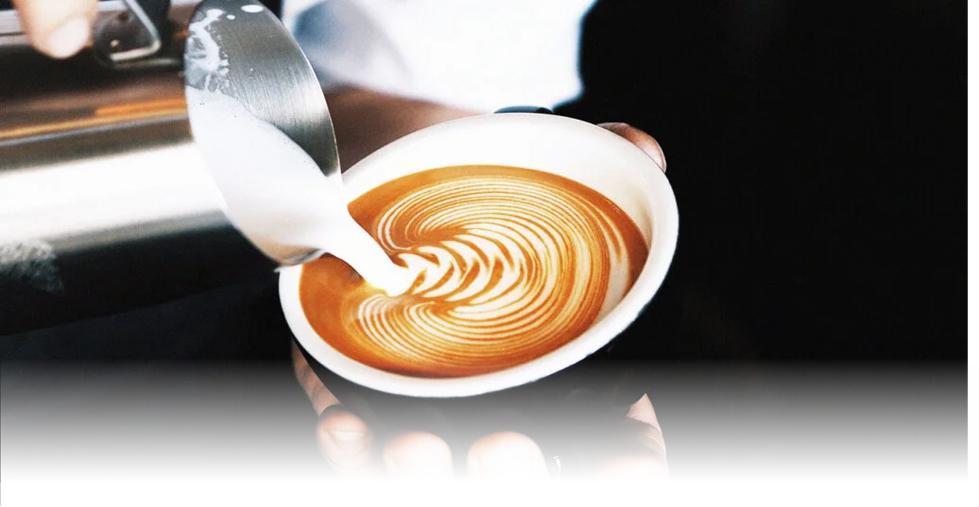
In recent years, China's B-end dairy market has shown a booming development trend, with the market scale continuously expanding and huge growth potential. The rapid rise of industries such as coffee, baking, and tea drinks has led to increasing demand for dairy products, injecting strong momentum into the development of the B-end dairy market.
According to industry analysis, the total scale of the B-end dairy market has expanded to the trillion-level, becoming an important part of the dairy industry that cannot be ignored. Taking the coffee market as an example, major chain brands such as Starbucks and Luckin Coffee are continuously increasing the number of stores, with huge demand for fresh milk, cream, cheese, and other dairy products. The white paper released by iResearch shows that the sales volume of freshly made milk coffee in China is expected to reach 3.3 billion cups in 2023, with a growth rate of 37.5%, and it is predicted to reach 5 billion cups by 2025.
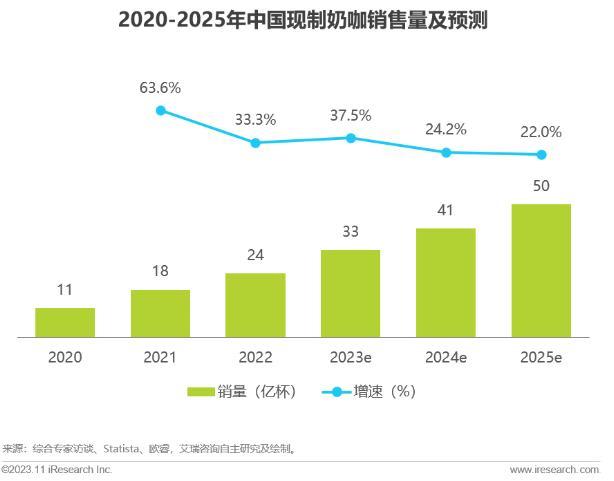
▲ Image/iResearch
According to Huatai Securities, the expansion brought by the B-end coffee track to the dairy industry is expected to reach 26.5 billion yuan in 2025. In addition to coffee, the demand for dairy products in the baking and tea drink industries is equally strong. Data from iiMedia Research shows that the retail market size of China's baking food has reached 611.07 billion yuan in 2024, with a year-on-year growth of 8.8%, and it is expected to increase to 859.56 billion yuan by 2029, providing huge application space for cream, butter, and other dairy products. The rapid development of these downstream industries constitutes a solid foundation for the continuous growth of the B-end dairy market.
While the B-end dairy market is rapidly expanding, a significant trend is the acceleration of domestic substitution.
For a long time, the domestic B-end market, especially in the field of high-end cream, butter, cheese, and other deep-processed products, has been mainly occupied by international brands such as Fonterra and Anchor, with a localization rate of less than 30%. However, in recent years, with the continuous progress of domestic dairy companies in technology research and development, production processes, and supply chain management, this pattern is being broken.
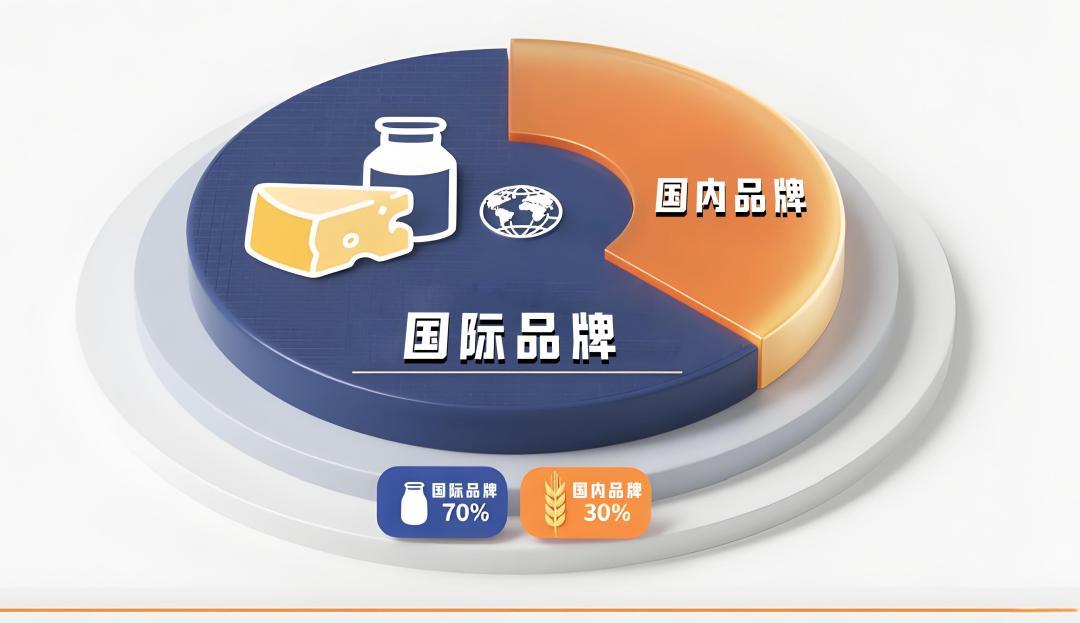
▲ Image/AI Production
Wei Lihua, Chairman of Junlebao Dairy Group, pointed out that currently, 70% to 80% of the domestic B-end market share is still occupied by imported dairy companies, but the space for domestic substitution is huge. The advantage of domestic dairy companies lies in the shorter supply chain path, which can ensure product freshness and cost advantages. In addition, domestic dairy companies are closer to the local market, able to respond quickly to customer needs and provide customized products and services.
Anti-dumping policies have created a favorable policy environment for the development of domestic dairy companies in the B-end market. In the past, some foreign dairy products entered the Chinese market in large quantities due to their price advantages, causing a certain impact on domestic dairy companies. To protect the development of the domestic dairy industry, the Chinese government has introduced a series of anti-dumping policies, imposing anti-dumping duties on some imported dairy products, effectively curbing the dumping behavior of foreign low-priced dairy products, improving the market competitiveness of domestic dairy companies, and providing policy support for the promotion of domestic dairy products in the B-end market.
The cost advantage of raw milk is an important bargaining chip for domestic dairy companies to participate in the B-end market competition. In recent years, due to the temporary surplus of domestic milk sources, the price of fresh milk has continued to run at a low level. Data from the Ministry of Agriculture and Rural Affairs shows that in April 2024, the average price of fresh milk in 10 major producing provinces such as Inner Mongolia and Heilongjiang was 3.07 yuan/kg, a year-on-year decrease of 11.3%. In the first week of July 2025, the average price of fresh milk in major producing provinces further dropped to 3.04 yuan/kg, a year-on-year decrease of 6.5%. The decline in raw milk prices directly reduces the production costs of domestic dairy companies, making them more competitive in price in the B-end market.
In contrast, imported dairy products need to bear a series of additional costs such as international transportation, tariffs, and insurance, weakening their price advantage. For B-end customers who are highly sensitive to price, purchasing domestic dairy products with lower costs while ensuring product quality is undoubtedly a more attractive choice. This cost advantage allows domestic dairy companies to provide more cost-effective products when competing with international brands, thereby accelerating the process of domestic substitution.
The continuous breakthroughs and innovations in production technology by domestic dairy companies are the fundamental guarantee for the localization of B-end dairy products. In the past, in the production technology of high-end dairy products, especially cheese, butter, cream, and other deep-processed products, domestic dairy companies had a large gap with international advanced levels, resulting in unstable product quality and difficulty in meeting the professional needs of B-end customers.
However, after years of research and development investment and technology introduction, domestic dairy companies have made significant progress in production processes, equipment levels, and quality control. Leading companies such as Junlebao, Yili, and Mengniu have also established professional research and development centers to innovate and customize products based on the needs of B-end customers.
A realistic trend is that under the protection of anti-dumping policies, the advantage of raw milk costs, and the support of production technology, B-end dairy products have entered the era of localization, bringing unprecedented opportunities for the development of domestic dairy companies in the B-end market.
The Strategy of Dairy Companies' Layout

Faced with the huge temptation of the B-end dairy market, dairy giants such as Mengniu, Yili, Junlebao, and Sanyuan are accelerating their layout steps, actively expanding B-end business through cooperation with catering companies, seeking the expansion and innovation of B-end business.
Mengniu's layout strategy in the B-end market is comprehensive and deep. In 2021, it launched the professional catering brand "Mengniu Professional Dairy Products," focusing on multiple fields such as catering, coffee, tea drinks, and baking, committed to providing customers with high-quality dairy raw materials and application solutions.
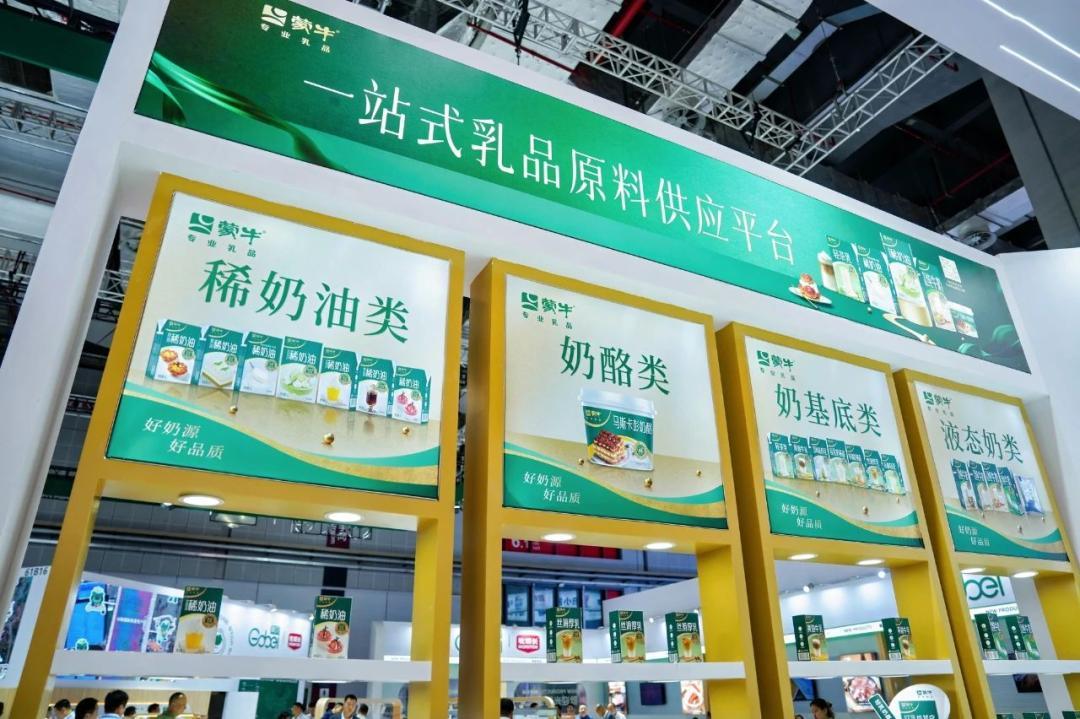
In terms of product strategy, Mengniu Professional Dairy Products did not blindly expand the product line but polished three core SKUs through in-depth market research: catering pure milk, cream, and thick milk base, to meet professional needs in different scenarios. In channel expansion, Mengniu Professional Dairy Products has established solid cooperative relationships with many leading companies.
As a strong competitor of Mengniu, Yili is also making every effort in the layout of the B-end market. It launched the professional dairy raw material brand "Yili Sofimis" and established cooperative relationships with well-known chain catering brands such as Nayuki Tea, Salia, and Auntie Shanghai.
To better serve B-end customers, Yili established a professional dairy product application innovation center in Shanghai and completed the upgrade in April 2025 to meet the diverse needs of customers in baking, beverages, meals, industry, and other scenarios. In addition, Yili also expanded the enterprise-level market through B2B platforms such as JD Enterprise Business, providing customized and set products and services, further broadening the B-end sales channels.
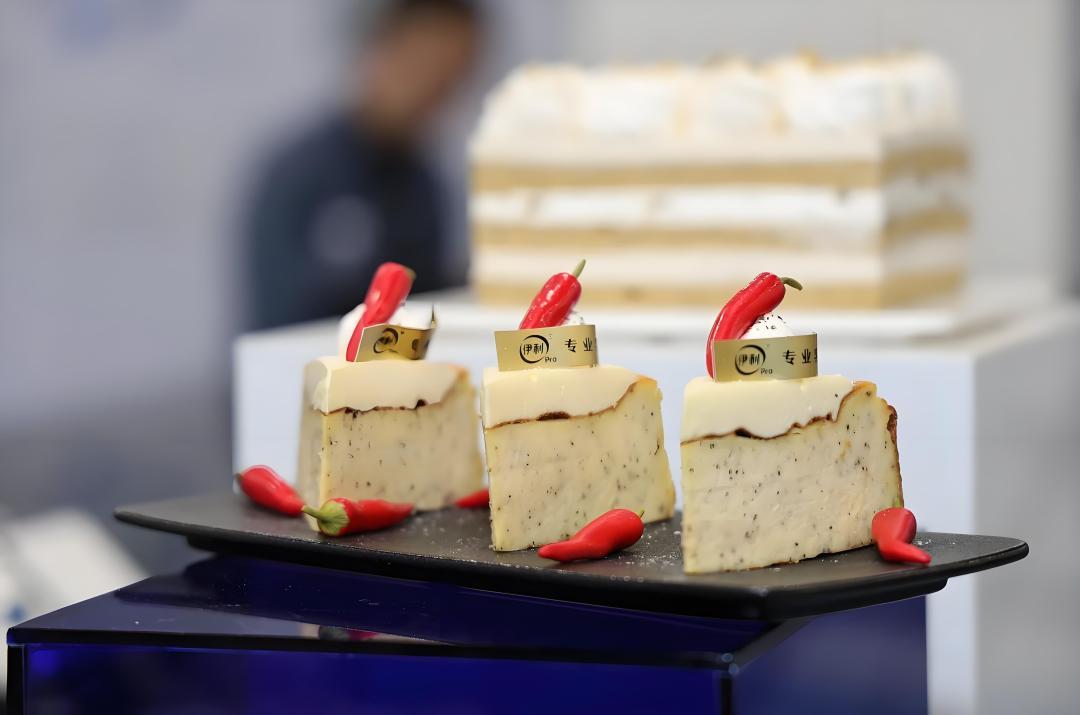
▲ Image/Yili Professional Dairy Products Shanghai Application Innovation Center Upgrade Ceremony Dairy Products
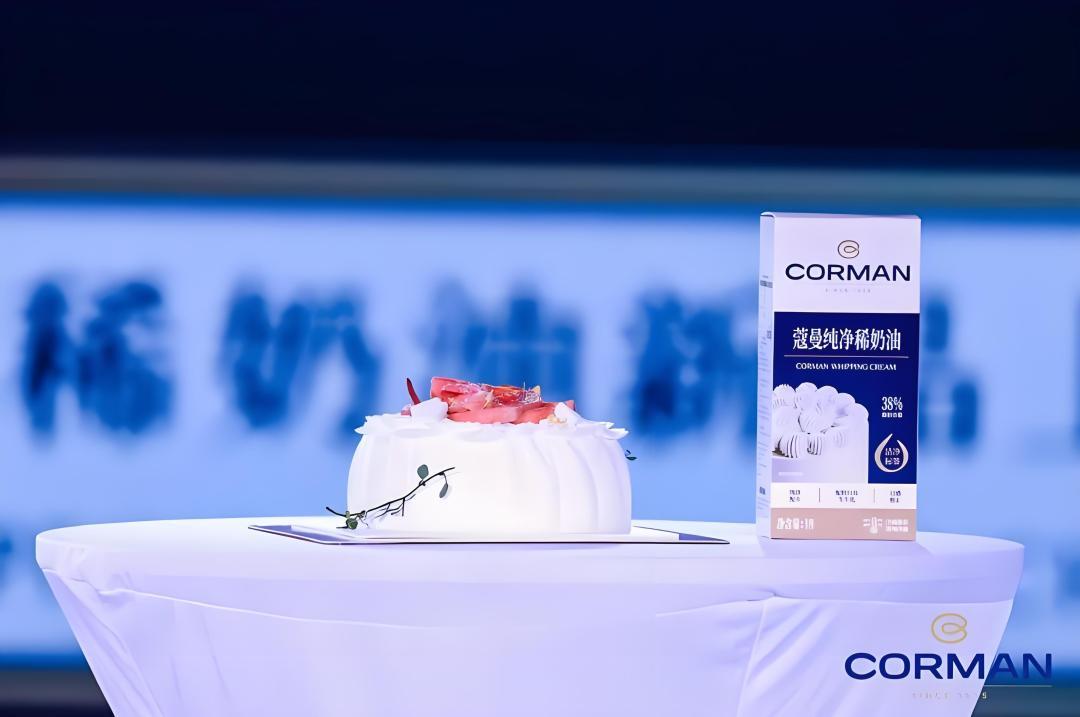
Junlebao has a certain differentiation, focusing more on high value-added deep processing fields. In May 2025, Junlebao cooperated with Sinodis under the French Savencia Group to launch "Coman Pure Cream," filling the gap in the domestic high-end cream market. Co-investing in the construction of a ranch with Mixue Bingcheng and deep supply chain cooperation with many leading new tea drink brands such as Chagee and Mo Yogurt are also explorations of B-end business.
Dairy companies are flocking to the B-end market, with profound logic and their own advantages. First, compared with the C-end market, the B-end market has relatively stable customer groups and large order volumes, which can bring continuous and stable income to dairy companies. At the same time, B-end customers have large and long-term demand for dairy products, which is conducive to dairy companies achieving large-scale production and reducing production costs. In addition, through cooperation with B-end customers, dairy companies can more directly understand market demand and consumer preferences, providing a basis for product research and innovation.
From the perspective of advantages, dairy companies have obvious advantages in raw material supply, production capacity, and brand influence. Dairy companies have stable milk source bases, which can ensure the continuous supply of dairy raw materials to meet the large demand of B-end customers. In terms of production capacity, advanced production equipment and mature production processes can achieve large-scale production, ensuring product stability and consistency. Moreover, dairy companies such as Mengniu and Yili have high brand awareness and good brand image in the market, and B-end customers are more willing to cooperate with these well-known dairy companies to improve the quality and reputation of their products.
Whether it is the industry prospects or the current hot layout of various dairy companies, it seems to confirm that the B-end is a promising direction, but is this really the case?
The Blue Ocean Market Also Hides Reefs

Although the B-end market is regarded as a blue ocean, compared with the C-end market, its competitive logic is significantly different. In the C-end market, the competition of dairy companies is more focused on brand promotion, marketing, and channel construction, occupying market share by attracting consumer attention and purchases. In the B-end market, product professionalism, customization ability, and efficient supply chain level become the focus of competition.
Catering industry customers often have specific requirements for the quality, specifications, taste, and other aspects of dairy products. For example, the coffee industry has strict standards for the fat content and acidity of fresh milk, and the baking industry has special requirements for the melting point and plasticity of butter. Therefore, dairy companies need to have strong research and development capabilities to produce products that meet the professional needs of different customers.
In addition, with the intensification of homogeneous competition in the catering market, brand owners are increasingly eager to create differentiated products. They hope that suppliers can provide "exclusive" raw materials or formulas to form unique brand memory points. This requires dairy companies to have strong customization development capabilities, able to carry out personalized customization from multiple dimensions such as formula, flavor, and packaging according to the specific needs of customers. This "customer co-creation" model tests the cooperation tacit understanding between the dairy company's research and development team and the customer's product team.
For chain catering brands with many stores, the efficiency and stability of the supply chain are their lifeline. Any delay or interruption in raw materials may lead to the inability of stores to operate normally, causing huge economic losses and damage to brand reputation. Therefore, B-end customers are extremely concerned about the supply chain capabilities of suppliers when choosing suppliers. Dairy companies need to establish a complete supply chain system, efficiently manage all links from raw material procurement, production processing to warehousing and logistics, ensuring that products can be delivered to customers in a timely and accurate manner. At the same time, an efficient supply chain can also reduce the operating costs of dairy companies and improve the competitiveness of enterprises.
In addition to establishing cooperation with customers, the competition between dairy companies is also not to be underestimated.
First is the technical barrier. The B-end market has high requirements for product professionalism, and new entrants need to invest a lot of funds in technology research and development and product testing to meet customer requirements; second is the scale barrier. Large catering companies have high requirements for the production capacity and supply stability of suppliers. New entrants, if they do not have sufficient production scale, find it difficult to obtain large customer orders; third is the brand barrier. In the B-end market, brand reputation is also an important consideration for customers when choosing suppliers. New entrants, due to lack of market reputation, find it difficult to gain customer recognition in a short time. These barriers work together to make the competitive landscape of the B-end market relatively stable, and it is not easy for new entrants to break through.
In addition, to seize market share, some dairy companies may adopt low-price strategies, leading to chaos in the market price system. Price wars not only reduce the profitability of dairy companies but may also affect product quality, which is not conducive to the healthy development of the entire B-end dairy market.
The rise of the B-end market has brought new growth opportunities to the Chinese dairy industry. However, this blue ocean is not a smooth path, with potential and challenges coexisting. Whether dairy companies can succeed in this new battlefield not only relates to the future development of the companies themselves but will also greatly affect the pattern of the entire industry. We will continue to pay attention to which company can stand out.
References:
Huatai Insight, "B-end Dairy: Domestic Substitution is Timely"
Dairy Times, "Hot and Boiling! Dairy Companies Compete for B-end Market" Dafang Finance, "Two Major Businesses Merged! What Chess is This Dairy Giant Playing?"
China Dairy Magazine, "Yili, Mengniu, Junlebao, Huashi, Sanyuan... Dairy Companies Start the Battle for B-end Market"
The copyright of this article belongs to the original author/organization.
The views expressed herein are solely those of the author and do not reflect the stance of the platform. The content is intended for investment reference purposes only and shall not be considered as investment advice. Please contact us if you have any questions or suggestions regarding the content services provided by the platform.
