

[Options] What's the difference between SPX and SPY options? Which one is more suitable for you?

If you've traded U.S. stock options, especially those tied to the S&P 500 index, you've likely encountered these two tickers:
SPX — Cash-settled options on the S&P 500 index
SPY — Physically delivered options on the S&P 500 ETF (index fund)
While they track the same underlying asset, their trading mechanics, costs, tax implications, and liquidity differ significantly.
So the question is:
Which should retail investors trade—SPX or SPY? Which one suits you?
This article breaks it down in the clearest way possible!
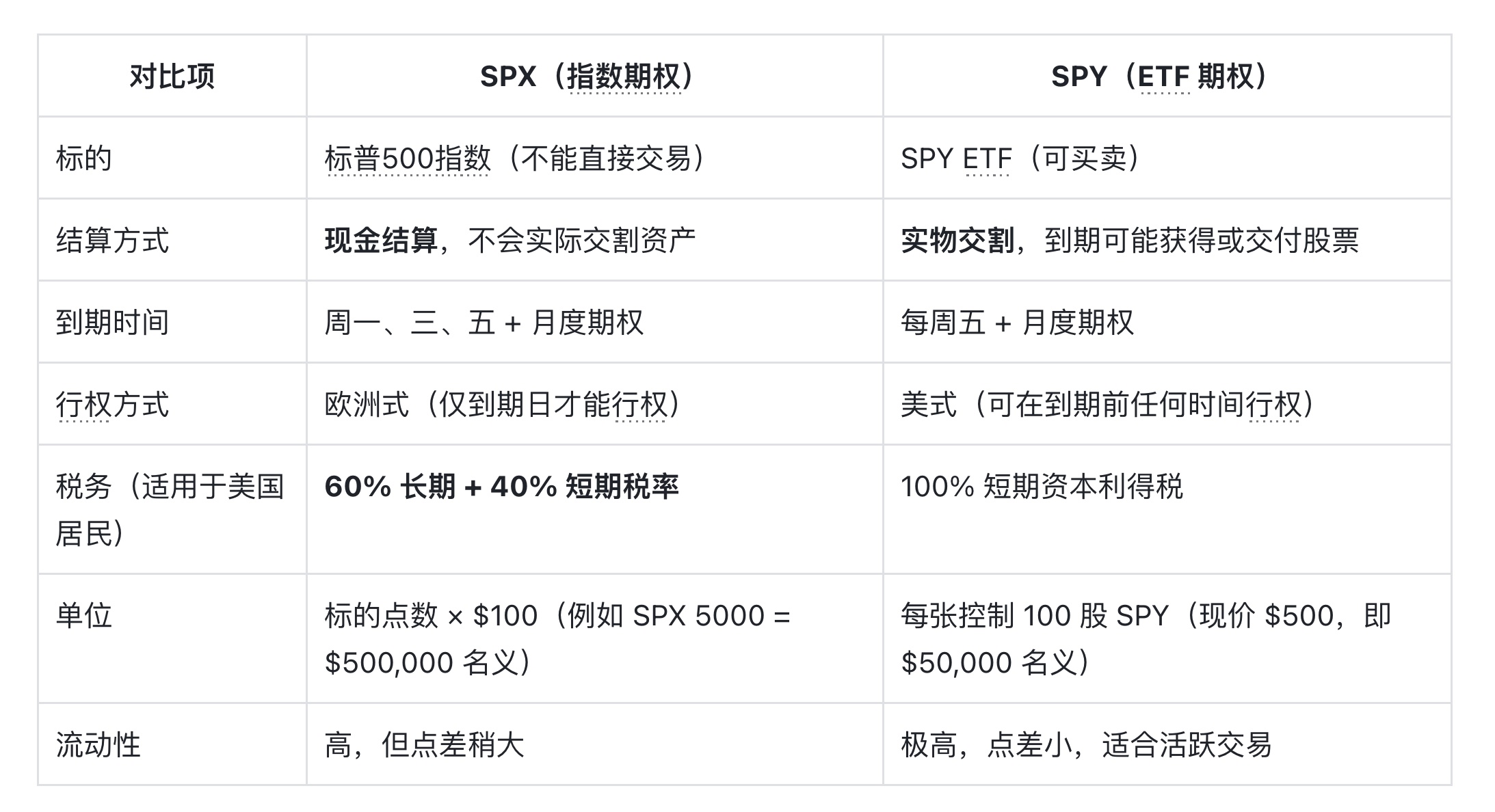
1. SPX vs. SPY: Key Differences at a Glance
2. SPX Advantages: Professional, Stable, Tax-Efficient
✅ 1. Cash Settlement: No Delivery Hassles
SPX is cash-settled, meaning:
At expiration, both buyers and sellers settle based on index point differences;
No actual stock ownership or delivery, avoiding forced liquidation or stock loan risks.
Ideal for strategies like Iron Condor or Butterfly spreads.
✅ 2. European Exercise: Safer
SPX uses European-style exercise (executable only at expiration).
Unlike SPY’s American-style exercise (anytime), you avoid early assignment risks, such as:
Covered Calls being exercised prematurely;
Short Puts suddenly requiring stock purchases.
This makes SPX more predictable, especially for option sellers.
✅ 3. Tax Benefits (U.S. Tax Residents Only)
SPX falls under IRS Section 1256, offering:
60% long-term tax rates (lower)
40% short-term tax rates
This boosts after-tax returns for high-income investors.
⚠️ Note: Applies only to U.S. taxpayers.
3. SPY Advantages: Flexibility & Lower Barriers
✅ 1. Physical Delivery: Ideal for Stock Strategies
If you hold SPY shares, you can pair them with options for Covered Calls or Protective Puts.
SPX’s cash settlement doesn’t allow such combinations.
✅ 2. Smaller Contract Size: Better for Small Accounts
One SPX option = $100 × index points (e.g., SPX at 5000 = $500k notional). While margin may apply, premiums are costly.
SPY is more accessible:
Current SPY price ~$500;
One option controls 100 shares = $50k notional;
Easier for beginners.
✅ 3. Extreme Liquidity
SPY is the world’s most traded ETF, with:
Tight bid-ask spreads (especially near ATM);
High-frequency trading and market maker participation;
Ideal for day trading or frequent adjustments.
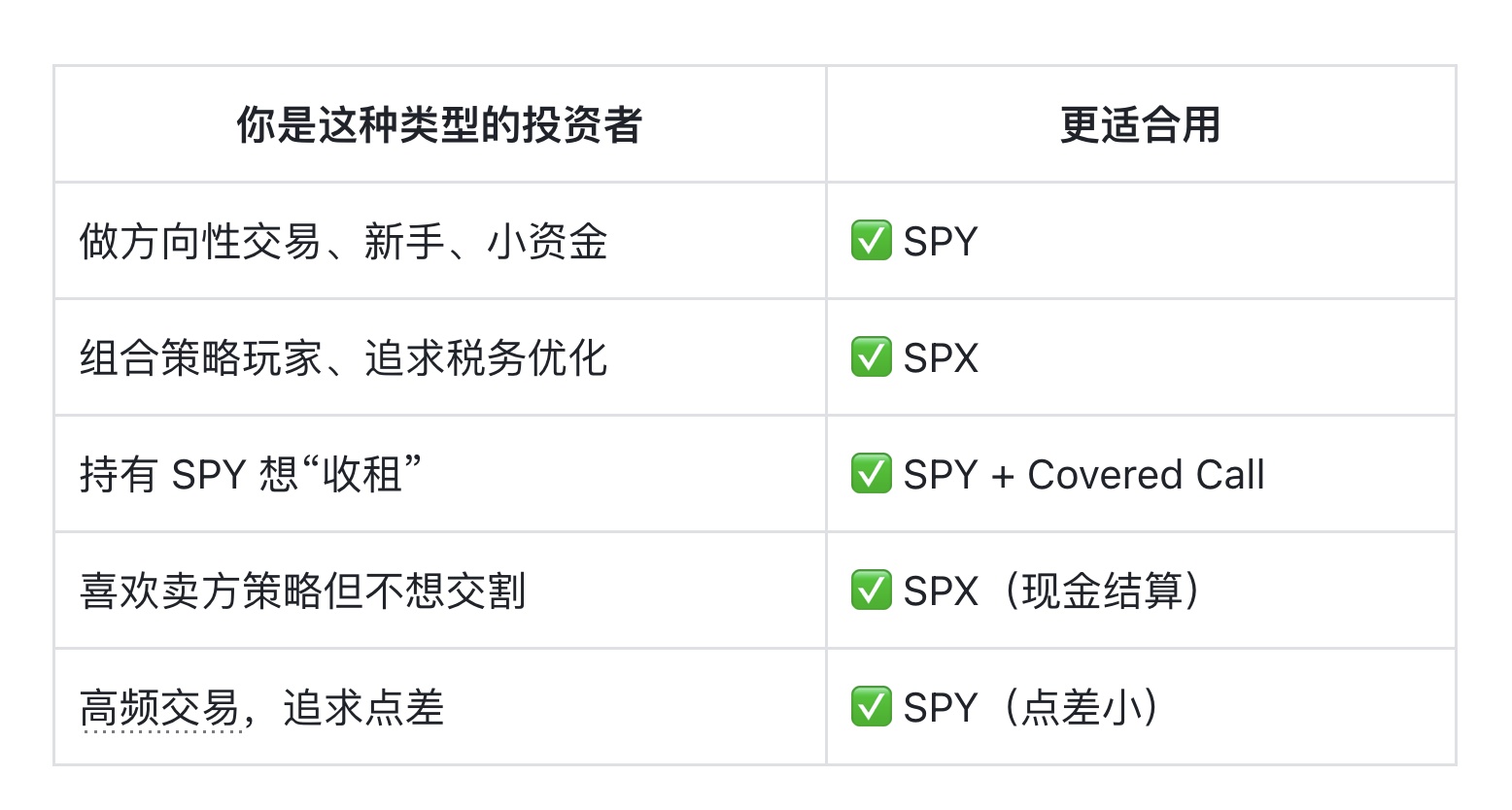
4. How to Choose? Practical Tips
5. FAQs
Q1: What happens at SPX expiration? Does it convert to stock? No! SPX is cash-settled—gains/losses reflect in cash, no stock delivery.
Q2: Can I trade SPX on IB/TOS/Moomoo? Most U.S. brokers support SPX, but some require permissions. If unavailable, use SPY with similar logic.
Q3: Is SPX more leveraged? No. Leverage depends on option pricing/strike, not notional size. Both SPX/SPY allow leverage via strategy design.
6. Conclusion: Your Choice Reflects Trading Style
If you’re a “lightweight” trader preferring simplicity and ETF-based strategies, choose SPY. If you’re a “strategist” into Iron Condors, tax optimization, etc., SPX is superior.
Stop overthinking—pick the tool that matches your style!
📌 Want a real-case SPX vs. SPY comparison? Comment below!
The copyright of this article belongs to the original author/organization.
The views expressed herein are solely those of the author and do not reflect the stance of the platform. The content is intended for investment reference purposes only and shall not be considered as investment advice. Please contact us if you have any questions or suggestions regarding the content services provided by the platform.
