

Alibaba and SAIC's nurtured Banma Zhixing is going solo in Hong Kong.
 I'm LongbridgeAI, I can summarize articles.
On August 21, Alibaba's announcement of a spin-off pushed "Zebra Zhixing" into the spotlight. At the same time, this intelligent vehicle operating system service provider, jointly nurtured by Alibaba and SAIC, officially embarked on the path of independent listing.
One day before the spin-off announcement, the Hong Kong Stock Exchange disclosed Zebra Zhixing's listing application documents, with Deutsche Bank, CICC, and Guotai Junan International serving as joint sponsors.
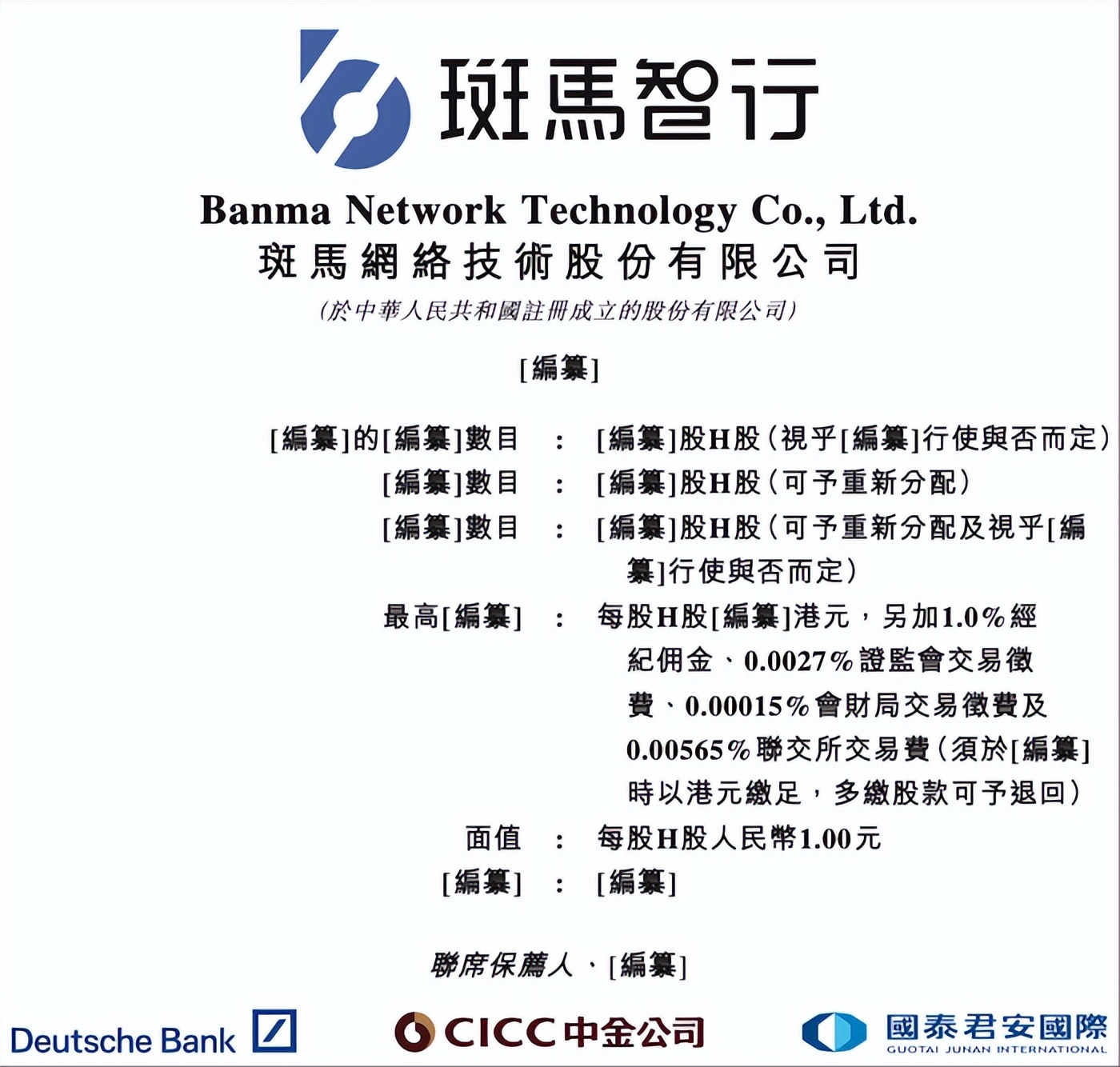
Public information shows that Zebra Zhixing mainly provides intelligent vehicle operating systems, intelligent vehicle solutions, and digital transportation solutions for the automotive and transportation industries. It was established in 2015 through an investment by an internet automotive fund jointly initiated by SAIC Group and Alibaba.
After ten years, this company, once regarded as a "benchmark for internet vehicle operating systems," is finally moving from a "group internal project" to an independent capital stage.
Zebra Zhixing revealed in its prospectus that the funds raised from this IPO will be used to strengthen R&D investment, increase market share in China, expand into global markets, support business acquisitions and expansion plans, and supplement working capital.
Spin-off Listing: Strategic Advancement from "Alibaba System" to "Independent Player"
This round of spin-off by Zebra Zhixing actually left traces as early as 2024.
On December 27, 2024, Alibaba Group quietly removed the "wholly-owned subsidiary" label of "Zebra Zhixing" in its financial report, converting it into an "equity-accounted investee." After the equity identity conversion, Alibaba still holds about 44.72% of Zebra Zhixing's shares;
Eight months later, the new spin-off listing announcement was officially implemented. According to the announcement, after the spin-off is completed, Alibaba is expected to maintain a shareholding ratio of over 30%, continuing to serve as an important strategic investor, and Zebra Zhixing will remain an equity-accounted investee.
Behind this capital operation is actually a key move for Zebra Zhixing to shed the label of "Alibaba ecosystem appendage" and upgrade to an "independent industry entity."
In fact, due to its origin in the exploration of new possibilities for deep integration of automobiles and the internet by Alibaba Group and SAIC Group, Zebra Zhixing has received a lot of nurturing from internet software and hardware technology over the past decade, as well as the strong manufacturing capabilities of a state-owned automotive leader, but it has never had an independent color, which is not conducive to its crossing the new cycle of competition in automotive intelligence.
Penetrating the equity relationship reveals that its second-largest shareholder, SAIC Group, indirectly holds about 34.34% of the shares through Shanghai Sawei and Jiaxing Ruijia, forming a "dual giant" shareholding structure with Alibaba. This design retained the technical synergy between Zebra Zhixing and Alibaba in cloud computing, AI algorithms, etc., in the early stages, while also strengthening market penetration through SAIC's industrial resources.
Thanks to the dedicated irrigation of capital and industry by the dual giants of software and hardware, Zebra Zhixing has long become a company focused on intelligent operating systems and full-stack AI integration.
According to the prospectus, based on 2024 revenue, Zebra Zhixing is China's largest "software-centric intelligent cockpit solution provider," also ranking first in terms of solution deployment volume. Notably, in the intelligent cockpit industry, Zebra Zhixing is also one of only two third-party suppliers in China that have achieved fully self-developed automotive operating systems, and the only one capable of building a "operating system + AI full-stack capability + in-vehicle platform service" three-in-one architecture, spanning underlying systems, AI interaction, and application ecosystems as a third-party service provider.
This technical architecture gives it differentiated advantages in multiple dimensions such as intelligent cockpits, advanced driver assistance, and vehicle networking services. According to the prospectus, as of the first quarter of 2025, Zebra Zhixing has cooperated with more than 40 automotive brands, including Volkswagen, BMW, SAIC, FAW, etc., with over 10 million intelligent vehicles deployed. Zebra Zhixing mainly provides two major businesses: intelligent vehicle operating systems and solutions built around the system, with a domestic market share exceeding 15% in 2024. Its vast customer circle of friends and market position further attest to its strength.
However, in recent years, as the competition for automotive intelligence in China has become increasingly intense, the spin-off of Zebra Zhixing has become inevitable. Essentially, it is also the inevitable result of the refinement of the division of labor in the intelligent automotive industry. In the past, as a product of Alibaba's "Internet Automotive Fund," it more often played a collaborative role in the group's "vehicle-road-cloud integration" strategy; now, as intelligent cockpits become the core battlefield for differentiated competition among car companies, independent listing can both release its technical value and connect with car company customers in a more flexible manner.
Operating System "Depreciation"? Zebra Has Already Bet on the AI Track
If the spin-off solved the "identity problem," then technological iteration is the "survival foundation" of Zebra Zhixing.
Facing the industry's warning that "operating systems are becoming less valuable," it chose to reconstruct the intelligent cockpit experience with AI large models, completing the strategic upgrade from "vehicle system" to "AI-defined cockpit" with the "Yuanshen AI" technology brand.
The technical background of Zebra Zhixing began with Alibaba's self-developed AliOS operating system. The predecessor of this system can be traced back to the YunOS platform launched in 2010. After years of repeated iterations, AliOS has evolved from a single "vehicle information entertainment system" to a "full vehicle scheduling hub," supporting full hardware, multi-domain information integration, and complex AI application ecosystem expansion.
But even so, the bottleneck of traditional operating systems is still gradually emerging, with serious homogenization of functions such as voice control and navigation, user interaction relying on touch, and ecological barriers easily being broken by car companies' self-developed replacements, etc.
In fact, if we jump out of the strict definition of business and product boundaries, Zebra Zhixing has many potential competitors, each with its own characteristics and advantages, including Huawei, which builds an ecosystem with the Harmony OS vehicle system and ADS advanced intelligent driving solutions, and Baidu, which focuses on the intelligent driving field with the Apollo platform; it also includes Desay SV, ECARX, Bosch, Visteon, and other domestic and foreign Tier 1 suppliers that occupy a leading position in the cockpit domain controller hardware market, as well as car companies such as Tesla, Nio, Li Auto, XPeng, and BYD that choose the self-development path; previously, An Conghui, president of Geely Holding Group, also clearly pointed out the problem of "high homogenization of intelligent cockpit technology."
In addition, regarding the operating system itself, Zebra Zhixing admitted in the impairment operation in the first quarter of this year that "it may become less and less valuable, and AI-driven business is worth focusing on."
Considering the major trend of intelligence on the automotive end, the emergence of these situations is not surprising. As a company, it is more important to be prepared, especially with a first-mover advantage.
From the actions, Zebra Zhixing officially released the new intelligent cockpit technology brand "Yuanshen AI" at the Alibaba Cloud Summit last September, indicating that the company's strategic focus has fully shifted to the AI-defined cockpit era driven by large models; this April, it also released the "One Arrow Ten Stars" interactive intelligent body, namely 1 system-level main intelligent body (System Agent) coordinating the overall situation, 10 platform-level application Agents (scene intelligent bodies) working together, through a star-like collaborative architecture, users can call multi-scene services through natural language instructions.
According to IDC's "Intelligent Cockpit Large Model Capability Assessment, 2025" released in July, Zebra Zhixing's "Yuanshen AI" ranked first in 6 indicators (3 full marks) in 7 high-frequency scenarios such as vehicle control, entertainment, and life, surpassing competitors such as Huawei Harmony OS and Baidu Apollo, confirming its technological leadership.
Overweight R&D Investment, Spin-off to Release Technology Value
Behind these strong outputs, it is clear that Zebra Zhixing's substantial investment in R&D cannot be ignored. Through its financial report data, it can be found that the R&D expenses for each cycle have exceeded its revenue so far: 2022 revenue of 805 million yuan, R&D expenses of 1.11 billion yuan; 2023 revenue of 872 million yuan, R&D expenses of 1.12 billion yuan; 2024 revenue of 824 million yuan, R&D expenses of 980 million yuan; 2025Q1 revenue of 140 million yuan, R&D expenses of nearly 200 million yuan.
High investment directly leads to losses: cumulative pre-tax losses of over 3 billion yuan from 2022 to 2024, and a pre-tax net loss of over 2 billion yuan in the first quarter of 2025 due to the impairment of intangible assets of the operating system (1.841 billion yuan).
But based on the clear understanding of the depreciation of operating systems by Alibaba, SAIC, and Zebra Zhixing, this loss is clearly not disorderly expansion, but long-term necessary technology investment. As of June 2025, Zebra Zhixing has over 500 core patents, covering key areas such as operating system underlying architecture, in-vehicle AI models, and multi-modal perception.
The timing of this spin-off by Zebra Zhixing coincides highly with its technology strategy shift. One of the core demands of the spin-off listing is to "blood transfuse" AI R&D.
As of the end of June 2025, Zebra Zhixing's "cash and cash equivalents" were only 3.161 billion yuan, and total equity was only 4.743 billion yuan. Its prospectus also clearly states that the funds raised from this IPO will be mainly invested in "AI cockpit R&D driven by large models" and "global market expansion" and other fields.
For Alibaba, spinning off Zebra Zhixing can both release the value of underestimated technology assets, as the valuation of innovative businesses in Alibaba's current valuation system is generally lower than that of core e-commerce, and more importantly, it can feed back its "vehicle-road-cloud integration" strategy through capital linkage with Hong Kong stocks.







The copyright of this article belongs to the original author/organization.
The views expressed herein are solely those of the author and do not reflect the stance of the platform. The content is intended for investment reference purposes only and shall not be considered as investment advice. Please contact us if you have any questions or suggestions regarding the content services provided by the platform.