



OpenAI sparks IT investment boom, does AI new infrastructure drive Lenovo's growth?

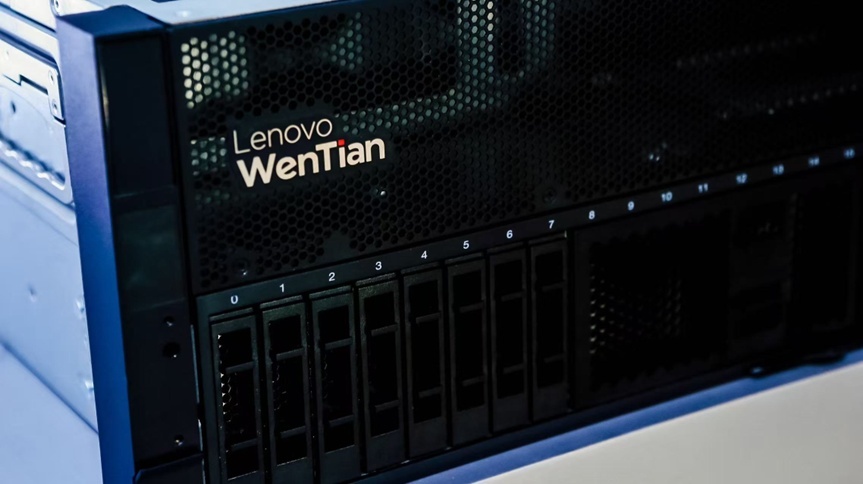
Recently, OpenAI has reached a series of industry-shaking agreements with companies such as NVIDIA, Oracle, and AMD, sparking a wave of investment in AI infrastructure.
Almost simultaneously, Dell also announced a significant upward revision of its performance expectations for the next four years due to a surge in demand for AI servers. In fact, over the past six months, Dell's market value has risen by more than 90%, and many investment banks have raised their target prices, with analysts expressing strong confidence in the growth prospects of the company's AI business. Additionally, Super Micro Computer and Hewlett Packard Enterprise, which sell AI servers, have seen their market values rise by more than 75% and 85%, respectively, in the past six months.
As a veteran PC giant with the largest global PC market share, Lenovo has also released an interim performance report showing revenue growth of over 20%, with its AI server business growing threefold year-on-year.
In this new round of IT investment cycles driven by AI, Dell and its peers have gained market revaluation through AI servers. So, can Lenovo also ride this wave to new heights?
AI "Red Hot," the Wave of Enterprise Infrastructure Investment Arrives
Entering October, the AI infrastructure investment boom continues to heat up, with a series of heavyweight deals emerging this year.
In addition to OpenAI's "investment for orders," it was recently reported that BlackRock's infrastructure fund GIP is planning to acquire data center operator Aligned Data Centers for a valuation of approximately $40 billion. This news once again proves that the capital market's interest in AI infrastructure investment is growing stronger.
This deal highlights an important trend: investors' focus has shifted from AI models themselves to the infrastructure that supports these models, including data centers, servers, and computing power networks. OpenAI CEO Sam Altman also explicitly stated, based on strong confidence in future model capabilities and demand, "We've decided it's time to make a very aggressive bet on infrastructure."
Against this backdrop, the role of traditional PC manufacturers is undergoing profound changes. Companies like Dell and Lenovo, with their years of accumulation in the server field, have unexpectedly become core participants in the computing power revolution, standing at the forefront of this transformation.
Take Dell as an example. Its Infrastructure Solutions Group has become the main driver of performance growth this quarter. The continuous rise in AI server orders has directly prompted the company to raise its annual revenue growth forecast to 7%-9%. Dell's COO Jeff Clarke also admitted to underestimating the development potential of the AI market. He said, "Two years ago, we were completely wrong about the size of the AI market. Now, it's only going to get bigger."

Similarly, as the manufacturer that has long held the largest global PC market share, Lenovo also delivered impressive results this quarter, with revenue growing 22% year-on-year, setting a new record for the same period in history.
A closer look at Lenovo's growth drivers reveals a clear shift from traditional PC business to AI-driven diversified growth. Lenovo's Infrastructure Solutions Group led all business segments with a 36% growth rate, with AI server revenue doubling, becoming a key factor in driving overall performance beyond expectations.
At the same time, Lenovo's Intelligent Devices Group also demonstrated strong resilience. According to data from market research firm Canalys, Lenovo's AI PC shipments increased by 228% quarter-on-quarter in the second quarter of this year, indicating that the consumer electronics market may be entering an AI-driven replacement cycle.
From enterprise-level AI server demand to consumer-level AI PC trends, veteran PC giants are entering a new cycle of growth. However, financial reports also show that Lenovo still faces significant challenges in this cycle.
Although non-PC business revenue has reached 47%, nearly half of the total, Lenovo still heavily relies on PC business revenue and profits. While the Infrastructure Solutions Group is growing rapidly, it has yet to achieve stable profitability, with an operating margin in the negative in the latest quarter, in stark contrast to the 22% high margin of the Solutions and Services Group.
This contrast in profitability precisely reveals Lenovo's transformation goals in the AI era.
Can "Hybrid AI" Rebuild Lenovo?
In recent years, after a short-term surge following a special period, the global PC market has returned to a trajectory of slowing growth.
PC, the core market that Lenovo built its foundation on, can still provide stable cash flow but is clearly unable to support the capital market's expectations for future growth.
Therefore, at the Lenovo Kickoff 2025 event on March 31, 2025, Lenovo announced the "Hybrid AI" strategy as its core development direction for the next decade. By integrating personal intelligence, enterprise intelligence, and public intelligence, the company plans to build a full-stack capability covering "device-edge-cloud-network-intelligence," transforming from a traditional device seller to an AI ecosystem service provider.
This means Lenovo aims to transition from a PC-centric hardware company to a technology enterprise with competitiveness in the AI field. In this regard, Yang Yuanqing once said in an interview, "Today, people may think of us as a device seller, but in the future, we may be a company centered on intelligent agent business."
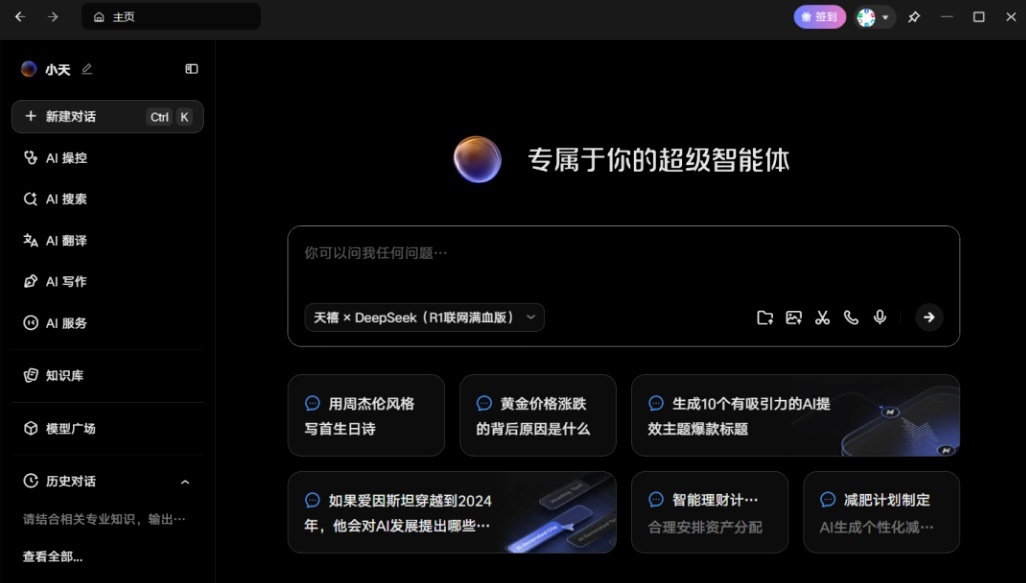
However, transformation is not easy. From traditional PC to AI ecosystem, Lenovo faces a more complex industry chain landscape.
Take the enterprise IT hardware market as an example. In the current AI server field, although Dell and Lenovo have shown significant growth, they face pressure from both ends.
Upstream GPU manufacturers like NVIDIA and AMD, with their technological monopolies, have pricing power, continuously squeezing the profit margins of midstream manufacturers. Downstream cloud service providers like Amazon and Alibaba Cloud are enhancing their bargaining power through self-developed servers and large-scale procurement.
This positioning in the industry chain is also directly reflected in Lenovo's profitability. Although the Infrastructure Solutions Group has maintained a high growth rate of 36%, the business is still in a loss-making state, with an operating margin of -2% in the latest quarter.
To break through the "hardware value trap," Lenovo must move beyond the traditional hardware manufacturer logic and redefine its business model.
The "Hybrid AI" strategy carries this goal. According to different application scenarios, AI workloads are intelligently distributed between devices, edges, and the cloud. On the consumer side, smart devices like AI PCs reach end users; on the enterprise side, AI servers and solutions meet the computing power needs of institutional clients.
For Lenovo, this strategy means a transformation from a device seller to an AI ecosystem service provider.
Of course, the path to transformation is not smooth. In advancing the "Hybrid AI" strategy, Lenovo faces several key challenges, such as how to establish unique technological advantages in a fiercely competitive market and how to effectively translate hardware advantages into competitiveness in software and services.
The answers to these questions will determine whether Lenovo can successfully achieve the "elephant turnaround" from a hardware manufacturer to an AI ecosystem service provider.
From a broader perspective, Lenovo's transformation direction also reflects the collective path of traditional Chinese IT companies seeking change: how to climb from the middle and low end of the value chain to the high end, and how to transform from a single product manufacturer to a comprehensive solution provider.
Lenovo's new strategy also provides an important window for observing the transformation and upgrading of Chinese IT companies.
From Smart Hardware to Full-Stack AI Ecosystem, Revaluing This IT Cycle
Whether the "Hybrid AI" strategy can help Lenovo break free from the quagmire of traditional hardware competition still requires further market testing. But one thing is certain: the trend for AI technology companies is shifting from simply "selling products" to "selling ecosystem-level solutions."
Recently, at the Alibaba Cloud Summit, Alibaba Group CEO Eddie Wu clearly outlined Alibaba Cloud's core strategic path in the AI era, emphasizing the "Full-Stack AI + Super Cloud" strategy. Lenovo also showcased its "Full-Stack AI" solution at the event, covering AI terminals, infrastructure, and AI solutions and services, demonstrating its business ambitions beyond traditional hardware manufacturers.
A glimpse through a tube reveals that Lenovo's technology and ecosystem value is being unleashed, from relying on single products to building a diversified ecosystem, from hardware sales to service value-added, and from local competition to global layout.
For example, in the enterprise market, Lenovo's deep collaboration with Alibaba Cloud is continuously deepening. This not only brings direct orders to Lenovo but also integrates it into the mainstream ecosystem of China's AI industry development. Through innovations like liquid cooling technology, Lenovo has provided more competitive solutions in the high-performance computing field, further improving the profitability of its infrastructure business.

Image: Lenovo's 6th-Generation Neptune Liquid Cooling Technology
At the same time, Lenovo's Baiying platform is gradually gaining market recognition. The platform has provided AI services to over 100,000 enterprises. This shift in business model from "one-time device sales" to "continuous service provision," if scaled, will significantly enhance Lenovo's profit quality and valuation.
In fact, the revaluation of this PC company has already begun.
Over the past 90 days, 15 investment banks have given Lenovo a "buy" rating, with target prices concentrated between HK$13.8 and HK$14.9. Institutional investors' optimism is mainly based on expectations for the growth potential of Lenovo's AI server business and the upcoming AI PC replacement cycle. Goldman Sachs recently included Lenovo in its "buy list" and raised its net profit forecast for fiscal year 2025 by 23%.
This change is not only reflected in Lenovo but also in the market's shifting judgment of the entire PC industry. From its market revaluation due to AI server business, it can also be seen that veteran PC manufacturers are becoming indispensable ecosystem participants in the era of AI computing power.
Looking ahead, as AI infrastructure intensifies, the IT industry is ushering in a new golden decade. Lenovo's "fifth re-entrepreneurship" has also begun.
Horizontally, Lenovo's development history is a microcosm of China's technological development. Having experienced following innovation in the PC era, falling behind in the smartphone era, the "device + cloud" integrated transformation in 2017, and the "3S transformation" focusing on smart devices in 2019, Lenovo now stands at another critical moment to determine its future.
The leap from a hardware giant to an AI ecosystem player is Lenovo's direction for the next decade. True value enhancement requires completing the critical leap from "business diversification" to "ecosystem synergy."
Ideally, Lenovo will organically integrate these three major businesses through a hybrid AI architecture, forming a closed loop of "devices generate data, data drives intelligence, and intelligence creates value."
If this closed loop can be achieved, Lenovo will participate deeply in the rise of emerging technologies as an ecosystem enterprise in the AI era. This is also the core goal of Lenovo's latest entrepreneurial endeavor.
With OpenAI's "vertical and horizontal alliances" and the accelerated transformation of PC giants like Dell, a new round of IT industry chain reshuffling has begun. Whether Lenovo can complete its identity transformation will determine whether it drinks soup or eats meat in this AI feast.
Source: Hong Kong Stock Research Society
The copyright of this article belongs to the original author/organization.
The views expressed herein are solely those of the author and do not reflect the stance of the platform. The content is intended for investment reference purposes only and shall not be considered as investment advice. Please contact us if you have any questions or suggestions regarding the content services provided by the platform.
