


Lalamove's sixth IPO filing: valuation shrinks, commission cuts and profit anxiety

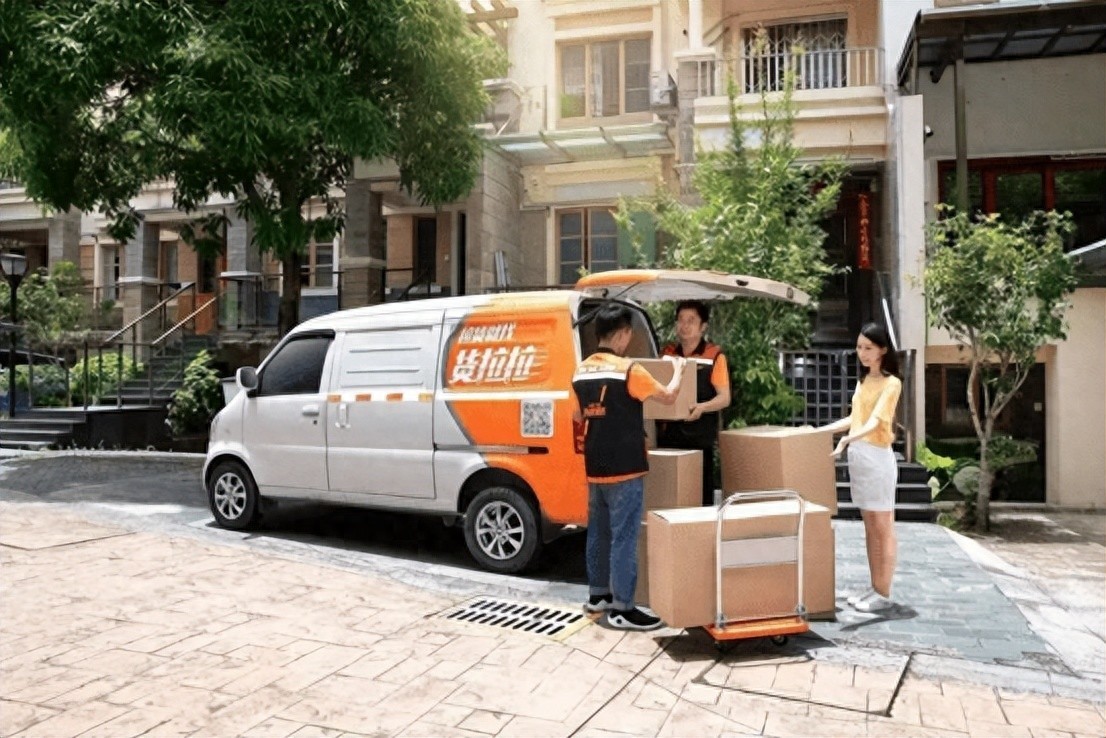
Introduction: After six attempts to enter the capital market, Lalamove$Lalamove(LALA.NA) is once again standing at the doorstep of the Hong Kong Stock Exchange. This once $90 billion-valued unicorn has seen its valuation continuously decline—can it still win over the capital markets?
Summary:
1. Sustainability of profitability: After a series of commission cuts and fee reductions, Lalamove's operating cash flow growth has slowed.
2. Service reputation and regulatory compliance: Complaints from drivers and users remain high—how can management and service levels improve?
3. Restoring capital market trust: Is the valuation decline a return to rationality or a loss of investor confidence in its growth potential?
Recently, Lalamove's operating entity—Lalatech Holdings Limited—submitted another listing application to the Hong Kong Stock Exchange, aiming for a Main Board IPO. This marks its sixth attempt since 2023, with the previous five expiring due to time limits.
Founded in Hong Kong in 2013, Lalamove initially positioned itself as the "Didi for urban freight." Leveraging its matching model, flexible pricing, and large driver pool, it quickly became China's largest freight matching platform and expanded into Southeast Asia and Latin America.
According to Frost & Sullivan, Lalamove is now the world's largest logistics transaction platform by closed-loop Gross Transaction Value (GTV) in H1 2025, holding a 53.3% global market share.
However, contrasting its business expansion is Lalamove's declining valuation, driven by regulatory constraints on its profit model, lower commission rates, and cyclical impacts in China's freight industry.
01 Three Straight Declines in Monetization Rate, Over 100K User Complaints
In H1 2025, Lalamove reported revenue of $935 million, up 31.8% YoY, with total earnings of ~$254 million, a 46.62% YoY increase. Its gross margin was 52.3%, down from 59.4% a year earlier.
Yet its core profitability metric—freight platform service monetization rate—has fallen for three consecutive years: 10.3% in 2023, 9.6% in 2024, and 9.2% in H1 2025.
This decline isn't purely a business decision but a necessary response to regulatory pressure and public backlash.
Since 2022, Lalamove has been repeatedly summoned by the Ministry of Transport and State Administration for Market Regulation over predatory pricing and excessive commissions. Official notices highlight two critical interventions:
First, in November 2022, regulators criticized its "fixed-price orders" and "discounted carpooling products" for artificially suppressing freight rates, harming driver rights, and disrupting market order. At the time, non-member drivers faced an 18% commission rate, sparking controversy over its membership-fee-tied model.
Second, in September 2025, antitrust authorities intervened. Lalamove pledged "full compliance with rectification requirements."
To address regulators, Lalamove implemented "commission cuts and fee reductions" starting in 2024, including:
1. Lower commissions and membership fees: Non-member rates dropped from 18% to 15%; tiered membership fees were reduced (e.g., Tier 1: ¥239 → ¥209, with 11% commissions).
2. Driver protections: Expanded injury insurance coverage to 17 provinces (80%+ drivers), with ¥150M spent over three years; introduced "limited-time discount cards" and pledged ¥50M+ subsidies for low-earning drivers in 2025.
3. Algorithm transparency: In March 2025, it became the first freight platform to disclose core algorithms, vowing to eliminate "dynamic pricing discrimination" (uniform rates for the same route) and prioritize proximity-based order matching (90%+ orders).
These measures aim to rebuild driver trust and mitigate regulatory risks but have eroded short-term profits. Lalamove estimates a ¥230M profit dip in 2025, offset by higher driver retention.
Yet their impact on reputation remains unclear.
Notably, over 100K complaints about Lalamove—spanning overcharging, deposit refunds, and order disputes—flood platforms like Hei Mao.
Consumer reports also show Lalamove accounted for 26% (1,999/7,629) of freight/housekeeping complaints from 2019–Sep 2025, with a record-low 3.4% resolution rate in 2025.
Users cite "claim difficulties and slow 客服响应"; drivers gripe about "high fees and strict penalties."
Still, Lalamove claims AI-driven dispatch and dynamic commissions boosted order acceptance by 12% and cut low-rated orders by 20%.
02 Slowing Cash Flow Growth Puts Hopes on Overseas Markets
As of June 2025, Lalamove held $1.68B in cash/equivalents, with $694M in payables, $19.1M in contract liabilities, and $10M in lease obligations. Short-term liquidity appears stable.
But 2024 operating cash flow growth slowed sharply to $369M (vs. $359M in 2023) due to driver incentives and transparency investments.
Revenue comes from three segments:
1. Freight platform services (52% of revenue): Matching fees from same/cross-city shipments via a closed-loop system (order-to-payment).
2. Diversified logistics (40.1% in H1 2025, up from 30.5%): Includes LTL, moving, and corporate transport.
3. Value-added services (6%): Vehicle leasing, fuel/energy, and financing.
Overseas expansion is now a priority. From 2022–H1 2025, international monetization rates and gross margins (70.1% in H1 2025 vs. 50.2% in 2022) outperformed domestic, bolstering pricing power.
As of June 2025, Lalamove operated in 14 markets (400+ cities), with overseas revenue contributing 9.3% (2024) and 9.5% (H1 2025). It's replicating its China success in four-wheel delivery abroad, focusing on SEA and LatAm, with plans to enter the Middle East.
IPO proceeds would fund market expansion, tech/R&D, EV fleet ecosystems, M&A, and debt repayment—shifting from a "matching platform" to a "tech-driven logistics ecosystem."
03 Strong Capital Backing, Founder Holds Absolute Control
Lalamove has raised $2.66B over 11 rounds, but post-2022 valuations fell 24.41% to $57.57/share (vs. $76.16 in Feb 2022). The Hurun Global Unicorn Index shows its valuation dropped 27% from ¥90B (2023) to ¥65B (2024).
Founder Chow Shing-yuk (Stanford economics, ex-Bain) controls 76.97% voting power via 0.31% direct stake and family trust-held Lalatech Underscore (24.74%), under a dual-class share structure (10:1 voting ratio).
Other investors include Hillhouse, Sequoia China, Xiaomi's Shunwei, Tencent, Meituan, BOC Hong Kong, and Ping An.
Management blends tech and finance veterans: COO Tan Wenbao (ex-SF Technology VP), directors from Hillhouse, Sequoia, and ex-Netease CFO Li Tingbin.
This sixth IPO bid isn't just about funding—it's strategic for navigating competition and regulations. Global road freight digitization remains low (2.4% in 2024, 3.4% by 2029), with SEA/LatAm intra-city GTV poised for 4.1% CAGR (2024–2029). But domestic profit pressures, overseas localization, and driver/user grievances demand sustained investment.
Success would make Lalamove HKEX's "first logistics tech stock"; failure risks further valuation erosion.
The copyright of this article belongs to the original author/organization.
The views expressed herein are solely those of the author and do not reflect the stance of the platform. The content is intended for investment reference purposes only and shall not be considered as investment advice. Please contact us if you have any questions or suggestions regarding the content services provided by the platform.
