

Debunking the "NVIDIA Scam Case" One by One: How Did a Flawed Essay Go Viral Worldwide? (Part 1)

First of all, congratulations to Innovation Industries for a 30.57% surge in the grey market, continuing to rise on the first day, and up 34.94% as of writing!
As I predicted earlier, influenced by market sentiment, it would first dip and then rebound to a reasonable valuation level.
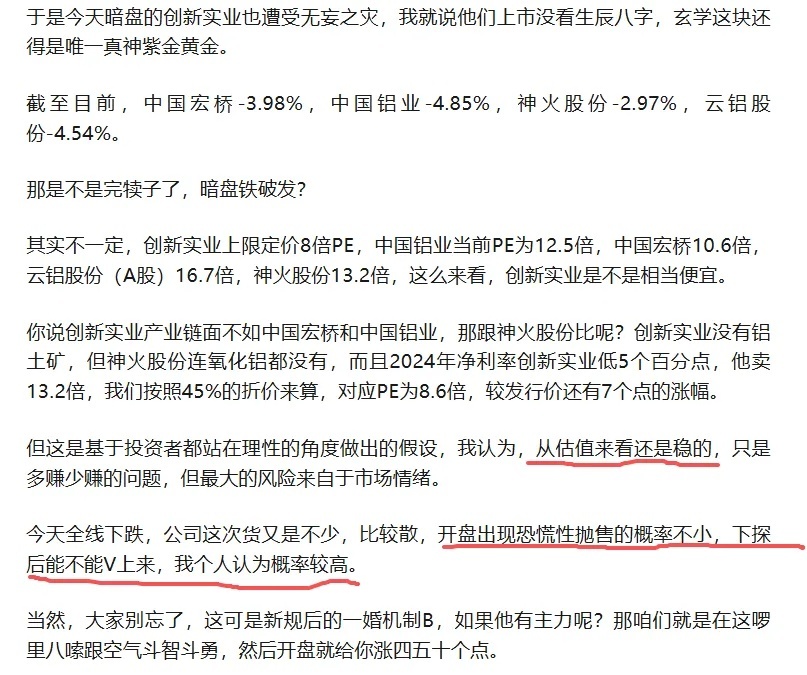
As for whether to sell in the grey market or on the first day, a fan asked this question last Friday. I think around 30% is already close to a reasonable price. Look, it has basically stabilized today.

I wanted to brag more about this operation today, but there are other things I want to write about, so the review of Innovation Industries ends here.
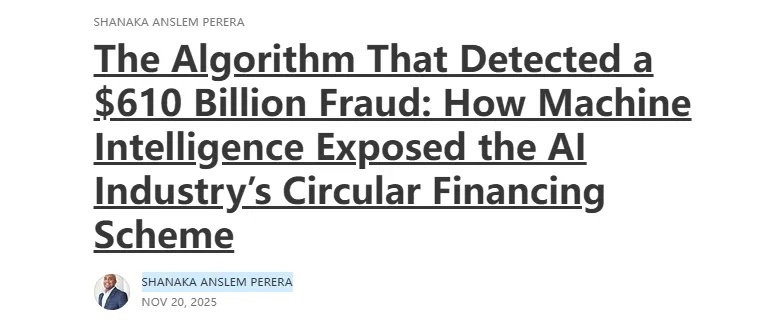
As for what to write, I believe many fans saw the article published by GuruFocus last week titled:
"The Algorithm That Exposed a $610 Billion Fraud: How Machine Intelligence Uncovered the AI Industry's Circular Financing Scam"
The article analyzed NVIDIA's accounts receivable, cash flow, inventory, etc., claiming that NVIDIA inflated profits, committed financial fraud, and that AI is full of bubbles. The article went viral across major media outlets in just one day, from overseas to domestic.
Oh my god, you scared me to death. If you say NVIDIA committed financial fraud, then I, an analyst who has spent the past seven or eight years digging into A-share financial frauds, won't be sleepy anymore. Let's take a look at whether this guy named Shanaka Anslem Perera is an industry prophet or just a fame-seeking opportunist.
To ensure comprehensiveness and authenticity, I specifically found the original article on Substack. Pretty rigorous, right? But for everyone's convenience, I'll use Doubao's translation for the screenshots.
Alright, shall we begin?
First Paragraph:
Nothing much to say, but one interesting point: On one hand, Shanaka criticizes AI as all bubbles, but on the other hand, he says Machine Intelligence identified this accounting fraud in just 18 hours. So, is AI useful or not?
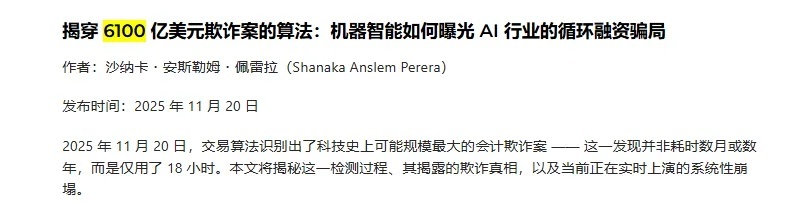
Moreover, I deeply suspect this wasn't discovered by Machine Intelligence at all—it's just his own opinion (with no credible sources cited). Shanaka talks down AI but shamelessly uses "Machine Intelligence" in the title to boost credibility. Are you schizophrenic?
Second Paragraph:
Shanaka starts talking about abnormal accounts receivable, with a turnover period of 53 days, significantly higher than AMD, Intel, TSMC, and Micron; and higher than NVIDIA's historical average from 2020-24 (46 days).
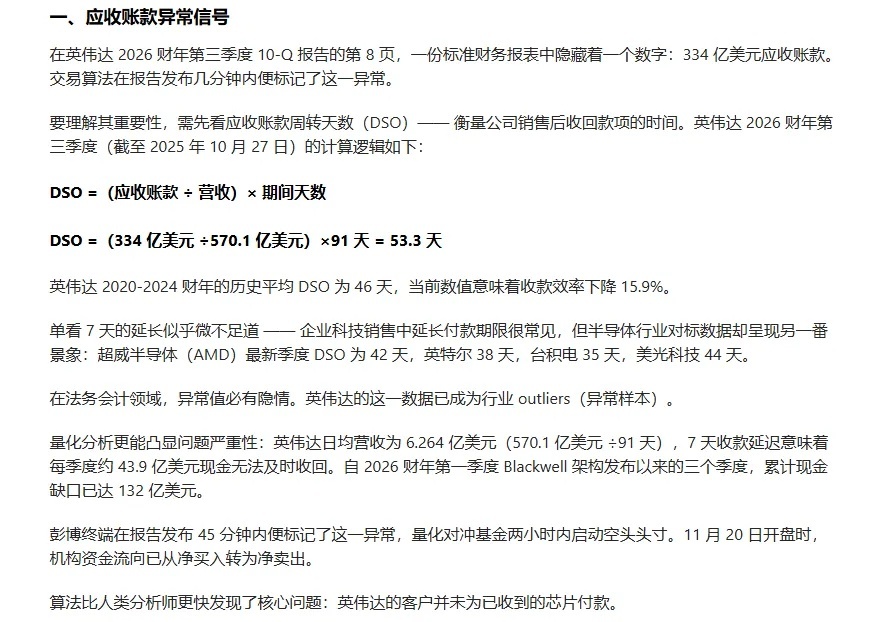
First, let's see if the peer comparison makes sense. Among the four companies mentioned, TSMC and Micron are upstream suppliers to NVIDIA. How is that comparable? It's like comparing Lens Technology to Apple or Sanhua Intelligent Controls to Tesla—they sell completely different things.
Intel does have GPU business after acquiring Habana Labs, but it only fully launched this September, with GPU accounting for a small share.
If we're talking about GPU-heavy companies, globally, besides NVIDIA, there's only AMD—and domestically, Cambricon and Moore Threads.
Now, some might say, "But Shanaka's article shows AMD's turnover days are lower than NVIDIA's."
You're right, but he's wrong—because the AMD accounts receivable turnover days he cited are incorrect!
According to AMD's latest Q3 report, revenue was $9.246 billion, and accounts receivable were $6.201 billion, giving a turnover period of 61 days!
I'm speechless. You're a "renowned analyst," yet you're confidently citing wrong data. If I were your boss, I'd chew you out so hard you wouldn't recognize yourself.
Looking at the other two, Cambricon and Moore Threads (which just IPO'd today), their latest accounts receivable turnover days are 25 and 69 days, respectively. Cambricon's seems lower than NVIDIA's, but its data fluctuates too much to be a strong reference.
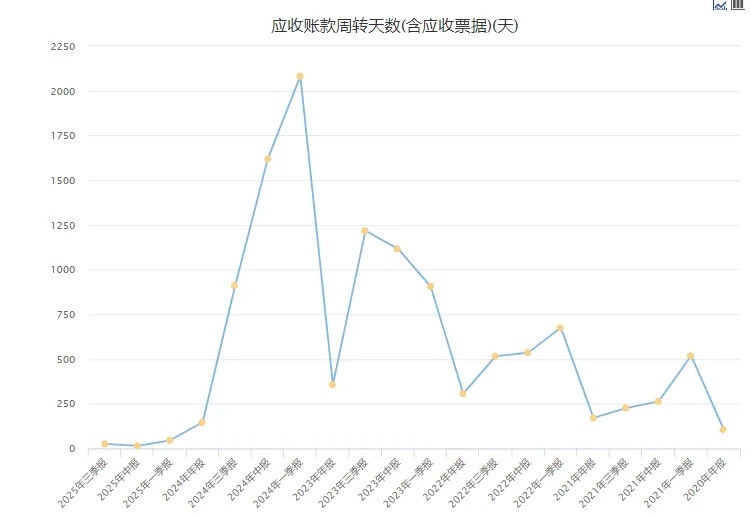
As for NVIDIA itself, the increase in accounts receivable turnover days is indeed true (up 10 days YoY). I admit NVIDIA's operational efficiency declined this quarter, but that's it.
You mentioned the YoY increase—why not mention the 1-day QoQ decrease? Because it contradicts your narrative?
Later, it gets even more abstract: He multiplies the single-quarter increase in delayed payments by 3 to estimate the total delayed payments for the first three quarters.
Honestly, I've never calculated this "delayed payment amount" because it involves accounting mismatches. Why multiply the difference by the end-of-period daily revenue (Q3 2025 total revenue: $57 billion) instead of the start-of-period daily revenue (Q3 2024: $35.08 billion)? What economic significance does this number even have?
But if we're going to calculate this made-up metric, at least do it right. Multiplying by 3 assumes revenue and accounts receivable were identical across all three quarters this year and last year. Seriously?
What, did the other five quarters' financial reports not come out yet?
Buddy, throwing in a few formulas and numbers doesn't prove your expertise—it just exposes your incompetence.
Later, he says quant funds initiated short positions, and given NVIDIA's price drop, this might be true. But "quant funds taking two hours to react"? Most quant reactions are in milliseconds. Are you running your quant models on Windows 95?
And how do you prove the short positions are related to your flimsy argument? This is like saying, "I think apples are red because they're full of blood vessels, and apples are indeed red, so apples are full of blood vessels."
Nice bait-and-switch.
My guess? The short pressure is more likely due to profit-taking after the post-earnings rally.
Third Paragraph:
Here, Shanaka talks about NVIDIA's inventory—up QoQ, whereas it declined when the H100 launched in 2023.
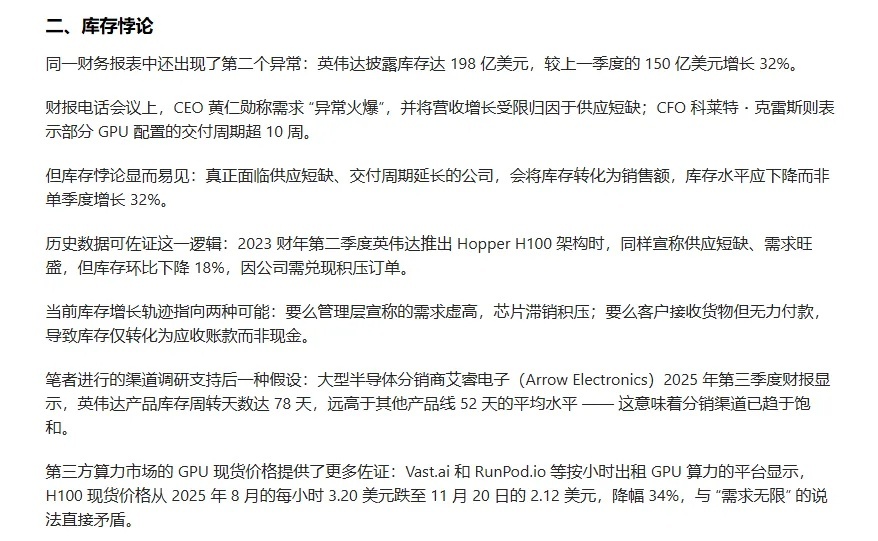
No major flaws here. NVIDIA's inventory rise could be strategic—securing long-lead components for next-gen architecture ramp-up—or, as Shanaka suggests, due to weaker demand.
But the ending is pure nonsense, mentioning the spot price drop of the H100. Dude, that's a 2022 product. It's 2025 now. That's like saying the RTX 3050's price drop means the RTX 5090 won't sell.
Fourth Paragraph:
This part is wild. Shanaka says Q3 net profit was $19.3 billion, with operating cash flow of $14.5 billion.
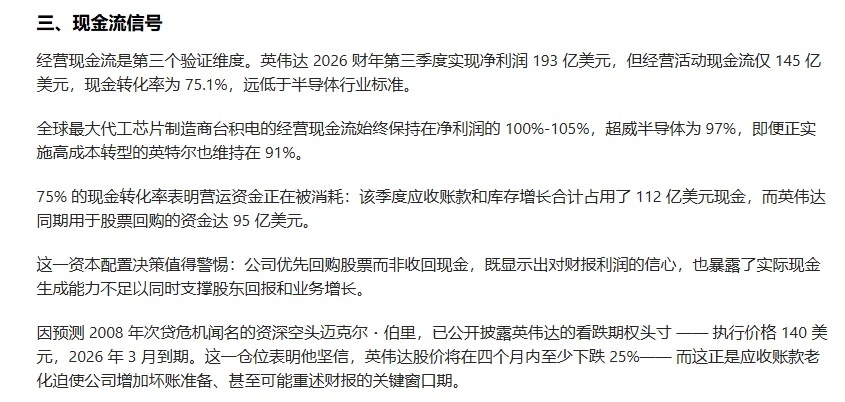
I was silent for a long time after reading this...
Because no matter how many times I read it, NVIDIA's net profit was $31.9 billion, and operating cash flow was $23.8 billion.
Then I glanced to the right and realized this guy misread the line—he used last year's data as this year's.
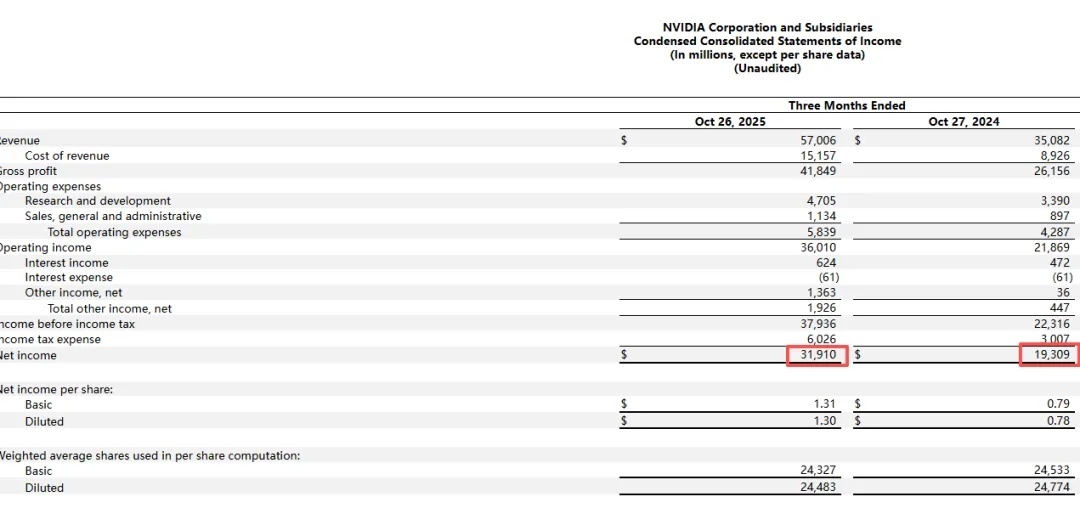
Speechless....

Then he says the company spent $9.5 billion on buybacks. Again, silence—the report clearly states $12.6 billion.

His conclusion: "The company prioritized buybacks over cash, showing confidence in reported profits but exposing insufficient cash generation to support both shareholder returns and business growth."
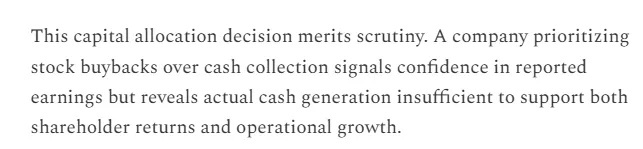
I'm numb. Buybacks and cash recovery are opposites—one's an outflow, the other an inflow. How is this a binary choice? Since when do buybacks imply "insufficient cash generation"? There's zero logical connection. Earth is too dangerous for you, Shanaka. Go back to Mars.
Fifth Paragraph:
This part discusses the circular financing structure—the "financing scam" in the title. My take: Alarmist nonsense.
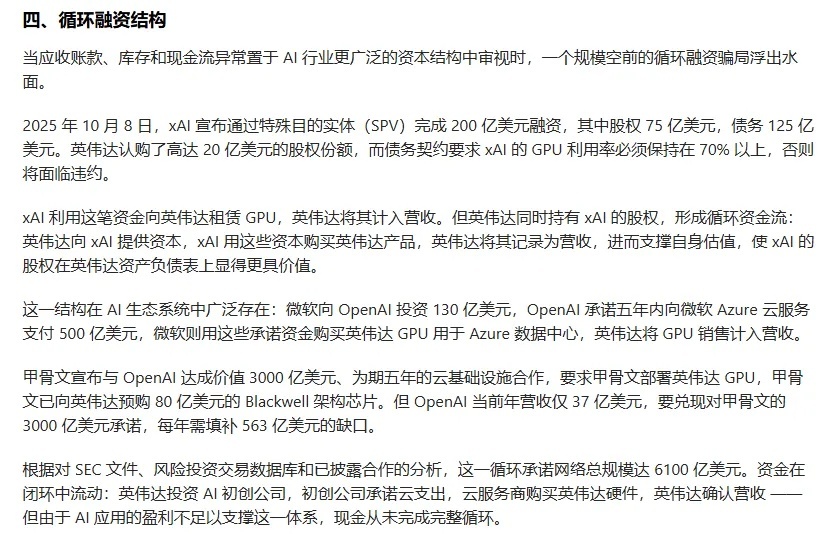
I didn't verify every announcement, so let's assume his data is correct.
Basically, Shanaka's "financing scam" is just companies investing in their own customers or suppliers. This is super common. Just look at Hong Kong IPOs:
Sanhua Intelligent Controls is both a thermal management supplier and a cornerstone investor (1.6%) for Seres.
Huabao International is both a raw material supplier and a cornerstone investor (7.8%) for Auntie Shanghai.
Anke Biotechnology is both a major customer and a cornerstone investor (27.2%) for Visen Pharmaceuticals.
So, this kind of cross-investment is normal. By your logic, 8 out of 10 listed companies are "financing scams"? Does your family know you're throwing around accusations like this?
Are there risks? Sure—potential revenue inflation, hence the need to disclose related-party transactions. But calling them "scams"? Hard disagree.
The weirdest part is the last bit, where he says AI applications underperformed, profits couldn't sustain this system, and cash never fully circulated.
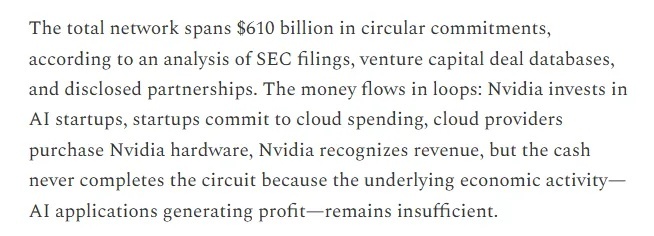
What's his point? That NVIDIA's "scam" failed? Contradictory much?
And does NVIDIA recognize revenue when startups promise cloud spending? I'm not sure, but if they did, the SEC would be knocking the next day. That's stomping on accounting standards.
Sixth Paragraph:
This part covers "Vibe Revenue" and OpenAI's valuation.
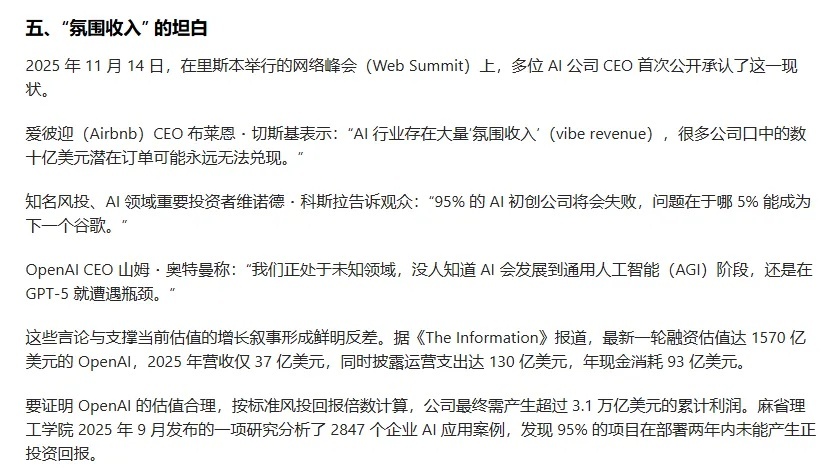
On Vibe Revenue, Shanaka says potential AI orders may not materialize. Fair criticism—these "future orders" are just promises. Believe them at your own risk, but given AI's hype, most investors do.
But the second half is nonsense. He says, per "standard VC return multiples," OpenAI needs cumulative net profits of $3.1 trillion.
How? Simple: last-round valuation ($157B) × 20x.
But that's market cap, not net profit! Oh wait—he's using a DCF model where future cash flows equal market cap, hence "cumulative net profits" of $3.1T.
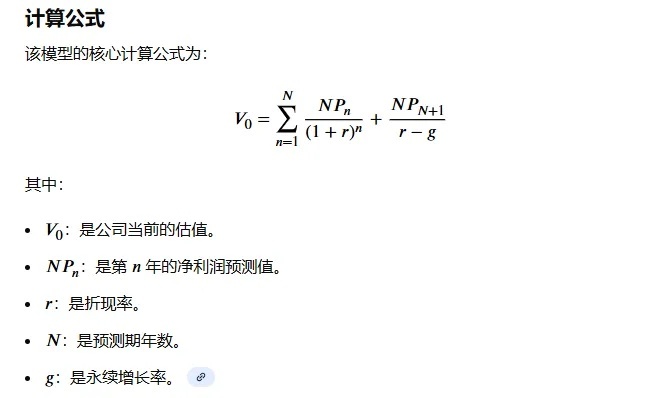
Dude, this is misleading. Using a perpetuity assumption and calling it "cumulative net profits"? You didn't say "$3.1T market cap" because even you know that sounds reasonable, huh?
"Cumulative net profits" makes it sound like OpenAI must earn $3.1T over decades. How about: "OpenAI must earn $3.1T over 3,000 years"—sounds better, right?
And where does the 20x "standard return" come from? Based on which AI company's post-IPO multiples? Any evidence? Just making up numbers to scare people—that's your logic?
Almost 4,000 words—I'll stop here. Six down, six to go. If you want more, leave a comment. If enough people are interested, I'll continue. (But tomorrow, Lemo Tech and Naxin Micro are IPOing, so maybe the day after.)
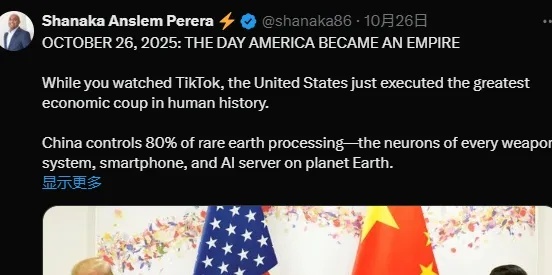
P.S. I found this guy's X (Twitter). Extremely toxic, loves putting others down. Not a good person—reading it will piss you off.
$NVIDIA(NVDA.US) $CHUANGXIN IND(02788.HK) $Proshares UltraPro QQQ(TQQQ.US)
The copyright of this article belongs to the original author/organization.
The views expressed herein are solely those of the author and do not reflect the stance of the platform. The content is intended for investment reference purposes only and shall not be considered as investment advice. Please contact us if you have any questions or suggestions regarding the content services provided by the platform.
