

E-House 市场份额、销量、收入、增长率分析报告 2026-2032

E-House (modular electrical equipment room, prefabricated electrical room, pre-assembled modular substation, or prefabricated cabin substation) is a modular, factory-built enclosed structure used to integrate electrical facilities such as switchgear, transformers, protection and control equipment, automation systems, UPS power supplies, and communication equipment. After pre-assembly and testing in the factory, the equipment can be transported to the site as a complete unit or modular unit, enabling rapid deployment, shortened installation cycles, and improved construction quality and operational reliability. E-Houses are widely used in power, industrial, oil and gas, mining, rail transit, and other applications requiring high reliability and automated control.
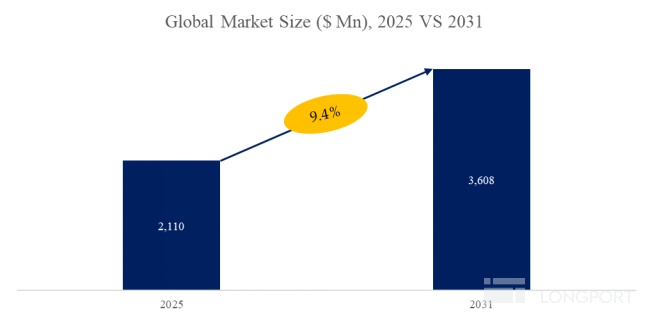
Global E-House market sales reached $1.894 billion in 2024 and are expected to reach $3.608 billion by 2031, with a compound annual growth rate (CAGR) of 9.36% (2025-2031). The global E-House market demand is driven by multiple industries: smart grids and renewable energy integration in the power sector, industrial automation and expansion, oil & gas and mining facility expansions, rail transit construction, and rapid deployment needs for data centers, marine, and chemical parks. The combined demand for modular, efficient, reliable, and energy-saving E-House solutions across industries continues to drive market growth. Regionally, China's market has seen rapid changes in recent years, with a market size of $568 million in 2024, accounting for 29.97% of the global share, and is expected to reach $1.238 billion by 2031, representing 34.33% of the global market.
Figure. E-House, Global Market Size (USD Million)
Source: Global Info Research E-House Research Center
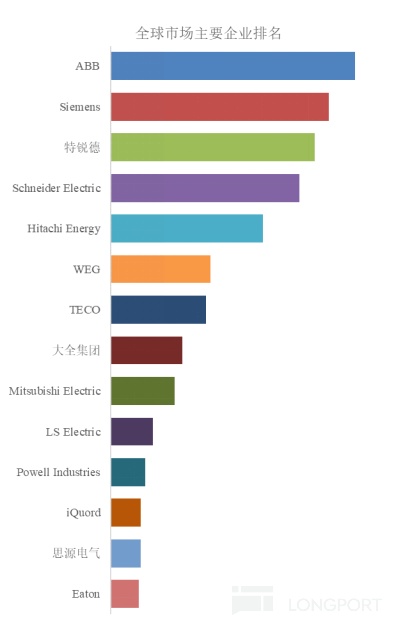
Currently, major global players include ABB, Siemens, TGOOD, Schneider Electric, Hitachi Energy, WEG, TECO, DAQO Group, Mitsubishi Electric, LS Electric, Powell Industries, iQuord, Sieyuan Electric, and Eaton. In 2024, the top five manufacturers held a combined 52.13% market share. Looking ahead, with smart grid construction, renewable energy integration, industrial automation upgrades, and green/low-carbon trends accelerating, the E-House industry will develop toward higher reliability, intelligence, modularity, and standardization. The application of advanced sensing and remote monitoring technologies will further enhance equipment operability and safety. Meanwhile, as emerging markets and new application scenarios continue to emerge—including renewable energy projects, urban infrastructure expansions, and emergency power supply needs—the global market structure will continue to evolve, providing new growth drivers and opportunities for the industry.
Figure. Global E-House Market Top 14 Manufacturers Ranking and Market Share (Based on 2024 research data; latest data subject to our latest research)
Source: Global Info Research E-House Research Center. The industry is constantly evolving; for the latest data, please contact Global Info Research.
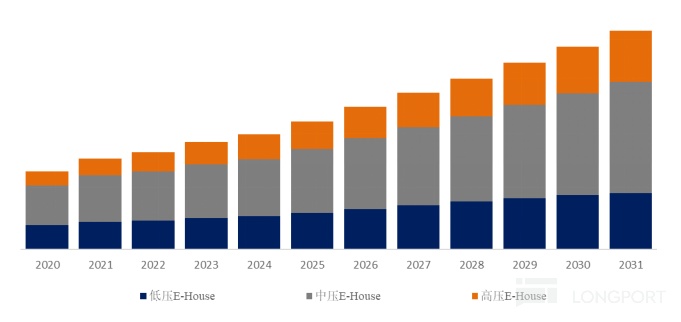
From a product perspective, E-Houses can be categorized into low-voltage, medium-voltage, and high-voltage types. Medium-voltage E-Houses dominate the market, primarily used in medium-voltage power distribution, motor control, and protection systems to meet the needs of industrial plants, mining areas, power systems, and oil & gas for high-reliability power supply and automated control. In 2024, medium-voltage E-House revenue was $942 million, accounting for 49.76% of the market, and is expected to rise to 50.99% by 2031. Low-voltage E-Houses are mainly used in small-scale industrial, commercial buildings, and rail transit, emphasizing rapid deployment, modular integration, and flexible expansion. High-voltage E-Houses are primarily applied in high-voltage power distribution, substations, and renewable energy grid integration projects, providing stable power supply for large-scale industrial and energy infrastructure. All E-House product types collectively drive market growth while meeting diverse voltage-level and application-scenario demands.
Figure. E-House, Global Market Size by Product Type
Source: Global Info Research E-House Research Center
From an upstream/downstream perspective, the upstream supply chain centers on high/medium-voltage switchgear, compact substations, protection and monitoring components, precision busbars, and enclosure materials (steel structures and anti-corrosion coatings), involving both multinational giants (e.g., ABB, Siemens, Schneider providing key electrical components) and numerous local machining and electromechanical integration suppliers offering enclosures and assembly services. Downstream demand comes from grid upgrades, renewable energy sites (PV, wind power), metallurgical and petrochemical enterprises, ports, and data centers, with procurement favoring EPC and turnkey system integration capabilities. While the supply chain matures in component standardization and long-term supply agreements, requirements for delivery cycles, on-site installation, and O&M services continue to rise, driving manufacturers to transition from pure equipment sales to providing EPC and value-added O&M services.
Key industry drivers and barriers: Drivers include (1) accelerated renewable energy integration and microgrid construction, making prefabricated modular substations the preferred solution for rapid deployment; (2) industrial digitalization and edge computing expansion, creating rigid demand for standardized, mobile power units in data centers and industrial parks; (3) cost and schedule advantages—E-Houses significantly outperform traditional civil substations in factory pre-assembly and on-site rapid installation. Barriers include: reliance on high-end electrical components and imported 配套 increasing cost and delivery risks; differing grid standards and certifications across regions raising 推广难度; and customer concerns about long-term durability and O&M capabilities affecting adoption rates for large projects.
In the short-to-medium term (3–5 years), the E-House market will be primarily driven by renewable energy integration, oil & gas and mining electrification upgrades, and data center rapid expansion, with emerging markets in Asia-Pacific (China, India, Southeast Asia) and Latin America as core 增量 sources. Long-term (5–10 years), as localized supply chains mature, standardized components proliferate, and smart O&M (remote monitoring, digital twin) capabilities advance, E-Houses will shift from "replacement-driven" growth to "platform service" growth—manufacturers will achieve higher margins and customer stickiness through modular product lines, engineering capabilities, and lifecycle service bundles. Industry participants are advised to focus on localized manufacturing, long-term component procurement agreements, and O&M service systems to address 跨区域 expansion and profit sustainability challenges.
Excerpted from the "2026 Global E-House Market Size, Key Manufacturers, Regions, Product and Application Segmentation Research Report" published by Global Info Research, this article provides an in-depth analysis of the E-House market through professional research methods, including competitors' responses to U.S. tariff policies and regional economic impacts on supply chains.
The copyright of this article belongs to the original author/organization.
The views expressed herein are solely those of the author and do not reflect the stance of the platform. The content is intended for investment reference purposes only and shall not be considered as investment advice. Please contact us if you have any questions or suggestions regarding the content services provided by the platform.
