


 Rate Of Return
🚀⚡When Jensen Huang elevates 'energy' to the fundamental logic of the industry, what should the market truly be wary of?

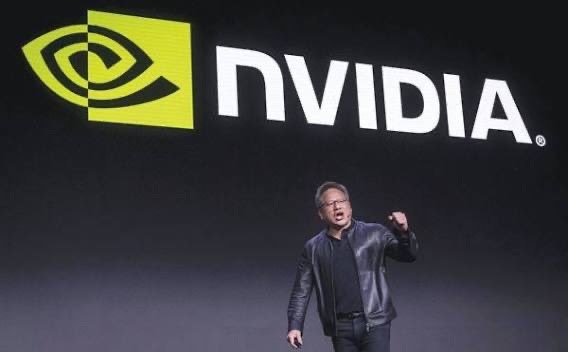
This statement by $NVIDIA(NVDA.US) CEO Jensen Huang, seemingly simple, has redefined the tech landscape for the next decade:
"All new industries are built on energy. Without energy, there will be no growth in new industries."
This is not a macro commentary but a structural warning from a core figure in global computing power.
1️⃣ AI's bottleneck isn't chips—it's electricity
Capital markets have focused on GPUs, models, and data in recent years, but Huang's point is: The real growth ceiling is determined by energy infrastructure.
Without sufficient power generation and transmission capacity, AI training centers, inference services, autonomous driving systems, and even semiconductor fabs cannot expand.
This means whoever controls the energy growth curve controls the next wave of tech 红利分配。
2️⃣ The U.S. energy gap will directly impact AI competitiveness
Huang rarely names specifics but insists the U.S. must "double or even multiply" investments in energy systems.
The reason is stark—large model training and AI inference don’t consume linear power but exponentially growing power.
If energy supply lags, AI's compute expansion will be capped, slowing commercialization from $NVIDIA(NVDA.US) to the entire $C3.AI(AI.US) ecosystem.
3️⃣ AI factories are, at their core, power-devouring machines
Huang has long emphasized "AI factories," but outsiders fixate on GPUs.
The real logic: AI factories aren’t built on land but on power grids.
As compute demand shifts from training to global real-time inference (e.g., autonomous driving, robotics, Agent systems), electricity becomes the primary factor of production.
4️⃣ Energy investment will become tech's new "prerequisite"
Huang’s implied industry sequence:
Energy → Power infrastructure → Data centers → Model training → New industries (autonomous driving, smart manufacturing, AI healthcare, AI finance, etc.)
If energy falls behind, all downstream industries stagnate.
This will accelerate U.S. investments in nuclear, SMRs, solar, wind, storage, and grid upgrades.
5️⃣ Why say this now?
Because $NVIDIA(NVDA.US)’s growth is hitting energy limits.
AI isn’t too slow—energy supply growth is too slow.
Markets will realize: Energy isn’t a traditional value stock but AI’s infrastructure play.
The question:
When tech’s bottleneck shifts to "power supply," who benefits most—legacy energy firms, grid infrastructure, or new energy giants?
📬 Tracking structural inflection points in tech—from compute, energy to AI commercialization—to decode the next repricing cycle. Follow for frontier trends and positioning insights.
#AI #NVIDIA #JensenHuang #Energy #TechStocks #DataCenters #Semiconductors
The copyright of this article belongs to the original author/organization.
The views expressed herein are solely those of the author and do not reflect the stance of the platform. The content is intended for investment reference purposes only and shall not be considered as investment advice. Please contact us if you have any questions or suggestions regarding the content services provided by the platform.
