


What changes will Zhou Yuefeng bring as the new CEO of Huawei Cloud?

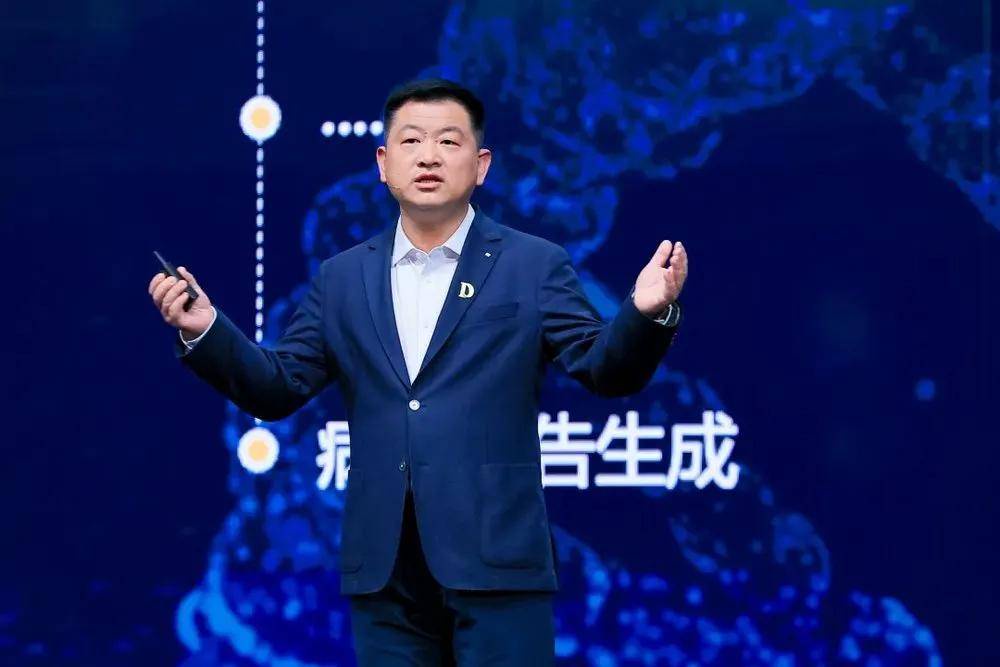
The cloud computing industry is being redefined by AI.
As industry applications move from "pilot validation" to "large-scale deployment," computing demand has shown exponential growth. Cloud computing is accelerating its shift from "resource-driven" to "scenario-driven," no longer about "competing on resource scale" but about delivering industrial value.
At this critical juncture as the industry enters deeper waters, Huawei Cloud has undergone a key organizational adjustment: Zhou Yuefeng, President of Huawei's Data Storage Product Line, has been appointed as CEO of Huawei Cloud. The Huawei Cloud R&D organization has been moved under the ICT organization, further solidifying Huawei Cloud's positioning as the "black soil."
Over the past week, discussions about Huawei Cloud's organizational changes have heated up. One highly debated topic is: Why is Huawei Cloud handing the steering wheel to this tech-savvy "leader" in the new industry cycle?
The answer lies in Zhou Yuefeng's past "victories."
01 Spotting Trends in Details: Zhou Yuefeng, a "Game Changer" Skilled in Turnarounds
Looking back at Zhou Yuefeng's career at Huawei, he has repeatedly played the role of a "game-changer," especially in two instances of "stepping up in times of crisis," both achieving miracles from "impossible" to "industry benchmark."
The first was the "resurrection" of small cells.
Before 2013, small cells were a lukewarm technology globally—high cost, unclear value, and cautious operator attitudes. The industry generally believed it had "little future."
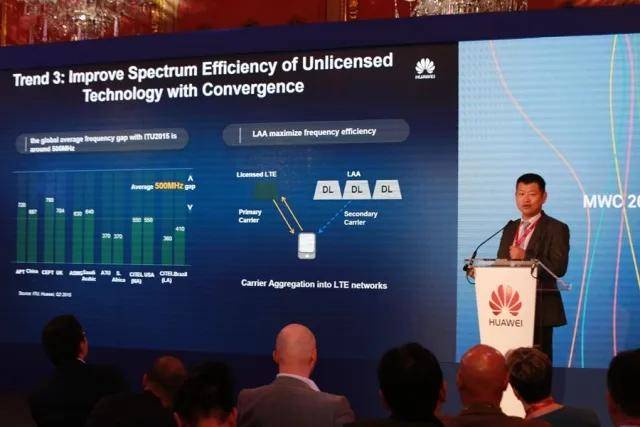
As President of Huawei's Small Cell Product Line at the time, Zhou Yuefeng accurately captured two subtle yet critical signals: mobile traffic was growing rapidly, and indoor spaces were becoming the main battlefield for mobile networks. He predicted a structural shift in indoor mobile network solutions.
Thanks to Zhou's leadership in technological innovation and market expansion for small cells, a once-marginalized business gradually became Huawei's growth engine, establishing Huawei's leading position in 5G indoor coverage. His concept of "digital indoor coverage" became an industry standard in the mobile internet era, driving global wireless networks toward efficiency and intelligence.
From a business needing rescue to a mainstream industry technology, Zhou's approach was clear: bold strategic bets, aggressive technological investment, and uncompromising product capabilities.
The second was the breakthrough in data storage.
At the time, Huawei's storage business was not dominant—domestic competition was fierce, and overseas markets were long monopolized by foreign players. Breaking through was a daunting challenge.
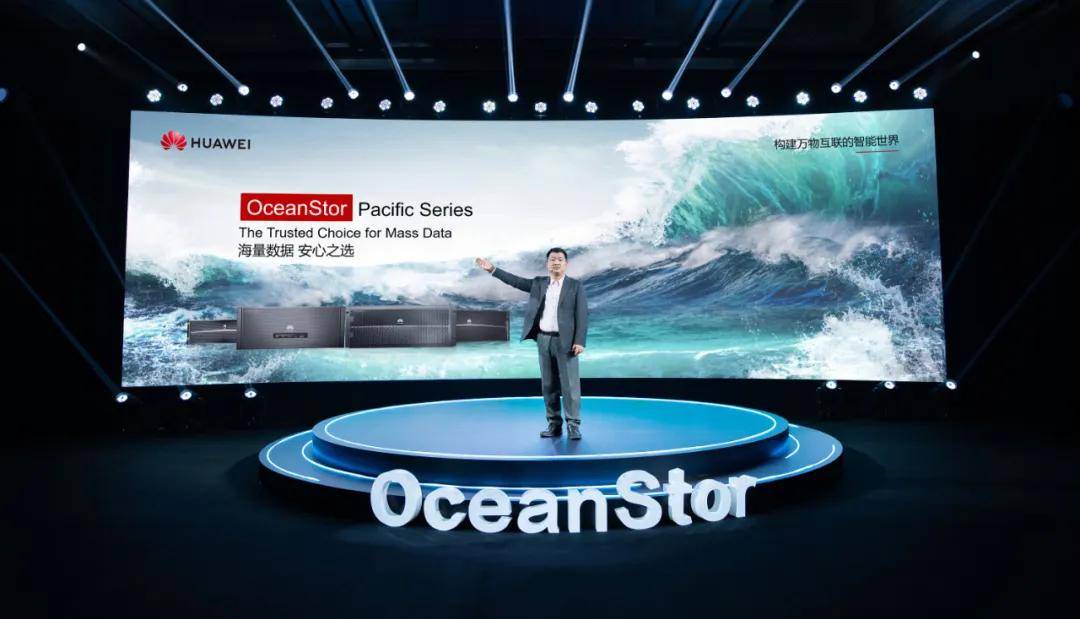
After transferring to the IT department in 2019, Zhou took over the data storage business and made a series of critical decisions.
For example, he spearheaded the launch of the OceanStor Pacific storage system series, fully embracing all-flash scenarios and introducing the concept of "data storage power." Under this concept, market focus gradually shifted from hardware specs to "real data efficiency and value."
In just a few years, Huawei's data storage achieved leapfrog growth, not only entering Gartner's Leaders Quadrant as the only Chinese vendor in the global top tier but also maintaining overseas market growth exceeding 30% for multiple years, carving out a share from foreign competitors.
It's clear that Zhou is not a traditional "management" leader but a tech-savvy visionary with sharp market insights and a product-centric approach, capable of turning businesses into global leaders. These qualities align perfectly with Huawei Cloud's emphasis on "system-level innovation + industrial-scale implementation" and form the trust foundation for leading Huawei Cloud through tough battles.
Of course, Zhou's contributions to AI are also a plus. In 2025 alone, he led the release of two key AI technologies:
One was UCM (Universal Cache Manager), which reduced AI inference's first-token latency by 90% and increased system throughput by 22x through multi-level caching.
The other was Flex:ai container technology, which improved GPU/NPU utilization by 30% through intelligent scheduling, directly lowering enterprise AI costs and promoting "AI democratization."
As industries embrace AI, moving beyond the "toy phase" into production workflows, Zhou—with his track record of driving exponential growth in critical businesses and his strategic-technical acumen—naturally becomes Huawei Cloud's ideal helmsman for the AI era.
02 The Most Tech-Savvy CEO: What Will Zhou Yuefeng Bring to Huawei Cloud?
Having addressed Zhou's fit with Huawei Cloud, how will this distinctly technical CEO chart the company's path forward?
At Huawei Cloud's China Partner Policy Conference in Dongguan on November 29, Zhou appeared on stage as "Huawei Cloud CEO" and "Chair of the Cloud Business Product Line Management Committee" to outline Huawei Cloud's new strategic direction.
The approach can be summarized in three points:
First, build more fertile "black soil."
Second, adopt a more open and pragmatic attitude to enrich the ecosystem on this black soil.
Third, cloud is a key strategic business for Huawei's future.
Huawei Cloud's positioning and focus are clear, but the key question now is: How will this strategy be implemented?
Two levers are visible:
First, integrate R&D to build system-level capabilities for the AI era.
The core of Huawei Cloud's organizational reform is an "upgraded system"—R&D is fully integrated into ICT, with five new cloud R&D product lines: Infrastructure Cloud Services, Data & AI Cloud Services, Database Cloud Services, Security Cloud Services, and HCS.
This remains "system-level innovation" through hardware-software synergy, combining networking, communications, computing, storage, and OS technologies into one engineering effort.

The rationale is straightforward.
AI-era digital infrastructure is no longer about single-component competition but efficiency battles in end-to-end coordination—compute utilization, data access speed, inference latency, training throughput, energy costs, etc. Given Zhou's hardware-software integration experience in wireless and storage, Huawei Cloud will accelerate building system-level capabilities fit for AI.
Second, emphasize product competitiveness, focusing strategic resources rather than "spreading thin."
Beyond his CEO role, Zhou will oversee five product lines, with Huawei Cloud and product lines adopting a "buy-sell relationship." Only competitive products enter Huawei Cloud to create value for customers and partners, ensuring resource focus.
Zhou has publicly stated: The core issue in aligning productivity and production relations is product competitiveness. Products developed by product lines must pass Huawei Cloud BU's review before market launch, ensuring limited sales resources go to competitive offerings.
In R&D management, Zhou has a clear playbook.
On one hand, explore cutting-edge fields like embodied AI and large models for experimental innovation and first-mover advantage. On the other, concentrate resources on core products with scalable potential to solidify growth. Meanwhile, Huawei Cloud will adopt a more open, pragmatic stance to enrich its ecosystem.
At the partner conference, Zhou said Huawei Cloud welcomes more capable PaaS/SaaS developers and service providers. If Huawei cannot achieve "what others don't have, better than others," it will abandon in-house R&D and efficiently fill gaps through openness.
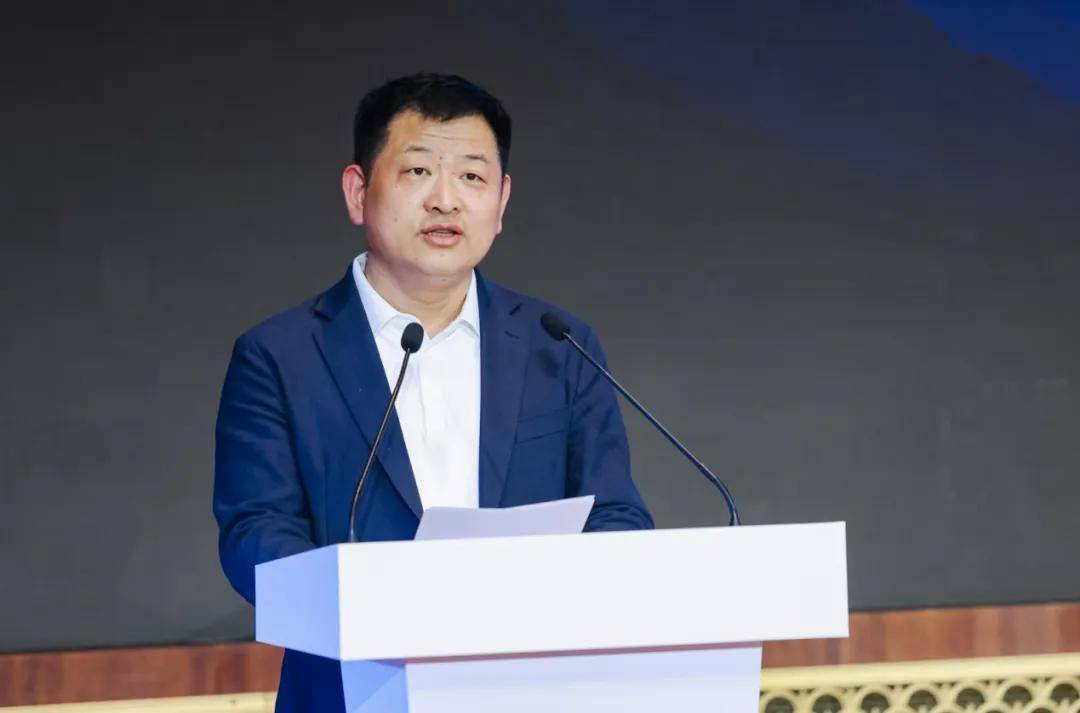
Industry-wise, AI is still early-stage, with the window far from closed. Huawei Cloud's core strategy remains tech breakthroughs, with Zhou tasked to "fight hard battles" while being more open in ecosystem building.
Bold prediction: Under Zhou, Huawei Cloud may advance on three fronts:
1. Strengthen the public cloud main track. Commercialize Huawei's long-accumulated hardware-software innovations via services, solidifying the "black soil" foundation and building moats.
2. Double down on AI as the growth engine. Whether refining Pangu foundation models, building AI Agent systems, or creating full-scenario AI data platforms, the goal is industrializing complex tech to make AI adoption viable.
3. Leverage R&D's structural edge. Extend the "product-led market penetration" approach from Small Cell and storage, using flagship products to elevate Huawei Cloud from "chaser" to "definer."
03 Closing Thoughts
More answers await time.
As AI dives into industrial deep waters, what dividends will Huawei Cloud's "system-level innovation" unleash?
Can Zhou Yuefeng steer Huawei Cloud onto an exponential AI-era growth curve?
One certainty: AI's tide offers cloud providers far more opportunities than challenges.
Amid the resonance of tech, business, demand, and capital cycles, cloud computing is marching toward its second growth curve. Zhou's leadership begins at this convergence—a strategic handoff in sync with cycles, a critical breakthrough to seize the window.
The copyright of this article belongs to the original author/organization.
The views expressed herein are solely those of the author and do not reflect the stance of the platform. The content is intended for investment reference purposes only and shall not be considered as investment advice. Please contact us if you have any questions or suggestions regarding the content services provided by the platform.
