



From comprehensive cooperation to in-depth co-creation, Duodian Digital Intelligence is truly bringing AI into the retail scene

As price wars enter deep waters, traffic dividends continue to decline, and adjustments become an industry consensus, the retail sector is undergoing a structural transformation more profound than "digital transformation"—decision-making methods, organizational efficiency, and the understanding of "good business" are being redefined.
How to effectively utilize new technologies and embrace new logic? Dmall shared its insights at the annual partner conference—what kind of digital intelligence capabilities the retail industry truly needs as AI becomes widely applied, and what role Dmall aims to play in this evolution.

From the declaration of the "Year of AI in Retail" to the launch of Dmall OS 3.X, and continuous co-creation with diverse retailers like Pang Donglai, Wumart, BBK, and Better Life, this conference served as a mirror—reflecting Dmall’s evolving positioning and the emerging consensus in China’s retail industry.
01 The Rise of AI: Retail Shifts from "Experience-Based Correctness" to "System-Based Correctness"
Looking at the most tangible changes in retail over recent years, achieving "correctness" has become harder.
Previously, many companies could rely on managerial intuition, frontline experience, and procurement feedback to make localized correct decisions. But as competition shifts from growth to stock, consumers move from "availability" to "quality," and business models expand from in-store to at-home, retail decision chains grow longer: site selection, product assortment, display, inventory, pricing, promotions… Each link can be a profit lever.
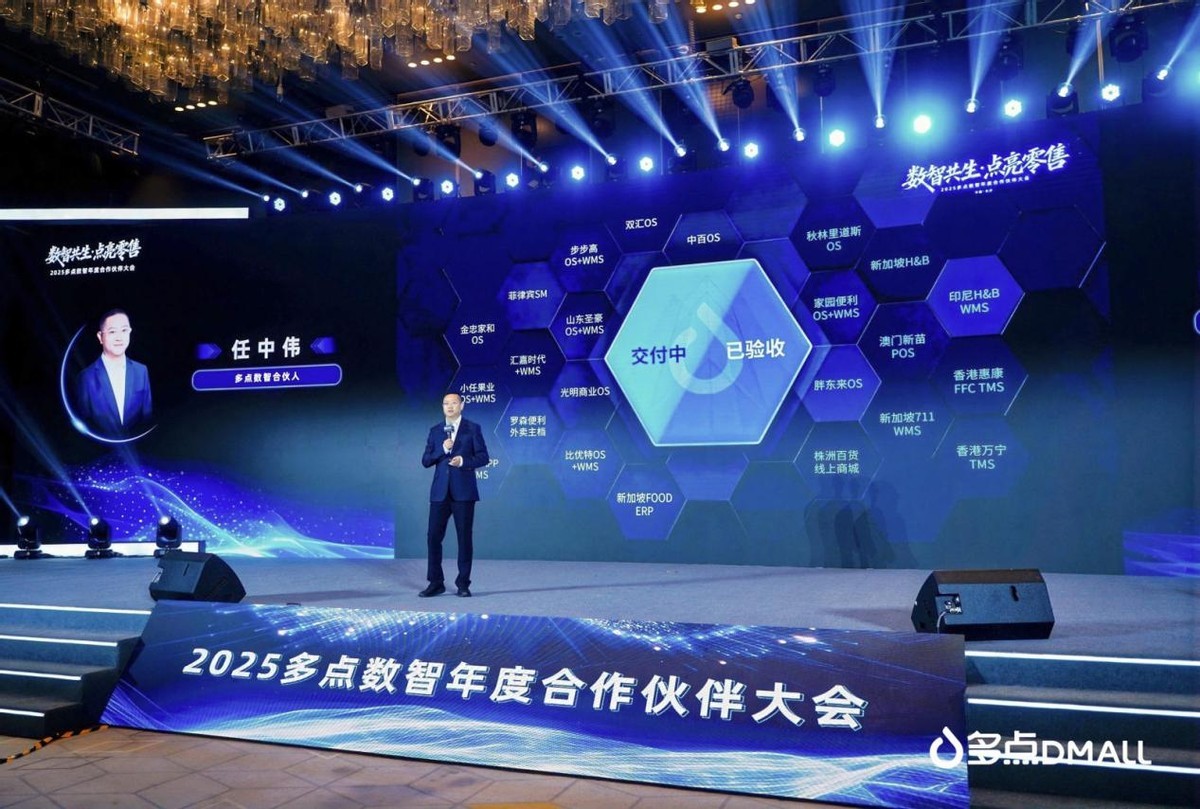
Ren Zhongwei, Partner at Dmall, noted in a media interview: "Physical retail involves many decision points. We might have oversimplified what it takes to run it well."
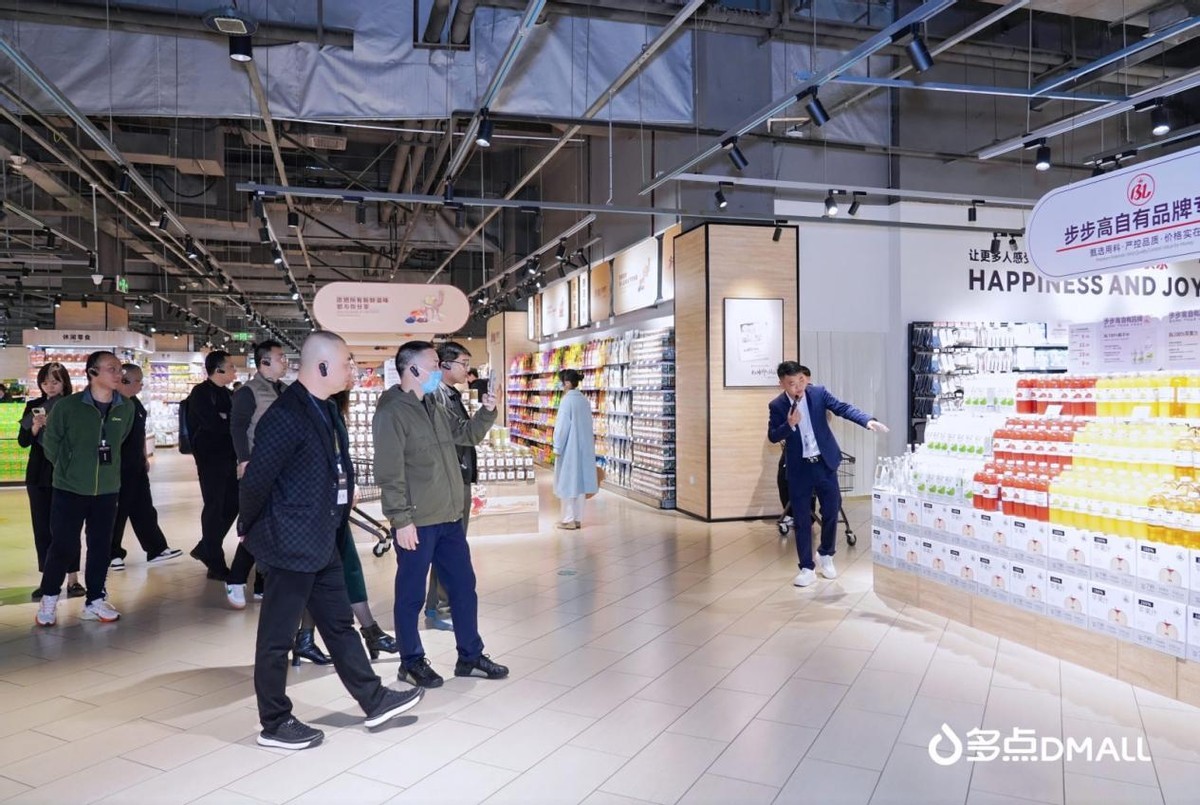
How to interpret this? Businesses with 20–30 years of operation have accumulated omnichannel data across online-offline, membership, seasons, festivals, and categories. Historically, this data was merely recorded but rarely utilized. Thus, they possess an undervalued asset—data.
The key in the AI era is leveraging technology to transform static data warehouses into dynamic capabilities, shifting organizations from human-driven decisions to system-calculated, model-predicted, and algorithm-guarded operations.
This explains why conference buzzwords like "AI Retail," "AI New-Quality Retail," and "High-Quality Development" recurred—they answer one question: If growth no longer comes from opening more stores, spending more, or undercutting prices, what can retailers rely on for certainty?
The answer is simple: quality, efficiency, experience, and end-to-end operational capabilities. Today, these increasingly require systematic, standardized, and intelligent foundations.
Thus, the most intriguing takeaway was Dmall’s long-term product vision.
Previously, DMALL OS was understood as a retail OS or an end-to-end solution. But Ren reframed its ultimate goal as a more imaginative and pain-point-aligned form—the "Retail Agent."
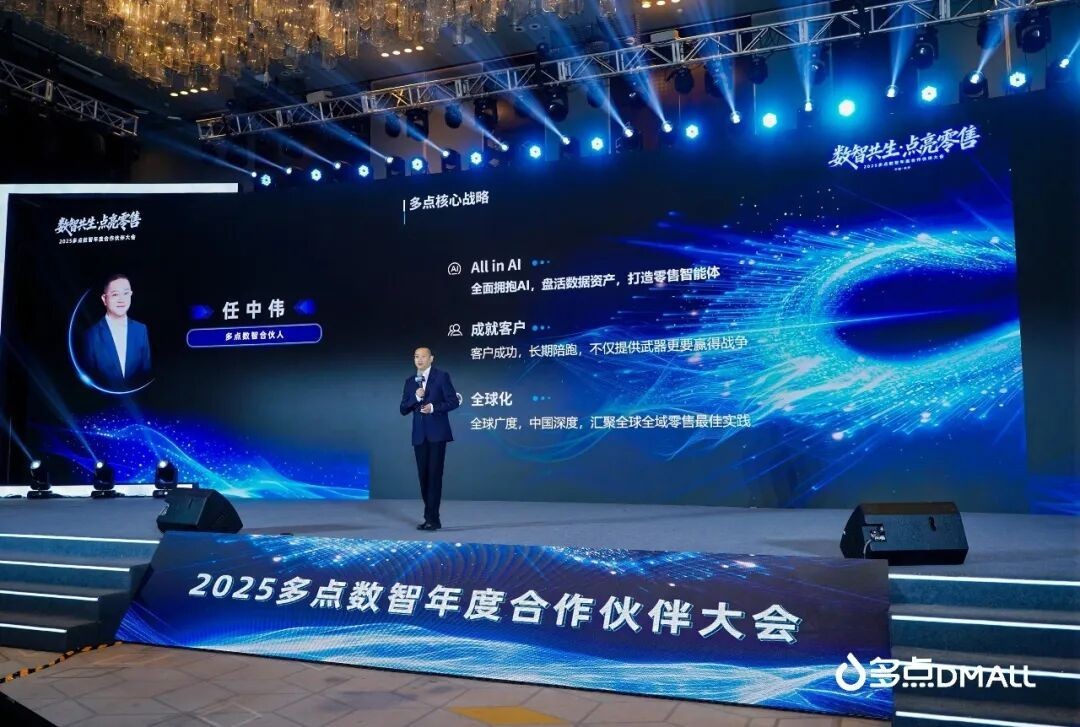
He offered an analogy: ERP is like a fuel car, while the Agent is a highly intelligent, near-autonomous EV. The difference isn’t just better record-keeping but upgrading from passive data logging to an active "thinker, processor, and inheritor of knowledge"—structuring 30 years of lessons into searchable, conversational, reusable, and decision-aiding assets.
This explains the "long-term" shift:
First, Dmall anticipates opportunities in system replacement cycles. Ren noted that legacy ERP systems are aging, triggering a "replacement wave"—fewer than 30% of top retailers have adopted new systems. This is a market opportunity, but mere replacement has limits: systems risk becoming cost centers trapped in price and delivery battles.
Second, Dmall aims to transition from SaaS tool subscriptions to outcome-based pricing. This requires evolving the Retail Agent from advisory functions to executing large-scale decisions that tangibly improve retail. The Agent’s growth parallels Dmall’s transformation.
Hence the "3.X" label—not "4.0"—signaling ongoing evolution: "Why ‘X’? Because AI+Retail and AI+SaaS hold boundless potential we can’t yet rigidly define."
02 Dmall Iterates Best Practices
Aligned with the "Year of AI in Retail," Dmall’s focus is codifying top retailers’ practices into systems usable by mid-tier players.
This defines the conference theme, "Digital Intelligence Symbiosis": Dmall elevates partnerships into co-creation—learning culture/QC from Pang Donglai, settlement/finance from BBK, scaling AI retail with Wumart, and supply chain efficiency with Better Life.
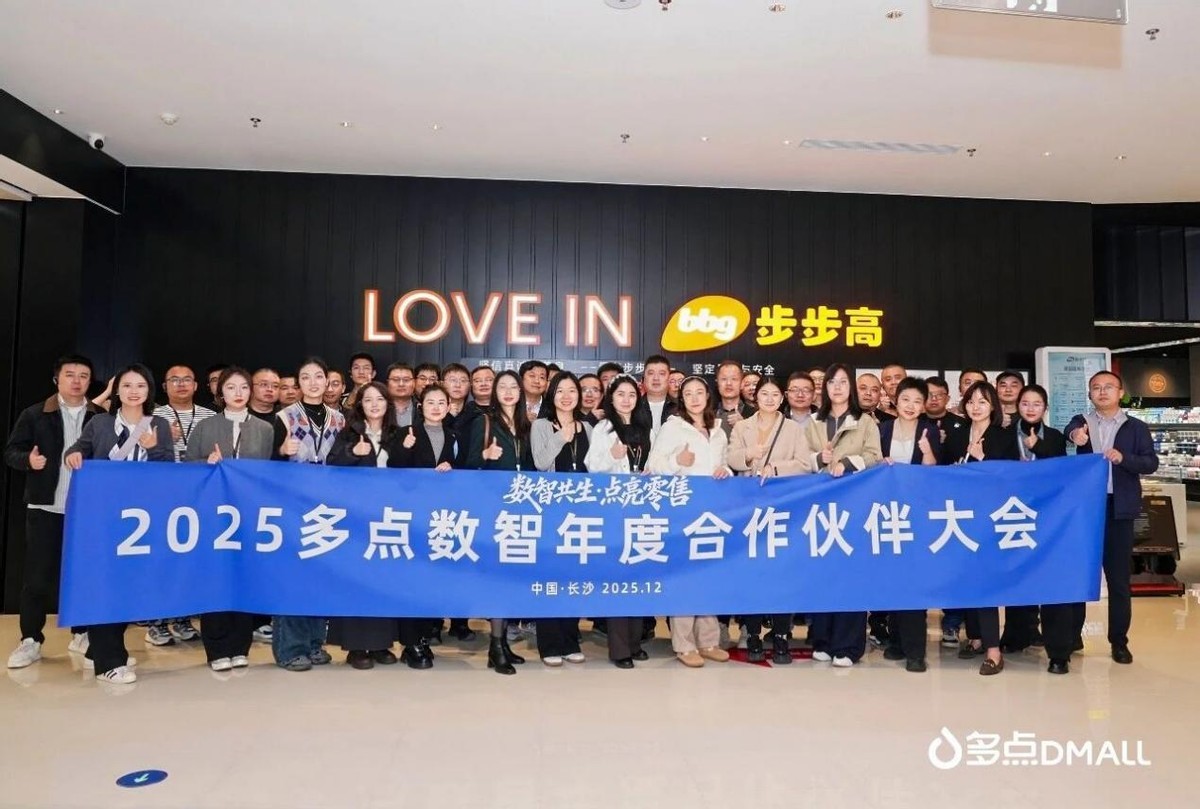
"Efficiency retail and quality retail share the same system backbone, just configured differently per format."
This approach’s strength lies in grounding products in proven practices, creating replicable retail capabilities. Retail fears tacit "you just know" empiricism—Dmall targets this Achilles’ heel.
Ren remarked: "We used to think each success was unique. Now we see great retail management as summarizable, scientifiable, transferable, and replicable." This is Dmall’s mission and the industry’s breakthrough need.
DMALL OS 3.X crystallizes this via customer-centricity, quality/efficiency focus, and a framework of "5 core upgrades + 10 AI apps + intelligent risk control," mapped to retail’s key certainty projects:
On the frontline: Turning gray zones into transparent processes (e.g., mobile-enabled fresh procurement in lower-tier markets); digitizing quality standards (inspired by Pang Donglai); and measurable supply chain gains (e.g., Better Life’s "daily delivery" model, with KPIs like cost, turnover days, stockouts).
In user ops: Converting traffic shifts into system capabilities—quickly adopting new platform trends to capture "first-wave traffic" and convert public to private domains.
In back-office: Automating finance (unified settlement, e-invoices, reconciliation) to refocus teams from paperwork to core needs.
In practice, AI modules deliver: AI-driven sourcing turns buyers into category experts; AI Fresh forecasts 3R goods processing hourly (90%+ accuracy, 30% less waste).
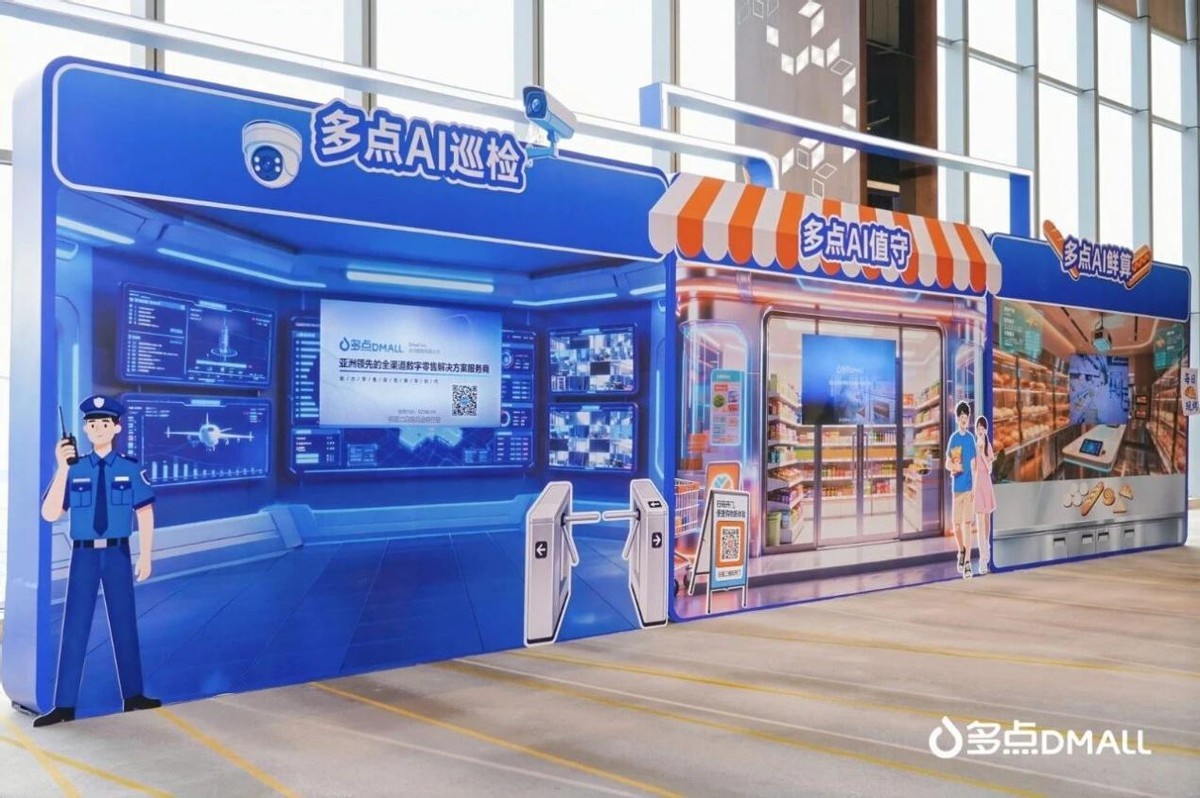
Dmall VP Hao Chunqiang likened current AI to "L2–L3 autonomy" in tasks like processing, routing, and restocking. "In three years, we aim to elevate most retail operations to L3."
As intelligence permeates, Dmall will drive retail closer to its ideal state.
03 Dmall’s Optimism Stems from Converging Needs
Macroscopically, retail needs are converging, not diverging. Ren highlighted unifying demands: supply chain quality, omnichannel integration (instant retail), and core ops like assortment/pricing/promotions.
This means one truth—in stock competition, all return to fundamentals: better products, lower end-to-end costs, stable experiences.
Convergence benefits standardized platforms like Dmall, enabling scalable products and reusable co-creation.
Hence Dmall’s "multi-cloud" strategy—partnering with Volcano Engine etc. for AI models while focusing on application. Priority goes to high-ROI scenarios (e.g., sourcing, markdowns) over complex ones (e.g., AI shopping guides).
Three trends intertwine as growth levers:
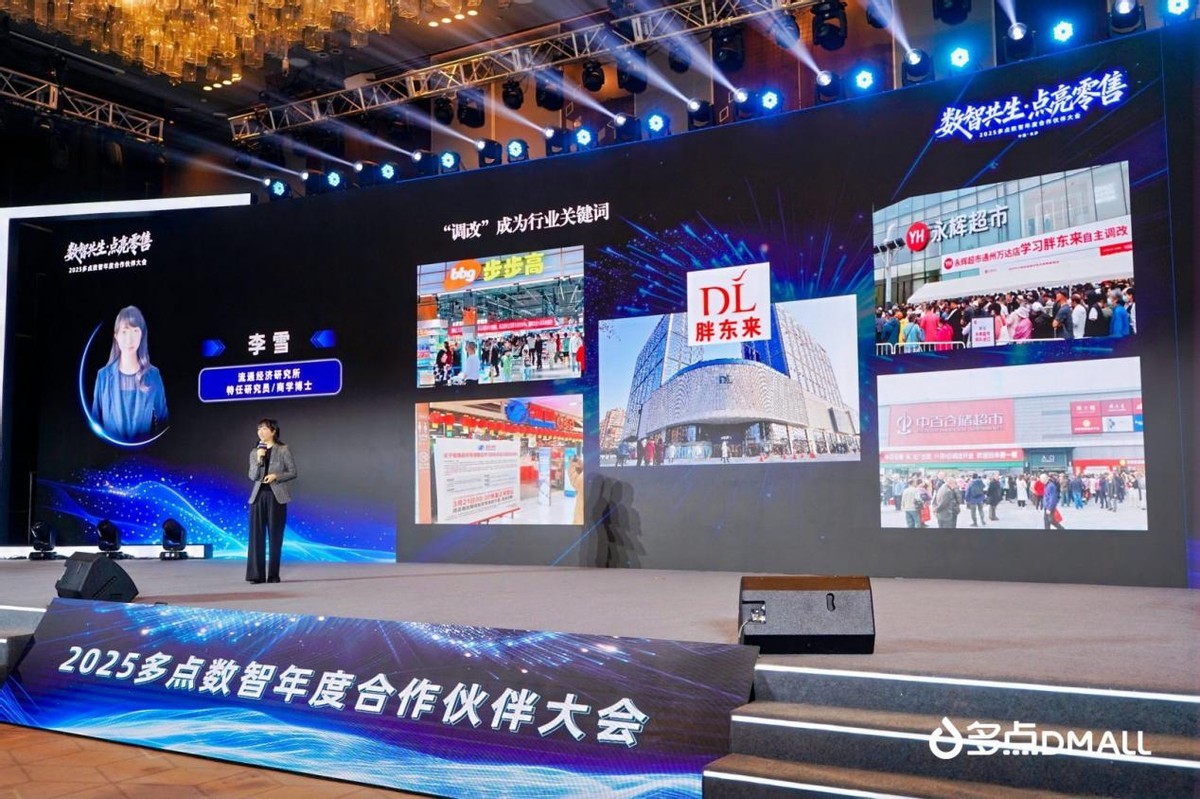
1. Store Revamps: Evolving from copy-paste to systemic overhauls—rebuilding assortments, layouts, and feedback loops with data. Ren cited NPS surveys, shelf digitization as signs of this shift. Success cases (e.g., Wumart, Xinhua stores with 3–4x sales) validate Dmall’s methodology.
2. Succession Waves: Over half the industry faces generational handovers, with heirs more digitally native. The Retail Agent narrative addresses this—making experience transferable beyond individual minds.
3. Global Expansion: Dmall builds trust abroad by delivering best practices. Overseas clients skip ERP questions, asking directly: "Show us China’s AI apps." Tech leadership becomes reputational—Dmall leads with AI, then offers end-to-end systems. Overseas revenue (~8%) targets 30% in three years; trust is the hurdle, tackled via local benchmarks, teams, and ecosystems.
04 Conclusion
The conference’s key takeaway: Dmall aims to be "retail’s autonomous driving," currently at L1/L2 but on the right path to higher levels.
Retail’s complexity lies in its offline-human fabric—stores, warehouses, suppliers, customers. Precisely thus, AI’s value hinges on replicable, outcome-driving certainty. Dmall’s optimism is rooted in this intricate practice.
Ren’s keyword for global trust: "Seeing is believing." As retail returns to its essence, Dmall has built capabilities where quality meets efficiency, warmth meets standardization, and experience meets systems—all demonstrably real.
"I once thought every retail success was unique. Now I see universality." Delivering tangible solutions to universal needs is Dmall’s grounded answer to retail’s future.
The copyright of this article belongs to the original author/organization.
The views expressed herein are solely those of the author and do not reflect the stance of the platform. The content is intended for investment reference purposes only and shall not be considered as investment advice. Please contact us if you have any questions or suggestions regarding the content services provided by the platform.
