

Triple Witching Alert: Your Options Trading Survival Guide to Wall Street's "Wildest" and Most Volatile Day!

Yesterday's CPI data ignited the market, with US stocks rising across the board in jubilation. Today is another bustling day.
Wall Street is about to witness the craziest "Triple Witching Day" in history, with over $7.1 trillion in notional value of options contracts expiring, setting a new record.
Among them, about $5 trillion is tied to the S&P 500 Index (SPX), and another $880 billion is related to the individual stock options we trade daily.

Time for a lesson: Understanding "notional value" starts with distinguishing between two "100s"!
Many friends often confuse Contract Size with Multiplier.
Especially in US stock options, both are 100, but their concepts are somewhat different.
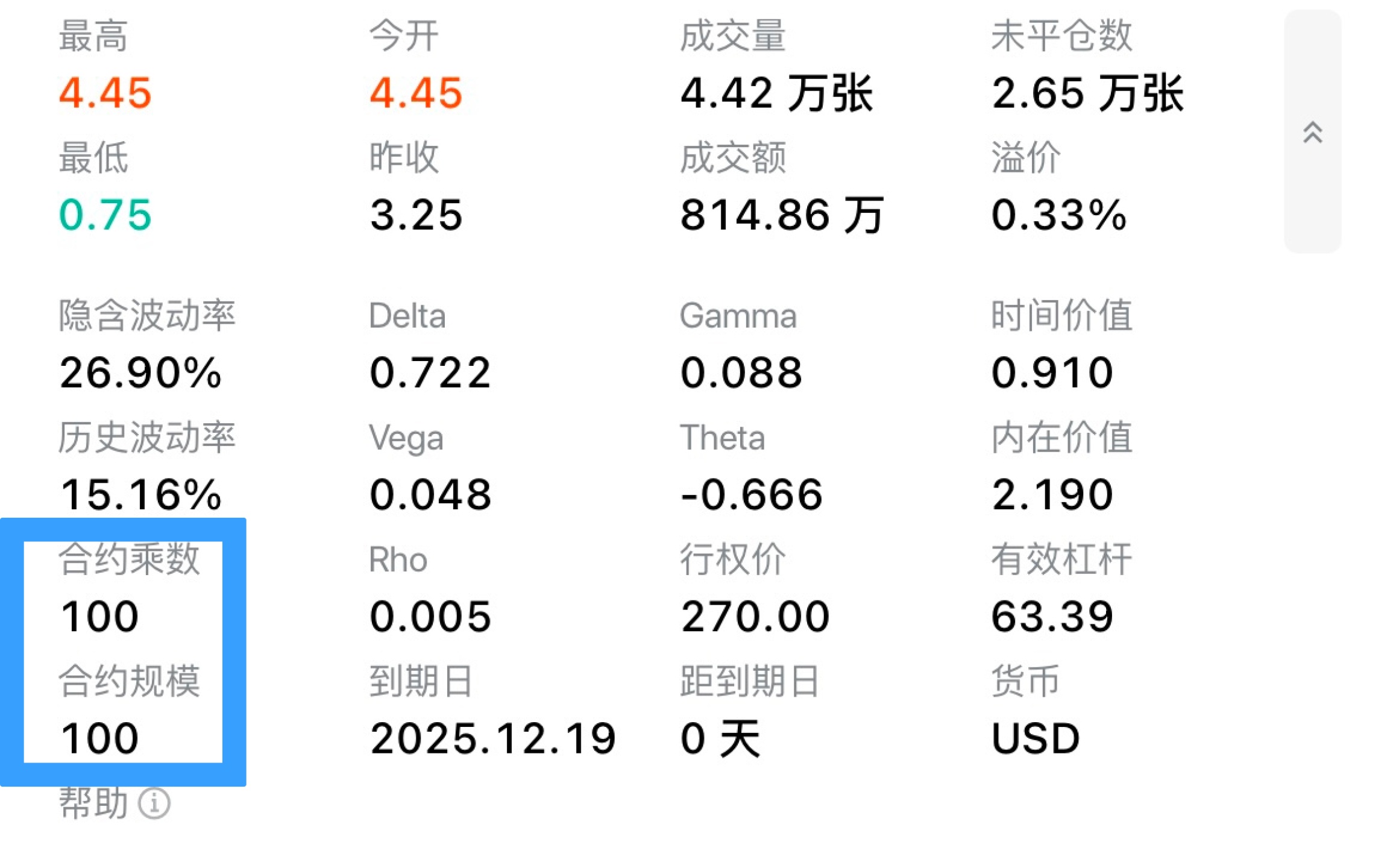
Let’s take a simple example:
1. Calculating notional value depends on contract size: How much capital does this contract leverage?
For example, one AAPL option typically corresponds to 100 shares of stock—this is the contract size. If the current stock price is $270, then the "notional value" of this option = contract size 100 shares * current stock price $270 = $27,000.
The aforementioned $7.1 trillion is the total "notional value" of the options contracts expiring today.
2. Calculating the option premium depends on the multiplier: How much does it cost to buy or sell this contract?
If you want to buy this AAPL option with a premium of $5, your actual cost = multiplier 100 * option price $5 = $500.
See, with just $500 in premium, you can leverage assets worth $27,000 in notional value.
This is why the concentrated expiration of options can significantly amplify market volatility, as massive "potential notional value" needs to be repriced and settled in a short time.
Have you noticed an interesting phenomenon? On days like today, very few companies release major announcements or earnings reports.
This is no coincidence! Companies deliberately avoid this special day known as the "Triple Witching Day", as no one wants to sail in stormy seas.
Today, we won’t discuss practical trading but focus on an educational piece about what Triple Witching Day is. If you have more trading experience, feel free to discuss in the comments.
1. What is Triple Witching Day?
Triple Witching Day is when three types of derivatives contracts expire on the same day in the US stock market.
The term originates from European folklore, referring to the time when supernatural forces are most active at midnight.
Wall Street borrowed it to describe the mysterious and chaotic market atmosphere when derivatives like options and futures expire.
Triple Witching Day schedule:
It occurs four times a year, always on the third Friday of March, June, September, and December.
For example, today is the fourth and final Triple Witching Day of 2025.
Three types of contracts expiring on Triple Witching Day:
Stock Options: Such as $NVIDIA.US, $Tesla.US, $Intel.US, $Apple.US—options of companies we’re all familiar with.
Stock Index Options: Such as $Nasdaq 100 Index.US, $SentinelOne(S.US)&P 500 Volatility Index.US, and popular ETF options like $SentinelOne(S.US)&P 500 ETF - SPDR.US, $Nasdaq 100 ETF - Invesco.US.
Stock Index Futures: Such as E-mini S&P 500 futures, etc.
2. Why does the market fluctuate so much on Triple Witching Day?
Statistics from the past 20 Triple Witching Days show:
Average trading volume is 49% higher than usual, with options volume surging 78%;
Mainstream ETFs like SPY see trading volume 2-3 times higher than usual;
Intraday volatility widens by an average of 22%; the VIX volatility index typically rises 8-12%.
Behind these numbers lies the market mechanism and the concentrated actions of various participants.
Why does this happen?
Imagine your credit card bill, Huabei, rent, and utilities all coming due on the same day! You’d have to scramble to manage your funds.
The market faces similar "concentrated expiration" pressure on Triple Witching Day, leading to a surge in capital, positions, and risk management all at once.
How do different market participants behave?
Institutional investors: Suppose a hedge fund holds 10,000 SPY options expiring today. To maintain exposure, they must sell the expiring contracts and buy new ones for the next quarter. Countless institutions are doing the same, naturally spiking trading volume.
Retail investors: If you hold Tesla or NVIDIA options expiring today, you must urgently decide: close the position, exercise, roll over, or let the options expire worthless? Each choice affects your returns and risk, and many retail investors face the same dilemma.
Market makers: These liquidity providers dynamically hedge to maintain delta neutrality. Near expiration, this hedging creates a "Gamma Effect," sometimes requiring billions in stock trades to adjust risk, further amplifying volatility.
We won’t delve deeper here, but if interested, we can dedicate a session to how options markets operate.
Finally, market-wide 博弈: There’s also the concept of "Max Pain"—the price level where the most options expire worthless, causing maximum loss to buyers. Markets often gravitate toward this price as expiration nears.
For example, if SPY is at $449.8 near 4 PM, but 50,000 call options have a strike at $450, sellers will push the price down to avoid exercise, while buyers rally to break through. In the final minutes, this tug-of-war creates a "pinning effect" around key strikes, explaining why prices often "stick" near round numbers or popular strikes at Triple Witching close.
Pro tip: The most intense "Witching Hour" is 3-4 PM ET, as institutional trades concentrate in the closing auction at 4 PM, causing a volume spike.
3. Key Focus Areas for Triple Witching Day
1. How to identify the most affected stocks?
On Triple Witching Day, the most volatile stocks are typically those with high open interest and trading volume in options.
Pay special attention to major index components (like SPY) and hot ETF components—these are the "main battlegrounds" for institutions and retail, making them more susceptible to expiration effects.
For example, if Tesla has heavy open interest at a certain strike, price swings near that level may intensify on Triple Witching Day.
Practical tip:
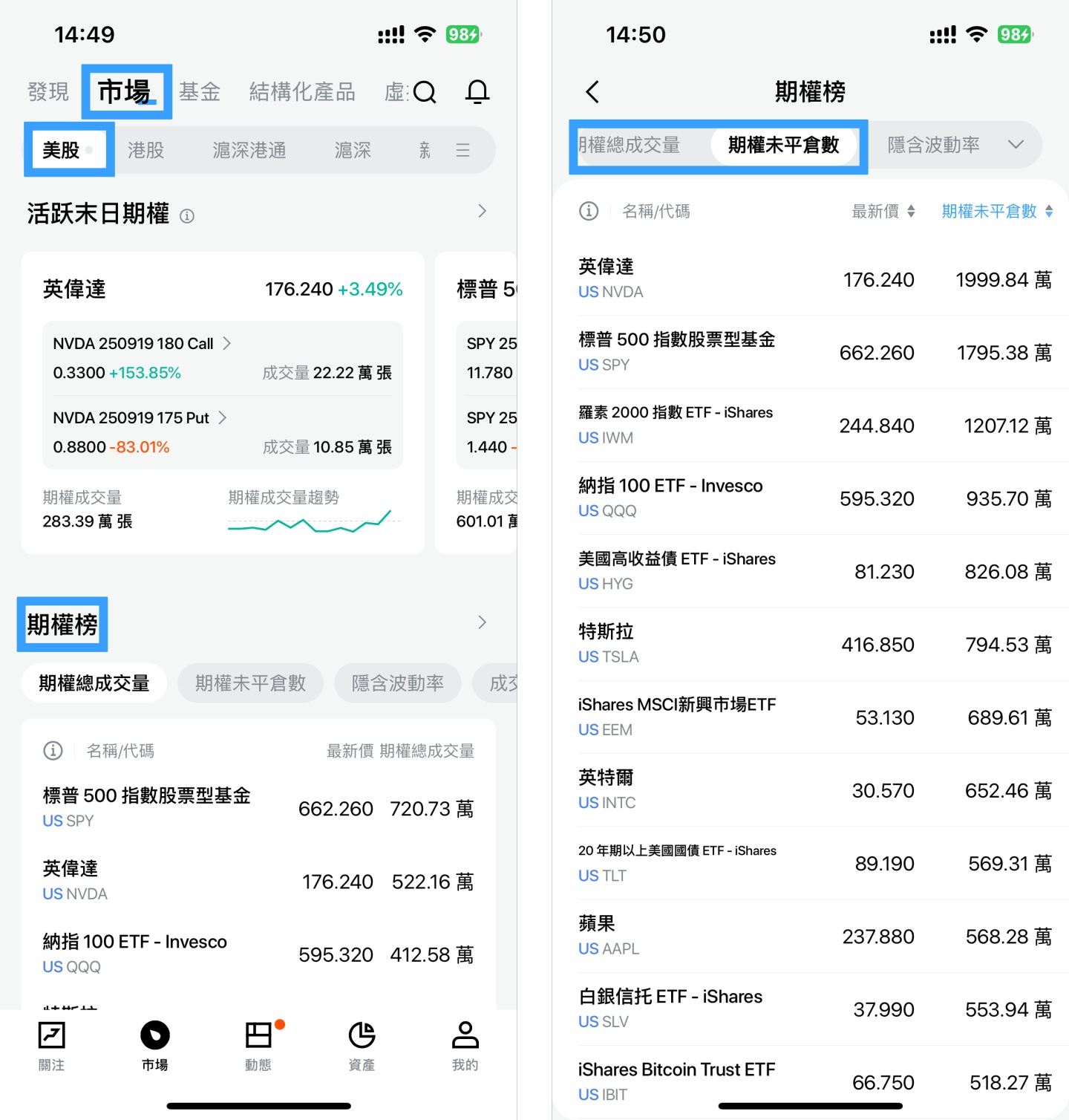
On Longbridge, use the "Options Leaderboard" to filter active stocks: Market → US Stocks → scroll down to the Options Leaderboard.
Sort by volume or open interest to spot market hotspots.
2. Watch active 0DTE options
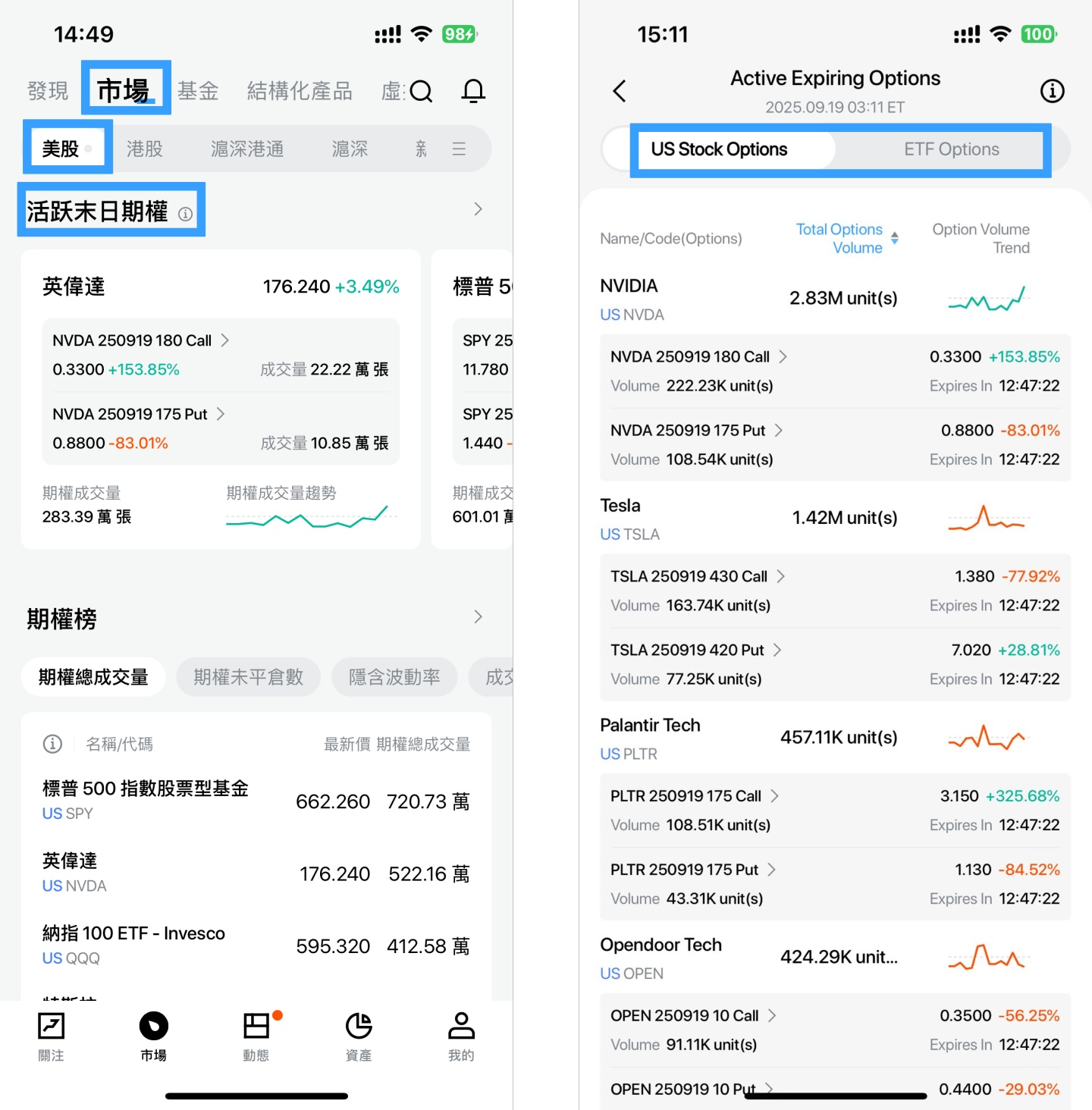
The most attention-grabbing on Triple Witching Day are "0DTE" (Zero Days to Expiration) options—those expiring that day or week. These low-cost, high-leverage contracts act like "daily lottery tickets," attracting many retail traders.
Goldman Sachs data shows 0DTE options now account for 60% of total US options volume, a record high, making them the go-to tool for short-term bets.
But beware: while 0DTE offers opportunities, the risks are extreme. Trade cautiously, control position sizes, and avoid heavy losses from wild swings.
Practical tip:
On Longbridge, check the "Active 0DTE Options" section (Market → US Stocks → scroll down) to spot market movers.
3. Monitor active index options
Goldman’s options expert John Marshall estimates over $5.3 trillion in notional value expires this Friday, including $3 trillion in S&P 500 options and $935 billion in single-stock options.
Thus, major indices like the S&P 500 and Nasdaq 100—and their heavyweights (Apple, Microsoft)—will be today’s "storm centers."
Relevant stocks include:
4. Triple Witching Survival Guide
With today’s rollercoaster market, here’s how to navigate smoothly:
1. Lighten positions
While you might usually go all-in, dial it back today. If you’d normally buy 10 SPY options, try 3-5 instead. It’s like packing light when you know a typhoon’s coming—hence why few firms release earnings on Triple Witching Day.
2. Use limit orders to avoid "stampedes"
With wild swings, market orders may fill at unfavorable prices. Use limit orders to set your price and avoid being "washed out," protecting your trade costs.
3. Manage risk, cut losses early Triple Witching often brings abnormal moves. Whether holding stocks or options, set stop-losses to prevent major losses from sudden swings. Remember: opportunities abound daily, but risk control ensures long-term survival.
4. Stay calm, avoid emotional trades The volatility can make you reckless. Stick to your pre-set plan—don’t chase rallies or panic-sell based on short-term moves.
The copyright of this article belongs to the original author/organization.
The views expressed herein are solely those of the author and do not reflect the stance of the platform. The content is intended for investment reference purposes only and shall not be considered as investment advice. Please contact us if you have any questions or suggestions regarding the content services provided by the platform.
