



[IPO Frontline] Battery-swapping unicorn enters Hong Kong stocks: Aulton's massive losses and transformation 'life-or-death situation'


When $NIO-SW(09866.HK) surpassed 3,600 battery swap stations, another battery swap giant is seeking a breakthrough by leveraging the Hong Kong stock market as a springboard.
Aulton New Energy, known for its "20-second ultra-fast battery swap," recently submitted its IPO application to the Hong Kong Stock Exchange. However, behind the glossy IPO application lies the company's massive losses, a difficult transition from "selling equipment" to "providing services," and survival anxiety amid fierce industry competition. This much-anticipated unicorn is stepping onto the capital market's examination hall with a host of contradictions.
From "Selling Hardware" to "Providing Services"
Aulton New Energy's founder, Cai Dongqing, is a "cross-border expert." The company he founded, $Alpha Group(002292.SZ), holds well-known IPs such as "Pleasant Goat and Big Big Wolf" and "Super Wings." By 2024, Aulton had become China's largest independent third-party battery swap solution provider based on operating service revenue.
Notably, NIO is a major shareholder, holding a 5.53% stake in the company.
As an early player in China's battery swap sector, Aulton New Energy has achieved ultra-fast battery swaps for passenger vehicles (20 seconds) and heavy trucks (40 seconds) with its self-developed snap-on chassis battery swap technology, accumulating over 2,300 patents. In 2022, the company's revenue primarily came from hardware sales, including battery swap stations and modules, accounting for 66.1% of total revenue—a clear "equipment manufacturer."
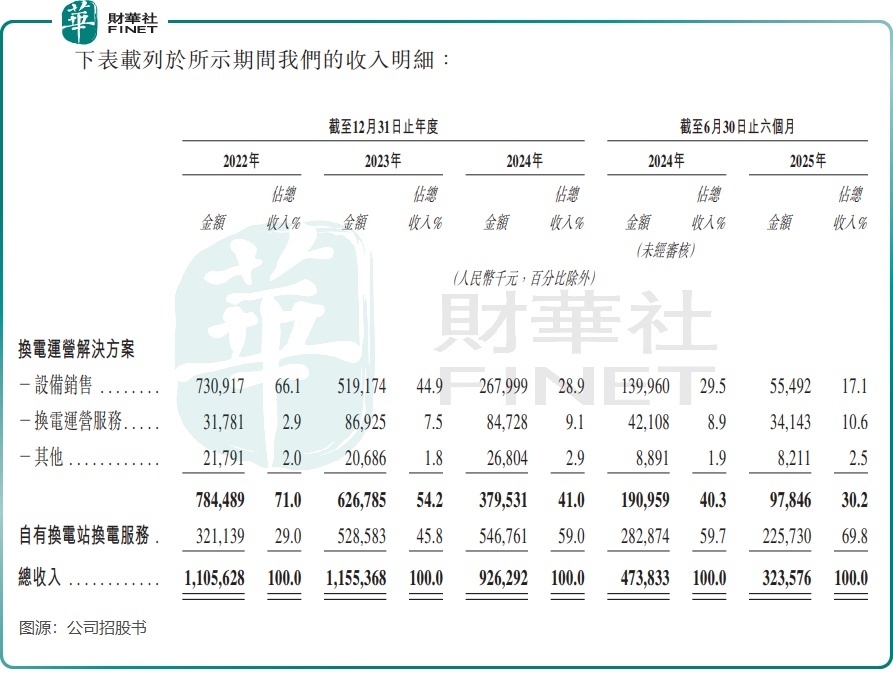
However, shifting market trends disrupted the original rhythm. As battery swap models gained popularity, customers increasingly preferred "asset-light" cooperation, no longer willing to purchase equipment on a large scale but opting for operational services instead.
This change led to a sharp decline in Aulton New Energy's capacity utilization. The production utilization rate of battery swap stations dropped from 80.7% in 2022 to 23.4% in the first half of 2025, while the utilization rate of battery swap modules fell from 89.7% to 23.9%. Idle capacity drove up unit costs, and equipment sales revenue shrank for three consecutive years, accounting for only 17.1% of total revenue in the first half of 2025.
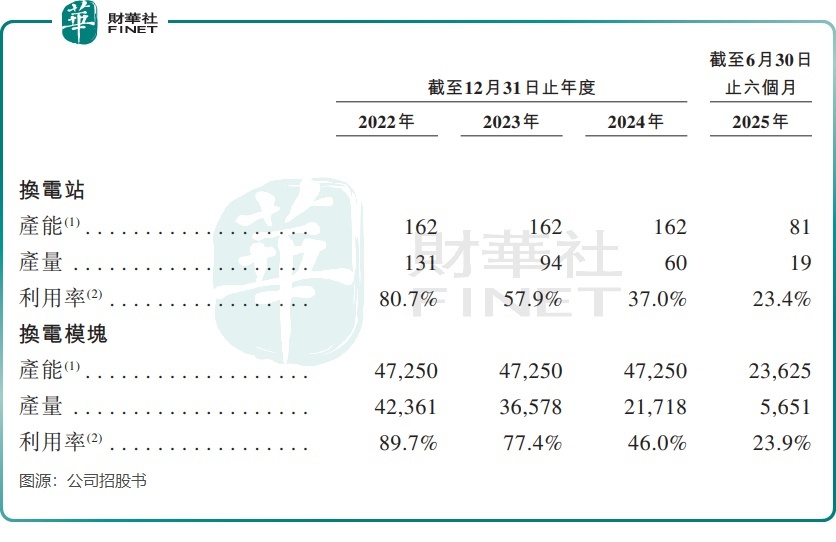
To survive, Aulton New Energy had to make a "sharp turn," shifting its core business to battery swap operation services. The company stated in its IPO prospectus, "We will no longer primarily rely on capital-intensive self-operated battery swap stations but expect to expand revenue by selling battery swap stations and providing value-added services such as daily operation management, maintenance, customer support, and platform services."
As of the end of June 2025, Aulton New Energy had 267 self-operated battery swap stations, provided operational services to 62 third-party stations, and offered independent platform services to 192 third-party stations. Battery swap operation service revenue rose to 10.6% of total revenue in the first half of 2025. However, this transformation has yet to bring profitability. On one hand, battery swap operation service revenue declined in 2024 and the first half of 2025; on the other hand, due to pricing pressure from market competition, the company's gross loss margin widened to 8.9% in the first half of 2025, significantly worse than the 3.7% in 2024.
Amid declining revenue, Aulton New Energy remains mired in losses, with cumulative net losses exceeding RMB 2 billion from 2022 to the first half of 2025 (in RMB, same below), reflecting ongoing transition challenges.
A Hot Sector but Under Siege
Aulton New Energy's confidence in pursuing an IPO stems from the vast market opportunities in the battery swap sector.
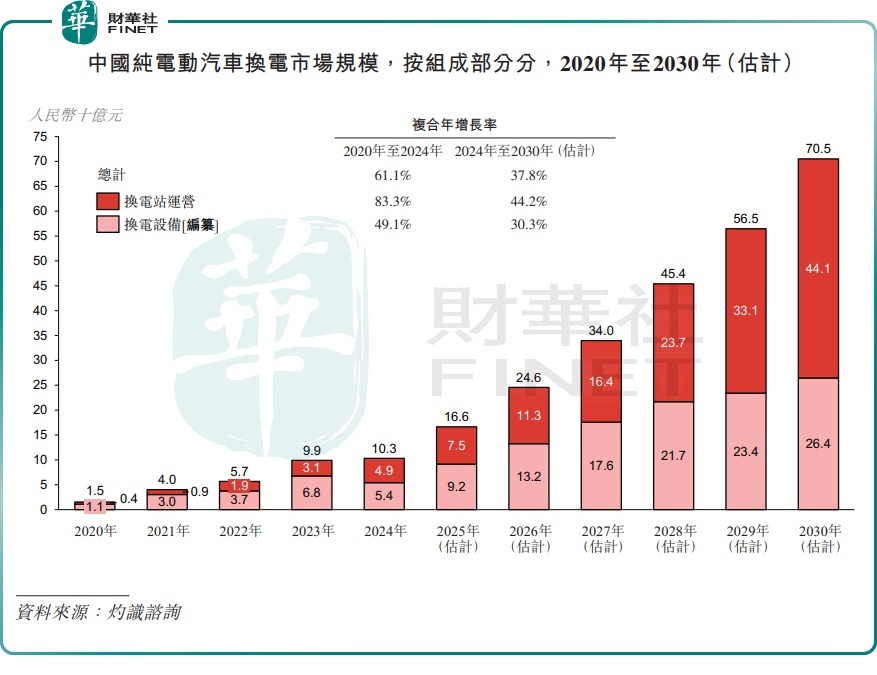
With the explosive growth of pure electric vehicle sales, charging anxiety has become an industry pain point, and battery swap models are seen as a key solution. Data shows that China's battery swap market has grown from RMB 1.5 billion in 2020 to RMB 10.3 billion in 2024, with projections reaching RMB 70.5 billion by 2030—a compound annual growth rate of 37.8% from 2024 to 2030.
But behind the hot sector lies cutthroat competition. Aulton New Energy faces a "pincer attack": on one side, shareholders like NIO and Geely (00175.HK) are ramping up their self-operated battery swap networks—NIO has built over 8,400 charging and swap stations (including over 3,600 swap stations), dwarfing Aulton's 267 stations; on the other side, CATL (300750.SZ) (03750.HK) has partnered with automakers like FAW, Changan (000625.SZ), and Chery (09973.HK) to build a battery swap ecosystem, with its "Chocolate Battery Swap" aiming for 1,000 stations by 2025.
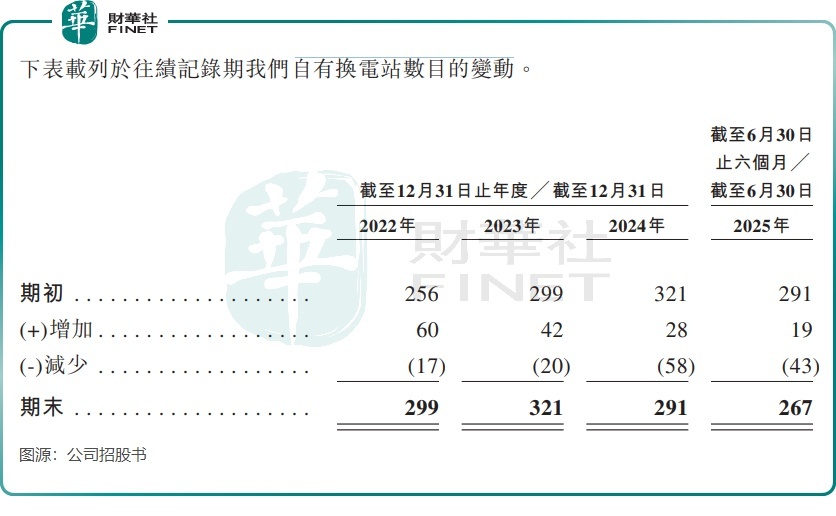
Aulton's lack of scale has trapped it in a "diseconomies of scale" dilemma. Meanwhile, its number of self-operated stations continues to shrink, dropping from 321 at the end of 2023 to 267 by mid-2025, risking further market share erosion.
Financial pressure is also mounting. As of June 2025, Aulton New Energy had cash and equivalents of RMB 438 million but current liabilities of RMB 926 million, with a current ratio of just 1.0, highlighting short-term debt pressure. Additionally, R&D spending has declined for three consecutive years, with R&D expenses at RMB 26.981 million in the first half of 2025, accounting for 8.3% of revenue. In an industry where technology evolves rapidly, reduced R&D investment could undermine long-term competitiveness.
Can an IPO Save the Day?
For Aulton New Energy, this IPO is more like a "lifeline." According to the prospectus, the funds raised will mainly go toward R&D, operational expansion, strategic investments, and working capital. Amid persistent losses and tight cash flow, capital market funding is key to breaking the scale bottleneck and competing effectively.
But the path forward is fraught with challenges. First, the profit model remains a core issue. The industry is capital-intensive with long payback periods, and Aulton has yet to find a stable profit path after shifting to services—its battery swap service gross margin remains negative. How to achieve profitability through scale and operational efficiency is a question it must answer.
Second, industry standards are not yet unified. Multiple technical routes exist for battery swaps, with varying battery sizes and interface standards, limiting cross-brand adoption. While Aulton collaborates with several automakers, future industry shifts could render its investments risky.
Finally, the competitive landscape is hard to change. Automakers have ecosystem advantages with self-built networks, while third-party players rely on capital or resources to expand. To survive, Aulton needs not just funding but breakthroughs in technical compatibility, cost control, and partner development.
Author: Yao Yuan
The copyright of this article belongs to the original author/organization.
The views expressed herein are solely those of the author and do not reflect the stance of the platform. The content is intended for investment reference purposes only and shall not be considered as investment advice. Please contact us if you have any questions or suggestions regarding the content services provided by the platform.
