


Waymo is currently raising funds, aiming to secure $15 billion with a valuation of $110 billion. This power plant outage caused traffic lights to go out, isn't this making things difficult for them?😂
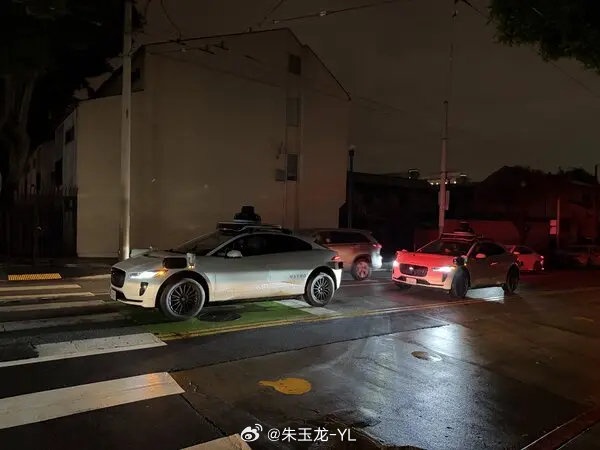
The San Francisco blackout visually demonstrated which autonomous driving approach—Tesla's or Google's—has higher limits when facing unexpected issues. With some intersections' traffic lights out, Waymo's Robotaxis operating in San Francisco largely remained stationary at intersections, causing regional traffic congestion. No accidents or dangerous maneuvers occurred; at its current intelligence level, Waymo's Robotaxi chose the most "conservative" strategy: don't move.
Waymo's choice: building safety on "certainty." From an engineering perspective, Waymo's behavior is entirely reasonable. Its system heavily relies on high-definition maps, intersection semantic modeling, and infrastructure signal inputs. Traffic lights act as rule triggers: when to stop or go is driven by "signal state." When lights go out, the system isn't "confused about how to proceed"—it's missing critical decision inputs. In this scenario, the safest, most compliance-aligned action is to stop.
Waymo's approach represents the core characteristics of previous L4 Robotaxis: strong rules, strong priors, and heavy infrastructure dependence—playing by the rules avoids regulatory fines. In known, structured, rule-complete environments, system behavior is highly predictable with clear risk boundaries, essential for Robotaxi commercialization. But once the environment deviates from the "defined world," the system's operational space shrinks drastically, hence the current public ridicule.
If the same scenario were applied to Tesla's FSD technical assumptions, the problem's nature would be redefined. In FSD's logic, traffic lights aren't "mandatory command sources" but merely visual objects in the environment. When absent or malfunctioning, the system faces not "vanishing rules" but an uncertain intersection. The decision logic then mirrors human driving: slow down → observe → negotiate with other road users → proceed.
The copyright of this article belongs to the original author/organization.
The views expressed herein are solely those of the author and do not reflect the stance of the platform. The content is intended for investment reference purposes only and shall not be considered as investment advice. Please contact us if you have any questions or suggestions regarding the content services provided by the platform.
