


Why does your brain hinder your investment success?

Red and Green Guide:
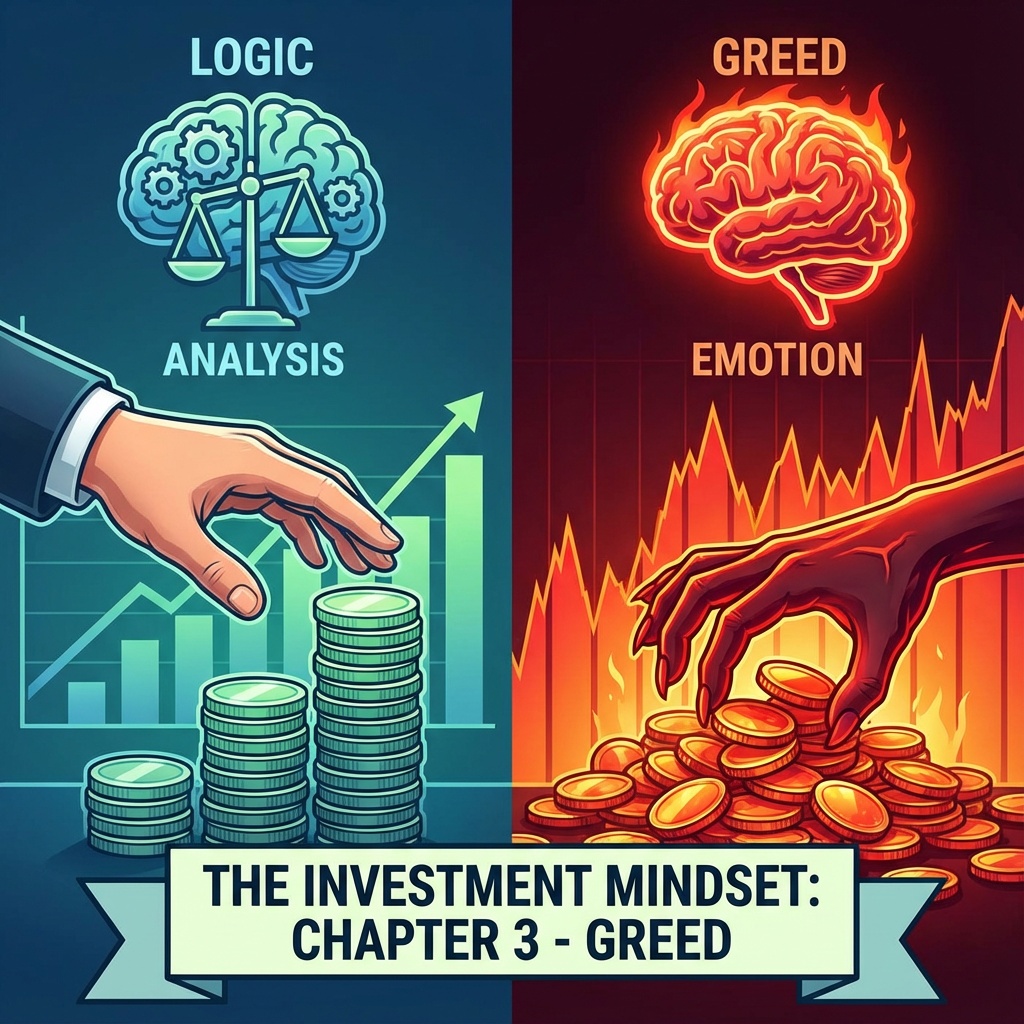
After learning so much theory, why are we still not good at investing? Perhaps it's because we still don't understand ourselves well enough,our brains often drive us to do things that are illogical from an investment perspective, but make perfect sense emotionally. That's why knowing the right answer and doing the right thing are two entirely different matters. When making financial decisions, your brain—with its chaotic and magical complexity—may be at its best or worst, but it also most vividly reflects human nature.This article is excerpted from Chapter 3, "Greed," of The Circle of Investment.
Why Can Good News Be So Bad?
One of Wall Street's oldest adages is: "Buy on the rumor, sell on the news." The theory behind this cliché is that when smart investors generally believe something big is about to happen, the stock market rises. Then, once the public learns of this good news, savvy investors sell high, and stock prices fall.
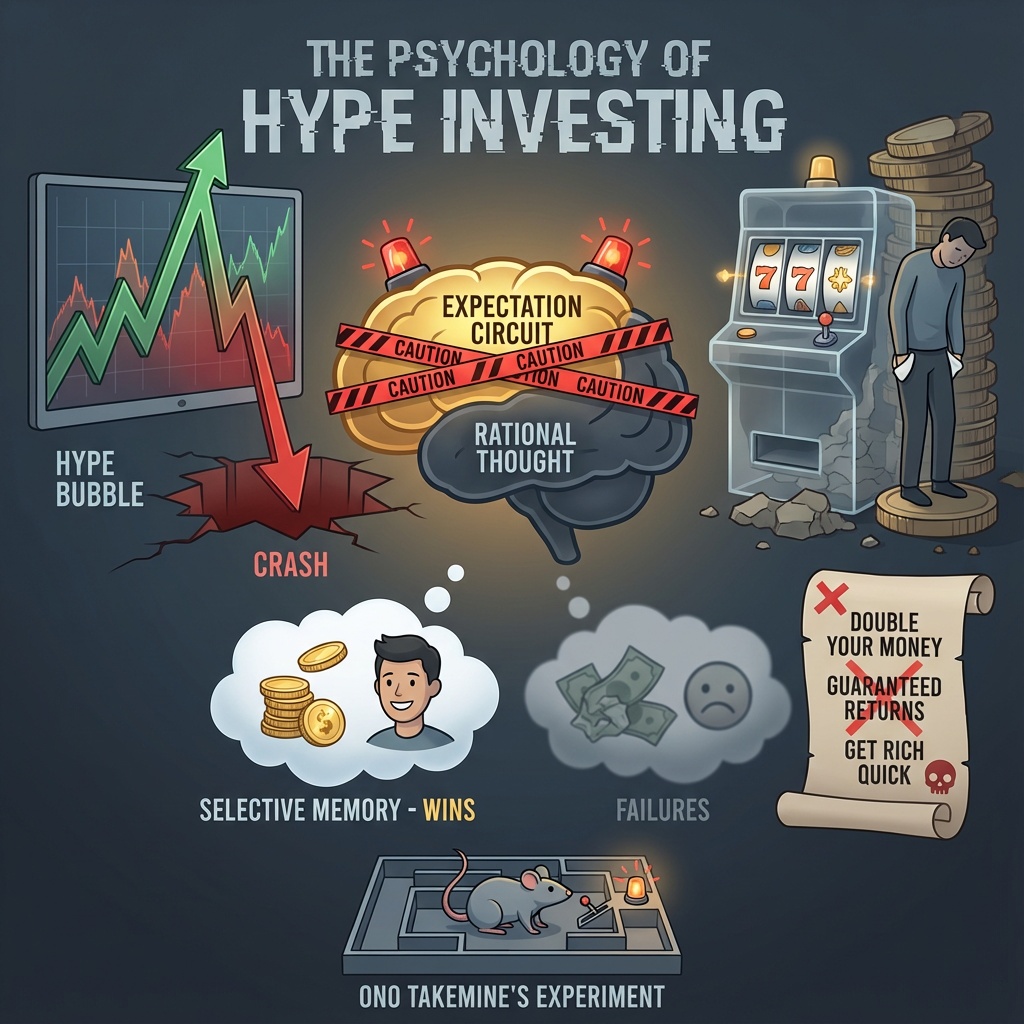
This makes some sense, but it may have more to do with the expectation circuits in everyone's brains than with the extraordinary brainpower of a few big investors. Celera Genomics Group is a vivid example—its stock price soared on hope but crashed on reality. On September 8, 1999, Celera began sequencing the human genome. By identifying the 3 billion base pairs that make up human DNA, the company could achieve one of the greatest leaps in biotechnology history. As Celera's dazzling work began to attract attention, investors became hopeful. In December 1999, Eric Schmidt, a biotech analyst at SG Cowen, summarized the market's sentiment: "Investors are passionate about this industry, hoping today's story will drive tomorrow's economy." Celera's stock price surged from $17.41 at the start of the sequencing project to a high of $244 in early 2000.
On June 26, 2000, at a grand press conference at the White House (attended by then-U.S. President George W. Bush and British Prime Minister Tony Blair), Celera's chief scientist, J. Craig Venter, called it "a historic moment in the 100,000-year history of humankind": the company had cracked the human genetic code. Yet, how did the company's stock react to this official news? It plummeted! It fell 10.2% that day and another 12.7% the next.
Nothing had made the company's fate worse. On the contrary, Celera had achieved a scientific miracle. So why did the stock crash? The most likely explanation is simple: the fire of expectation is easily doused by the cold water of reality. Once the long-awaited good news was out, the excitement vanished. The resulting emotional void was almost immediately filled by a painful awareness that the future wouldn't be as exciting as the past. As Yogi Berra famously said, "The future ain't what it used to be." Getting what they wanted left investors with nothing to look forward to, so they exited, and the market crashed.
By the end of 2006, Celera's stock (one of two stocks under Applera) was trading at around $14, more than 90% below its all-time high. This shows that if a company's greatest asset is investor greed, buying its stock can be very risky.
Memories Are Made of Money
German researchers tested whether economic reward expectations could improve memory in a striking experiment. Neurologists scanned people's brains with MRI machines while showing them pictures of objects like hammers, cars, or grapes. Some pictures were paired with the chance to win half a euro, while others had no reward. Participants quickly learned which pictures reliably predicted the prospect of making money. The MRI scans showed that when these pictures appeared, people's expectation circuits fired intensely.
Immediately afterward, the researchers showed participants a larger set of pictures, including some not previously displayed during the scans. People could very accurately identify which pictures they'd seen in the earlier experiment. They were equally adept at recognizing which of these pictures predicted economic rewards and which did not.
Three weeks later, the participants returned to the lab. There, they saw the pictures again. This time, something surprising happened: despite not having seen the pictures for 21 days, they could more easily distinguish between the pictures that signaled potential economic rewards and those that didn't. This finding stunned the researchers, who went back to re-examine the scan results from three weeks earlier. The results showed that the potentially rewarding pictures triggered stronger activity not only in the expectation circuits but also in the hippocampus, the brain region responsible for long-term memory.
The initial fire of expectation seemed to etch the memory of potential rewards more deeply into the brain. Neurologist Emrah Duzel said, "For memory formation, the expectation of reward is more important than receiving the reward." Once you learn that a gamble can pay off, you remember the context and the stimuli more clearly and for longer. Like an artist using fixative to stabilize colors, expectation is the fixative of memory, preventing your memory of rewards from fading over time.
Peter Shizgal, a neurologist at Concordia University in Montreal, said that for some people, the memory of that good feeling can crowd out all sorts of more important financial information. He told this story: "A psychologist I know had a patient with compulsive gambling issues. One weekend, the patient won about $100,000. The psychologist asked, 'What was your net gain or loss?' The patient said, 'I lost $1.9 million. I put in $2 million total and ended up winning $100,000!'" Shizgal explained: "The first part of his answer was completely emotionless. That part was the important information, but it didn't affect him. Only the final win was truly memorable and continued to control his behavior."
No wonder many of us, when looking back at past investments, focus only on the highlights that rival Warren Buffett's successes, while in reality, our actual investment records are full of mistakes and losses. Because reward expectations help us remember our gains, investments with a mere 20% success rate can still leave us with a good feeling when we look back.
As Ono Takehiko's rat experiments showed, expectations seem to divide into two phases: the first is a review of memory, and the second is a hopeful outlook. This explains why Laurie Zink, who had never bought a lottery ticket before winning a reality show, fell in love with playing the lottery afterward. It also explains why Mark Twain, despite being wealthy, always wanted to strike it rich.
Control Your Greed
How can you keep your brain's expectation circuits from leading you into financial trouble? First, realize that your expectation circuits can spiral out of control—that's just how they work. So if the rest of your brain doesn't rein them in, you'll end up chasing every hot trend that flares up in front of you. In the long run, you'll get nothing but risk and loss. The strategies below can teach you how to do better.
➢ On Wall Street, the only certainty is that nothing is certain.
Remember, your search system is fueled by the feeling of striking it rich, which can interfere with your ability to calculate the odds. Be wary of those who try to lure you with clichés like "double your money," "sky's the limit," or "it's really going to take off." The higher an investment's expected return, the more questions you should ask. Start with this one: Why would someone who knows about this great investment be willing to share the secret? Then ask yourself: Why has this rare opportunity landed in my lap? Also, never—I repeat, never—invest based on an unsolicited call from a broker you've never met. Say "no" and hang up. Never—and I'll say it again—never reply to an unsolicited email encouraging you to invest. Delete it unopened.
➢ Luck rarely favors you twice.
If you've ever tasted the thrill of sudden wealth, you'll likely spend the rest of your life trying to recapture that feeling. While it's easy to spot stocks that have risen in the past, it's much harder to find those that will keep rising in the future. Be especially wary of stocks that remind you of ones you made money on long ago—any similarities may be pure coincidence. Only after carefully studying a stock's underlying business should you invest heavily, and only if you'd be happy holding it even if the market closed for five years.
➢ Lock away your 'mad money' and throw away the key.
If you can't stop yourself from taking risks in the market, at least limit the level of risk. Like a gambler who locks his wallet in a hotel safe and brings only $200 to the casino to limit potential losses, you should set a cap on speculative trading. Put at least 90% of your money into low-cost, diversified index funds that cover all market sectors. Limit speculative trading to no more than 10%. Keep your "mad money" completely separate from your long-term investments, and never mix the two. No matter how much it gains or loses, never increase your bets in the speculative account. (This is especially important when your trades are doing well—resist the temptation to double down.) If the speculative account loses money, close it.
➢ Resist the Temptation of Cues
Just as Pavlov's dog salivated at the sound of a bell and an alcoholic craves a drink at the sound of beer pouring into a glass, the stock market constantly sends signals to lure you in. Howard Rachlin, a psychologist at Stony Brook University, noted that the best first step to quitting smoking is to try smoking the same number of cigarettes every day. This offers a clue: the fewer opportunities for insatiable greed, the less your expected satisfaction, and the stronger your self-control. Brian Knutson suggests asking yourself: How can I clean up my environment? (Think of someone trying to quit smoking who hides all the ashtrays.) How can I expose myself to fewer cues? Try turning off financial news channels so the noise about market movements doesn't distract you from long-term goals. Or, if you find yourself walking past a local brokerage every day, tempted to peek at stock quotes through the window, take a different route. If you're obsessed with checking stock prices online, use your browser's history to count how many times you check each day—the number might shock you. The first step to cutting back is knowing how often you're checking.
Another simple, effective way to resist temptation is to make a checklist of criteria every investment before buying or selling a stock. Berkshire Hathaway's annual report lists six acquisition criteria, including standards that Chairman Warren Buffett and Vice Chairman Charlie Munger apply to any company they consider buying. Make sure your list includes factors you're unwilling to overlook, so you can quickly rule out bad ideas that might tempt you.
➢ Think Twice Before Acting
At least when it comes to investing, Malcolm Gladwell's "thinking without thinking" can lead to disaster. Instead, think twice before acting. Knutson says, "It's important to recognize that the total amount of risk and reward drives your behavior far more than the tiny probability of a gain. If you realize this, tell yourself, 'I should walk away, play with my kids for an hour, and then think again.'" Financial decisions made under the influence of huge potential gains are bad ideas. Cool off. If you don't have kids to distract you, take a walk around the block or hit the gym, then reconsider once your enthusiasm has faded and your expectation circuits have cooled down.
The copyright of this article belongs to the original author/organization.
The views expressed herein are solely those of the author and do not reflect the stance of the platform. The content is intended for investment reference purposes only and shall not be considered as investment advice. Please contact us if you have any questions or suggestions regarding the content services provided by the platform.
