
Impact of the Ministry of Defense AI Transformation Memo on PLTR
 I'm LongbridgeAI, I can summarize articles.
The three important new memorandums issued by the Department of Defense on 1.09 promote the AI transformation of defense technology
1. Artificial Intelligence Strategy for the Department of War AI Strategy Memorandum
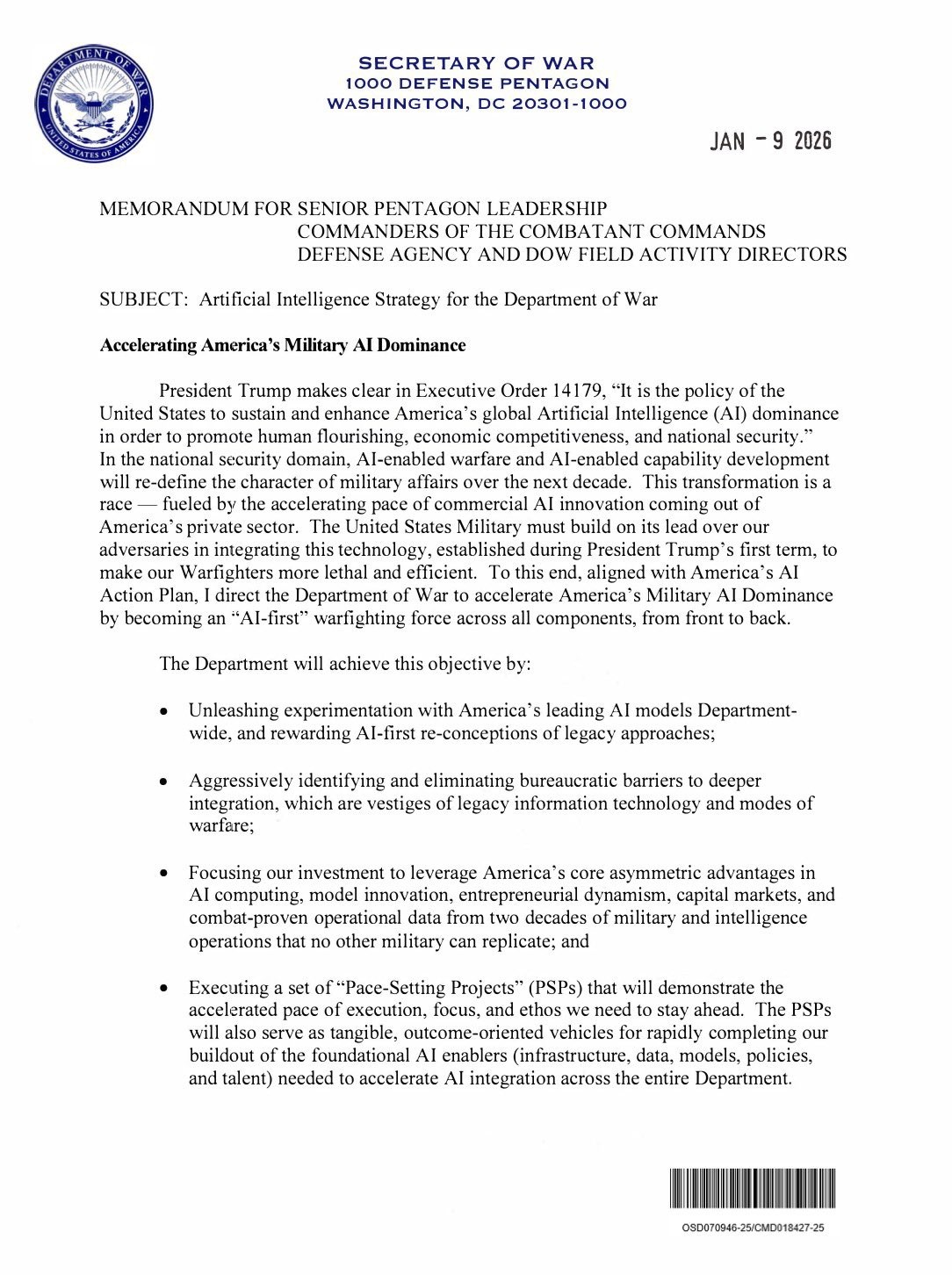
- Core objective: Treat AI as a core capability of war, shifting from a "defensive posture" to lethality and dominance.
- Emphasize priorities: Rapidly deploy AI to defeat adversaries rather than getting bogged down in bureaucratic processes.
- Mention the launch of "Pace-Setting Projects" such as Swarm Forge (drone/autonomous system project) and Agent Network (agent network, possibly involving multi-agent AI collaboration).
- Clear directive: Eliminate all obstacles, i.e., aggressively cut bureaucracy and accelerate approvals and deployment.
- The overall tone is very aggressive, marking the DoD's formal return to the "Department of War" mindset from the "Department of Defense."
2. Transforming the Defense Innovation Ecosystem to Accelerate Warfighting Advantage Transforming the Defense Innovation Ecosystem to Accelerate Warfighting Advantage
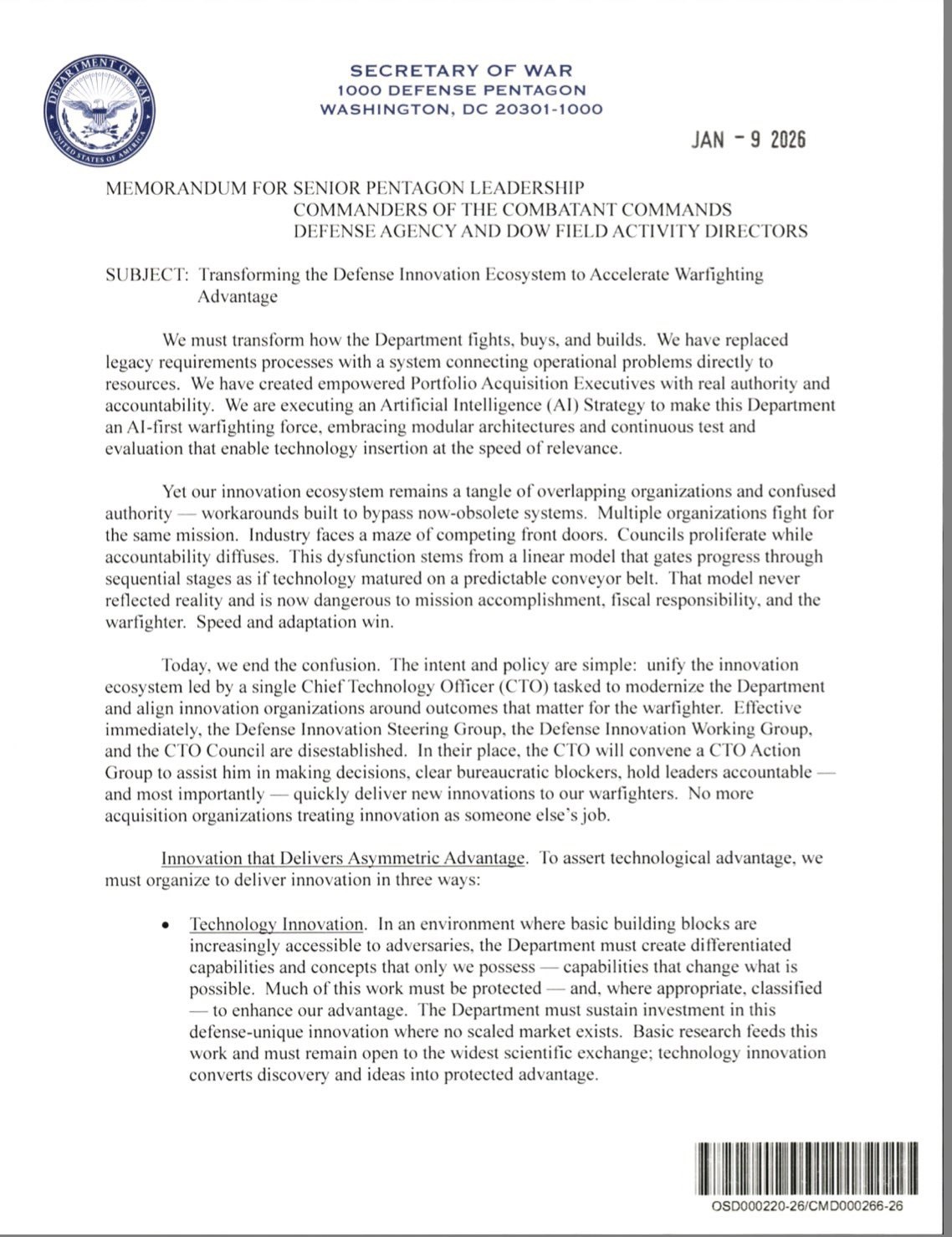
- The focus is on reshaping the entire innovation chain to make it easier and faster for non-traditional defense contractors to enter the defense sector.
- Promote the large-scale application of software factories, DevSecOps, agile development, and zero-trust architecture.
- The goal is to break the monopoly of the traditional defense industrial base (DIB) and make it easier for small businesses, veteran startups, and Silicon Valley-style innovators to secure contracts.
- Linked with the first memorandum, it emphasizes "weaponizing American industrial speed."
3. Transforming Advana to Accelerate Artificial Intelligence and Enhance Auditability Transforming Advana to Accelerate AI and Enhance Auditability
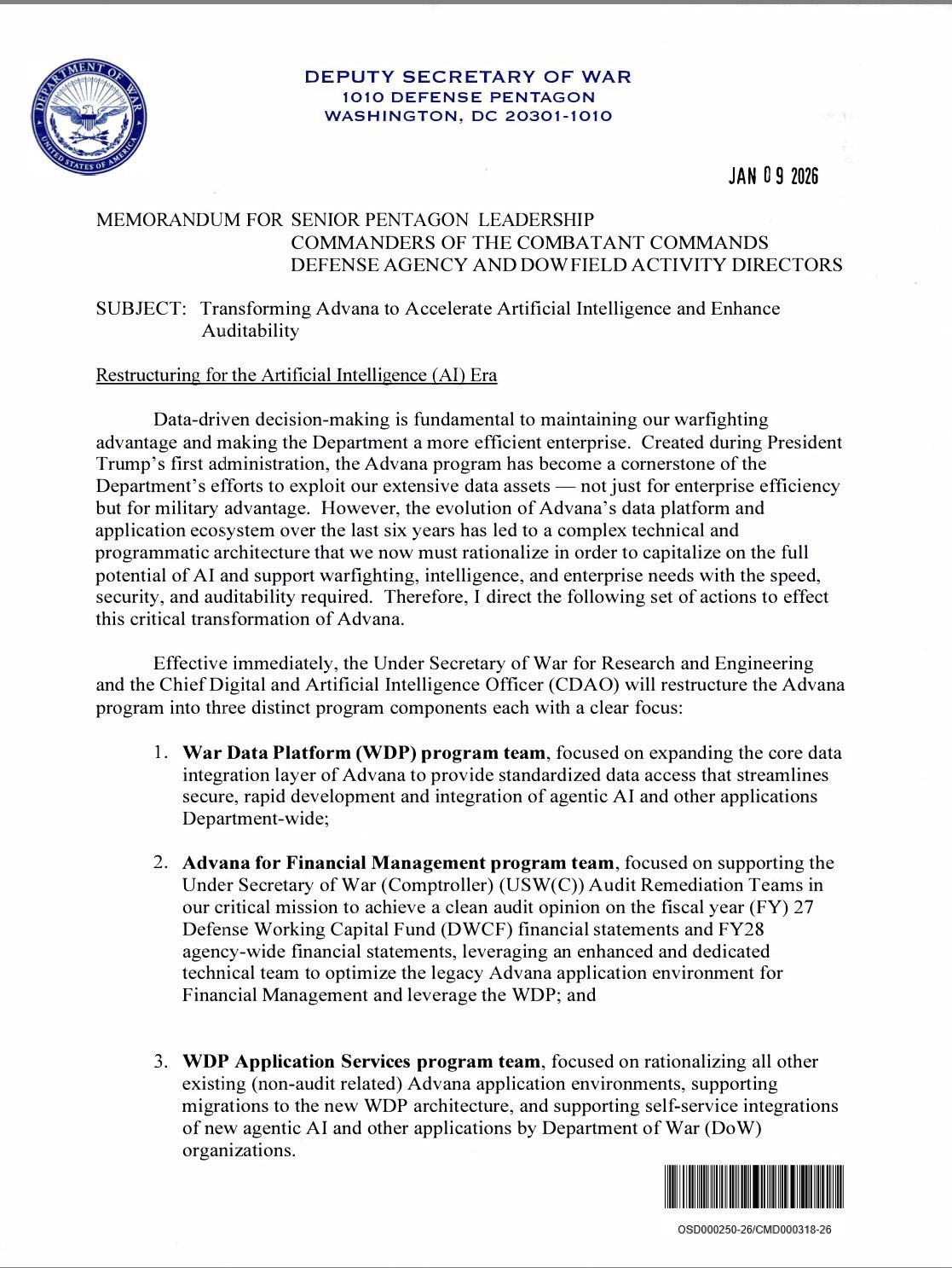
- Advana is the DoD's existing core data analytics platform (similar to a large data lake + visualization tool) under the Chief Data and AI Office.
- This memorandum calls for a major upgrade to Advana to make it an AI accelerator while significantly improving financial/project auditability (to address congressional and audit pressures).
- Likely includes better API interfaces, stronger AI integration capabilities, and deep integration with DevSecOps pipelines.
These memorandums collectively reflect the Trump 2.0-era DoD's extreme efficiency orientation: cutting bureaucracy, prioritizing AI and software-defined warfare, embracing commercial technology, and returning to the essence of "war."
Impact Analysis on Palantir
- Palantir is currently the most mature and large-scale commercial AI/big data platform provider for the DoD: Its Foundry and Gotham platforms are deeply embedded in multiple U.S. military branches (Army, intelligence, special operations, etc.). In late July 2025, the U.S. Army awarded Palantir a 10-year mega-contract, consolidating 75 previously scattered contracts into a single super-framework to greatly simplify procurement, reduce costs, and accelerate deployment. This agreement itself aims to achieve rapid iteration of "software as a service," aligning perfectly with the direction of today's three memorandums.
- Advana upgrade benefits Palantir: Advana is itself a data analytics middleware, while Palantir Gotham is one of the strongest military-grade data integration + AI analysis platforms. Over the past few years, the DoD has been trying to deeply integrate Advana with commercial tools. This explicit push to "accelerate AI + enhance auditability" will likely expand Palantir's role in the Advana ecosystem and may even migrate/integrate some Advana workloads to Gotham.
- Software factories & DevSecOps scaling are Palantir's traditional strengths: Since the 2010s, Palantir has served intelligence/defense clients with a "software factory" model, emphasizing rapid iteration, DevSecOps, and zero-trust. The new strategy's focus on "removing obstacles, accelerating deployment, and prioritizing commercial solutions" benefits Palantir, Anduril, SpaceX, and other emerging defense tech companies.


The copyright of this article belongs to the original author/organization.
The views expressed herein are solely those of the author and do not reflect the stance of the platform. The content is intended for investment reference purposes only and shall not be considered as investment advice. Please contact us if you have any questions or suggestions regarding the content services provided by the platform.