



Ranked first in domestic high-speed robots, Atom's next challenge is profitability

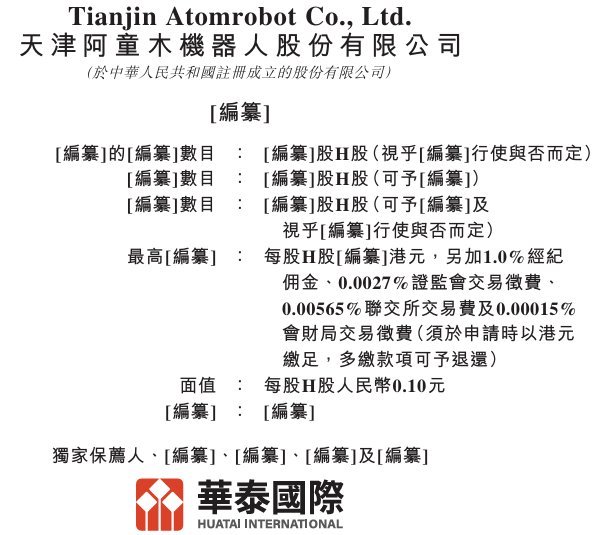
When domestic parallel robots first defeated foreign brands head-on in the Chinese market, AtomRobot chose to file for an IPO in Hong Kong.
Founded during the wave of industrial automation, this company has achieved the No. 1 domestic market share among all brands in a niche segment long monopolized by overseas manufacturers—parallel robots—and has also ranked among the top globally.
From a technical perspective, micron-level precision, millisecond-level cycle times, and a fully self-developed system make it almost the "ideal sample" of domestic industrial robots.
But another timeline is equally clear: During the cycle of surging robot installations and expanding capital expenditures in new energy, AtomRobot suffered consecutive years of losses, barely turning profitable in the first nine months of 2025. Just as the industrial robot industry shifted from "expansion-driven" to "efficiency and cash flow-driven," the company chose to knock on the door of the capital market.
This is not just an IPO application from a high-speed robot company but more like an open question: With technological advantages already realized, have domestic industrial robots truly crossed the threshold of commercialization?
When Parallel Robots Surpass Foreign Brands, Domestic High-Speed Robots Stand at the "Efficiency Hub"
In the industrial robot system, parallel robots have long been regarded as the "most challenging and slowest to yield returns" category. Compared to traditional six-axis robots, parallel structures demand higher requirements for kinematic models, control algorithms, dynamic compensation, and system integration capabilities, with applications concentrated in high-speed, high-frequency, and highly repetitive production processes.
This also means they often only hold scalable value in industries extremely sensitive to cycle times, such as food and beverage, daily chemicals, pharmaceuticals, and new energy.
For this reason, this segment has long been dominated by foreign brands like ABB, Schneider, and Fanuc. Domestic manufacturers have mostly played roles as low-end substitutes or partial supplements.
AtomRobot has changed this landscape. According to Frost & Sullivan data, since 2020, it has ranked first in domestic market share among independent brands for five consecutive years and, in 2023, surpassed foreign manufacturers for the first time to become the No. 1 in overall domestic market share. By 2024, its share in China's parallel robot market reached about 12.3%, ranking second globally.
This "overtaking" was not the result of a price war but occurred against the backdrop of structural changes in manufacturing demand. After a previous round of capacity expansion, industries like new energy, food, and daily chemicals began focusing more on output efficiency and stability per unit of time.
Compared to general-purpose industrial robots, the value of high-speed parallel robots in short-cycle, continuous-operation scenarios has been rapidly amplified.
AtomRobot's product path has also evolved accordingly. From early breakthroughs with a single model, it has shifted to a diversified portfolio: parallel robots, high-speed SCARA, heavy-duty collaborative robots, and embodied intelligent robots now form its product matrix.
On the surface, this is "product line expansion," but in essence, it is to adapt to industrial customers' shifting procurement logic from "buying equipment" to "demanding whole-line efficiency."
This logic is particularly evident in the new energy sector. Power battery and component manufacturing processes impose extremely high demands on sorting, handling, and assembly cycle times, making high-speed parallel robots increasingly critical. AtomRobot has become one of the largest parallel robot suppliers in China's new energy industry, with its advantage lying not in single-device performance but in a holistic understanding of production line rhythms.
From an industry perspective, the company has not tapped into the "flood irrigation"红利 of industrial robots but rather the structural demand for "efficiency-hub equipment" as manufacturing enters a phase of refined operations.
The high-speed robot market is not vast—China's market was about ¥1.5 billion in 2024—but its growth is more certain, and its technical barriers are significantly higher than those of general-purpose robots.
This is also the fundamental reason AtomRobot has been able to establish itself in this niche segment.
From Technological Leadership to Profitability: Industrial Robots Still Face the Hardest Hurdle
However, improvements in technology and market position have not translated into stable profitability.
Financial data shows that in 2023 and 2024, AtomRobot incurred losses of ¥39.25 million and ¥47.07 million, respectively, only achieving a modest profit of less than ¥1 million in the first nine months of 2025. Although gross margins rose from 17% to nearly 29%, they remain low compared to mature overseas robot manufacturers.
This phenomenon is not unique to AtomRobot but reflects a common dilemma in the domestic industrial robot industry. The core reason is that robots are not one-time standardized products but engineering products highly dependent on system integration, debugging, and after-sales support. Even with self-developed core components, labor, service, and customization costs during delivery continue to erode profit margins.
A more immediate challenge lies in the changing industry cycle. From 2021 to 2022, capital expenditures in new energy and 3C industries drove a concentrated release of demand for industrial robots.
But as capacity gradually meets demand, downstream customers have begun slowing their expansion pace, placing greater emphasis on return on investment. This directly impacts robot manufacturers, manifesting as slower order rhythms and intensified price negotiations.
Against this backdrop, turning profitable does not inherently mean risks are eliminated. The Hong Kong market's pricing logic for manufacturing companies is far more biased toward cash flow stability and capital returns than the A-share market.
A one-time profit improvement can hardly sustain long-term valuations; sustained orders, replicable gross margins, and scalable delivery capabilities are what investors truly care about.
AtomRobot's current advantage lies in the fact that its high-speed robot segment has not yet fallen into severe homogenized competition. The barriers in structural design and algorithmic control for parallel robots make it difficult for latecomers to break through via simple replication. This provides room for further gross margin improvements.
But risks also exist. Once the industry enters a consolidation phase, the bargaining power of leading customers will continue to grow, forcing equipment manufacturers to constantly balance performance, price, and delivery capabilities. For companies yet to achieve stable cash flows, this balancing act is no easy task.
From this perspective, AtomRobot's decision to list in Hong Kong at this time is more like an act of "voluntarily submitting to scrutiny." It is neither at the peak of an upcycle nor struggling to survive but is proactively approaching the capital market at a critical juncture as the industry shifts from scale competition to efficiency competition.
Conclusion
AtomRobot's IPO is not just another success story of domestic robots rising.
It is more like a concentrated presentation of a real-world question: After breakthroughs in technical metrics and market share, the true test for domestic industrial robots has only just begun. High-speed parallel robots defeating foreign brands proves capability; whether they can sustainably profit amid cyclical fluctuations will determine their fate.
In the industrial robot industry, "installation volume" is losing its magic, while "efficiency" and "returns" are becoming the new hard standards. AtomRobot is already standing at the threshold—but whether it truly crosses over remains to be answered by time and the market.
The copyright of this article belongs to the original author/organization.
The views expressed herein are solely those of the author and do not reflect the stance of the platform. The content is intended for investment reference purposes only and shall not be considered as investment advice. Please contact us if you have any questions or suggestions regarding the content services provided by the platform.
