



Going overseas is not easy, but Worktranscend chose an even harder path

When "going global" shifts from a growth narrative to a battle for market share, more and more Chinese companies are realizing that overseas markets are no longer simple destinations for incremental growth, but complex battlefields that demand higher organizational capabilities, systemic strength, and long-term endurance.
Strategies like low pricing, mass distribution, and traffic arbitrage—once highly effective in the early days of cross-border e-commerce—are rapidly losing their edge in emerging markets like Southeast Asia.
On the surface, Southeast Asia remains one of the fastest-growing consumer regions globally: a young demographic, an expanding middle class, and rising e-commerce penetration. But beneath this lies a highly fragmented market, non-standardized infrastructure, offline retail dominance, inefficient traditional channels, and slow brand penetration.
This creates a paradox where "growth dividends" coexist with "operational challenges," leaving many globalizing companies trapped in dual bottlenecks of profitability and efficiency after scaling up.
Against this backdrop, Shenzhen Woke Feifan Technology Co., Ltd. has chosen to knock on the door of the Hong Kong Stock Exchange. As a cross-border new retail company deeply rooted in Southeast Asia, Woke Feifan does not position itself as a mere product or channel player but aims to restructure traditional retail efficiency through end-to-end digitalization and localized heavy-asset investments.
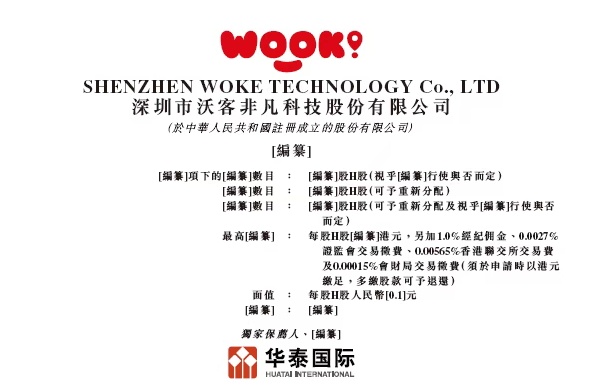
Its IPO, in a way, serves as a litmus test: Has the globalization model of Chinese companies truly evolved from "selling abroad" to "sustaining long-term local presence"?
Growth Isn’t Scarce—What’s Scarce Is Repaired Retail Efficiency
Macro data suggests Southeast Asia’s retail market is still expanding. According to Frost & Sullivan, the region’s retail market size was approximately $879.9 billion in 2024 and is projected to grow to $1.2 trillion by 2029, with a CAGR of 6.4%, significantly outpacing most mature economies. This growth has long positioned Southeast Asia as a core engine of global consumption.
But a closer look reveals glaring inefficiencies behind this growth. In key markets like Indonesia, Vietnam, and the Philippines, offline retail still accounts for nearly half or more of total sales.
Countless small and medium retailers form the "capillaries" of the market but operate in a high-cost, low-efficiency state: lengthy procurement chains, fragmented logistics, crude inventory management, and near-zero digital capabilities.
This supply-side inefficiency starkly contrasts with demand-side upgrades. On one hand, rising incomes are expanding the middle and aspiring-middle classes, driving demand for quality, branded goods. On the other, the market suffers from a supply gap—international brands enjoy recognition but are often overpriced and lack local adaptation, while local generics or budget products, though affordable, struggle to build trust in quality, after-sales service, and safety. Consumers are forced to constantly weigh "price" against "quality."
Woke Feifan targets this long-overlooked structural contradiction. Unlike most cross-border players prioritizing online platforms, its strategy resembles an "efficiency repair" of traditional retail systems.
The company focuses on high-frequency, essential categories like 3C accessories, small appliances, and home improvement materials, tailoring products and pricing for local middle and aspiring-middle-class consumers. Through mechanisms like "one-year replacement guarantees," it seeks to strike a new balance between price and quality.
More importantly, its growth isn’t solely consumer-driven but deeply embedded in local SME retailer networks. By streamlining procurement, enabling direct warehouse-to-store delivery, and revamping retail endpoints, it shortens supply chains, cuts logistics time, and systematically reduces retail costs.
By 2024, Woke Feifan had become Indonesia’s top-selling Chinese cross-border 3C accessory brand—a result that validates its model in at least one core market.
Financially, this "efficiency-led" approach is paying off. Revenue grew from RMB 908 million in FY2023 to RMB 1.049 billion in FY2024, with a further 17.6% increase in the first nine months of 2025.
Notably, in emerging markets like Vietnam, Thailand, and the Philippines, revenue surged 68.5% YoY in the first nine months of 2025, demonstrating the scalability of its "Indonesia-first, ASEAN-next" replication strategy.
As Globalization Enters Deep Waters, Competition Shifts from Products to Systems
If the first phase of globalization was about products and pricing, in complex markets like Southeast Asia, the ceiling is now determined by systemic capabilities. Woke Feifan isn’t building a brand portfolio but a "data-driven cross-border new retail operating system."
This system isn’t a traditional ERP or supply chain tool but a self-developed digital platform integrating Chinese manufacturing, cross-border logistics, and local fulfillment into a visible, schedulable, and optimizable network.
Here, data isn’t just for record-keeping but drives decisions on product selection, pricing, inventory, and channel placement. The direct outcome? Rising gross margins alongside scale.
Financials reflect this shift. Gross margin climbed from 33.6% in 2023 to 35.6% in 2024, further improving to 36.9% in the first nine months of 2025.
Meanwhile, the cost-to-sales ratio declined, reflecting stronger economies of scale and supply chain bargaining power. This isn’t about price hikes but a reallocation of value from systemic efficiency gains.
Concurrently, Woke Feifan continues investing heavily in local warehousing, logistics, and offline retail networks. While these capital-intensive moves raise short-term sales and distribution costs, they create formidable barriers to entry in a fragmented, infrastructure-inconsistent market.
General and administrative expenses dropped from 7.8% in 2023 to 5.4% in the first nine months of 2025, showing how digital management unlocks operating leverage at scale.
The deeper transformation lies in its evolving business model. Through a "house brands + partner brands" mix, Woke Feifan is turning its vast retail network into a distributed demand-and-service platform.
House brands drive margins and data accumulation, while partner brands amplify network effects, shifting the company from mere arbitrage to sharing value created by supply chain efficiency.
The challenge? This model demands algorithmic prowess, heavy-asset execution, and ecosystem coordination—three traits rarely balanced within one organization.
But once a closed loop forms, the competitive edge becomes highly path-dependent. Woke Feifan’s rising gross margins and operating margins (up from 5.7% in 2023 to 8.8% in the first nine months of 2025) exemplify how systemic complexity translates into financial results.
Conclusion
Zooming out, Woke Feifan’s IPO isn’t just a corporate capital event but reflects a phase shift in Chinese companies’ globalization logic. As traffic and platform 红利 (dividends) fade, the true survivors will be those willing to invest time and capital into rebuilding local industrial efficiency.
Southeast Asia’s retail upgrade is ongoing, but the road ahead is arduous—requiring slower pacing, heavier investments, and deeper local insights.
Woke Feifan has chosen a harder but more deterministic path. Whether it delivers long-term value remains to be seen, but one thing is clear: Globalization has entered "hard mode," and the efficiency war has only just begun.
The copyright of this article belongs to the original author/organization.
The views expressed herein are solely those of the author and do not reflect the stance of the platform. The content is intended for investment reference purposes only and shall not be considered as investment advice. Please contact us if you have any questions or suggestions regarding the content services provided by the platform.
