



The home coffee machine market is advancing rapidly. Can Gemilai live up to the expectations of domestic brands?

Coffee is undergoing an identity shift in China, from a "lifestyle" to a "manufacturing category," and the capital market is not always willing to pay for the latter.
Recently, Gemilai submitted a listing application to the main board of the Hong Kong Stock Exchange. As the leading domestic brand in China's semi-automatic espresso machine market by market share, this coffee machine company, established over a decade ago, is exposing itself fully to the scrutiny of the capital market for the first time.
On the surface, this is a company that has hit multiple "tailwinds": China's coffee consumption continues to heat up, the home coffee machine market is expanding rapidly, and semi-automatic espresso machines have become the fastest-growing segment. In terms of data, Gemilai's revenue and profits have grown in tandem, with gross margins consistently maintained above 40%, which is rare among manufacturing-oriented consumer companies.
But the other side is equally clear: coffee machines are, after all, hardware, with low user frequency and long replacement cycles. While the proportion of online channels continues to rise, the 红利 of traffic is fading. The Hong Kong stock market's valuation attitude toward "consumer hardware + manufacturing" has long ceased to be generous.
Against the backdrop of the global coffee machine market's continued expansion and the acceleration of domestic substitution for Chinese coffee equipment, Gemilai's decision to go public at this time is both a concentrated display of its scaling capabilities and an answer to an unavoidable question: Is a Chinese manufacturing company that started with semi-automatic coffee machines cashing in on 红利 or 透支 the future?
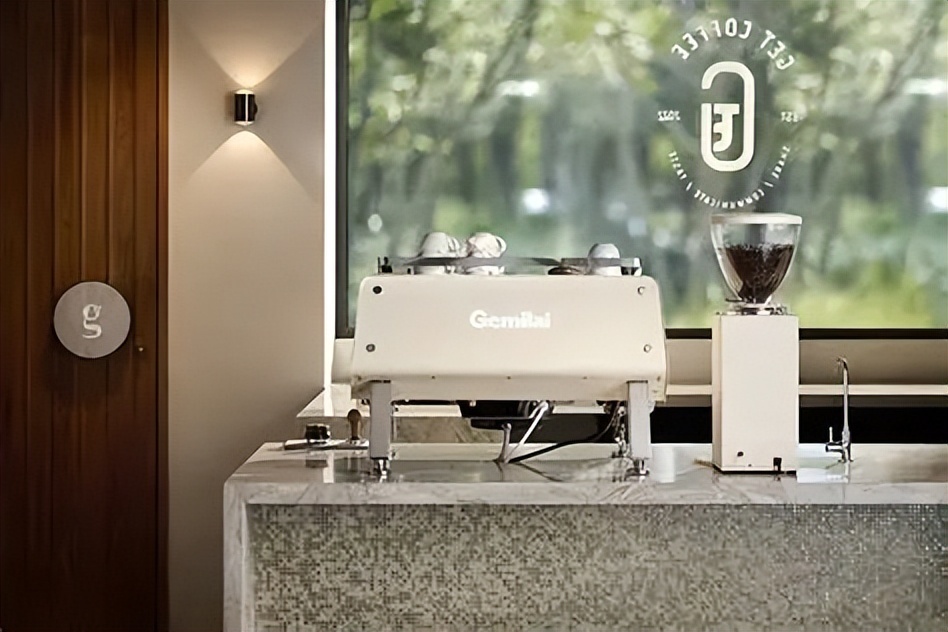
Semi-automatic espresso machines: A visible growth logic
From an industry perspective, Gemilai's 赛道 is not lacking in certainty.
Data from Frost & Sullivan shows that the global coffee machine market has nearly doubled in the past five years, growing from $15.3 billion in 2019 to $30.6 billion in 2024, and is expected to approach $60 billion by 2029.
What truly sets the 差距 apart is not the commercial 场景 but the home market. The global home coffee machine market's compound growth rate from 2019 to 2024 exceeded 17%, significantly higher than that of the commercial market.
This trend is further 放大 in the Chinese market. China's coffee machine market size grew from RMB 2 billion in 2019 to RMB 5.3 billion in 2024, with a compound growth rate exceeding 21%.
More critically, the growth is not evenly distributed but highly concentrated in espresso machines, particularly the semi-automatic espresso machine 细分品类。
In China's coffee machine market, fully automatic machines emphasize convenience, capsule machines emphasize brand and consumable 绑定, while semi-automatic espresso machines occupy a 微妙 middle ground: they retain a sense of "professionalism" and operational 仪式感 while keeping the price range within 家庭 acceptable limits.
As coffee culture shifts from "drinking coffee" to "making coffee oneself," this category has rapidly evolved from niche equipment to a mainstream choice.
Gemilai is a direct beneficiary of this change. By revenue, the company has become the second-largest brand in China's coffee machine industry and the largest domestic coffee machine brand. In the semi-automatic espresso machine segment, its market share reaches 16%, and in split-type semi-automatic espresso machines, it approaches 28%.
This 领先 is not the result of aggressive expansion but of long-term focus on a single 主线. Unlike some manufacturers that pursue "full-category coverage," Gemilai has 始终围绕 semi-automatic espresso machines to build its product matrix, covering different price points and usage scenarios through 丰富 SKUs while extending to grinders, coffee accessories, and coffee beans to 强化专业属性 rather than simply lengthening the product line.
Financial data further 印证 this logic. From 2023 to 2024, the company's revenue grew from RMB 308 million to RMB 498 million, with 同步提升 in profits. In the first three quarters of 2025, profits had already exceeded the previous year's full-year results, even though revenue had not yet been fully 结算。
More importantly, its gross margins have remained stable at around 40%, even rebounding to over 44% in the first nine months of 2025, indicating that brand 溢价 and scale effects are taking shape.
In China's consumer manufacturing sector, this is not common. Gemilai 更像 a company that has already completed the transition from "OEM thinking" to "brand manufacturing," with a growth path that is logically 自洽 and persuasive at this stage.
As 红利 slow, is the coffee machine still a "long-term story"?
The real 分歧 lies not in the present but in the future.
Although China's home coffee machine market is still growing, it cannot be ignored that the high-speed expansion is more a result of the early stages of 渗透率提升. The user base for semi-automatic espresso machines naturally leans toward coffee enthusiasts and middle-to-high-income groups, whose 规模 and growth 上限 are inherently lower than those of mass consumer goods.
At the same time, as durable consumer goods, coffee machines have long 更新 cycles and low 复购频率, which means that a company's growth must 持续依赖 new users rather than 存量复购. For Gemilai, this means it must continuously expand into new usage scenarios, new demographics, and even new markets.
Changes in 渠道结构 are also quietly 施加压力. Industry data shows that coffee machine sales in China have become highly 线上化, with the online market size reaching RMB 4.2 billion in 2024, with a compound annual growth rate of 26.4%, and is expected to reach RMB 10.9 billion by 2029, with a compound annual growth rate of 21.0%.
While online channels bring scale, they also mean price transparency, intensified competition, and uncertainty in platform rules. After the 红利 of traffic recedes, whether brands can maintain customer acquisition efficiency will become a long-term challenge.
A deeper 考验 comes from the capital market's pricing logic. In recent years, the Hong Kong stock market's attitude toward "consumer + hardware" has grown increasingly cautious. Manufacturing companies with 单一品类 and 单一主线 often struggle to sustain high valuations unless they can clearly answer one question: Where is the second curve of growth?
For Gemilai, this question has not yet fully unfolded. Should it continue to dig deeper into professional coffee equipment, extending into higher-end or more professional markets? Or should it build longer-term user relationships through consumables, content, and services? Or should it accelerate its 海外市场布局, using globalization to hedge against domestic growth slowdowns?
These paths all exist, but they all require time to 验证。
Thus, Gemilai's IPO 更像 a 阶段性检验 rather than an 终点. It represents both the 成熟 of China's coffee machine manufacturing in 细分领域 and the 现实 that consumer manufacturing companies must face in the capital market—growth can be proven, but 想象力 must be continuously answered.
As coffee moves from a "craze" to an "everyday" item, capital may become more 冷静. What Gemilai truly needs to prove is not whether it caught the last wave of 红利 but whether it is ready to navigate the next cycle.
The copyright of this article belongs to the original author/organization.
The views expressed herein are solely those of the author and do not reflect the stance of the platform. The content is intended for investment reference purposes only and shall not be considered as investment advice. Please contact us if you have any questions or suggestions regarding the content services provided by the platform.
