



Stock prices rollercoaster again! China Chunlai's family ownership of shares raises market concerns


On January 30, the stock price of $CHINA CHUNLAI(01969.HK) once again staged a "roller coaster" performance, with intraday gains approaching 80%, drawing market attention. However, momentum sharply declined in the afternoon, and the final closing gain narrowed to 22.76%.
Despite recording a turnover of HKD 1.413 billion and a turnover rate of 24.9% on the day, the seemingly active trading still couldn’t mask the structural issue of frequent "sharp fluctuations" in its stock price. Looking back to October 8, 2024, July 8, 2025, and September 26, similar scenarios of "intraday surges followed by pullbacks at the close" repeatedly played out, almost becoming the "standard feature" of this private education company’s stock price.
Delving into the root causes, the highly concentrated ownership structure may be the unavoidable key factor.
Data from Tonghuashun shows that Chunlai Investment Limited, the largest shareholder of China Chunlai (controlled by executive director Hou Junyu), held a 75% stake as of the end of August 2025, far exceeding the 50% threshold for absolute control. This highly concentrated ownership structure results in an extremely low proportion of actual free float. Of the company’s total share capital of approximately 1.2 billion shares, the controlling shareholder holds about 900 million shares, mostly long-term locked-up holdings, leaving only about 300 million shares as truly free float in the market.
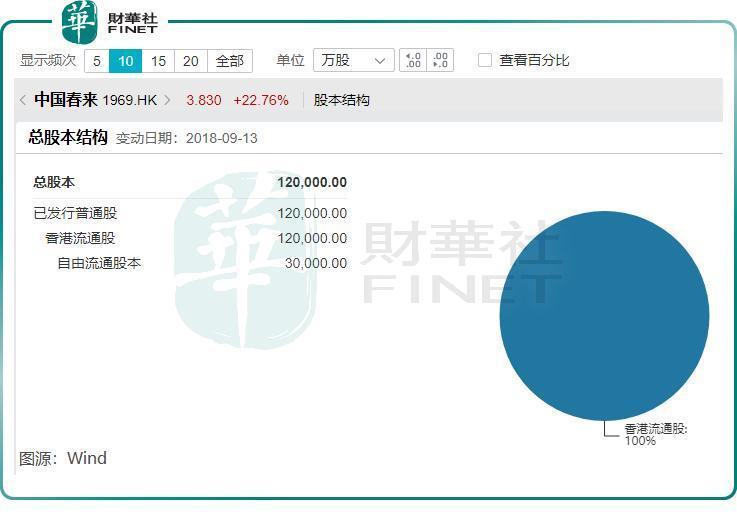
This "small free float combined with high control" setup means that only a small amount of capital is needed to trigger short-term price surges. However, due to the lack of long-term fundamental support, such surges are highly prone to rapid pullbacks as speculative capital takes profits. For investors, this kind of price volatility driven by a minority of capital carries hidden risks, and blindly chasing highs may lead to significant pressure from being trapped.
Behind the highly concentrated ownership lies the strong family-run nature of China Chunlai. A review of its 2018 prospectus and Tonghuashun data reveals extremely tight "kinship ties" among the company’s management.
Hou Junyu, now 35, the son of China Chunlai’s chairman Hou Chunlai, returned to China in 2012 without completing his undergraduate studies at the University of Sussex to take over the group’s operations.
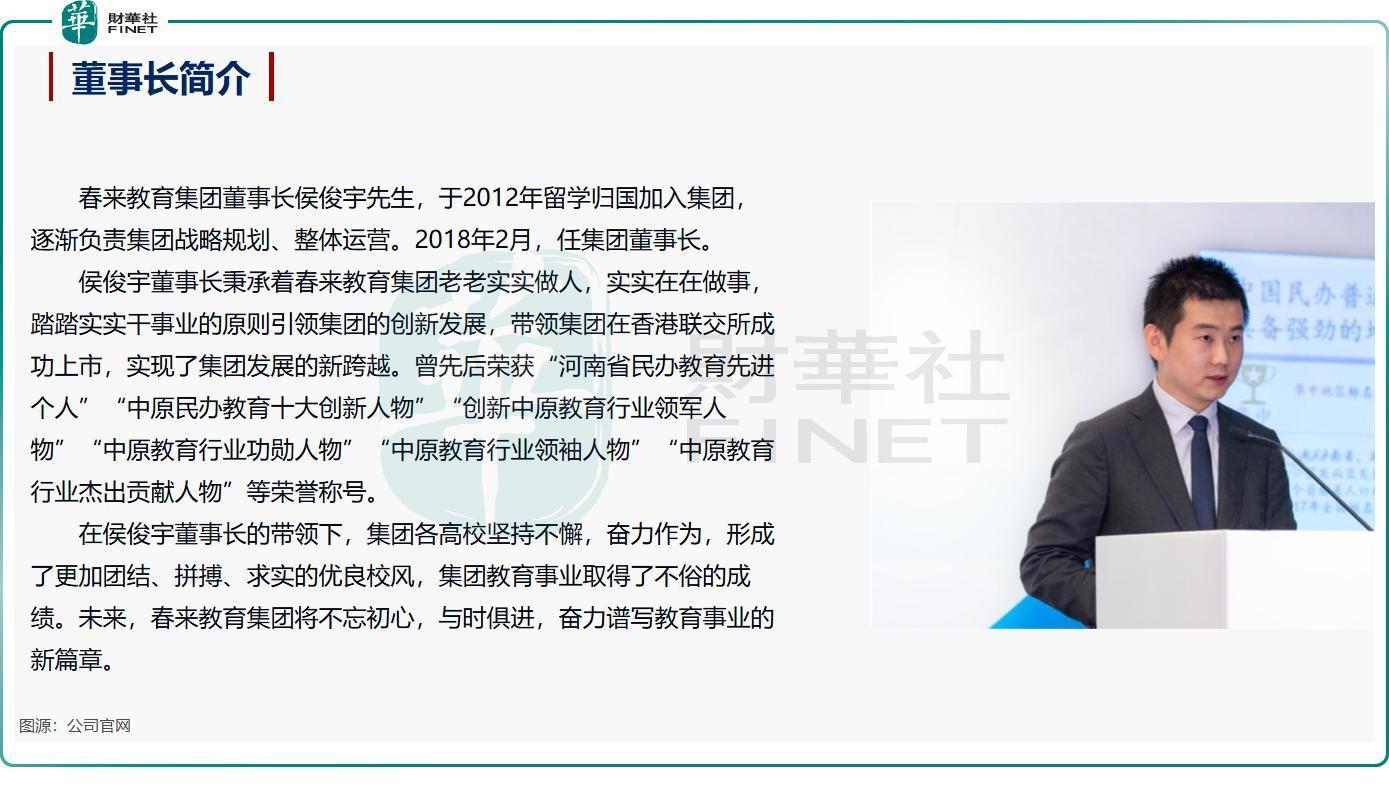
Additionally, Hou Junyu’s mother, Jiang Shuqin, serves as an executive director of China Chunlai with a high school education, overseeing strategic development and financial supervision. Jiang Shuqin is also the sister-in-law of the company’s general manager Yang Xinzhong and the cousin of former HR director Jiang Yongqi.
While the concentration of family members in key positions may enhance decision-making efficiency and strategic execution speed, it has also raised persistent market concerns about "governance independence." Are the company’s major decisions fully considering the interests of minority shareholders? Can the professional management team truly play its role? Such questions linger in investors’ minds.
However, setting aside the stock price’s wild swings and governance controversies, China Chunlai’s fundamental performance presents a different picture of stability.
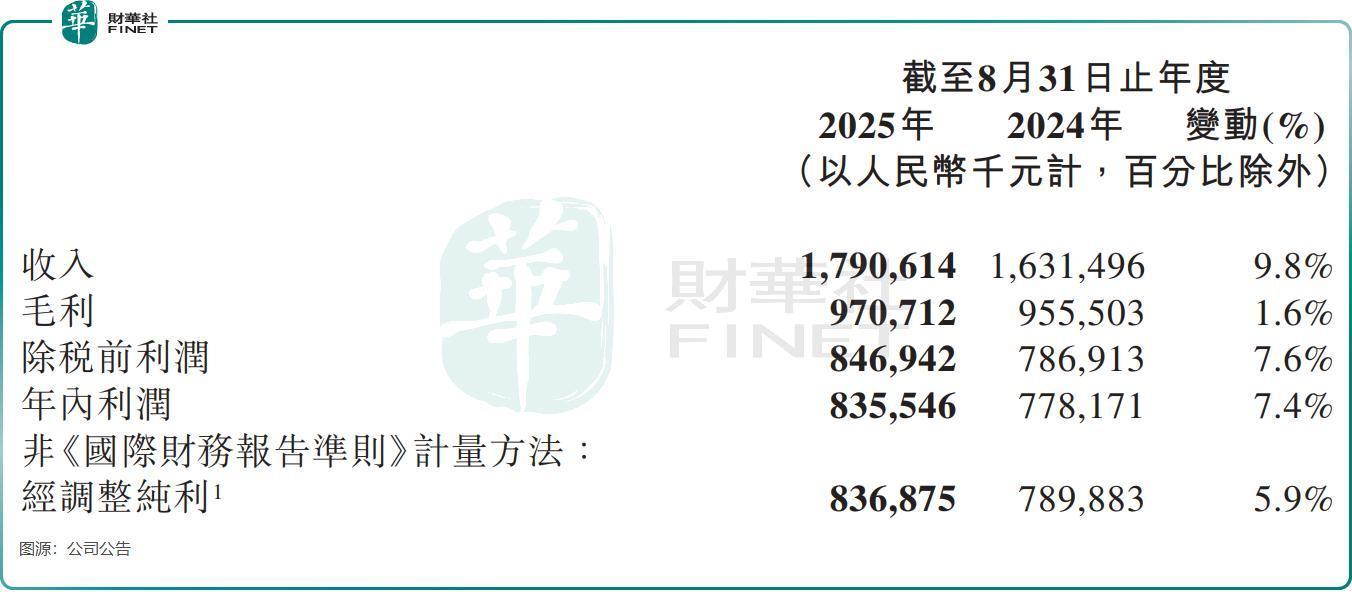
For the fiscal year 2025 (ending August 31, 2025), the company achieved revenue of RMB 1.791 billion (in RMB, same below), a year-on-year increase of 9.8%, and a profit of RMB 836 million, up 7.4% year-on-year.
The student enrollment figures are equally impressive, with approximately 110,000 students in the 2024/2025 academic year, up 6.4% year-on-year, thanks in part to contributions from new campuses such as Anyang University Yuanyang Campus and Hubei Health Vocational College. Financially, as of August 31, 2025, the company’s cash and cash equivalents stood at RMB 832 million.
In recent years, China Chunlai has also attempted to ride the AI wave to find new growth avenues.
In October 2025, the company’s board chairman Hou Chunlai announced the donation of his AI and blockchain technology usage rights and related profits from a data center in Washington, D.C., to the company at no cost. The company also deployed the DeepSeek R1 model, integrating it into its self-developed AI education platform to focus on optimizing teaching processes and designing personalized learning paths.
However, China Chunlai’s path to technological transformation is not without challenges. Currently, the effects of integrating AI and blockchain technologies have yet to fully materialize, and the education industry’s inherent "heavy investment, slow return" nature means that such initiatives require long-term patience. More critically, can its existing family-run governance model adapt to the demands of cutting-edge technological transformation? Does the internal pool of professional talent suffice to effectively implement new technologies? These questions remain unanswered.
For China Chunlai, breaking free from the "stock price volatility cycle" and transitioning from a "traditional education stock" to a "tech education stock" requires not only sustained delivery on its AI strategy but also greater openness in its governance structure. Only then can it truly win the market’s long-term trust.
Author: Yao Yuan
The copyright of this article belongs to the original author/organization.
The views expressed herein are solely those of the author and do not reflect the stance of the platform. The content is intended for investment reference purposes only and shall not be considered as investment advice. Please contact us if you have any questions or suggestions regarding the content services provided by the platform.
