



Denovo Pharmaceuticals rushes to Hong Kong stocks again: With Phase III in hand, will capital be willing to pay for this certainty?

Another Chinese biotech company focusing on the "anti-infection" track has submitted an application to the Hong Kong Stock Exchange.
On February 3, 2026, Suzhou Danuo Pharmaceutical Co., Ltd. (referred to as "Danuo Pharmaceutical") once again submitted a prospectus to the Hong Kong Stock Exchange, with CITIC Securities and ABC International as joint sponsors.
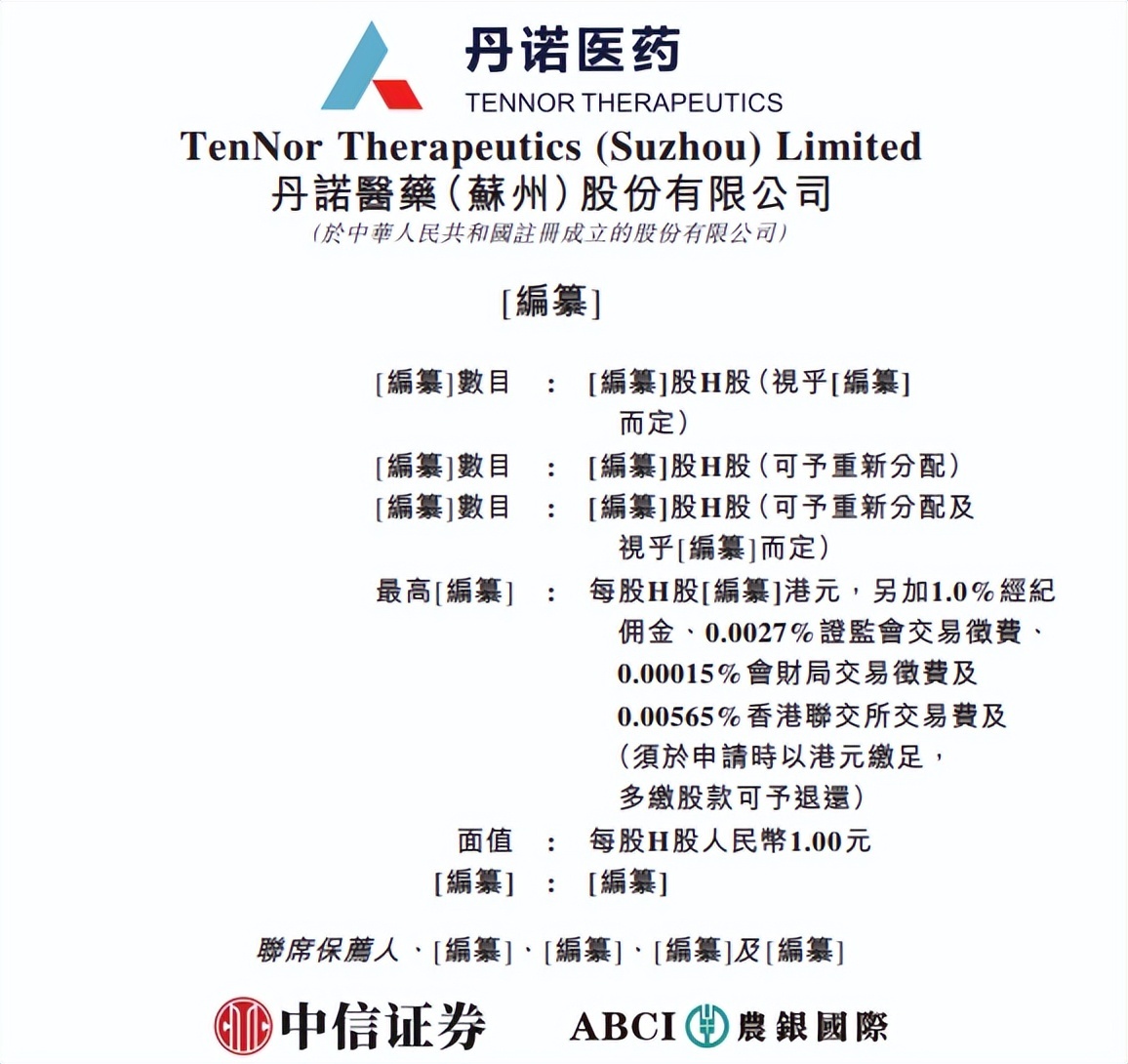
This comes just over half a year after its first application in July 2025 expired. During this half-year period, the biggest variable for Danuo Pharmaceutical was that its core product, Lifotonazole (TNP-2198), submitted a new drug application (NDA) in August 2025.
This means Danuo Pharmaceutical has officially reached the critical threshold of transitioning from massive R&D investment to commercial revenue.
Specializing in the Anti-Infection Track, Multi-Target Innovation Breaks New Ground
Danuo Pharmaceutical was established in 2013. Its focus was not on popular oncology or autoimmune fields but on the anti-infection sector, which has long been considered "low-innovation return." This choice was not particularly advantageous at the time but has gradually revealed its strategic value over the past few years.
With the worsening global issue of antimicrobial resistance (AMR), the therapeutic ceiling of traditional single-target antibacterial drugs has become increasingly apparent. Taking Helicobacter pylori as an example, the infection rate in China is about 44%, but the mainstream bismuth quadruple therapy (BQT) faces systemic issues such as rising resistance rates, numerous adverse reactions, and poor patient compliance.
Danuo Pharmaceutical's approach is to use multi-target conjugate molecular technology to achieve multi-mechanism synergy within a single molecule, thereby reducing the probability of resistance. This idea is not simply an "improvement of antibiotics" but an attempt to reconstruct the effectiveness boundary of anti-infective drugs at the mechanism level.
To date, Danuo Pharmaceutical has built a pipeline of seven innovative assets, three of which are listed as core products, including a new molecular entity for Helicobacter pylori infection—Lifotonazole (TNP-2198), an injectable version of Rifaxiquinone (TNP-2092) for implant-related bacterial infections, and an oral formulation of TNP-2092 targeting gut microbiota-related metabolic diseases.
Among these, the first two core products are concrete implementations of the above technical concept. Lifotonazole is designed to simultaneously inhibit RNA polymerase and nitroreductase, achieving synergistic bactericidal effects through dual mechanisms. According to the company's R&D results released in January 2026, the drug performed impressively in a Chinese Phase III clinical trial involving 700 patients.
Its triple therapy achieved an eradication rate of over 94% in treatment-naïve patients and still reached 90% in nearly half of multidrug-resistant patients, significantly outperforming traditional therapies. More importantly, its adverse event rate (37%) was lower than the 53% of traditional BQT. Against the backdrop of China's high Helicobacter pylori infection rate and the challenges faced by traditional therapies due to resistance and side effects, the potential market space for this drug is self-evident.
The injectable version of Rifaxiquinone, designed for the more challenging "biofilm infection" treatment, targets three sites simultaneously and is the world's first new molecular entity candidate drug expected to be effective against biofilm infections at clinical doses. Currently, the drug has entered Phase II clinical trials in both China and the U.S.
This "multi-target" approach essentially transplants the logic of "overcoming resistance" from cancer drug development into the anti-infection field. It avoids direct competition with industry giants on traditional single-target paths and attempts to establish extremely high technical barriers in a niche but critical clinical need.
According to the prospectus, over 80% and 65% of Danuo Pharmaceutical's R&D investments in 2024 and the first quarter of 2025, respectively, were concentrated on its core products, reflecting its strategic focus on breakthroughs.
Notably, the layout of Danuo Pharmaceutical's three core product pipelines follows a clear "vertical extension" logic, from acute infections → refractory infections → microbiota imbalance-related chronic diseases. This also allows Danuo Pharmaceutical to surpass traditional anti-infection companies in terms of commercial imagination, gradually intersecting with the emerging field of microbiome-modulating medicines (SMMM).
With Phase III in Hand, Can Danuo Pharmaceutical Be Repriced?
Among all of Danuo Pharmaceutical's assets, Lifotonazole (TNP-2198) is the closest to commercialization and the most highly anticipated product in the capital market. According to the prospectus, the product has completed a Chinese Phase III head-to-head clinical trial and submitted an NDA to the National Medical Products Administration (NMPA) in August 2025. In a study covering 40 clinical centers and approximately 700 patients, Lifotonazole triple therapy (RTT) was non-inferior and even partially superior to the current BQT regimen in terms of eradication rate, safety, and compliance.
Its core value lies not in "replacing one regimen" but in three aspects: First, mechanism innovation—dual-target synergistic antibacterial action reduces resistance risk; second, improved patient experience—lower adverse event rates than BQT; and third, public health significance—facilitating the implementation of "screening-eradication" strategies to reduce gastric cancer risk.
Globally, no dedicated new molecular entity has been approved for Helicobacter pylori, giving Lifotonazole a clear First-in-Class positioning.
Compared to Lifotonazole, the strategic significance of another core product, TNP-2092, is more medium- to long-term. Its injectable version primarily targets implant-related biofilm infections, a field long lacking effective drugs, while the oral formulation extends further to gut microbiota-related metabolic diseases, including hepatic encephalopathy and irritable bowel syndrome.
This layout positions Danuo Pharmaceutical to form "cross-comparisons" with international microbiome-focused companies like Enterome and Seres Therapeutics in terms of technical pathways: not directly delivering microbiota but precisely modulating microbiota structure and metabolic function through small molecules (the SMMM pathway).
Against the backdrop of plateauing treatments for chronic diseases like IBD, such indirect modulation approaches are seen as potential breakthroughs beyond current therapeutic ceilings.
Financially, Danuo Pharmaceutical remains a typical R&D-focused biotech. It has yet to generate revenue, with R&D expenditures of RMB 108 million and RMB 69.84 million in 2023 and 2024, respectively, and net losses of RMB 192 million and RMB 146 million in the same periods. In the first three months of 2025, the loss was RMB 115 million.
Notably, as core pipelines gradually enter late-stage clinical trials, the company's R&D and operational losses have narrowed. This change stems more from project phase transitions than cost-cutting.
In terms of financing, from 2022 to the present, Danuo Pharmaceutical has completed multiple funding rounds from Series D to E, with its valuation rising from approximately RMB 1.6 billion to RMB 2 billion. Its shareholder structure includes both industrial capital like WuXi AppTec and long-term institutions like Northern Light Venture Capital, Oriza Holdings, and Gaotejia. This structure, to some extent, indicates that the company's focus remains on accelerating product commercialization rather than short-term financial embellishment.
From a broader perspective, Danuo Pharmaceutical sits at the intersection of three industry trends: First, the global resurgence of antibacterial drug innovation, with AMR issues driving renewed policy and capital attention to anti-infection drugs; second, the rise of microbiome therapies, from FMT to LBP and the gradual maturation of small-molecule modulation pathways (SMMM); and third, the repricing of Hong Kong-listed biotech stocks, with the market placing greater emphasis on Phase III data, NDA applications, and actual commercialization milestones.
Compared to overseas companies like Seres and 4D Pharma, Danuo Pharmaceutical's advantages lie in its sharper focus and proximity to real-world applications, while its shortcomings include unverified international commercialization experience and pipeline breadth.
As a First-in-Class anti-infection drug stands at the doorstep of commercialization, whether the capital market will reprice this "definitive progress"—and by how much—remains a focal point.
The copyright of this article belongs to the original author/organization.
The views expressed herein are solely those of the author and do not reflect the stance of the platform. The content is intended for investment reference purposes only and shall not be considered as investment advice. Please contact us if you have any questions or suggestions regarding the content services provided by the platform.
