



Declining gross margin, credit upgrade: Why is the market still patient with ZTO Express?

Amid the industry consensus of "anti-involution," ZTO Express once again finds itself in a position of tension: on one hand, revenue and parcel volume continue to grow, while on the other, there is the real pressure of declining gross margins.
In early February, ZTO Express-W (02057.HK) disclosed its full-year 2025 performance forecast: annual revenue is expected to be between RMB 48.5 billion and RMB 50 billion, a year-on-year increase of 9.5% to 12.9%, generally in line with institutional expectations. However, at the same time, gross profit is expected to be between RMB 12.15 billion and RMB 12.55 billion, a year-on-year decline of 8.5% to 11.4%.
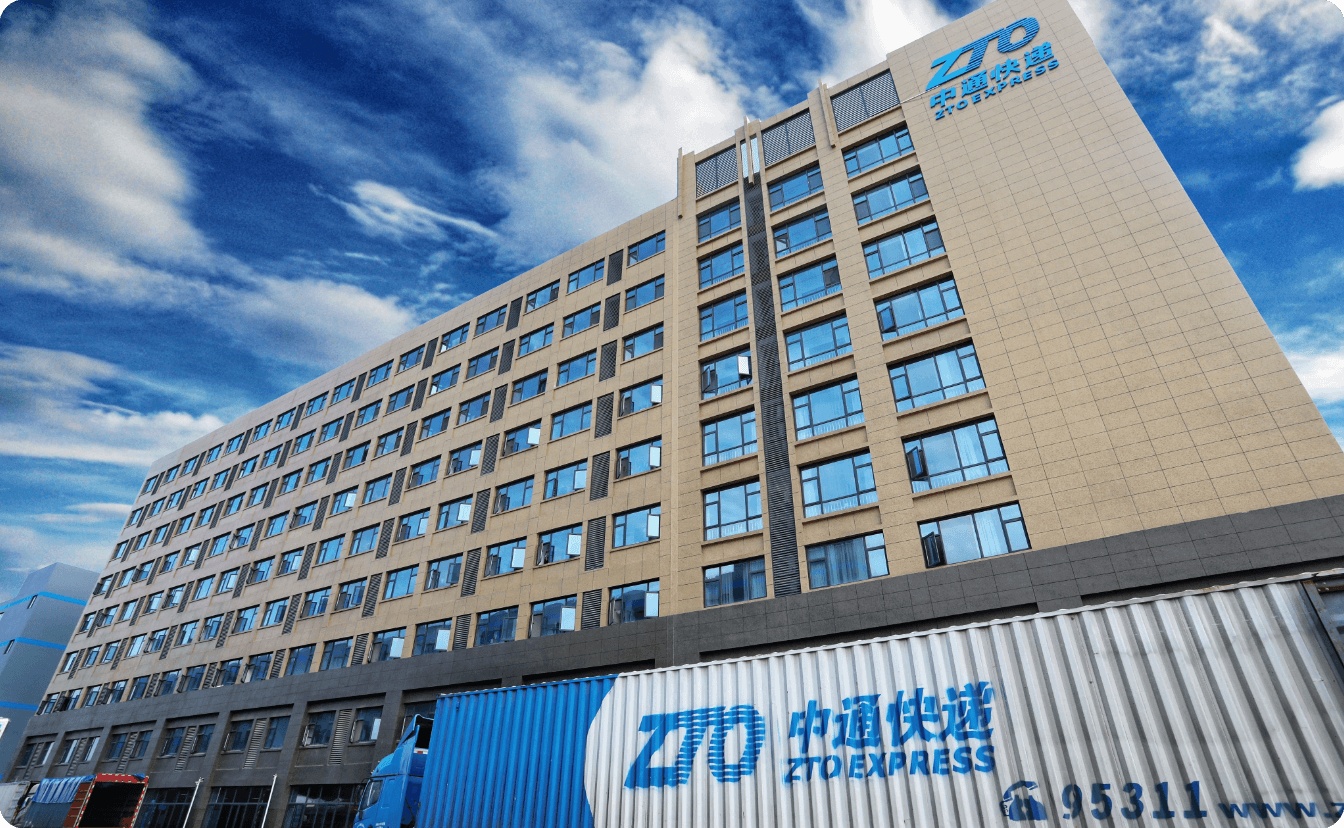
After the earnings announcement, ZTO Express's stock price rose by nearly 3% at one point. The market clearly did not simply interpret the "decline in gross margins" as a deterioration in operations but rather tended to understand it in the context of industry cycles and changes in competitive structure.
In the reality where "parcel volume continues to surge" and "revenue per ticket remains under pressure" coexist, this leader, which has consistently ranked first in China's express delivery industry for many years, is experiencing a critical year of transitioning from scale-driven to quality-oriented growth.
Volume Moves Forward, But Not All Growth Is 'Valuable'
From the results, ZTO's business scale continued to expand in 2025. The company disclosed that annual parcel volume reached 38.52 billion, a year-on-year increase of 13.3%, which is the primary source of revenue growth.
However, when viewed against the broader industry backdrop, this growth rate is not the strongest, especially considering ZTO's leading position. According to data from the State Post Bureau, China's express delivery volume is expected to reach 199 billion parcels in 2025, a year-on-year increase of approximately 13.7%. In comparison, ZTO's annual parcel growth rate is slightly below the industry average.
This change is even clearer over time. In the first half of 2025, ZTO's parcel volume grew by 18% year-on-year, higher than the industry's overall growth rate of 15.8% during the same period and also higher than the full-year growth rate. This means that its parcel expansion pace slowed in the second half of the year.
The structural reasons are equally easy to understand. ZTO's 13.3% growth came more from low-priced, standardized e-commerce parcels. Rating agency Fitch explicitly stated in its report that e-commerce parcels accounted for about 85% of the industry's express delivery revenue in 2025, and ZTO's core business is highly concentrated in standard e-commerce parcels with lower time sensitivity and lower per-ticket prices.
This also determines the inherent constraints of ZTO's growth model: even though the company maintains industry-leading operational efficiency and cost advantages in the standard e-commerce parcel segment and continues to generate stable free cash flow, in an environment of long-term price pressure, volume growth cannot linearly translate into gross margin expansion.
The year-on-year decline of 8.5%–11.4% in gross profit is not due to operational deceleration but rather a concentrated reflection of the price wars of previous years in financial terms.
2025 is widely regarded as a critical juncture for the "anti-involution" movement in the express delivery industry. From a policy perspective, postal regulatory authorities and industry associations in many regions have explicitly opposed below-cost competition. From a data perspective, the downward trend in industry prices has significantly narrowed.
But for ZTO, this improvement is not yet enough to fully offset the profit erosion caused by earlier price declines. In other words, the industry is "stopping the bleeding," but there is still a time lag before profits truly "recover."
A-Grade Credit Rating: Why Is the Market Still Willing to 'Be Patient'?
Almost simultaneously with the earnings forecast, ZTO announced plans to issue $1.5 billion in convertible preferred notes at a premium of about 37.5%. On the surface, this is a potentially dilutive financing move, but the market reaction has been positive.
Citi noted in its research report that as of September 2025, ZTO still had $700 million in share repurchase quotas. The low interest rate and high conversion premium could largely offset the dilution impact, and the company might restart buybacks around the earnings release. According to this interpretation, the "bond issuance + buyback" combination is more about preserving flexibility for long-term strategy without sacrificing the cash safety net.
More symbolic is the attitude of international rating agencies. Moody's assigned ZTO an "A3" issuer rating for the first time, while Fitch gave it an "A-" rating with a stable outlook.
In an industry long considered "highly competitive with low barriers," an A-grade rating is uncommon. The rating agencies' core reasons are highly consistent, including leading market share, consistently positive free cash flow, net cash position, and a robust balance sheet.
Of course, the rating reports also pointed out ZTO's boundary conditions. Compared with higher-rated peers, ZTO's operating scale, as measured by EBITDA, is smaller, and its business is highly concentrated in e-commerce parcels, making its profit volatility higher than that of typical A-grade companies.
As for ZTO's parcel growth rate being lower than the industry average, the consensus among several brokerages is that this is not a sign of declining competitiveness but rather a short-term divergence between operational strategy and industry trends. In the long run, it may mean the network ecosystem has not been dragged down by price wars.
Slowing Down Voluntarily Is a Temporary 'Step Back'
Starting in 2025, with the gradual implementation of government policies advocating "orderly competition" and "anti-involution," the competitive landscape of China's express delivery industry has seen positive changes.
ZTO Chairman Lai Meisong pointed out at the 2026 National Network Work Conference, "Under the government's active advocacy of orderly competition and anti-involution policies, industry prices have gradually stabilized and rebounded, and the competitive ecosystem continues to optimize."
This trend is reflected in the data. In December 2025, the industry's revenue per ticket fell by 1.6% year-on-year, a significant narrowing of 6.7 percentage points from the previous month. Research from Caitong Securities also showed that in December 2025, revenue per ticket in first-tier regions fell by only 0.3% year-on-year, a sharp narrowing of 8.6 percentage points, indicating that the "anti-involution" policy is taking effect first in key markets.
Faced with industry changes, ZTO's response is not a single-point effort. On one hand, it continues to advance infrastructure construction. As of June 2025, it had established 94 sorting centers, 690 automated sorting lines, and operated over 10,000 self-owned trunk vehicles. On the other hand, ZTO has intensified efforts in last-mile delivery, setting up approximately 110,000 service stations and 7 million smart parcel locker compartments to improve last-mile efficiency and service coverage.
The direct result of these investments is improved service quality. In the first half of the year, ZTO's end-to-end delivery time continued to optimize, while customer complaints, loss rates, and damage rates declined, ranking it at the top in reverse logistics platform assessments.
In fact, compared to "trunk line automation," which has already been widely replicated in the industry, ZTO's real focus in recent years has been on restructuring the last-mile system. Through service station partnerships, direct delivery, reverse logistics, and scattered parcel development, ZTO aims to reshape its profit structure by reducing last-mile costs and increasing the proportion of high-value parcels, even as per-ticket prices struggle to rebound quickly.
Lai Meisong's assessment is that the express delivery industry is at a critical stage of transitioning from "high quantity" to "high quality."
From a pure profit perspective, ZTO's 2025 performance is not dazzling. But when placed in the context of industry cycles and competitive dynamics, it is a relatively "clean" report card: parcel volume is still growing, industry order is being restored, and the leader is choosing to uphold operational bottom lines rather than chase short-term rankings.
The copyright of this article belongs to the original author/organization.
The views expressed herein are solely those of the author and do not reflect the stance of the platform. The content is intended for investment reference purposes only and shall not be considered as investment advice. Please contact us if you have any questions or suggestions regarding the content services provided by the platform.
