

 Amazon
 Feed Explorer
Regarding the Great Famine, these 11 books have recorded history.

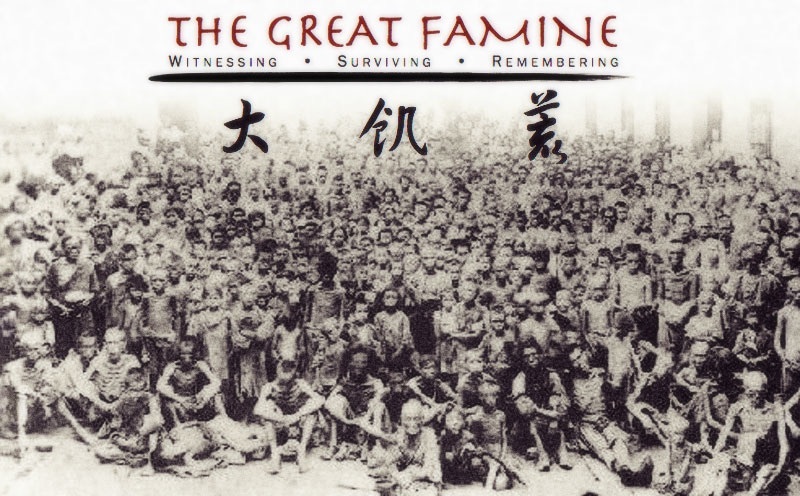
The period from 1959 to 1961 was an unprecedented time of great famine. These eleven books about the Great Famine, whose authors collected a vast amount of historical materials and interviewed survivors who personally experienced the famine, provide a relatively comprehensive and factual analysis and description of the causes and impacts of the famine from different perspectives and levels.
1. Dong Fu, "Green Wheat Seedlings, Yellow Rape Flowers: A Record of the Great Famine in Western Sichuan"
During the Great Famine, Sichuan was the region that suffered the most severely from the man-made disaster of the Great Leap Forward. Relevant data shows that the death toll exceeded ten million. This book is the first work to document the history of the Great Leap Forward and the Great Famine in Sichuan. The author spent several years collecting a large amount of historical materials, including millions of words of historical archives, and interviewed hundreds of cadres and ordinary people at various levels who personally experienced that period of history. It speaks with facts and truthfully reproduces this history.
2. Yi Wa, "Searching for Survivors of the Great Famine"
This book, totaling 540,000 words, is a record of the author's arduous and painstaking journey, traveling over mountains and rivers. It embodies the author's sweat and, more importantly, the blood and tears of the victims and survivors of the Great Famine. It adds tangible evidence for our exploration and reflection on that horrifying tragedy that occurred on Chinese soil half a century ago.
3. Qiao Peihua, "The Xinyang Incident"
In May 1960, Zhou Enlai learned from Wang Congwu's report the news that "over 700,000 people starved to death in Xinyang." He immediately reported it to Mao Zedong. The next day, Zhou Enlai, acting on orders, presided over an emergency meeting of the State Council to announce the "Xinyang Incident." At the meeting, Zhou Enlai said with great sorrow: Such a major event happened in Xinyang, yet no one reported it; the central government was unaware. Zhou Enlai later learned that the reason the central government could not be informed of the "Xinyang Incident" in a timely manner was because the Henan Provincial Committee and the Xinyang Prefectural Committee implemented a strict "internet shutdown operation." Qiao Peihua's records allow us to see why the "Xinyang Incident" occurred.
4. Zhang Xiangchi, "The Sanctuary: Reflections on the 1959-1961 Xinyang Great Famine"
This is a work of military writer Zhang Xiangchi, who poured his heart and soul into it over ten years, traversing the mountains and rivers of southern Henan, and interviewing over a hundred cadres and ordinary people from that time. Filled with passion, he created the book "The Sanctuary," which for the first time provides a panoramic disclosure of some of the earth-shattering and soul-stirring people and events that occurred during the 1959-1961 famine historically known as the "Xinyang Incident," reflecting the "blood-and-flesh ties" between the Party and the masses during those difficult years.
5. Cao Shuji, "The Great Famine: China's Population from 1959 to 1961"
During the three-year Great Famine from 1959 to 1961, exactly how many people starved to death in China remains unknown to this day, with no accurate figure. Due to interference from the ultra-leftist line, no nationwide census was conducted during the difficult period. Consequently, later scholars and experts have all made estimates based on the only three population censuses available from 1953, 1964, and 1982, along with other reference data.
The "China Statistical Yearbook" published in 1985 shows that the national population decreased by 10 million in 1960 compared to 1959. "Seventy Years of the Communist Party of China," compiled by the Party History Research Center of the CPC Central Committee, states: "According to official statistics, the national population decreased by over 10 million in 1960." This book provides some detailed materials.
6. Yang Jisheng, "Tombstone"
Yang Jisheng spent ten years conducting investigations and interviews. Using authentic first-hand materials, he wrote a monumental reportage work exposing the three-year Great Famine of the last century. It includes both focused provincial narratives and overviews of the famine in various provinces. For example, Sichuan Province, historically known as the "Land of Abundance," with fertile land and rich resources, saw 10 million people starve to death during the Great Famine, the highest number in the country. Henan Province, with its fertile central plains, saw at least 3 million deaths, including 1 million in the Xinyang region, accounting for one-eighth of the region's 8 million population. In Fengyang County, Anhui Province, with a population of less than 400,000, over 90,000 people starved to death, nearly a quarter. Even more heartbreaking was the occurrence of cannibalism during the Great Famine.
7. Penny Kane, "China's Great Famine"
In this book, scholar Penny Kane introduces several data points: Aird estimated 23 million abnormal deaths in 1960-1961; Mosher estimated abnormal deaths in 1960 to be between 11 and 30 million; Hill estimated 30 million abnormal deaths from 1958 to 1962, with 33 million babies not born or delayed in birth. Regardless, the lessons of history are profound.
8. Song Yongyi, Ding Shu (eds.), "The Great Leap Forward and the Great Famine: Facts and Reflections from Historical and Comparative Perspectives"
This book is a collection of essays by over sixty domestic and international scholars on the historical research of the Great Leap Forward and the Great Famine. Examining history may help prevent the recurrence of such disasters.
9. Tong Ziping, Wu Aning, "The Great Calamity: A Documentary Record of the 1959-1962 Great Famine in Yingjing, Sichuan"
Based on the numerous facts provided in this book, we can discover that the 1959-1962 Yingjing Great Famine had three characteristics different from other places: 1. The highest proportion of starvation deaths in the country; 2. Favorable weather conditions; 3. Large stockpiles of grain.
10. Niu Ben, "Oral History of the Great Famine"
In this book, Niu Ben provides micro-level ironclad evidence of the Great Famine 50 years ago: one location—his hometown, Niuzhai Brigade, Xingliu Commune, Fuyang, Anhui; one period: 1960. In that year, Niuzhai, with a population of 4,062, saw 930 deaths, nearly a quarter. He interviewed 38 elderly people, recording this tragic history.
11. Frank Dikötter, "The Great Famine"
In an interview, Frank Dikötter said that this book took six months to collect materials and three to four years in total including writing. He and his assistants visited over twenty archives, including provincial, municipal, county-level, and the Ministry of Foreign Affairs, as well as many victims from places like Sichuan, Henan, Anhui, Shandong, and Guangdong, recording their memories of the Great Leap Forward era.
The copyright of this article belongs to the original author/organization.
The views expressed herein are solely those of the author and do not reflect the stance of the platform. The content is intended for investment reference purposes only and shall not be considered as investment advice. Please contact us if you have any questions or suggestions regarding the content services provided by the platform.
