

Understanding Galaxy Bosera ASEAN ETF in One Article: How Do Economic Exposure Factors Define the Core of Stock Selection?

Amid the wave of global industrial chain restructuring and regional economic integration, the economic and trade linkage between China and ASEAN is becoming a key engine for Asia-Pacific economic growth. The Galaxy Bosera MSCI China ASEAN Economic Interconnectivity Index ETF $Galaxy Bosera ASEAN (02805.HK)$, as a thematic tool product focusing on this theme, leverages a unique design logic to build a stock selection system centered on the "Economic Exposure Factor," breaking through the limitations of traditional regional thematic products. It aims to provide targeted allocation tools for investors focusing on bilateral industrial collaboration.
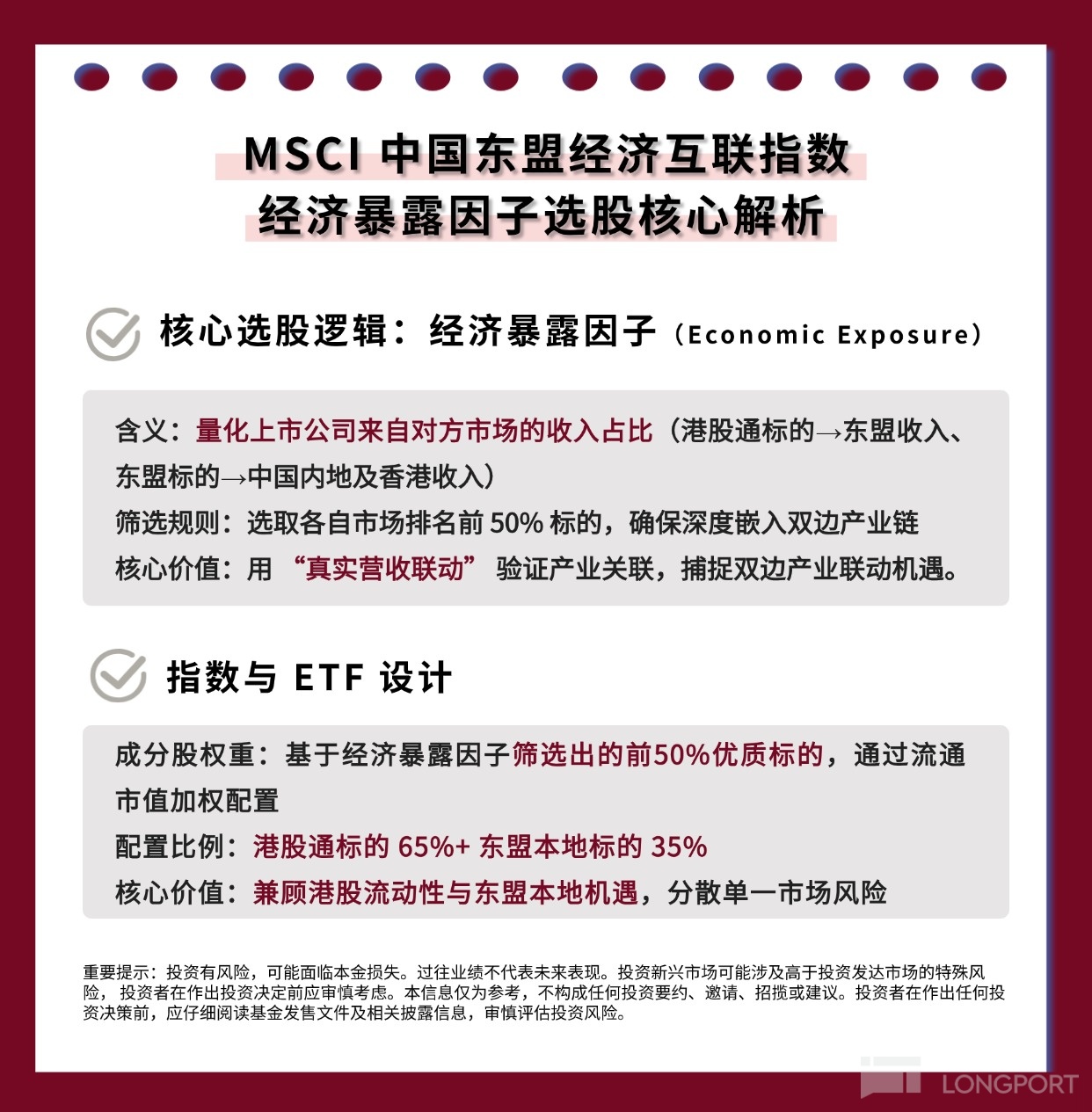
Economic Exposure Factor: Targeting Based on Revenue Linkage, Rejecting "Label-Based" Stock Selection
The Economic Exposure Factor is the core quantitative indicator of the MSCI China ASEAN Economic Interconnectivity Index tracked by this ETF. Its core logic is "anchoring targets based on revenue linkage": by estimating the proportion of revenue from ASEAN for Stock Connect companies and the proportion of revenue from mainland China and Hong Kong for local ASEAN companies, it forms the core basis for quantitative stock selection.
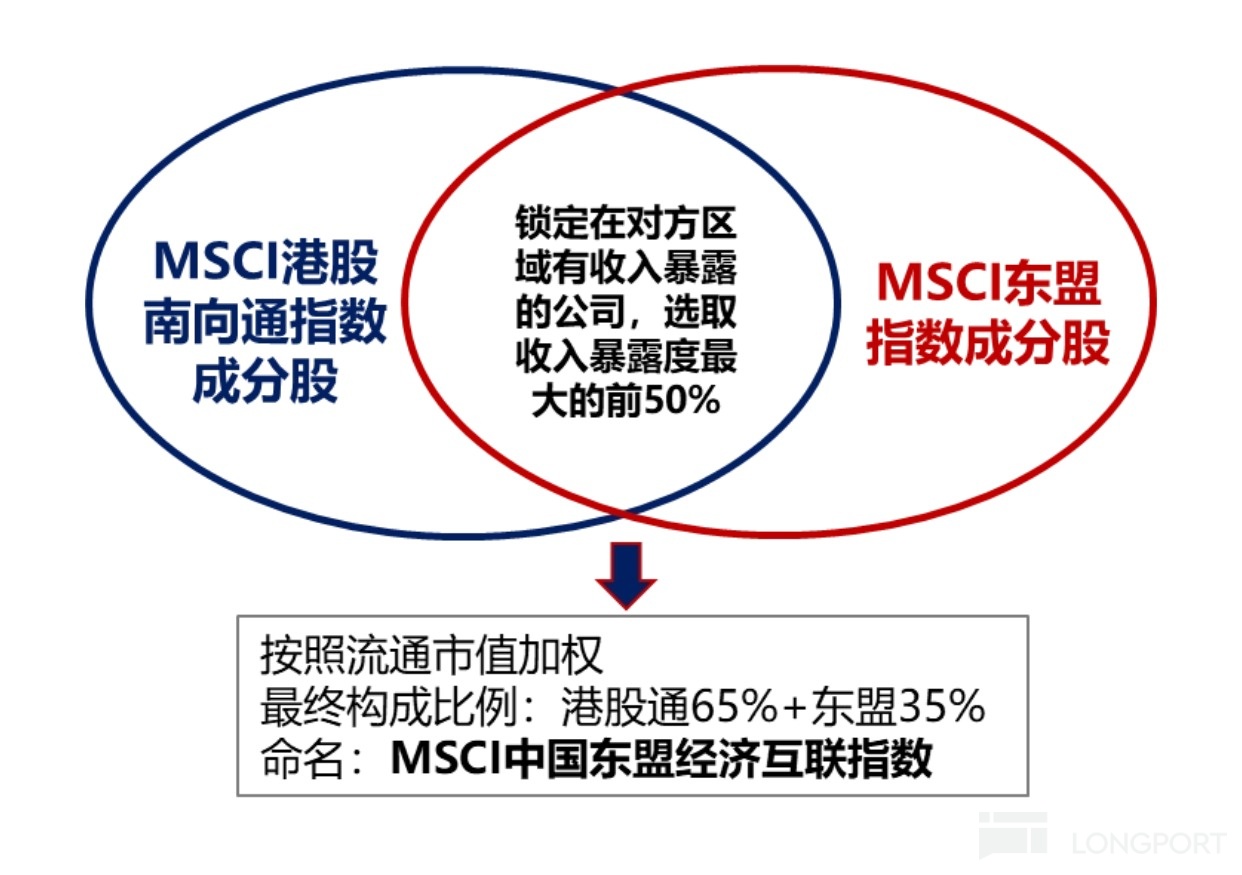
The stock selection process is concise and efficient: based on the ranking of Economic Exposure Factor values, it screens the top 50% of quality targets in the Stock Connect and local ASEAN markets to form an initial stock selection pool. This design ensures that selected targets are deeply integrated into the industrial chain of Chinese companies going global and ASEAN resource complementarity, capturing the potential opportunities brought by bilateral synergy.
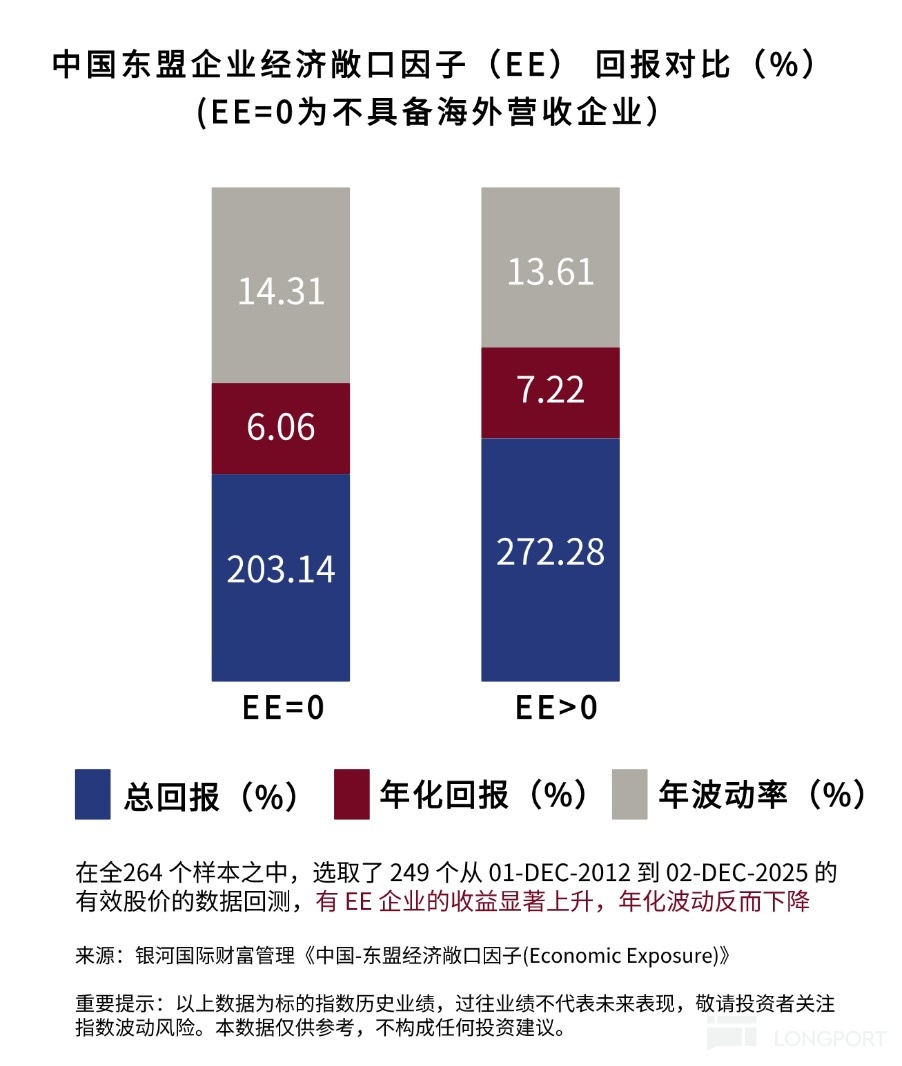
13 Years of Data Show: Return and Volatility Characteristics of the Economic Exposure Factor
Relying on 13 years of data from 264 sample companies from 2012 to 2025, Galaxy International Wealth Management focused its research on the "Economic Exposure Factor (EE)": The core of the EE factor is the degree of revenue linkage between companies and China-ASEAN (mutually referred to as the "opposite region"). The "High Exposure Group" with EE>5% specifically refers to companies deeply embedded in the China-ASEAN economic structure; while "excess return" refers to the additional return of such companies relative to companies without EE, which can range from 130% to 300%.
The core conclusion of Galaxy International Wealth Management's research is that the EE factor has dual value — the higher a company's revenue proportion from China-ASEAN, the more prominent its excess return, while also exhibiting relatively lower volatility in high-volatility market environments. Quantitative data clearly illustrates this: the cumulative total return for companies without EE is 203%, while for companies with EE it reaches 272%; the return for the High Exposure Group further increases to 373%, with the China-to-ASEAN High Exposure Group jumping to 737%. Meanwhile, the volatility of the High Exposure Group (11.48%) is lower than that of the No EE Group (14.31%).
Product Implementation: Balancing Liquidity and Diversification
The MSCI China ASEAN Economic Interconnectivity Index translates the Economic Exposure Factor stock selection logic into executable index rules. Based on the top 50% of targets screened by the factor, it uses the free-float market capitalization weighting method to determine constituent stock weights and strictly enforces a ratio of "65% Stock Connect targets + 35% local ASEAN targets." This structure retains the high liquidity advantage of Stock Connect targets while incorporating quality local ASEAN targets, aligning with the complementary nature of the bilateral economies and effectively diversifying single-market risk.
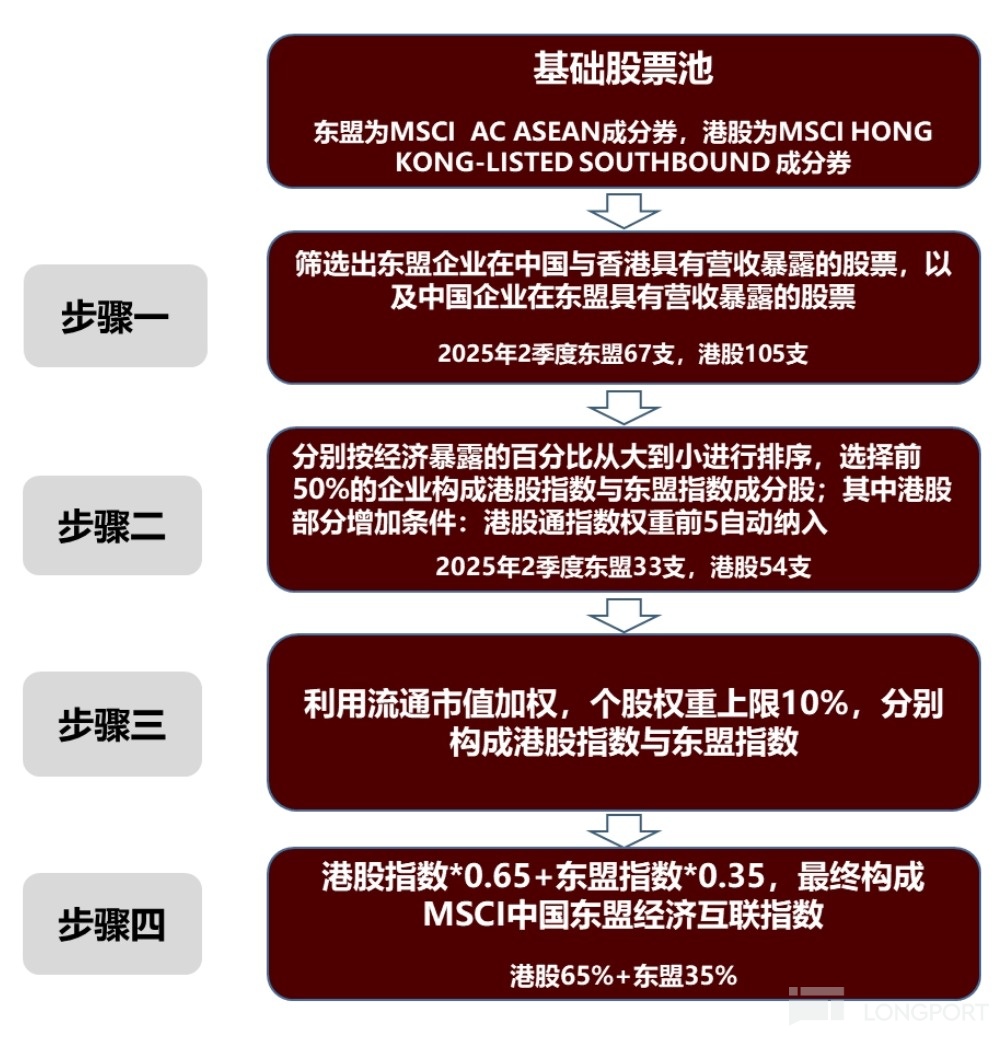
The core competitiveness of the Galaxy Bosera MSCI China ASEAN Economic Interconnectivity Index ETF lies in the innovative application of the Economic Exposure Factor — transforming the macro trend of China-ASEAN industrial synergy into quantifiable, trackable investment targets. It avoids the allocation bias of traditional regional thematic products while continuously tracking the opportunities brought by China-ASEAN collaborative development.
📌 Risk Warning: Investing involves risks, including the possible loss of principal. Past performance is not indicative of future results. Investing in emerging markets may involve special risks higher than those in developed markets. Investors should carefully consider before making any investment decisions. This information is for reference only and does not constitute any investment offer, invitation, solicitation, or advice. The material is produced and distributed by Bosera Funds (International) Co., Ltd. and has not been reviewed by the Securities and Futures Commission of Hong Kong. Before making any investment decision, investors should read the fund offering documents and related disclosure information carefully and prudently assess investment risks.
Index Provider Disclaimer: The fund or stock mentioned herein is not sponsored, endorsed, or promoted by MSCI, and MSCI bears no liability with respect to any such fund or stock or to any index on which such fund or stock is based. The fund prospectus contains a more detailed description of the limited relationship MSCI has with Bosera Funds (International) Co., Ltd. and any related funds.
https://www.bosera.com.hk/zh-HK/products/fund/news/detail/12345
#Hong Kong Stock ETF #China-ASEAN Economic Integration #Cross-Regional Investment #Asset Management #Value Investing #Global Allocation
The copyright of this article belongs to the original author/organization.
The views expressed herein are solely those of the author and do not reflect the stance of the platform. The content is intended for investment reference purposes only and shall not be considered as investment advice. Please contact us if you have any questions or suggestions regarding the content services provided by the platform.
