

 Rate Of Return
💢💢💢

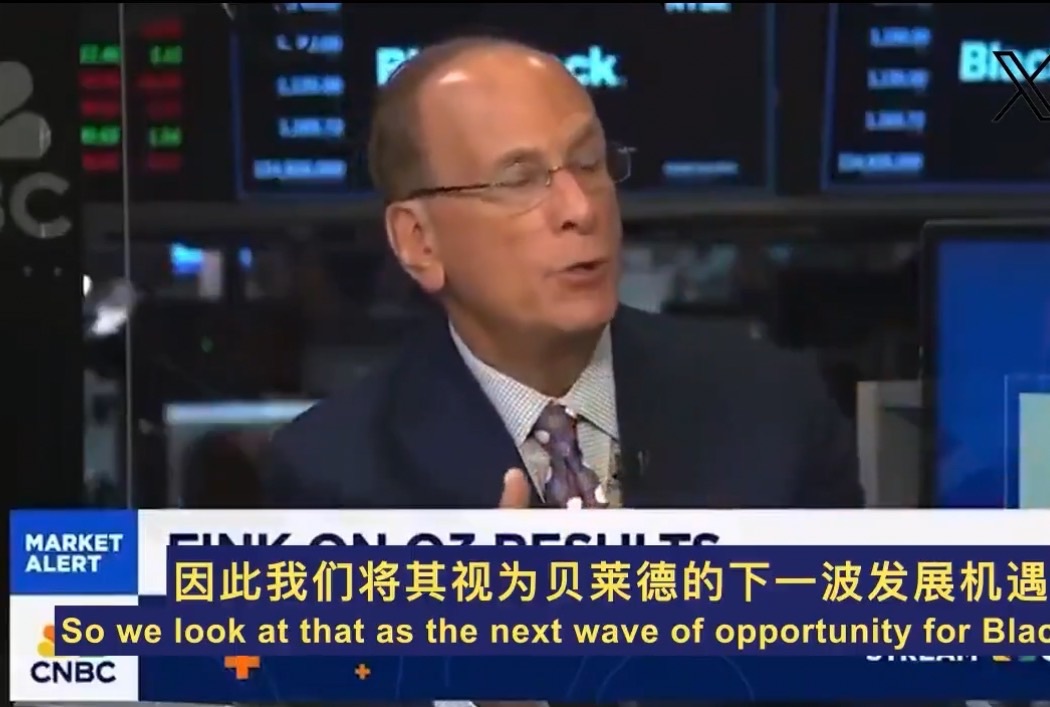
🚨💰 BlackRock's CEO, who manages $13 trillion, said on CNBC: Cryptocurrency may replace traditional finance—is this surrender, or a strategic move?
When Larry Fink publicly stated on CNBC that Bitcoin and cryptocurrencies could become the core financial opportunity for the coming decades, many people's first reaction was: Wall Street has finally bowed its head.
It sounds like the traditional financial system is making concessions to decentralization.
But if you break down his complete logic, things might be completely different.
Fink made it very clear—
Crypto assets are the "entry point."
What comes after the entry point?
Their strategy is to guide users who enter the digital asset space into more long-term, traditional retirement products and asset management systems.
This isn't about abandoning the old system, but expanding its boundaries.
In other words:
Crypto assets are the hook.
The real goal is to keep users within a "digital ecosystem."
And who controls that ecosystem?
It's super asset management institutions like BlackRock.
This raises a deeper question:
When traditional financial giants embrace crypto, is decentralization winning, or is centralization being upgraded?
If ETFs become the mainstream way to hold Bitcoin,
If institutional custody becomes the standard,
If digital assets are ultimately incorporated into traditional pension systems,
Then the "shell" of crypto assets still exists,
But has the underlying control returned to the same center?
This isn't a conspiracy theory, but the natural evolutionary path of the financial system.
Every "disruption" that enters the mainstream goes through three stages:
Stage One: Fringe Innovation
Stage Two: Capital Embrace
Stage Three: Institutional Absorption
The question is, which stage is crypto currently in?
When BlackRock issues a Bitcoin ETF, when institutions become the biggest buyers, when digital assets become part of asset allocation—
This looks more like "the financialization of decentralized ideals,"
rather than "the disappearance of centralized power."
Fink's statement about "staying in the digital ecosystem" itself indicates the direction.
This isn't confrontation, but integration.
Not decentralization of power, but incorporation.
The real question worth pondering isn't:
Has Wall Street surrendered?
But rather:
Can the spirit of decentralization maintain its original structure after scaling up?
This playbook is actually quite familiar.
The internet was once anti-establishment.
Social media was once decentralized.
In the end, who controls the traffic and data?
As the financial system becomes fully digital,
Does control simply shift from bank counters to digital platforms?
If crypto becomes the new financial infrastructure,
Are you more concerned about price increases,
or the restructuring of power dynamics?
🔔 I will continue to deconstruct the changes in power structures behind the integration of traditional finance and digital assets, not just price fluctuations.
The copyright of this article belongs to the original author/organization.
The views expressed herein are solely those of the author and do not reflect the stance of the platform. The content is intended for investment reference purposes only and shall not be considered as investment advice. Please contact us if you have any questions or suggestions regarding the content services provided by the platform.
