

When car manufacturing competition reaches its limit, can Hexia Technology fill the final piece of the puzzle?

If chips determine how smart a car can be, batteries determine how far a car can go, then testing equipment determines whether a car can be launched safely, stably, and on time. This is a fundamental link that has long been overlooked but is becoming increasingly critical.
Over the past few years, China's new energy vehicles have surged ahead, with sales, penetration rates, and brand influence all surpassing expectations, making vehicle manufacturing seem like the most dazzling stage. However, behind the glamorous story of complete vehicles, a significant portion of core R&D and validation capabilities still heavily rely on imported equipment: a high-end vehicle testing rig can cost tens of millions of yuan, with delivery cycles stretching to six months or even a year. Key control systems are closed, algorithms are black-boxed, and local automakers are often forced to adapt passively.
As electrification and intelligence push vehicle complexity to unprecedented heights, this dependency is beginning to become a new "invisible bottleneck." Consequently, a question is being brought back to the table: If testing capabilities are held by others, are the R&D efficiency and upper limits of Chinese automakers also perpetually constrained?
It is within this industrial fissure that a local company from Changxing, Zhejiang, is beginning to emerge. Founded only seven years ago, it has independently developed a complete vehicle drive system testing platform, achieved millisecond-level control breakthroughs, entered core validation processes for OEMs, and filed for listing on the Hong Kong Stock Exchange's Growth Enterprise Market in early 2026.
This company is called Hexia Technology. In an unseen battle for industrial substitution, what it represents is not just an IPO story, but a less-discussed path of domestic substitution.
When Cars Enter the "High-Complexity Era," Testing Capability Becomes the Real Invisible Barrier
Automotive testing was once a relatively low-profile industry.
In the era of traditional fuel vehicles, the powertrain structure was clear, validation logic was mature, and a large amount of testing could be completed within the automaker, with third-party testing playing a more auxiliary role. It was an era of controllable pace and stable technological boundaries.
But new energy and intelligence have completely changed these rules. A pure electric vehicle involves the high coupling of electric drive, battery management systems, thermal management systems, high-voltage safety, and software control systems; adding ADAS, autonomous driving algorithms, domain controllers, and hundreds of sensors, the vehicle has evolved from a mechanical product into a "mobile computing platform." Testing is no longer simple performance validation but a systems engineering project involving the synergy of mechanics, electrical engineering, algorithms, and software.
Increased complexity means validation costs and intensity soar simultaneously. A new vehicle model often requires tens of thousands of hours of bench testing, with powertrain, braking systems, chassis, and electronic controls repeatedly simulating extreme conditions in the lab. Even a 0.1-second control delay or a 0.01% error can be amplified into a vehicle failure risk.
Against this backdrop, testing capability itself is gradually becoming a key variable determining R&D efficiency and product reliability.
But the reality is, high-end testing equipment has long been monopolized by European and American companies. Core technologies such as control algorithms, torque coupling systems, and high-speed real-time measurement and control platforms are held by a handful of international manufacturers. Local automakers face not only high procurement prices but also issues like long delivery cycles, closed interfaces, and difficulty in customization.
Many R&D heads privately complain that the waiting time for a key piece of equipment can be even longer than the development cycle of a three-electric (battery, motor, electronic control) system.
This means the speed advantage of Chinese automakers could very well be slowed down by testing capabilities.
Meanwhile, the industry scale is rapidly expanding. Data shows that China's automotive testing service market has grown from 14.8 billion yuan in 2020 to 20.8 billion yuan in 2024, and is projected to reach 32.9 billion yuan by 2029, with a compound growth rate close to 10%. Behind this growth is the rising penetration of new energy, tightening regulations, and the accelerating trend of automakers outsourcing testing.
When testing becomes a high-frequency necessity, this "water seller's" business begins to possess new strategic value. Whoever masters the testing infrastructure stands at a more foundational and stable position in the industrial chain. Domestic substitution thus is no longer just a slogan but an inevitable structural shift.
From "Equipment Catch-up" to "Capability Benchmarking": Hexia Technology's Logic for a Bottom-up Breakthrough
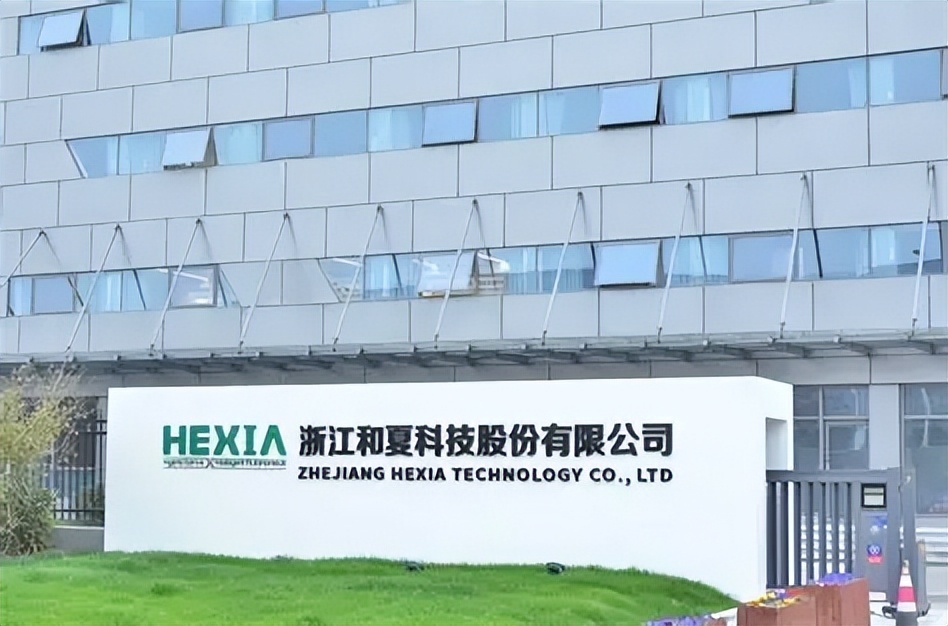
Hexia Technology's story is essentially a typical hard-tech entrepreneurship path. Instead of starting with asset-light software, it plunged into the most difficult area of equipment R&D—complete vehicle drive system testing platforms.
This type of platform can be called the "heart" of automotive testing. It needs to achieve precise decoupling control of force and torque while retaining the original wheels, simulating real-road loads and ensuring millisecond-level response. For a long time, domestic manufacturers mostly relied on imported integrated systems, with weak independent R&D capabilities.
Hexia chose to reconstruct from the ground up. Its self-developed wheel-axle coupling testing platform, through unique mechanical structures and high-precision algorithms, achieves independent torque application and dynamic control. The accompanying "HEX" automated measurement and control system compresses command response time from the traditional 10 milliseconds to 0.1 milliseconds, increasing control frequency to 1000Hz.
The significance of these parameters is not just "faster." It means that under extreme conditions, the testing system can more realistically replicate the vehicle's state, thereby shortening the validation cycle and improving test credibility—to some extent, it already possesses the capability to compete with international first-tier equipment.
True domestic substitution is never about being cheaper, but about performance benchmarking or even surpassing. Beyond technological breakthroughs, what's more noteworthy about Hexia is its business model.
It doesn't just sell equipment; it simultaneously deploys testing services, system integration, and component supply, forming a "equipment + operations" combination. The heavy-asset investment in building testing bases across the country and deploying over 430 testing devices makes it more like a "testing infrastructure operator."
The benefit of this model is twofold: it creates stable cash flow on one hand, and builds a natural barrier on the other. Testing capability cannot be replicated overnight; it requires equipment accumulation, customer trust, and the accumulation of long-term validation experience. From this perspective, Hexia is closer to a "utility-type company" within the industrial chain.
Financial data also shows typical growth-stage characteristics: stable revenue growth, gross margin maintained around 30%, but still in a phase of continuous R&D and expansion. R&D expense intensity exceeds 7%, putting short-term profit under pressure but gaining technological barriers and customer stickiness. This is highly similar to the path of many hard-tech companies—first build capability, then talk about scale and profitability.
Filing for the Hong Kong Stock Exchange's Growth Enterprise Market is essentially a capital infusion. For this type of heavy-asset, long-cycle equipment company, financing capability often determines the speed of expansion.
More importantly, the ceiling for the testing industry is far from being reached. Digital twin testing, virtual simulation, and AI automated validation are reshaping industry logic. In the future, testing will not just be about hardware competition, but about data, algorithms, and platform capabilities. Whoever can turn testing data into model assets has the opportunity to become the next-generation standard setter.
In this sense, what Hexia Technology is trying to do is not sell a few pieces of equipment, but build a foundation for China's automotive industry.
If new car-making forces represent the innovative narrative on the center stage, then companies like Hexia belong to the backstage infrastructure—not sexy enough, yet determining the thickness and upper limit of the entire industry.
As automotive competition enters deep waters, what's being contested is no longer just brand and traffic, but underlying engineering capability. And testing is precisely that most easily overlooked, yet hardest-to-fill shortcoming. This time, the story of domestic substitution may no longer happen under the spotlight, but could very well happen in the laboratory.
The copyright of this article belongs to the original author/organization.
The views expressed herein are solely those of the author and do not reflect the stance of the platform. The content is intended for investment reference purposes only and shall not be considered as investment advice. Please contact us if you have any questions or suggestions regarding the content services provided by the platform.
