

 Likes Received
Spring Festival Gala robots are flooding the screen! The AI battle is heating up, where are the opportunities for ordinary people? When will robots enter our daily lives?

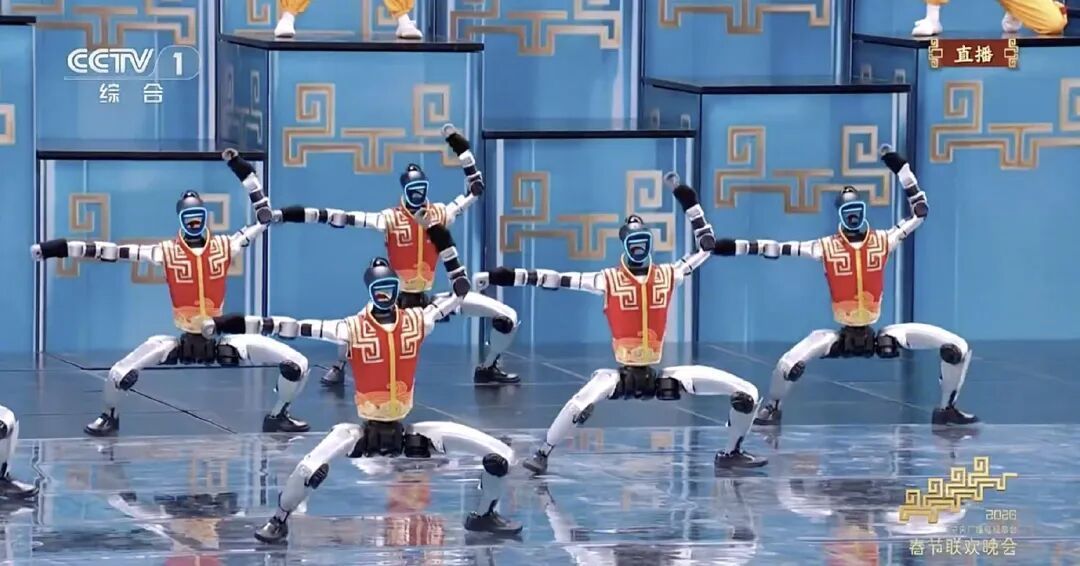
This year's Spring Festival was packed with tech vibes! On one hand, major AI giants were showering billions in red envelopes, intensifying the AI war; on the other, intelligent robots on the Spring Festival Gala stage amazed the audience, excelling at dancing and interaction, making people exclaim, "The future is here."
After watching this tech showcase, many people started wondering: The AI era is already upon us, how can we ordinary folks seize the opportunity? When will those cool robots from the Gala truly achieve commercial viability and enter our daily lives? Today, let's have a good chat about these two core issues.
First, let's talk about AI: Behind the war lies a golden window for ordinary people
How fierce is this year's AI war? Tencent Yuanbao, Alibaba Qianwen, Baidu ERNIE Bot, ByteDance Doubao took turns, showering 45 billion in benefits, from cash red envelopes to free milk tea, to exclusive Gala prizes. Essentially, they are all competing for users and popularizing AI applications.

But what many don't know is that AI's value goes far beyond grabbing red envelopes. There's a particularly striking statistic: In any industrial revolution, the early pioneers only capture 4% of the total benefits, while the remaining 96% eventually diffuse to the masses. The high salaries for AI researchers and the fortunes made by AI company founders we see now are just temporary phenomena. In the future, AI's value will rapidly flow to ordinary people.
For ordinary people, AI is not some high-tech "irrelevant to me," but a tool that can help us improve efficiency and beat competitors. The key is to learn how to "use AI," not wait to be replaced by it.
For ordinary people to seize AI opportunities, it boils down to these 3 core logics:
1. Mindset shift is the prerequisite: Don't treat AI like "some search engine," just throwing out a "help me work." Those who truly know how to use AI treat it as a partner—first fully discuss and share background information with AI, then break down the work into different parts, some for AI, some for yourself, some done together. For example, an author writing a book might have AI help supplement data citations while focusing on content creation, directly doubling efficiency.
2. Deep industry expertise is key: No matter how powerful big AI companies are, they can't cover all niche industries. Opportunities in fields like study abroad, finance and accounting, auditing, insurance can only be seized by those who understand both the industry and AI. For instance, in accounting, work that might take 3-5 days manually can be done by AI in ten minutes, and AI can also quality-check every workflow. Offering high-quality service for just 39.9 yuan—that's the charm of AI empowering niche industries.
3. Continuous learning is the safeguard: AI's capability boundaries are expanding every month. What it can't do today might be possible next month. Instead of worrying about whether AI will replace you, proactively learn how to use it. Even learning to build simple Q&A bots or intelligent agents can make you stand out at work—an employee can become the company's best AI user, an entrepreneur can make their company an AI pioneer in the industry.
Now, let's talk about robots: Behind the Gala's dazzle, commercialization still needs to overcome two hurdles
The Gala robots were indeed eye-catching, but don't get too eager—the robotics industry is currently in a stage of "polarization": on one side, big names like Elon Musk and Jensen Huang believe robots are about to explode; on the other, many question that "robots are too fake" and simply can't be commercialized.
Actually, for robot commercialization, the core is overcoming two hurdles, which is also a key consensus in the industry:
1. Must break through "remote control" to achieve autonomous decision-making
Many robots today look cool, but actually require human remote control behind the scenes. Such "remote-controlled robots" have little commercial value—you can't have an operator next to every household robot, right? Truly valuable robots must be able to solve problems autonomously: for example, responding promptly if an elderly person at home suddenly feels unwell, or adjusting workflows in a factory when unexpected situations arise.
A previous industry competition was quite indicative, requiring robots to complete tasks in a fully outdoor environment without remote operation, refusing to compromise even with frequent failures. This kind of competition might seem "unimpressive," but it can squeeze out industry bubbles and force companies to tackle the core technology of the "robot brain"—after all, among a robot's three major capabilities, the body and coordination are just the basics; the brain (autonomous decision-making) is the most valuable.
2. Must improve "generalization ability" to adapt to real environments
No matter how precise a robot is in the lab, it might struggle in real life: getting stuck on a small pebble on the ground, making recognition errors due to lighting changes. Just like the Gala robots, they performed on a carefully set stage. Once placed in complex home or work scenarios, they require 极强的 environmental adaptability.
Currently, companies at home and abroad are pushing in this direction: foreign companies are strengthening "coordination and the body" to make robot movements more fluid; domestic companies are strengthening the "brain" to make robots smarter. With continuous technological iteration, it's expected that in the next 3-5 years, commercialization will first be achieved in standardized scenarios like industry and logistics. Then, in another 5-10 years, home service robots will truly enter ordinary households.
For AI and robots, the opportunity for ordinary people lies not in "waiting" but in "doing"
Whether it's the AI war or robots flooding our screens, the message is clear: the tech revolution has arrived, and this wave's window of opportunity is about 3-5 years. For ordinary people, there's no need to fret about "will I be replaced," nor rush to "wait for the technology to mature." You can start acting now:
If you're an employee: Start learning to use AI today. Even just using it to organize materials or optimize copy can make you more efficient at work and become an indispensable person;
If you're an entrepreneur: Look for opportunities for AI empowerment within your niche industry. Hand repetitive tasks to AI, focus on enhancing core competitiveness, and you can pull ahead of your peers;
If you're just an ordinary consumer: Stay informed about technology, view new tech rationally, and when robot commercialization arrives, you'll be ready to precisely embrace the convenience.
Technological development has always followed the rule: "The early bird gets the worm, the latecomer gets the leftovers." AI and robots are not monsters, but tools that can make our lives better. Seize this wave of opportunity, and your future self will thank you for actively learning and trying now!
The copyright of this article belongs to the original author/organization.
The views expressed herein are solely those of the author and do not reflect the stance of the platform. The content is intended for investment reference purposes only and shall not be considered as investment advice. Please contact us if you have any questions or suggestions regarding the content services provided by the platform.
