

 Likes Received
 Rate Of Return
🚨🔥 "This is not a conspiracy, it's a liquidation!" — Have we really seen the truth behind this Bitcoin crash?
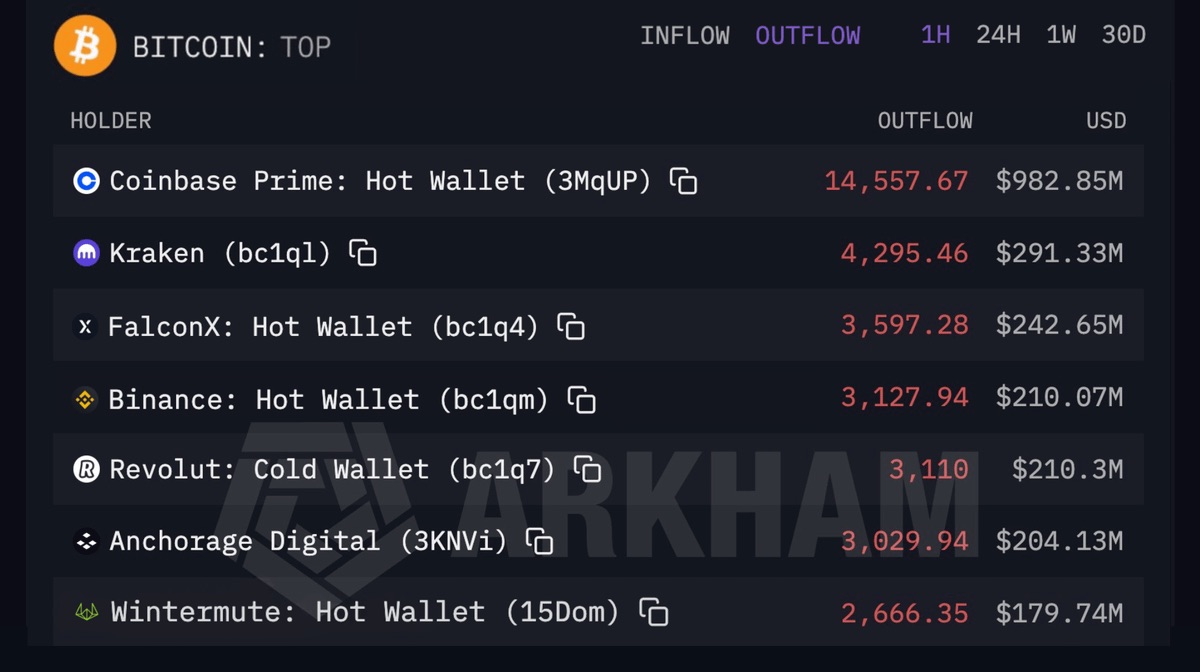
When the market takes a sharp dive, the first thing we see is a list of names:
$Grayscale Bitcoin Mini Trust ETF(BTC.US)
Coinbase
Kraken
Binance
FalconX
Revolut
Anchorage Digital
Wintermute
Then the community instantly jumps to a conclusion —
"This is a coordinated, premeditated sell-off!"
But if we calm down for three minutes, we might find the situation is completely different.
First, what we see are on-chain outflows, not "active dumping."
These institutions are essentially:
Exchanges
Market makers
Custodian banks
Institutional brokers
More often than not, they are handling client funds, not using their own capital to take directional short positions.
On-chain outflows could represent:
Client withdrawals
OTC settlements
Internal wallet adjustments
Market maker hedging
Asset transfers after liquidations
We cannot equate "outflow" directly with "dumping."
Second, what truly crashes a market is usually not sell orders, but leverage.
The question we should ask is not "who sold," but:
Was open interest at a high level?
Were funding rates overheated?
Were long positions overly crowded?
In a high-leverage environment, all it takes is a trigger —
Price drop → Liquidations → More selling → Triggers more liquidations.
This is called a liquidity cascade.
Not a conspiracy, but a mechanism.
Third, if it really was a "coordinated dump," what would be the cost?
Multiple globally compliant platforms manipulating prices simultaneously carries extremely high risks.
Legal liability, regulatory risk, brand damage —
These costs far outweigh the gains from short-term volatility.
We have to admit one thing:
When the market falls, our brains automatically look for a "single culprit."
Because that feels more comfortable.
But what often causes severe market volatility are:
Futures market liquidations
ETF fund outflows
Synchronized pullbacks in macro risk assets
Market maker Gamma hedging
These structural factors are more explanatory than a list of addresses.
If we only focus on "who transferred how much BTC," we miss the bigger variables:
U.S. Treasury yields
Dollar index
Equity market risk appetite
Liquidity contraction
The crypto market has never been an island.
Finally, we need to ask ourselves one question:
Do we want a dramatic story,
or do we want to truly understand market mechanisms?
If it's the latter, then this looks more like a typical deleveraging event, not a secret meeting.
The real question is —
When leverage climbs back to high levels, will we experience the same script all over again?
The copyright of this article belongs to the original author/organization.
The views expressed herein are solely those of the author and do not reflect the stance of the platform. The content is intended for investment reference purposes only and shall not be considered as investment advice. Please contact us if you have any questions or suggestions regarding the content services provided by the platform.
