

 Likes Received
 Rate Of Return
⚡🚀FCC makes an exception! $Tesla(TSLA.US) granted UWB wireless charging exemption, a key piece of the Robotaxi puzzle begins to fall into place
Many are still debating whether Robotaxi can actually run.
What I care more about is—whether it can "automatically replenish energy."
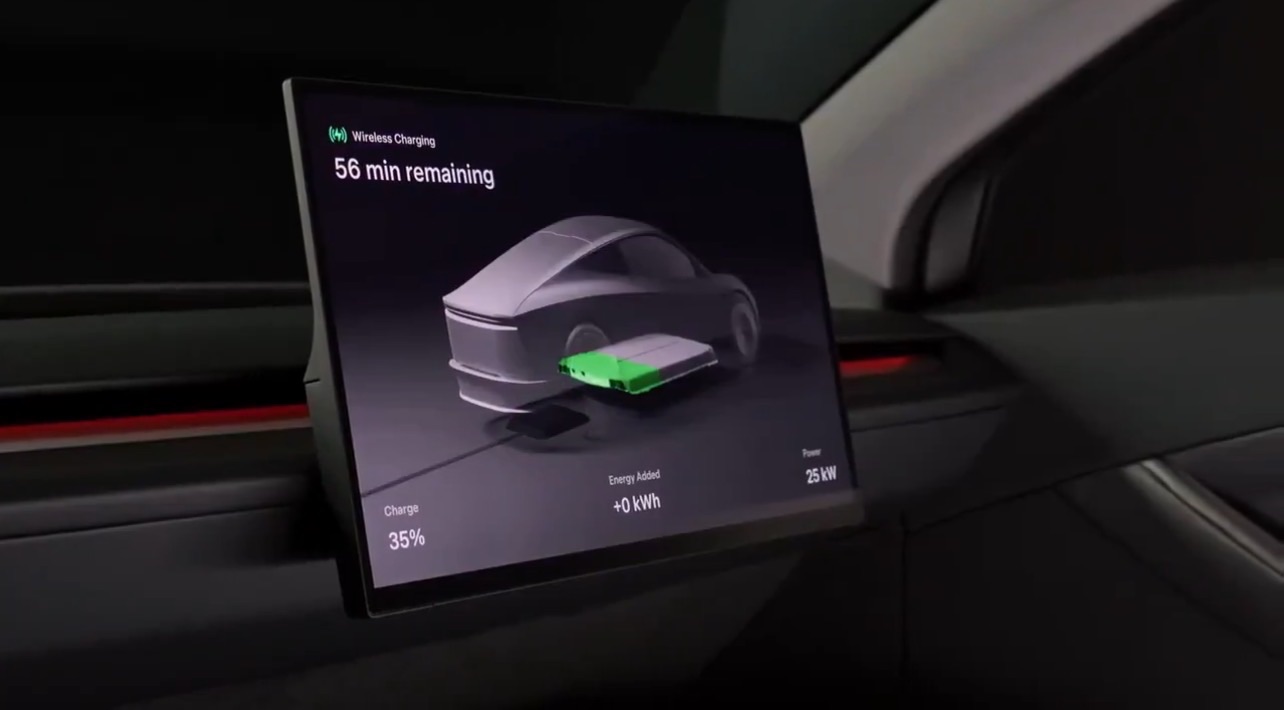
Today, the Federal Communications Commission officially approved a technical exemption for Tesla, allowing it to use UWB (Ultra-Wideband) radio technology in fixed, outdoor-installable electric vehicle wireless charging systems.
This is not just ordinary compliance approval, but a breakthrough at the regulatory level.
According to current U.S. regulations, such radio devices must typically be "handheld" and cannot be deployed on fixed outdoor installations. Tesla's ground charging pad is fixed and may be exposed to outdoor environments for extended periods, thus requiring a special exemption.
The FCC's core reasons for approval are only four points:
Extremely low signal power
Only briefly activated when a vehicle parks and approaches
Extremely short communication range
Will not cause interference to other wireless systems
This means regulators recognize its technical safety boundaries.
More crucial is the system architecture itself.
The disclosed documents show the system consists of two parts:
The first layer is Bluetooth.
Before a vehicle approaches the ground platform, it first discovers the platform's location and exchanges data via Bluetooth. This part does not require an exemption.
The second layer is UWB.
UWB only starts working when the vehicle enters the precise alignment phase. It uses pulsed ultra-wideband signals for point-to-point communication between the vehicle's transceiver and the ground platform, achieving centimeter-level positioning.
Wireless charging is only triggered after the vehicle enters the "optimal position."
Furthermore, the UWB signal only exists briefly during approach, is mainly concentrated between the vehicle and the ground, and is significantly attenuated by the vehicle body.
This is a "precision-triggered" wireless architecture, not continuous broadcasting.
If we zoom out a bit, the truly important aspect of this matter is—
Wireless charging is one of the key conditions for the unmanned, closed-loop operation of Robotaxi.
Without automatic energy replenishment, Robotaxi would require manual plugging, making the cost structure unclosed.
Now, regulatory barriers are being dismantled.
Many focus on FSD algorithm iteration, but I pay more attention to progress in infrastructure-level permits like this.
Because autonomous driving is just about "being able to drive,"
Automatic energy replenishment is what makes "a viable business model possible."
This FCC exemption essentially opens a door for future fixed, unmanned charging networks.
The question is—
Will wireless charging become the standard configuration for Robotaxi, or is it just a transitional solution?
Do you value FSD progress more, or breakthroughs at this infrastructure level?
📬 I will continue to analyze the key progress of $Tesla(TSLA.US) in autonomous driving and energy systems, and how these changes affect long-term business model judgments. Subscribe to understand the inflection point of the next round of industrial structure ahead of time.
The copyright of this article belongs to the original author/organization.
The views expressed herein are solely those of the author and do not reflect the stance of the platform. The content is intended for investment reference purposes only and shall not be considered as investment advice. Please contact us if you have any questions or suggestions regarding the content services provided by the platform.
