


Poultry drug veteran's third attempt at the Hong Kong stock market: Financing shrinks by 38%, can Xinde Technology's 'involution' self-rescue succeed?

In the narrative of China's agricultural modernization, animal health has always been a quiet yet crucial track. It connects to food safety and carries the risk management capabilities of large-scale farming. As industry growth slows and competition intensifies, a Shandong-based company founded in 1999 has chosen to go to the capital market.
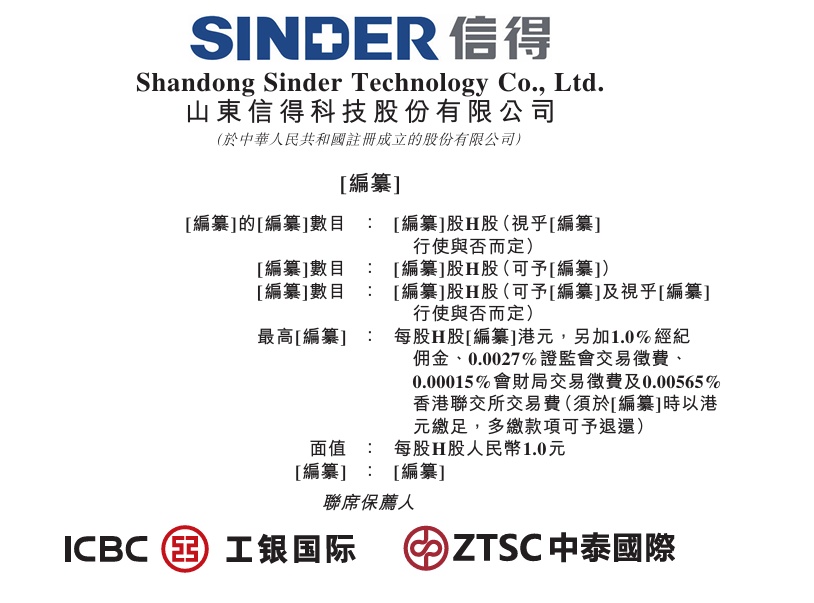
On February 16, according to disclosures from the Hong Kong Stock Exchange, Shandong Xinde Technology Co., Ltd. ("Xinde Technology") from Zhucheng, Weifang, Shandong, submitted its prospectus to the Main Board of the HKEX, attempting to open a new growth channel for itself.
This is not a "new species" that appeared out of nowhere, but rather a veteran with over two decades of deep cultivation in the field of poultry biological products. Its listing, to some extent, reflects the structural game within China's animal health industry during a period of slow growth.
Realism in the Animal Health Track
According to public information, Xinde Technology, founded in 1999, is primarily engaged in the R&D, production, and sales of a full range of animal health and supporting products. Its product line covers veterinary biological products, traditional Chinese veterinary medicine, chemical drug preparations, animal feed, and feed additives, thereby achieving the prevention, diagnosis, treatment, and control of diseases in poultry, livestock, aquatic animals, and pets.
From a capital trajectory perspective, its IPO is more like a "recovery journey." In September 2021, the company completed a RMB 200 million financing round, with its valuation soaring to RMB 2.878 billion, coinciding with the euphoria in the biopharmaceutical and consumer sectors. However, after completing a RMB 144 million financing round in October 2025, its valuation fell back to RMB 1.8 billion.
In just four years, nearly 40% of its valuation evaporated. This is not just a setback for the individual company but a "value reassessment" of the entire animal health industry in the capital market after facing the phased reality of intensified industry competition and profit pressure.
The core contradiction lies in the mismatch between a "slow industry" and "fast capital." According to data from CIC, the size of China's animal health market was RMB 68 billion in 2024, with a compound annual growth rate of only 6% over the past five years. This is a typical technology-intensive but slow-growing market.
The fluctuations in Xinde Technology's performance vividly reflect this dilemma. In 2023 and 2024, its revenues were RMB 985 million and RMB 982 million respectively, clearly in a period of growth stagnation; net profit even dropped from RMB 34.76 million to RMB 28.12 million. The prospectus frankly states that intensified market competition in 2024 led to a decline in the average selling price of antibody products, directly dragging down profitability.
The high valuation in 2021 was built on the capital market's high expectations for consumer healthcare and the post-farming cycle; the valuation correction in 2025 reflects capital's clearer understanding of the animal health industry's "defensive but non-explosive" nature.
It is worth noting that even after the valuation contraction, based on 2024 profits, Xinde Technology's P/E ratio still exceeds 60 times. For a company with strong traditional manufacturing attributes, for this valuation to gain recognition in the secondary market, a disruptive change in its growth logic is necessary.
Fortunately, data from the first nine months of 2025 provides some optimistic signals: revenue increased by 25.3% year-on-year, and net profit surged by 117.5% year-on-year to RMB 55.67 million; gross margin during the same period improved to 49.7%. The core drivers of the profit margin improvement are: an increased share of revenue from high-margin veterinary biological products, and cost-efficiency optimization brought about by a higher proportion of direct sales. These may be the key variables that can support its confidence in the RMB 1.8 billion valuation in the short term.
Product Breakthrough Under Vaccine Logic + New Overseas Expansion Ideas
Besides slow growth and low elasticity, the competitive landscape of the animal health industry is also highly fragmented, with over 1,500 veterinary drug manufacturers in China alone.
This means that even though Xinde Technology has entered the industry's TOP list, it does not possess strong brand dominance. According to CIC data, based on 2024 revenue, the company ranks ninth in China's animal health market and among the top three in the Chinese poultry veterinary biological products market, with a market share of about 7.9%, which can only be described as moderate in absolute terms.
In this industrial reality, how did Xinde Technology achieve a performance rebound in 2025? The answer lies in the dramatic change in product structure and the breakthrough in overseas markets.
First, this is a product structure battle shifting from "trading price for volume" to "trading technology for profit." In the first nine months of 2025, the company's gross margin increased from 47.9% in the same period last year to 49.7%, and its net profit margin soared to 6.3%. The driving force did not come from traditional chemical drugs, but from high-tech-barrier veterinary biological products.
During the reporting period, the combined revenue share of biological products such as vaccines, antibodies, and transfer factors was close to 70%, with the core vaccine products achieving a gross margin as high as 53.6%. In particular, the "Xin Bi Tuo" series of transfer factor products, as the first approved product in China, holds an absolute dominant position in the niche market. Such products with technological exclusivity or first-mover advantage are replacing low-margin chemical drugs as the ballast for profits.
This shift from being large and comprehensive to being high-end and sophisticated indicates that Xinde Technology is no longer solely pursuing market share, but is building a technological moat through high R&D investment. Data shows that its R&D expense ratio has consistently remained above 7% during the reporting period.
Secondly, overseas expansion under the stock game of domestic farming has become the second growth curve. The prospectus shows that although 94.7% of its revenue still comes from mainland China, overseas business growth is astonishing: in the first nine months of 2025, international business grew by over 100%.
This growth is not accidental. As early as the second half of 2023, Xinde Technology targeted emerging farming markets such as Pakistan, Egypt, and Vietnam for strategic layout. By deeply cooperating with local distributors, it bypasses patent blockades in mature markets and taps into the incremental markets of countries along the "Belt and Road" initiative.
For a company that has been in business for 26 years, this shift from "local defense" to "global offense" demonstrates that the company still possesses strong resilience and vitality for growth.
However, Xinde Technology's investment in production capacity is not light. According to disclosures, the company has cumulatively invested approximately RMB 1.1 billion to build four major production bases, with 34 production lines certified under the new version of veterinary drug GMP. This means the company possesses advantages in scale and quality systems, but also bears the pressure of fixed asset depreciation and financial costs.
The capital market's valuation of "niche industries" is usually more rational. Compared to innovative drugs or the AI track, animal health is closer to "agricultural infrastructure." Its value logic lies in stable cash flow and long-term demand, rather than explosive growth.
Xinde Technology's current IPO is essentially a financing attempt for "manufacturing upgrade + international expansion." Whether it can break the inertia of valuation decline depends on three factors: first, the continuous technological leadership of its vaccine products; second, the speed of overseas registration and localization; third, the sustainability of profit margin improvement.
In a slow-growth industry, a company's success is not about catching trends, but about structure and efficiency. If Xinde Technology can complete the balanced transition from a poultry-focused single pole to multiple categories + multiple regions, its capital story will no longer be just about a regional leader going public, but a global example of a Chinese animal health enterprise.
The copyright of this article belongs to the original author/organization.
The views expressed herein are solely those of the author and do not reflect the stance of the platform. The content is intended for investment reference purposes only and shall not be considered as investment advice. Please contact us if you have any questions or suggestions regarding the content services provided by the platform.
