


When AI agents start paying each other, Circle wants to be the only pipeline.

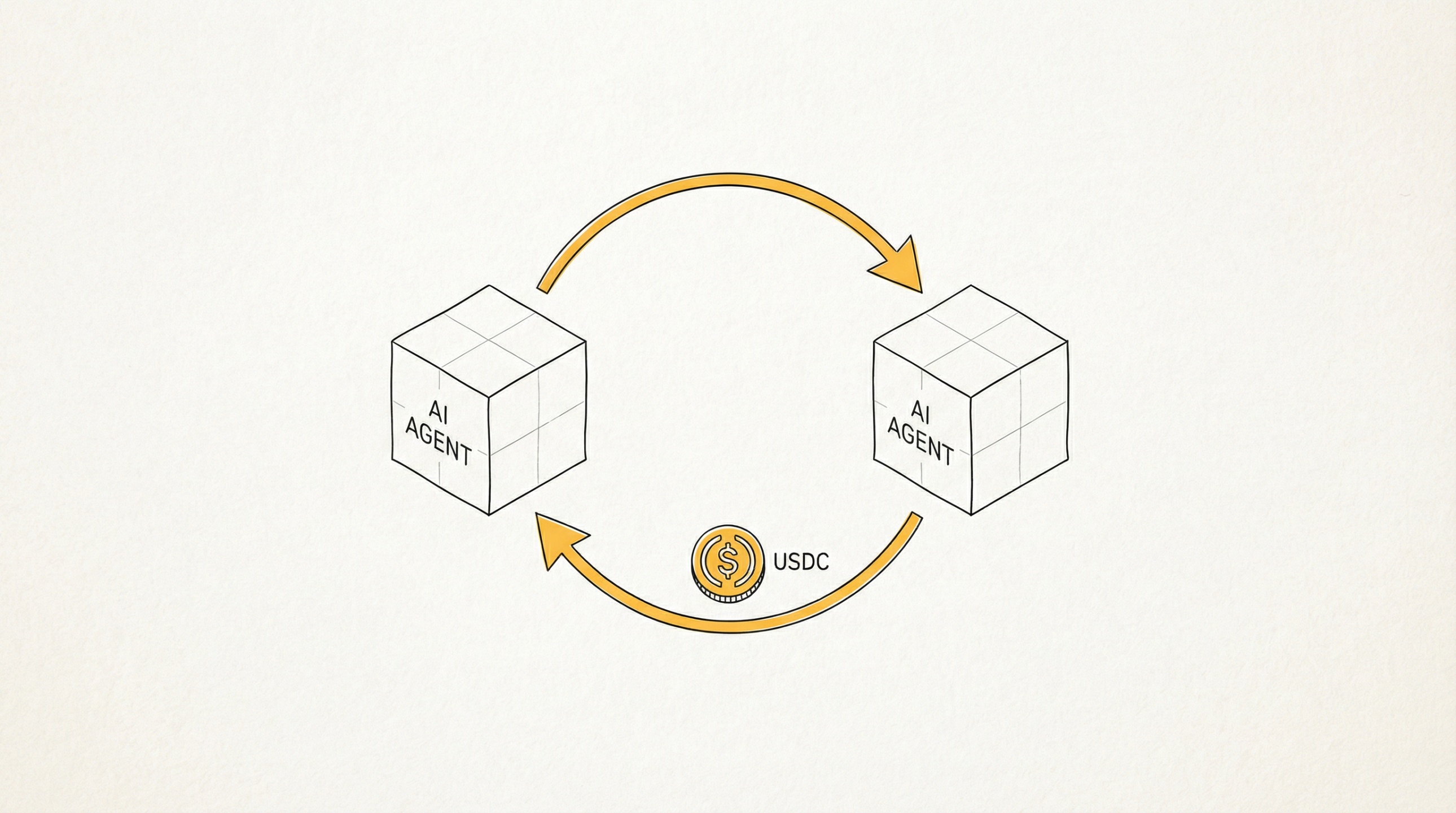
Imagine a workday in 2027, where one AI agent commissions another to analyze competitors, generate reports, and payment occurs automatically upon task completion—on-chain settlement, $0.00001, in less than a second. No bank accounts, no approval processes, no business hour restrictions.
This scenario is already happening today. Over the past few weeks, AI agent job boards have gone live, allowing agents to hire each other and settle in USDC—real economic activity happening on the internet, not a demo.
Traditional payment systems are not competitors; they fundamentally don't exist
Credit card networks are designed for humans: KYC requires manual verification, settlement cycles are measured in days, cross-border transfers go through SWIFT's multi-tier correspondent banks, and operations halt directly on weekends.
AI agents have no identification documents, cannot complete KYC, cannot wait for T+2 settlement, and cannot tolerate transaction windows closing. What they need is a settlement layer that can be initiated anytime, settled instantly, with costs approaching zero, and not reliant on any manual nodes.
SWIFT is not it, Visa is not it, PayPal is not it.
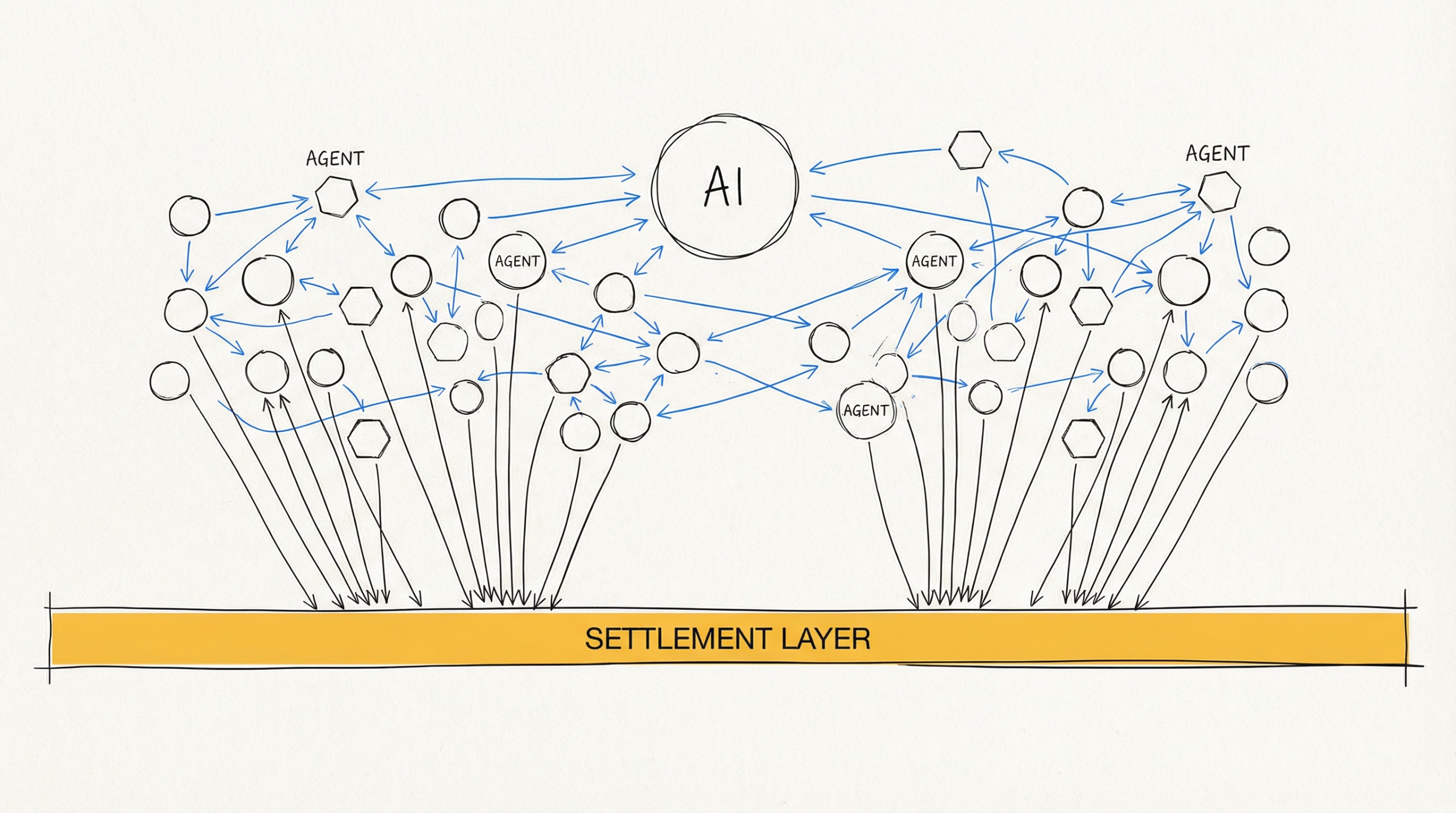
Tens of billions of agents need a public settlement layer
Circle CEO Allaire said on the February earnings call: "We are entering a world where there may be tens of billions or even hundreds of billions of AI agents interacting and performing economic functions on the internet."
When a company deploys hundreds of collaborative agents, every service call, data purchase, or computing power rental between agents is a transaction. A single transaction might be only $0.001, but the frequency is orders of magnitude higher than today's human financial system.
Allaire used the concept of "money velocity": in a world of tens of billions of agents, the velocity of money will be orders of magnitude higher than the existing system. This speed itself is a growth engine.
Circle has already laid the pipes
"Essentially, 99% of agent-based payments measured in the recent period were conducted in USDC."
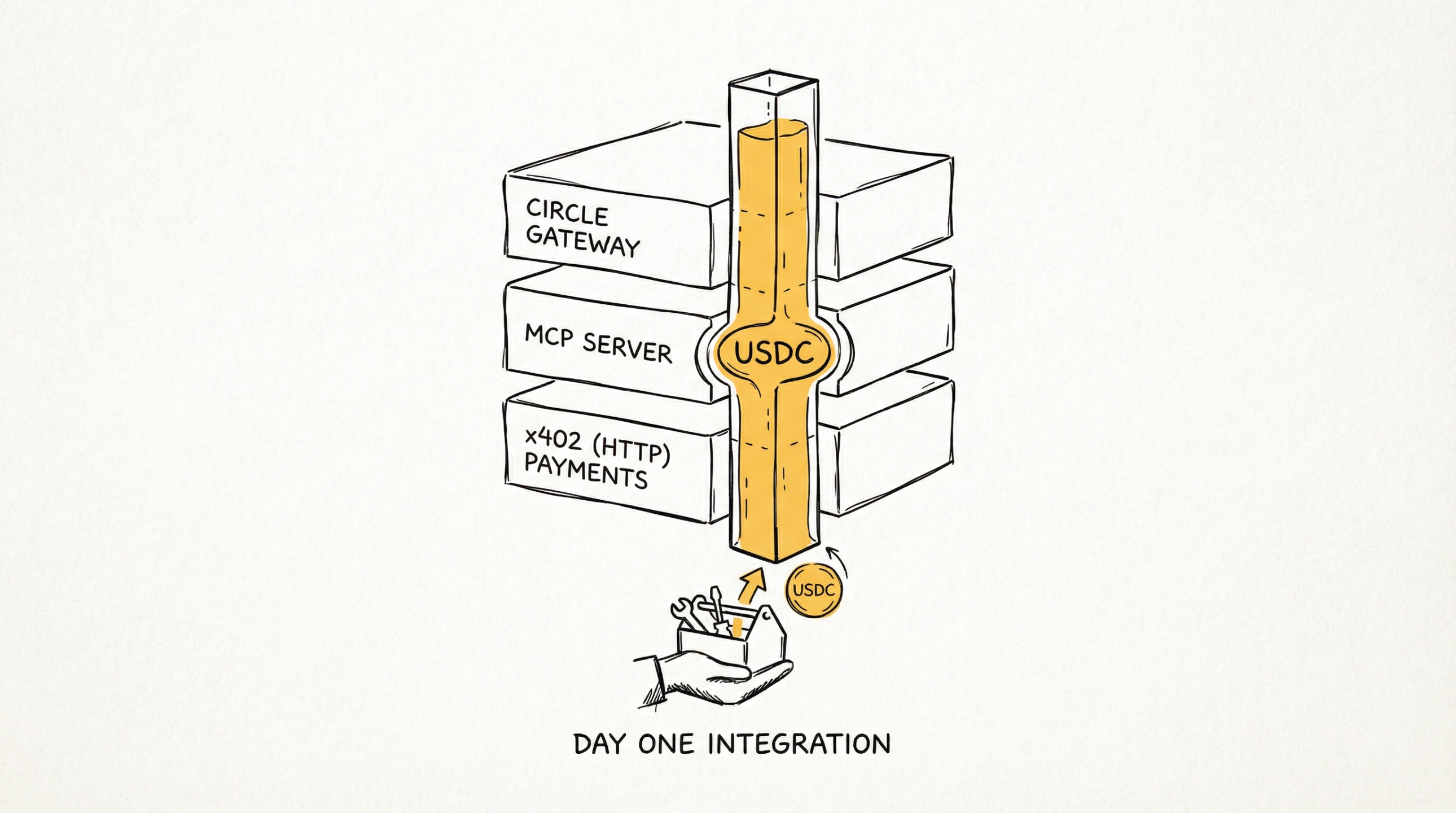
$Circle(CRCL.US) has embedded USDC into the foundational toolchain of the entire AI developer ecosystem over the past two years:
x402 protocol (co-developed with Google): AI agents can complete payments using HTTP requests, calling wallets just like calling an API.
MCP server: Wallet functionality is packaged as a Model Context Protocol service. When writing agents with Claude, wallet calls are already one of the default options.
CircleGateway: A cross-chain settlement layer for agent payments, $0.00001 per transaction, autonomously initiated by agents, requiring no human intervention.
A developer building agent applications with AI today will almost certainly encounter USDC at the very first step. This toolchain-level embedding doesn't rely on subsidies; it relies on having no alternative.
There's a reason this card is being played so hard
Circle is the issuer of USDC. The larger the USDC circulation, the more interest it earns on reserves—this is the core revenue logic of its IPO. Issued at $31 in June 2025, it peaked at $298, with Wall Street's first label being the "Crypto Jensen Huang."
The AI agent payment narrative gives Circle a growth engine independent of interest rates: if high-frequency micro-payments from tens of billions of agents become the primary transaction volume, growth will no longer be driven by Fed policy but by the scale of agent deployment enabled by improving model capabilities. This is deliberate expectation management and a real strategic bet, both happening simultaneously.
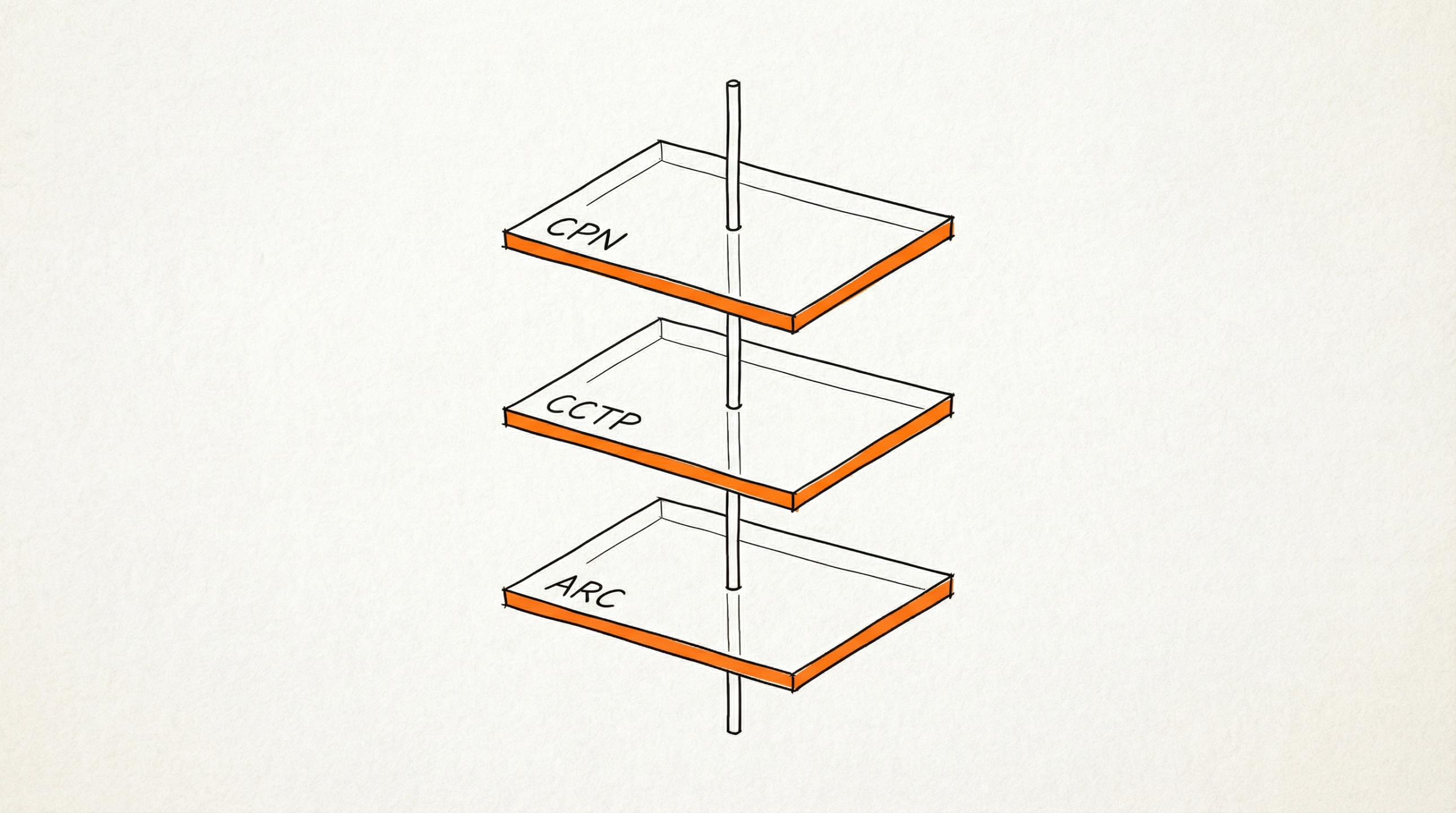
Circle is betting on more than just USDC; it's betting on the entire infrastructure map
Foundation: Arc: The Layer 1 blockchain Circle is building, positioned as the "Internet Economic Operating System." Over 100 financial institutions are already participating in testing, with an average settlement time of 0.5 seconds. The mainnet is expected to launch in 2026.
Middle layer: CCTP: Cross-Chain Transfer Protocol, already natively issuing USDC on over 30 chains. In January 2026, CCTP accounted for 62% of all cross-chain asset bridging volume—not just USDC, but all assets.
Application layer: CPN: Cross-border clearing network. The number of registered institutions increased from 29 in Q3 to 55 in Q4. As of February 20th, annualized TPV reached $5.7 billion, a 68% quarter-over-quarter increase.
Each layer is laying the groundwork for revenue "beyond interest rates": transaction fees from Arc, cross-border fees from CPN, API call fees—none of these depend on any single Fed meeting.
The traditional financial system is heading towards a fundamental transformation, and what $Circle(CRCL.US) wants to do is turn itself into that single, indispensable pipeline before the tipping point arrives.
Dollar-Cost Averaging (DCA) feature: Start a DCA plan immediately, steadily building your position amidst volatility. Click to jump.
Fractional shares feature: Start with as little as $1 to build a flexible position. Click to jump.
More content: Click [Me] - [Opportunity Insights] to view curated opportunities.
The copyright of this article belongs to the original author/organization.
The views expressed herein are solely those of the author and do not reflect the stance of the platform. The content is intended for investment reference purposes only and shall not be considered as investment advice. Please contact us if you have any questions or suggestions regarding the content services provided by the platform.
