

Fell 13% on its first day of trading! The market isn't buying Voyah's (07489.HK) premium story?

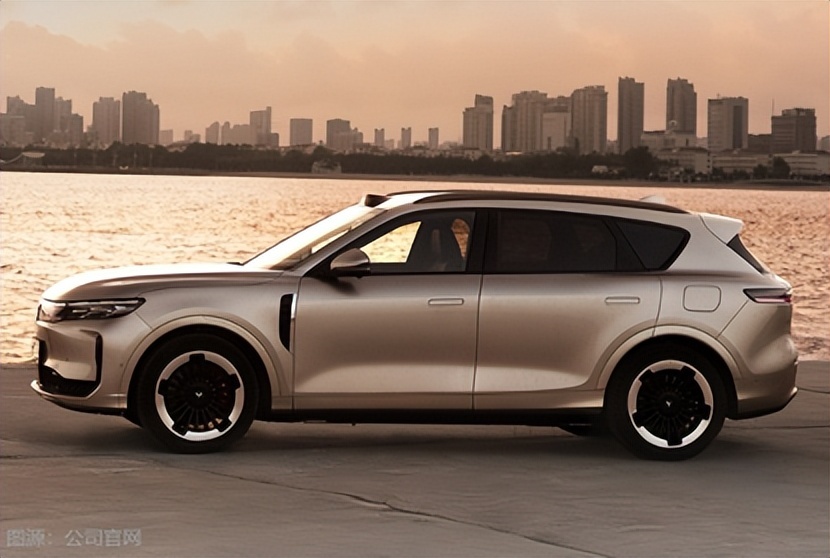
On March 19th, Voyah (07489.HK) officially listed on the Main Board of the Hong Kong Stock Exchange via introduction, earning the title of "the first state-owned enterprise high-end new energy stock on the Hong Kong market."
Just one trading day before its listing, its parent company, Dongfeng Motor Group, officially ended its 20-year listing journey on the Hong Kong stock market. This highly anticipated capital operation of "replacing the old with the new" concluded with the bell-ringing ceremony for Voyah's listing.
However, unexpectedly, on its first day on the Hong Kong market, Voyah encountered a "black start": the opening price was HK$7.5, and the closing price settled at HK$6.51, representing a single-day drop of 13.2%. The total turnover for the day was HK$651 million, with a closing market capitalization of HK$23.957 billion. Meanwhile, Chery Automobile (09973.HK), Geely Automobile (00175.HK), and Xiaomi Group (01810.HK) recorded gains.
As a premium new energy brand meticulously built under Dongfeng Motor Group, Voyah's fundamental data is quite impressive.
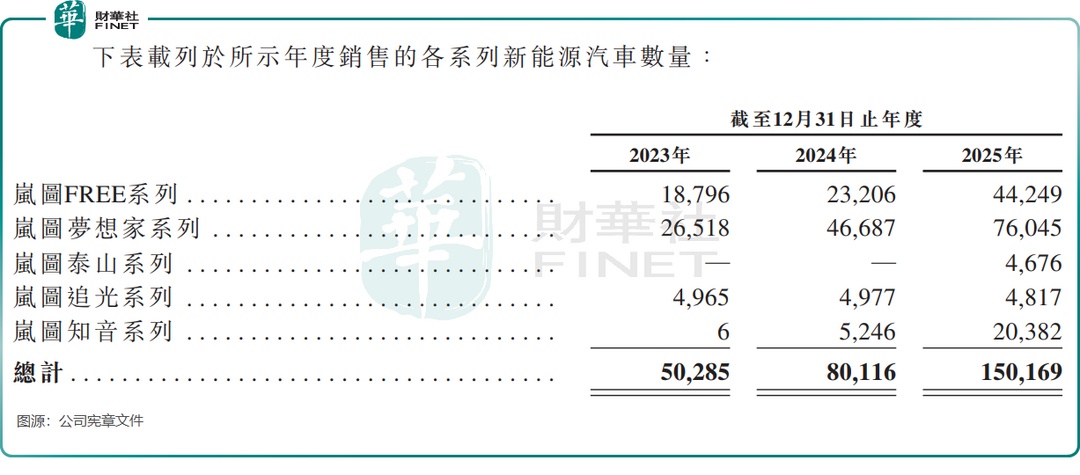
Over the past three years, the company has achieved growth far exceeding the industry average. Sales surged from 50,300 units in 2023 to 150,200 units in 2025, with a compound annual growth rate (CAGR) of 72.8%. During the same period, revenue climbed from RMB 12.749 billion (in Renminbi, same below) to RMB 34.865 billion, with a CAGR of 65.4%. More crucially, the company achieved a strong turnaround in 2025, with a net profit of RMB 1.017 billion, becoming one of the few profitable automakers in the new energy vehicle (NEV) sector.
Backed by Dongfeng's state-owned enterprise background, a comprehensive premium product portfolio covering sedans, SUVs, and MPVs, intelligent technology deeply integrated with Huawei, coupled with stellar performance growth, Voyah should have had a decent start in the capital market. Why did its stock price disappoint on the first day of trading?
1. Voyah's cold reception on its first day primarily stems from the inherent weaknesses of its special listing model.
Unlike the conventional IPO path of "issuing new shares and fundraising for listing," the introduction listing chosen by Voyah is characterized by "listing only, no new share issuance, and no fundraising." Throughout the listing process, no new shares were issued. The shares listed for trading all came from existing shares held by Dongfeng Motor Group, distributed to Dongfeng's shareholders via a distribution in specie. The company itself did not obtain any new funds through the listing.
While this model allows for a swift listing and achieves a degree of capital separation from the parent company, it also lacks the most critical price stabilization mechanisms for Hong Kong IPOs: it neither introduced cornerstone investors to provide long-term "support" for the stock price nor set up a greenshoe option (over-allotment option), a common tool to manage first-day volatility. On the first day of trading, facing concentrated selling from original shareholders, the market lacked corresponding buying power to absorb the pressure, making a stock price decline a high probability event.
2. Concentrated shareholding structure and liquidity challenges further amplified the stock price volatility.
Since all listed shares came from Dongfeng's share distribution, Voyah's shareholder structure is naturally highly concentrated, with a very limited free float in the initial listing phase.
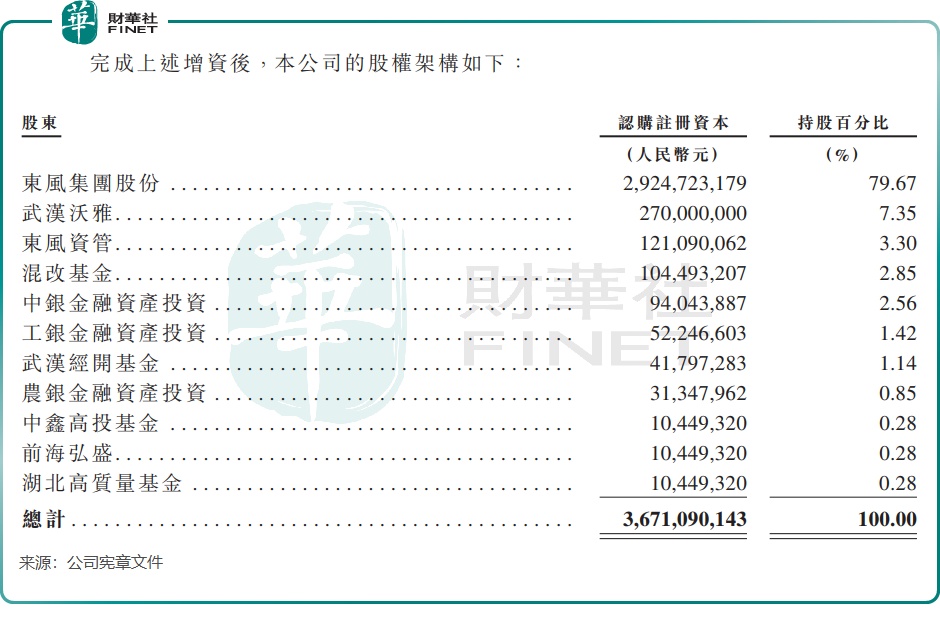
The prospectus shows that before listing, Dongfeng Motor Group held 79.67%, making it the absolute controlling shareholder. Other shareholders are also mainly state-backed institutions like Wuhan Woya and Dongfeng Asset Management. Under such a shareholding structure, a small amount of concentrated selling is enough to trigger significant price fluctuations. Furthermore, the Hong Kong market itself provides relatively weak liquidity support for small and mid-cap new listings. Insufficient trading activity further magnified the stock price decline, ultimately creating a negative cycle of "concentrated selling pressure and insufficient buying support."
3. The significant pre-listing valuation discount also dampened market investment confidence in advance.
According to Dongfeng's previous privatization plan, Voyah's implied valuation was approximately HK$10.85 per share, which also served as an important reference anchor for the market regarding its value. However, Voyah's opening price on its first day was only HK$7.5 per share, opening about 30% lower than the implied valuation. Such a substantial discount directly signaled to the market investors' cautious attitude towards its true value. Opening sharply below the reference point also discouraged many originally cautious investors and prompted some original shareholders who received distributed shares to sell and exit on the first day, further intensifying the downward pressure on the stock price.
4. A major market concern still stems from the debate over Voyah's profit quality.
Although Voyah delivered a net profit exceeding RMB 1 billion in 2025, the "quality" of this profit has been questioned by the market.
Prospectus data shows that in 2025, the company received government subsidies related to revenue amounting to RMB 1.013 billion, almost equal to its net profit for the same period. This implies that the company's profit is not entirely derived from the self-sustaining capability of its main business but relies heavily on policy subsidies. In the current context of an intensifying price war in the NEV industry and increasingly fierce competition in the premium segment, the market generally worries whether Voyah can maintain profitability once government subsidies are phased out. The sustainability of its core business profitability still needs time to be proven.
Conclusion: First-Day Break Below Issue Price Does Not Equal Value Negation
Objectively speaking, Voyah's sharp drop on the first day is more of a technical adjustment caused by structural factors rather than a fundamental collapse. Additionally, the overall risk-off sentiment in the Hong Kong market today also exerted some pressure on its stock price. Voyah's 2025 revenue of RMB 34.865 billion, gross margin of 20.9%, and sales growth rate far exceeding the industry average still place it among the top tier of new car-making forces.
As a landmark practice in the state-owned enterprise's new energy transformation, Voyah has obtained its ticket to the capital market this time. The real subsequent test lies in whether it can use continuously improving operational performance to make the market assign a valuation commensurate with its growth rate. 2026 is a big year for Voyah's product launches, with plans to introduce four new models equipped with Level 3 hardware and simultaneously expand into overseas markets like Europe and the Middle East. Whether the products can translate into sustained sales growth and whether the overseas market can achieve a substantive breakthrough will be key focuses for the market going forward.
Author: Yao Yuan
The copyright of this article belongs to the original author/organization.
The views expressed herein are solely those of the author and do not reflect the stance of the platform. The content is intended for investment reference purposes only and shall not be considered as investment advice. Please contact us if you have any questions or suggestions regarding the content services provided by the platform.
