

 Likes Received
A Guide to the Storage Industry

Looking at the "storage concept" that frequently surges, are you still unclear about what "storage" actually is? Why do these stocks skyrocket to the heavens? $Micron Tech(MU.US), $Sandisk(SNDK.US), $Western Digital(WDC.US)... What secrets do these star companies hold? In this issue, Baike Jun will help you answer these questions.
First, understand what a memory device is
Simply put, a memory device is a hardware device capable of storing, reading, and writing data. Its core function is to solve the problem of "temporary & long-term storage" of data. We can use a very simple analogy to understand: a computer is like a person working, with the CPU/GPU = the brain (responsible for thinking), and storage can be likened to this person's memory.
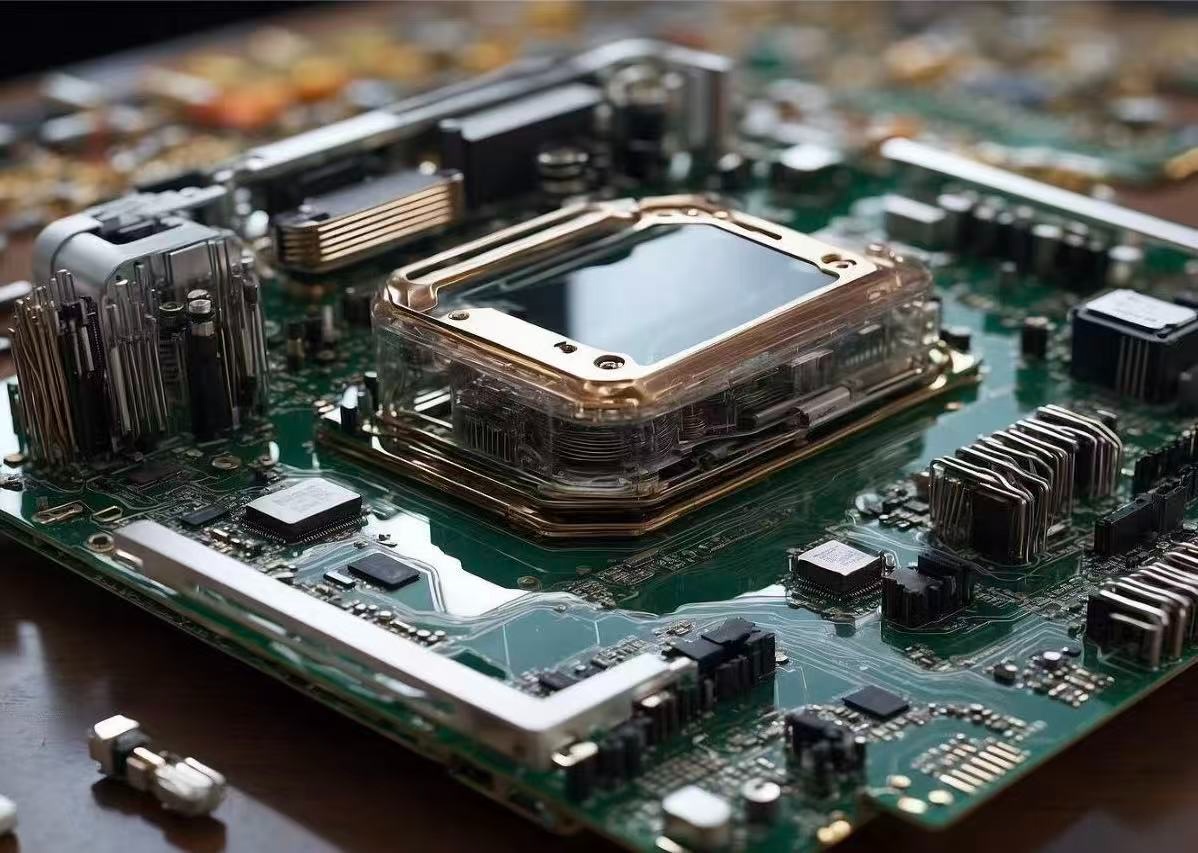
Memory devices are further divided into two major categories: volatile memory and non-volatile memory. The characteristic of volatile memory is fast read/write speeds, capable of matching the CPU's high-speed operations, but data is lost when power is off; non-volatile memory can retain data for a long time even when power is off, though read speeds are slower.
Going further, volatile memory can be divided into DRAM (Dynamic Random-Access Memory) and SRAM (Static Random-Access Memory). DRAM is the most mainstream type of memory, which is what we usually call RAM (the working memory in computers/phones). SRAM can be understood as "higher-level memory"; it's faster than DRAM and doesn't need refreshing, but it's very expensive and has very small capacity. Actually, besides these two traditional categories, many friends have probably also heard of HBM (High Bandwidth Memory). HBM is essentially an upgraded form of DRAM, which we will focus on later.
As for non-volatile memory, its core component is actually NAND Flash. The SSDs, USB drives, and phone storage (the 256G/512G part) we use daily all fall into this category. NOR Flash is relatively niche and won't be discussed in detail here.
The Historical Evolution of the Storage Industry
The storage industry has actually undergone several very distinct era shifts.
In the earliest computer era, the core of storage was whether data could be saved. From magnetic tapes, floppy disks to mechanical hard drives, the focus was on capacity because data was scarce back then, and being able to preserve data was already progress.
Later, entering the PC and internet era, storage began to require "storing more and reading faster." On one hand, operating systems and software became increasingly complex, requiring faster memory (DRAM) to support operations. On the other hand, massive amounts of data began to accumulate long-term, so NAND-based flash memory gradually replaced mechanical hard drives as the mainstream storage medium. But even so, for a long time, storage was not the most critical bottleneck. Because the core contradiction at the time was computing power—the performance improvements of CPUs and GPUs were the main driver pushing the entire industry forward.
The real structural change came with the current AI revolution. Because large model training and inference are essentially not purely computational problems, but data flow problems: massive amounts of data need to be constantly read, processed, and written back. If data cannot be delivered to the computing unit in time, even the strongest computing power cannot be utilized. This shifts the bottleneck from "how fast can we compute" to "how fast can we move data." It can be said that in the AI era, storage determines how much computing power can be utilized.
HBM—Born for the AI Era
The original purpose of HBM was actually to provide more memory to GPUs and other processors. This is mainly because GPUs are becoming increasingly powerful and need faster access to data from memory to shorten application processing times. From a technical perspective, HBM transforms DRAM from traditional 2D to 3D, fully utilizing space and reducing area. After stacking, the direct result is that the interface becomes wider, with far more interconnect points underneath than the number of connections traditional DDR memory has to the CPU. Precisely because HBM is the invisible bottleneck in this round of AI computing systems, and simultaneously has the highest technical barriers and tightest supply, companies focusing on HBM have become the most direct beneficiaries of this AI technology development.
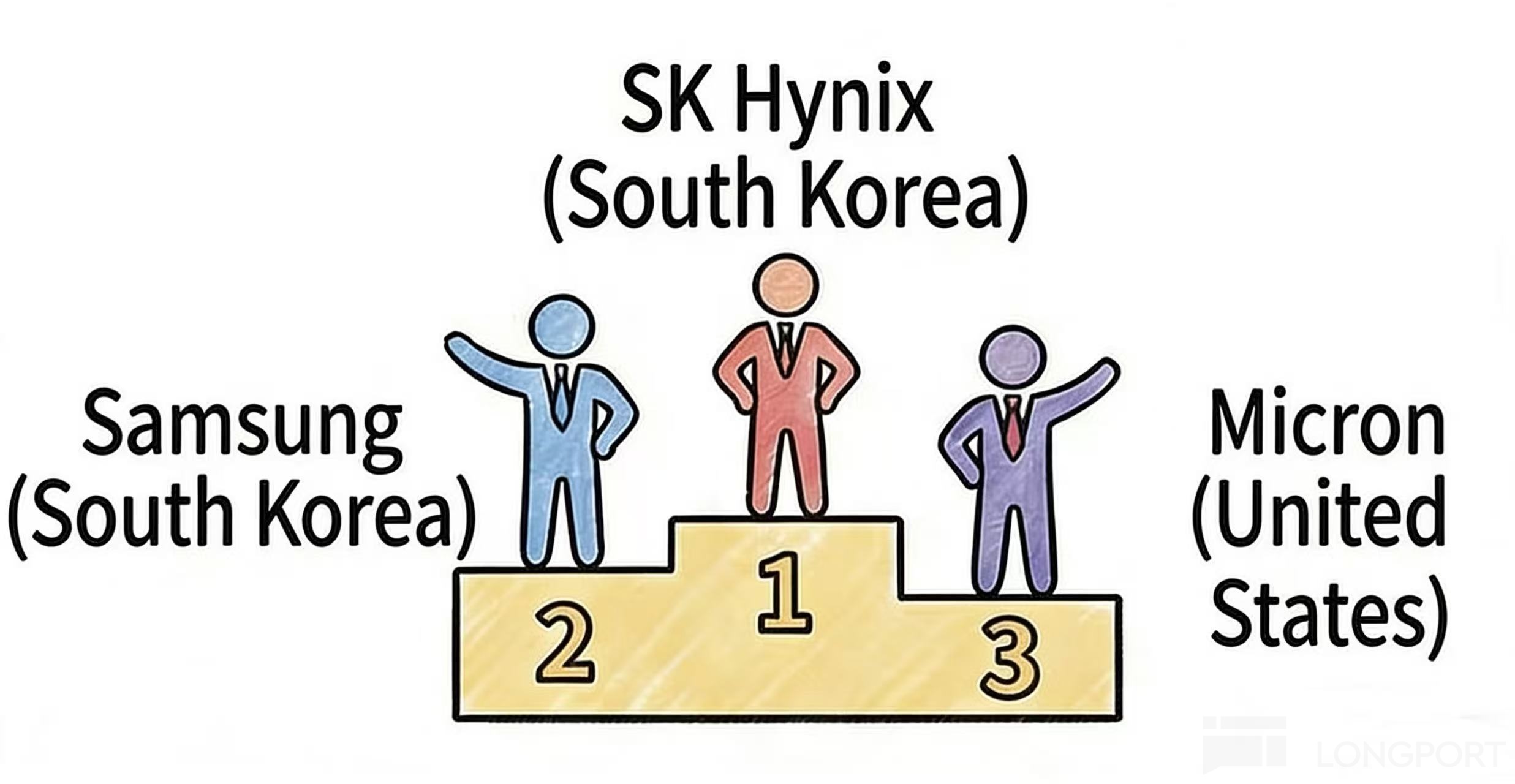
In the birth and development of HBM, $AMD(AMD.US) and SK Hynix can be said to have played indispensable roles. In 2013, these two companies jointly launched this core HBM technology. After the first generation of HBM was commercially released, Samsung joined the competition. In 2020, another storage giant, Micron, also announced its entry into this arena. Unfortunately, AMD completely shifted direction after releasing its product in 2016, almost abandoning HBM. Therefore, the current HBM market is basically concentrated among three companies: SK Hynix ($XL2CSOPHYNIX(07709.HK)), Samsung ($XL2CSOPSMSN(07747.HK)), and Micron Technology.
Other Indirect Beneficiaries
The "storage fever" brought about by this round of AI is indeed ignited by HBM as the core, but it doesn't mean only HBM benefits.
Because the entire chain is roughly like this: Data Storage (NAND) → Memory (DRAM) → HBM → GPU
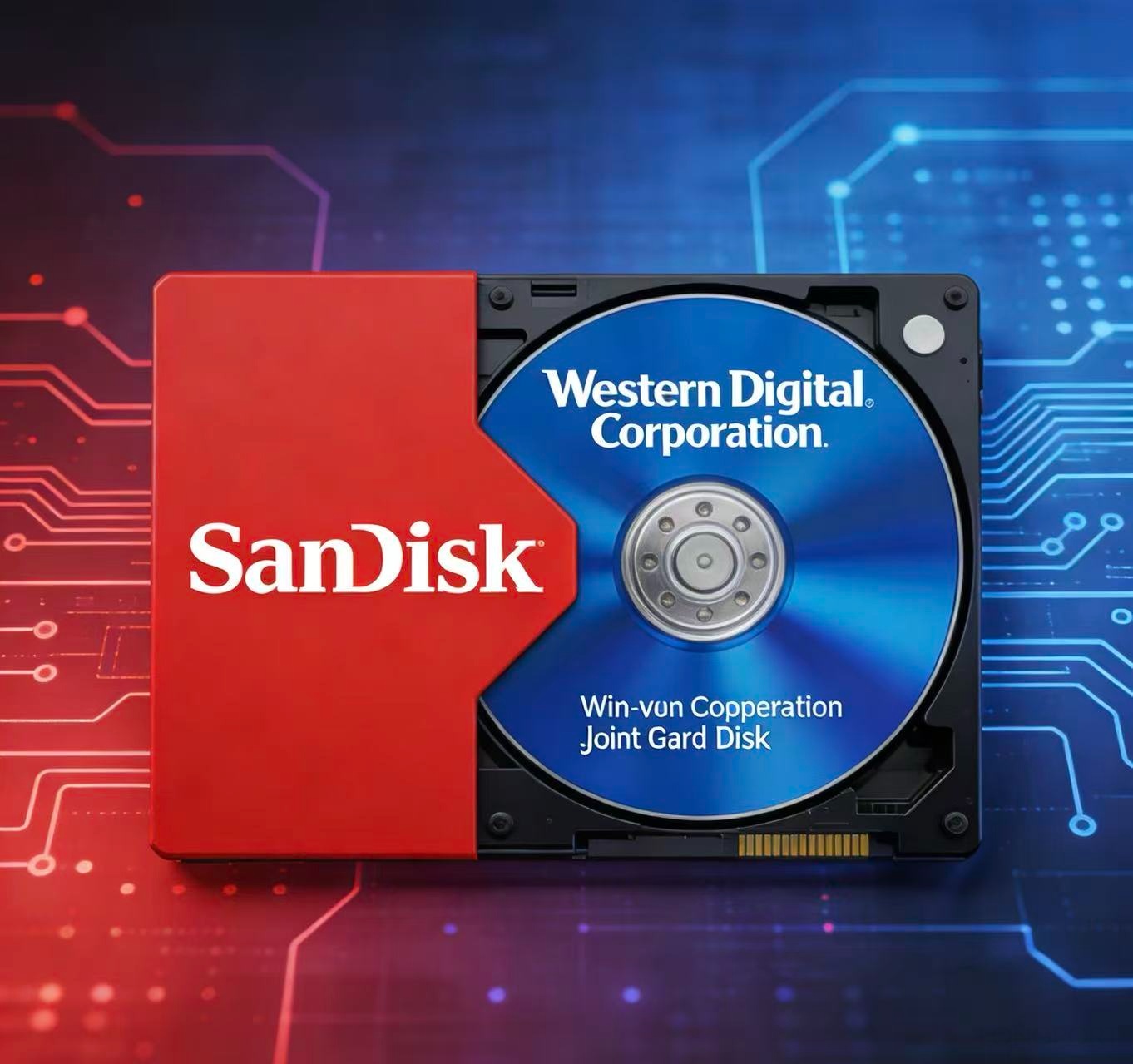
Besides needing HBM for faster data movement, AI also needs to store massive amounts of data. This has made manufacturers like SanDisk, which focus on enterprise-grade SSDs, also favored by the market. In 2025, SanDisk was spun off from Western Digital, becoming a pure flash memory company; Western Digital focuses on the traditional mechanical hard drive (HDD) business. Actually, whether it's SSD or traditional HDD, both have their place in the AI era, because not all tech operations need to pursue "speed." SSDs are certainly fast, but the massive amounts of cold data generated daily in the AI era—such as training logs and old archives that aren't used but must be stored—would be prohibitively expensive to store on SSDs. Therefore, Western Digital's HDDs have become the optimal solution for this scenario, a point well-validated by its stock price.
The copyright of this article belongs to the original author/organization.
The views expressed herein are solely those of the author and do not reflect the stance of the platform. The content is intended for investment reference purposes only and shall not be considered as investment advice. Please contact us if you have any questions or suggestions regarding the content services provided by the platform.
