

 Top 10 Influencers in 2025
 Markel
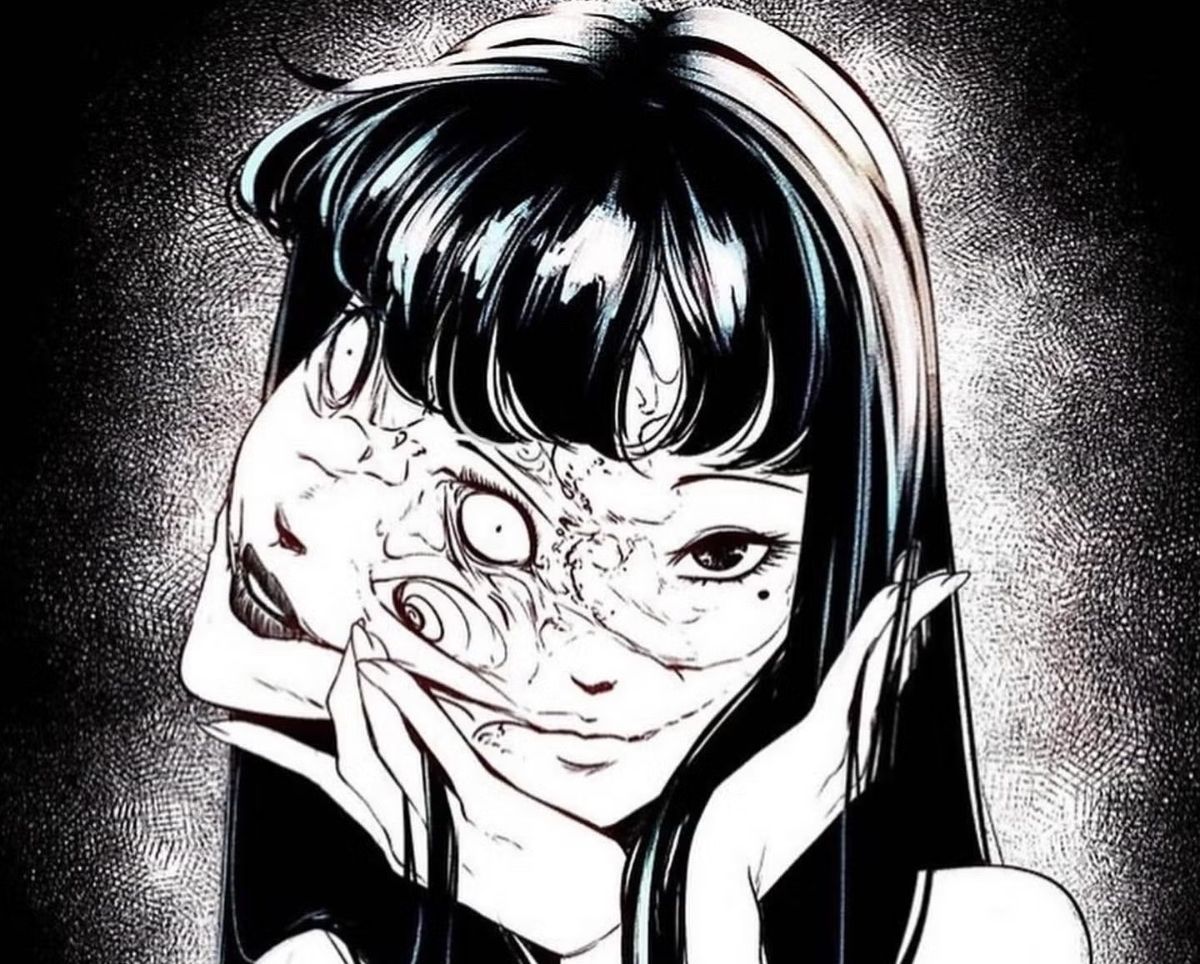
Overinterpretation of Tomie

The impulse to claim complete possession of something appears as a tragic grandeur in the eyes of some, while to others, it is merely naked pathology.
What seems like a divergence in aesthetic judgment reveals, upon closer inspection, the most fundamental dilemma of human existence: what kind of relationship should we have with the objects of our desire?
When people talk about possession, it is never about the object itself. The desire to possess something we like often stems not from the object's inherent worth, but from how the act of possession temporarily bridges the chasm between the self and the world.
The structure of human consciousness inherently creates a sense of separation. We are in the world, yet we stand opposite it.
This duality of participation and separation constitutes the basic paradox of existence. When we say "I want this," the subtext is that there is a gap between me and this thing, and possession can fill it.
But can possession truly fill this gap?
Those who claim they would destroy what they cannot have, or find a way to claim it for themselves, may not realize they are trapped in an eternal dilemma: to possess is to part. When we truly possess something, whether through purchase, power, or violence, what we possess is merely its shell, not its being.
A bird caged, a flower plucked and placed in a vase, a person forced to stay—when we incorporate them into our world through possession, we have already killed the part most worth possessing: freedom, life, and independent existence itself.
All conditioned phenomena are like a dream, an illusion, a bubble, a shadow, like dew or a flash of lightning. To cite this is itself a danger. The Sixth Patriarch Huineng emphasized not establishing words, because any speech can become a new object of attachment.
Once the discussion of possession falls into language, it becomes another form of possession: an attempt to possess truth through concepts and theories. Even the moral reaction we call "disgust," seemingly resolute, may itself constitute another form of obsession.
When one casts strong moral disgust upon an act, one is already controlled by it, and may even unconsciously share its basic premise: that the object is indeed worth possessing, only the method is displeasing.
Throughout the history of human civilization, great spiritual traditions have responded to this fundamental question of possession. In the Symposium, the ladder of love is a transformation from possession to transcendence: no longer trying to possess specific beautiful things, but through contemplation of beauty, transcending the limitations of individual existence. Laozi said, "To produce but not to possess, to act but not to rely, to lead but not to dominate." Zhuangzi said, "Heaven and earth were born with me, and all things are one with me." Both attempt to dissolve the self that seeks to possess. Zen's no-thought, no-form, no-abiding utterly negates the possibility of any attachment.
The entire history of human civilization is almost a history of possession. From possessing tools, land, and resources, to possessing power, knowledge, and meaning. People have even internalized possession as a basic category of thought: this is my view, that is your position; this is truth, that is falsehood.
Possession is not only our relationship with the world but also our way of understanding it. The person who madly desires to completely possess something is merely an extreme embodiment of the human condition, not a deviation from it. The reason his madness can be seen as beautiful by some is precisely because it reveals, in the most naked way, the fundamental dilemma of human existence: the need to be one with the world while retaining the self; the longing to completely merge with something, yet unwilling to disappear in the merging. This tension itself is tragic, and tragedy is an ancient form of beauty.
Yet, one cannot ultimately remain in the appreciation of this mad beauty. Because this appreciation itself may well be another form of possession. Possessing the madman and his madness through an aesthetic attitude, transforming them into objects of spiritual consumption. Praising and condemning the madness of possession may be essentially no different, each possessing the judgment of possession in its own way.
Where is the way out? In the "should not speak" of that "should not."
It is not about remaining silent on the question of possession, but realizing that any speech may fall into another possession. Transcendence lies not in finding the correct answer about possession, but in thoroughly questioning the question itself: why do we always think of our relationship with the world in terms of possession?
The person who wants to divide a thing into countless pieces to claim it for himself may not realize that when he truly divides it into countless pieces, the thing is no longer what he initially wanted to possess. And the most thorough possession of a thing is to let it go, to let it be itself.
A flower blooming in the wilderness, admired from afar but not plucked; a person coming and going freely, accompanied quietly but not detained; a thought arising in the heart, examined carefully but not clung to. In this non-possession, one participates most profoundly in the existence of things.
That mad desire for possession is, in a sense, truly beautiful, for it reflects, in a distorted way, humanity's longing to transcend itself.
Only this beauty is a beauty that needs to be cured, just as a high fever is a heroic spectacle of the body fighting disease—impressive in its intensity, yet ultimately an illness. Simple moral judgment would cause one to miss insight into the depths of human nature. The only attitude that avoids both extremes is to see the inevitability and tragedy of this madness of possession, neither glorifying it nor being disgusted by it, but viewing with a certain compassion the person struggling with the desire to possess. He has merely mistaken possession for unity, control for love.
All conditioned phenomena are like a dream, an illusion, a bubble, a shadow. The object of possession is a dream, the act of possession is an illusion, and the possessor himself—is he not also a bubble?
In this dreamlike, illusory existence, what truly matters is not what we possess, but how, with a non-possessive heart, we fully experience, feel, and participate in this world that can never be possessed.
When people gaze at the stars late at night, in that moment, the entire universe belongs to them, and yet they possess nothing.
This is the most beautiful madness.
The copyright of this article belongs to the original author/organization.
The views expressed herein are solely those of the author and do not reflect the stance of the platform. The content is intended for investment reference purposes only and shall not be considered as investment advice. Please contact us if you have any questions or suggestions regarding the content services provided by the platform.
