

 Likes Received
 Rate Of Return
🔥🎯No fuel needed to get home: True aerospace technology is about learning to "let gravity do the work for you."
Many people's first reaction is:
How much fuel would you need for a round trip to the Moon?
But the reality is the exact opposite—
The return journey can, in theory, use not a single drop of fuel.
This isn't science fiction; it's a plan already in use.
$Rocket Lab(RKLB.US)
$AST SpaceMobile(ASTS.US)
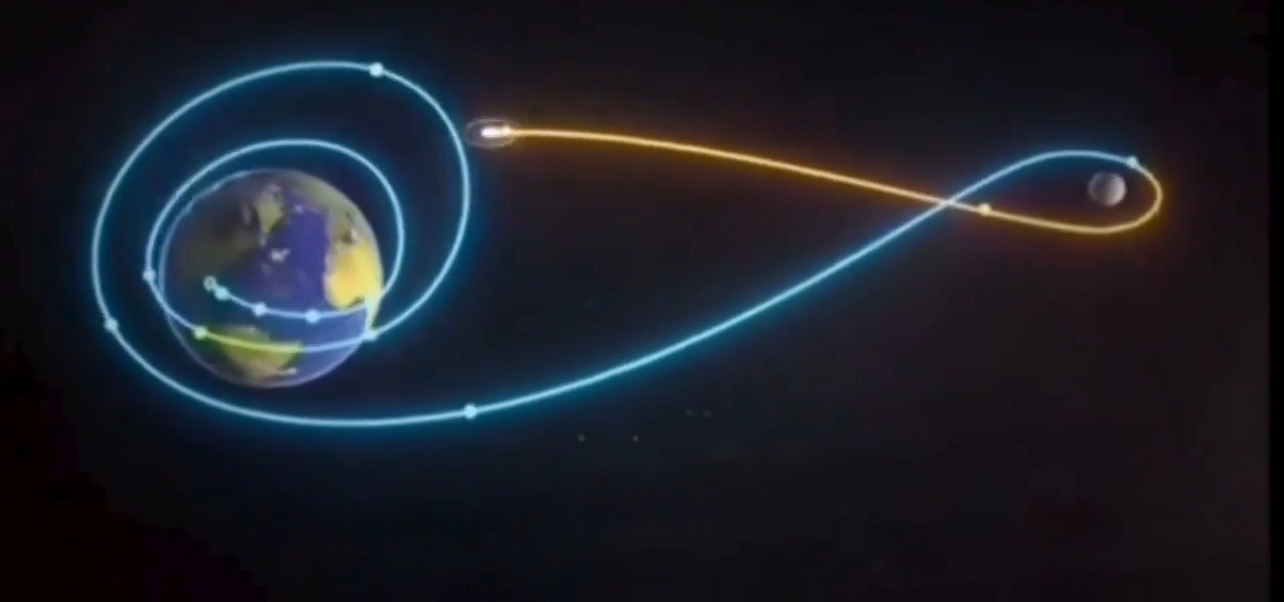
The core of the Artemis II lunar orbit mission uses a specific orbital design:
The free-return trajectory.
The logic is actually very counterintuitive.
At launch, you just need to send the spacecraft into a "just right" speed and angle.
The rest is done not by engines, but by gravity itself.
As the spacecraft approaches the Moon, the Moon's gravity alters its trajectory.
Not by slowing it down, but by "bending" it.
Like throwing a hammer—
The spacecraft gets a "slingshot" from the Moon, naturally turning its path back toward Earth.
The entire process requires no active return burn.
That's the key.
I've always felt the mindset behind this design is more important than the technology itself:
Not fighting physical laws, but using them.
And this isn't just about efficiency; it's also about safety.
If the worst happens in deep space:
The engines fail completely.
As long as the spacecraft is already on this trajectory,
Gravity itself is the ultimate backup system.
It doesn't need power
It doesn't need software
It doesn't need human operation
It just needs the laws of physics to keep working.
And the astronauts can come home.
This is actually an "ultimate safety net."
Looking further out, this way of thinking becomes even more apparent on a larger scale.
When Voyager flew toward the edge of the solar system, it didn't rely on crazy acceleration,
But on a series of "gravity assists."
Each time it passed a planet, it used its gravity for a speed boost.
Essentially, it "took a little" from the planet's orbital energy.
The spacecraft itself used almost no fuel, yet flew faster and faster.
This is the so-called gravity assist.
So in space, there's a very counterintuitive fact:
There's no such thing as truly straight-line flight.
All paths are essentially free-fall within different gravitational fields.
Engines are just for "getting into orbit."
What truly decides fate is the orbit itself.
I've gradually come to realize that behind this lies a completely different engineering philosophy:
Beginner level is "more thrust is better"
Advanced level is "when can you turn the engines off"
This isn't just about aerospace.
It's also a more fundamental way of thinking.
Are you more inclined to believe that "you need to keep adding force to move forward," or "once you find the structure, you can go with the flow of the system"?
The copyright of this article belongs to the original author/organization.
The views expressed herein are solely those of the author and do not reflect the stance of the platform. The content is intended for investment reference purposes only and shall not be considered as investment advice. Please contact us if you have any questions or suggestions regarding the content services provided by the platform.
