

 Likes Received
Pure-blood ETF has arrived: it solves an old problem, but there's a cost

On April 2, $Roundhill Memory ETF(DRAM.US) (Ticker: DRAM) officially listed on the U.S. stock market.
Investment Pain Points in the Memory Sector
As mentioned by Baikejun in the previous article Understanding the Memory Industry in One Article, the global HBM production capacity is currently largely controlled by three companies—Samsung, SK Hynix, and Micron. Among these three memory giants, Micron is a U.S.-listed company, so investing in it is relatively straightforward. However, the other two leading stocks, Samsung and SK Hynix, are listed on the Korean exchange. For ordinary investors to buy them, they either need to open a Korean account or go through a Korean stock ETF as a detour.
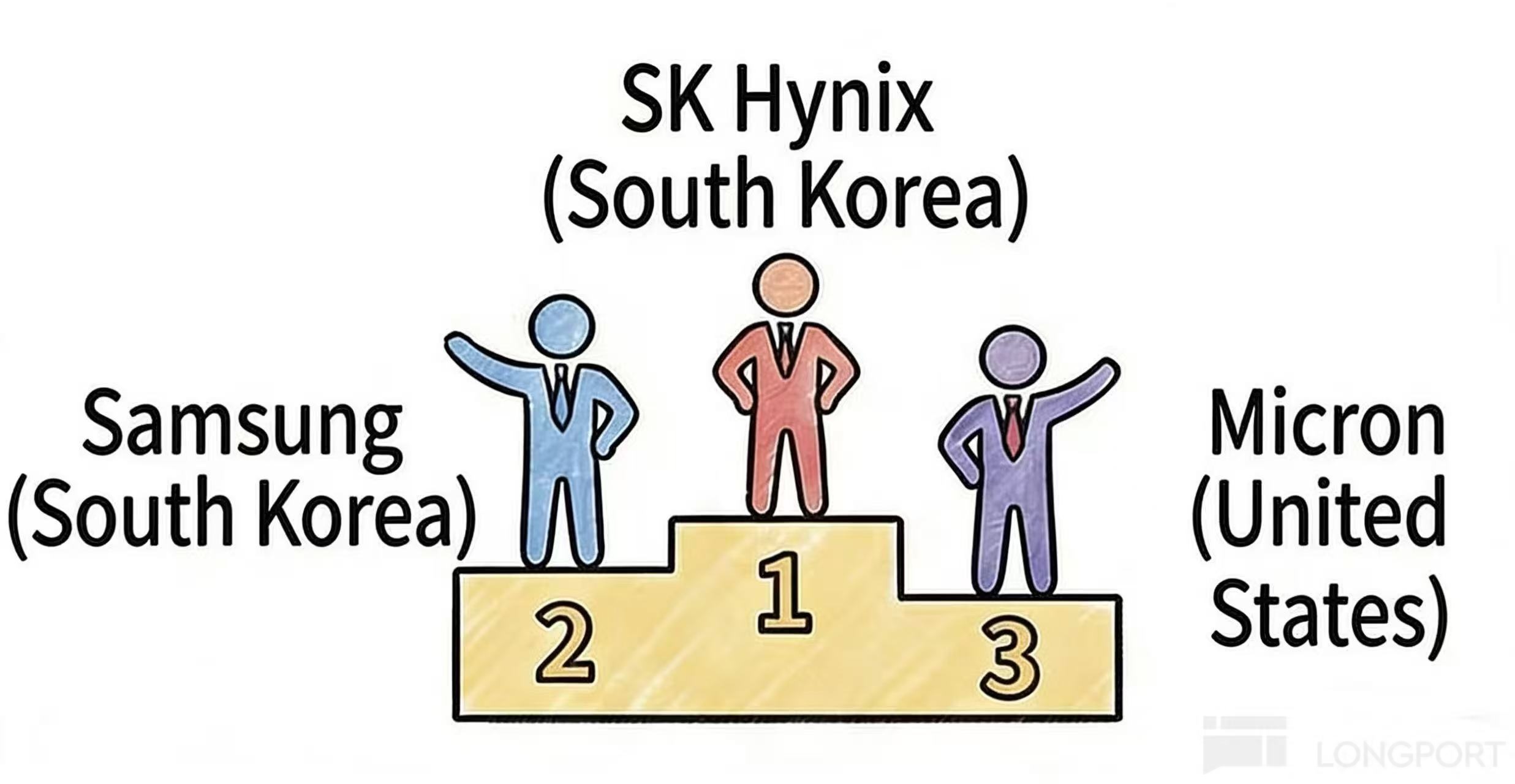
Consequently, a large amount of capital began flowing into a Korean large-cap ETF called EWY ($ISHRS MSCI S Korea Capped(EWY.US) )—because it has over 30% weight in Samsung and SK Hynix. The cost, however, is that you are also "hitching a ride" with companies like Hyundai and Korean banks that have little to do with memory. This misalignment is the backdrop for the birth of DRAM.
How Was DRAM Designed?
Seeing this opportunity, Roundhill did something very direct: packaged the companies that actually make memory into an ETF.
Let's look at its holdings structure:
The top three—Micron (24.6%), Samsung (24.1%), SK Hynix (23.1%)—together account for over 70%. Further down, SanDisk, Kioxia, Western Digital, Seagate, plus Taiwan's Nanya Technology and Winbond, make a total of 9 stocks, covering the entire industry chain from memory chips to flash memory.
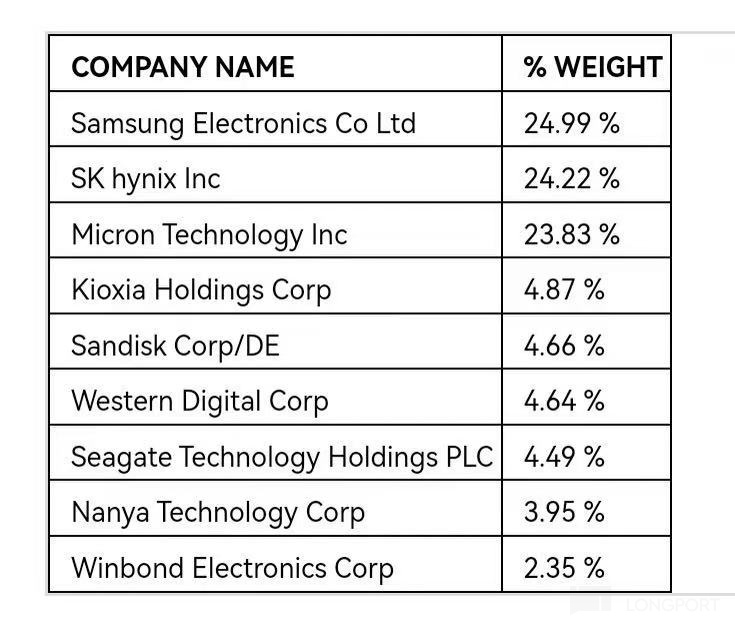
This portfolio addresses a core pain point: pure memory exposure. No Hyundai, no Korean financial stocks, no drag from consumer electronics—you get exactly what you want. But there's a noteworthy detail here: the management fee. DRAM's fee is 0.65% per year. In comparison, the average fee for passive ETFs in the U.S. is around 0.1% or even lower. This 0.65% isn't considered cheap in the U.S. ETF market. Because actively managed ETFs have investment research and rebalancing costs, and this product is still very small (about $2.5 million at launch), the operating expense ratio after amortization is naturally higher. For long-term holders, the fee is a factor that needs to be weighed before buying.
Another Perspective: What is an ETF Itself?
The emergence of DRAM also gives us an opportunity to re-examine the ETF as a tool.
Behind an ETF, there are actually three layers of structure:
First Layer: Underlying Assets. DRAM buys the actual shares of memory companies. These companies produce HBM, DRAM, NAND, directly linked to AI computing power demand.
Second Layer: Standardized Pricing. The ETF packages a basket of stocks into shares, with real-time creation and redemption at net asset value. This step turns "buying individual stocks" into "buying an index," reducing the risk of a single company blowing up, but also means you receive the industry's average return—good and bad companies are sold together.
Third Layer: Capital Nature. ETFs are bought out by capital. When a large amount of capital floods into a particular thematic ETF, it indicates that market consensus is already quite strong. This is good for the industry itself (more capital supports valuations), but for later buyers, the competitive landscape has also changed—the earliest opportunity discoverers have already entered.
This three-layer structure is the basic framework for understanding any ETF: What assets are you buying? Who is pricing? What does the timing of entry mean?
Risks: What Do You Need to Know at the Mechanism Level?
Of course, discussing a product shouldn't only highlight the advantages. DRAM has several mechanism-level risks that need to be objectively listed.
1️⃣ Concentration Risk: The top three (Micron + Samsung + SK Hynix) account for over 70% combined. This is both the biggest advantage of this ETF—pure memory exposure—and its biggest vulnerability. Capacity changes or technology roadmap shifts by any one of them will significantly impact the net asset value.
2️⃣ Relatively High Fee: As mentioned, the 0.65% management fee is not low among U.S. stock ETFs. The longer the holding period, the more pronounced the fee's erosion of returns becomes.
3️⃣ Technology Substitution Risk: Technology iteration in the memory industry is fast. HBM is the current mainstream, but will new future memory architectures bring substitute products? This is an uncertainty faced by the entire industry, not something a single ETF can avoid.
4️⃣ Supply-Demand Fundamentals: High profits stimulate capacity expansion; this is a basic market law. From a macroeconomic perspective, the current supply-demand tightness in the memory industry will not be a permanent state (yet this is precisely the core condition supporting the current high valuation of the memory sector).
A Final Word
The DRAM ETF is essentially the productization of a demand that has already been validated. It solves a real pain point—wanting to buy memory, but not finding a pure channel. This demand might be seen from the subsequent capital diversion from part of EWY.
But productization also means lower barriers. When everyone can buy with one click, the source of returns is no longer "discovering opportunities," but "whether reality can exceed already fully priced-in expectations." This is the core question all thematic investments face after reaching the productization stage.
The copyright of this article belongs to the original author/organization.
The views expressed herein are solely those of the author and do not reflect the stance of the platform. The content is intended for investment reference purposes only and shall not be considered as investment advice. Please contact us if you have any questions or suggestions regarding the content services provided by the platform.
