

 Likes Received
 Rate Of Return
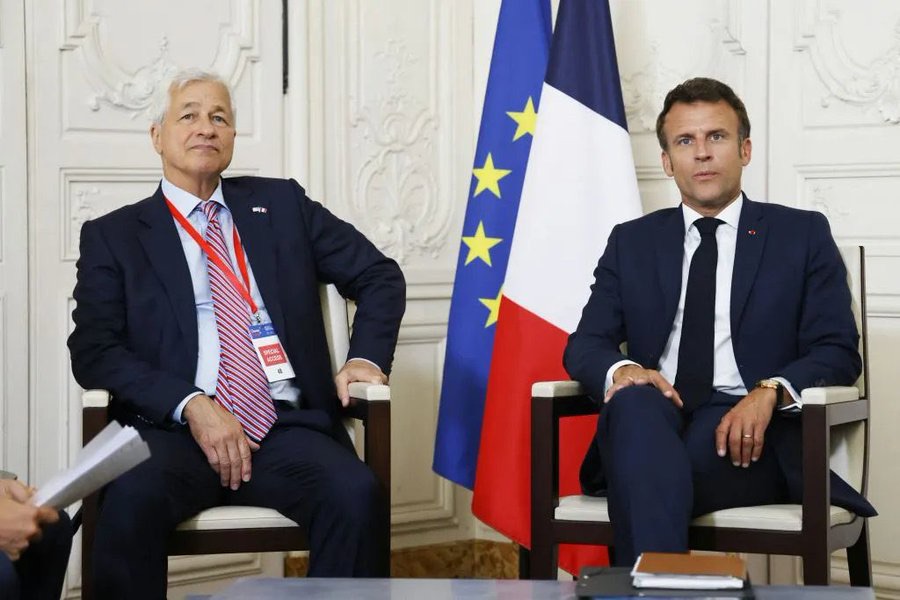
🔥🎯$JPMorgan Chase(JPM.US) CEO Jamie Dimon bluntly states Europe is "on the wrong track": The problem isn't recession, but a structural deadlock.
When Jamie Dimon says "Europe is slowly and steadily declining and fragmenting," it's not an emotional judgment, but a concentrated expression of a long-term structural issue.
The more crucial statement is:
Europe's problem is not a lack of resources, but an "inability to act."
This determines the trajectory of all subsequent issues.
Europe itself is not weak.
It possesses world-class companies, a deep savings base, and a high-quality workforce—these are the factual foundations.
But the problem is:
These advantages have not translated into sustained growth.
The reason is also pointed out very directly—
The economic union was never truly completed.
The EU achieved integration at the political level, but in key economic dimensions like fiscal policy, capital markets, and industrial policy, it has always been "semi-unified."
This leads to a persistent consequence:
Countries fight their own battles, and resources cannot be allocated efficiently.
The result is long-term "low growth + low efficiency."
Compounded by another structural problem—
The layering of bureaucratic systems.
New layers of regulation and institutions, intended for stability, have the side effect of:
Suppressing innovation, investment, and the pace of corporate expansion.
While the US is pushing for tech and capital market efficiency, and China is strengthening industrial scale and execution,
Europe is consuming its growth momentum in "internal coordination costs."
If this trend doesn't change, the consequences have actually been made quite clear:
• The social welfare system will be difficult to sustain long-term
• Military capabilities cannot be restored
• Economic growth will continue to lag
And the most underestimated point is:
This is not just Europe's problem.
Because the US also relies on a "stable and competitive Europe."
If Europe continues to weaken, the global economic structure will become imbalanced, and the US itself will face repercussions.
This is also why a seemingly "radical" proposal has been put forward—
A large-scale free trade agreement covering the whole of Europe.
The precondition is clear:
Europe must first complete reforms—including economic and military dimensions.
In essence, this is a logic of exchange:
The US provides market access and trade benefits.
Europe provides structural reforms and execution capability.
But the problem is, the reason this proposal is called a "long shot" is precisely because:
Europe's biggest current problem is its "difficulty in acting in unison."
If this cannot be resolved, all external incentives will be ineffective.
So the real core of this matter is not "whether Europe will decline."
But rather:
In an era that requires rapid decision-making and execution, can a "structurally difficult-to-act system" still maintain its competitiveness?
Which judgment do you lean towards: Will Europe be forced to reform and complete integration, or will it continue to slide in this "chronic bleeding"?
The copyright of this article belongs to the original author/organization.
The views expressed herein are solely those of the author and do not reflect the stance of the platform. The content is intended for investment reference purposes only and shall not be considered as investment advice. Please contact us if you have any questions or suggestions regarding the content services provided by the platform.
