

 Treasure Hunter
 XIAOMI Diamond Holder
Minimax is really hard to use. On one hand, you have to teach it step by step how to do things; on the other hand, it needs to accept instructions and solve problems on its own to complete the task.
Xiaomi's MIMO large model is among the top in terms of efficiency domestically.

$XIAOMI-W(01810.HK) While CEO Lei is driving, you could also pay attention to Xiaomi's large model developments like MiMo-V2-Pro, which haven't been priced in by the market yet. Overall, it's not bad.
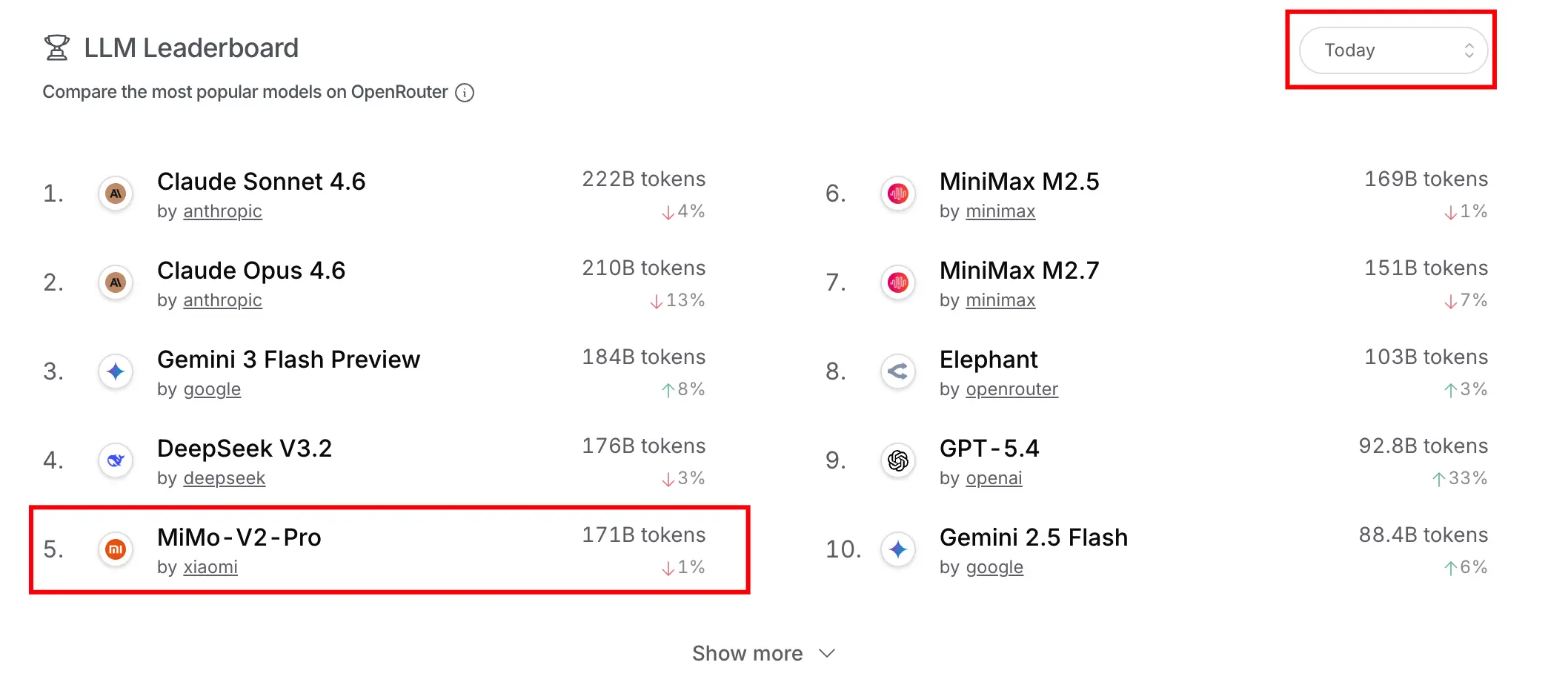
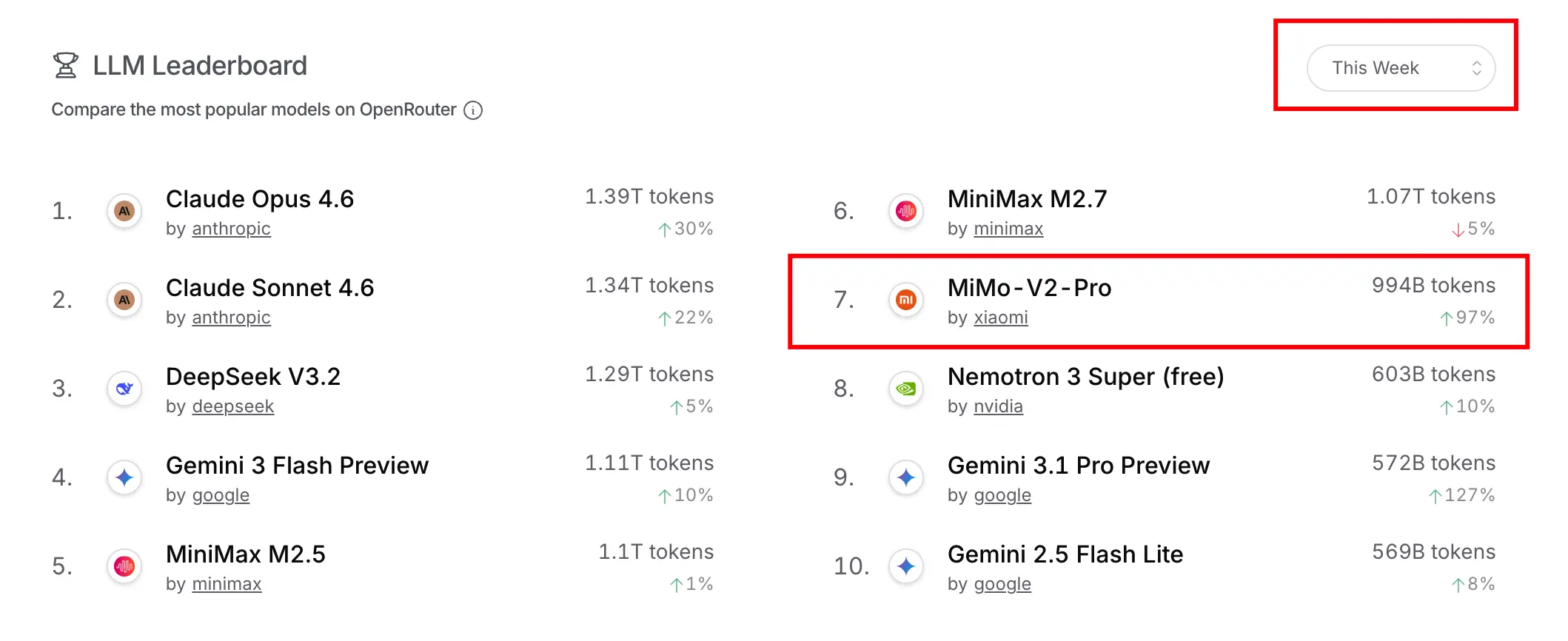
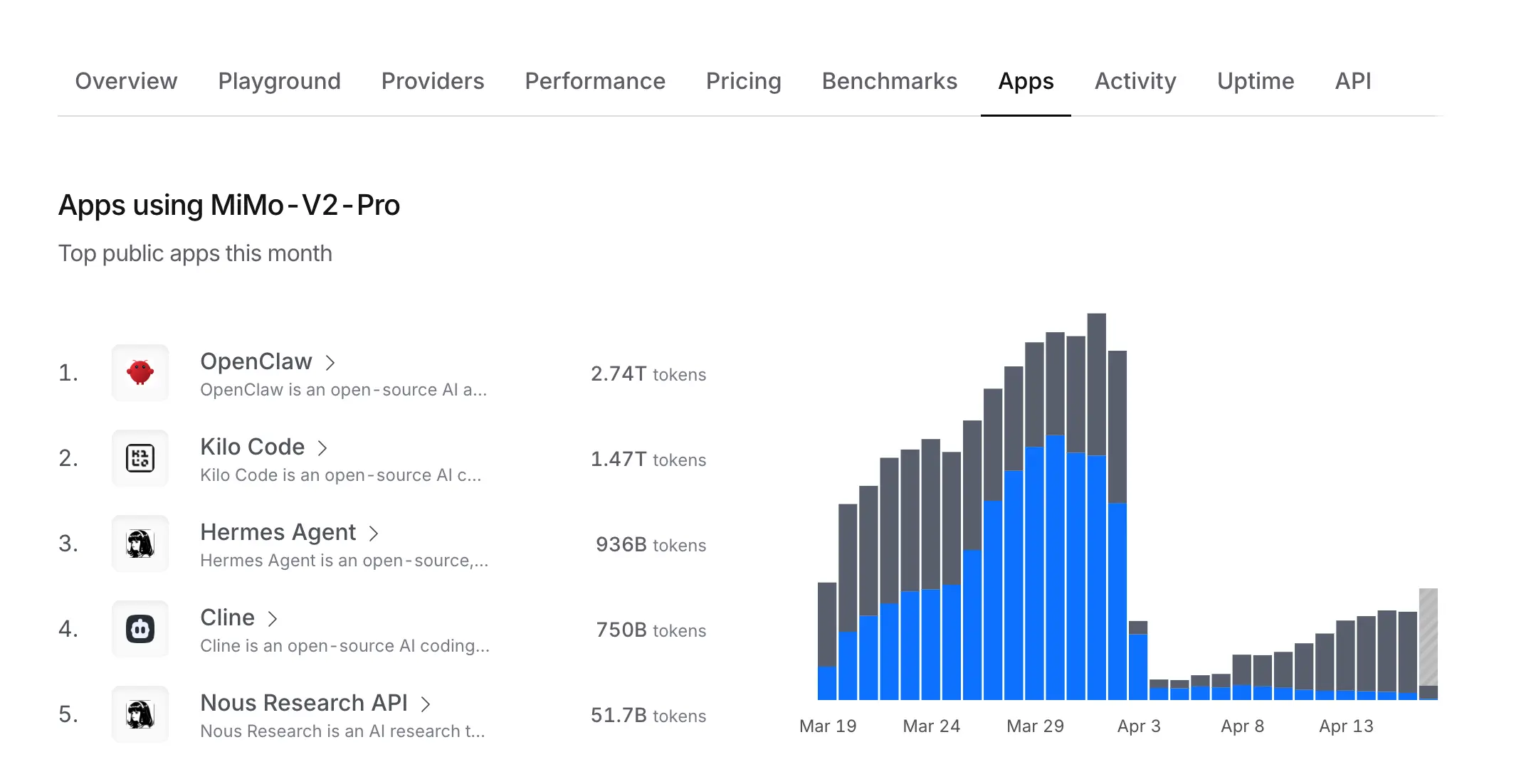
Remember, after Xiaomi's large model started charging based on the Token Plan in early April, MiMo-V2-Pro's ranking on the OpenRouter leaderboard continuously dropped from the top spot to around 14th. Of course, the free models from the Qianwen team also had an impact during that period. This week it's back to 7th place, and 5th today. Although factors like Hermes being free play a role, usage data shows that Lobster is the main factor. This indicates that after a month of being a paid service, the model's performance is quite good, and its usage shows it has gained recognition from a certain number of users.
From my own use, especially in Lobster scenarios, MiMo-V2-Pro is indeed quite good besides being more expensive than expected. I used to use MiniMax. After switching to MiMo-V2-Pro, Lobster immediately became efficient and to-the-point. Many tasks can be executed accurately without much hand-holding. I finally understand what intelligence means 😂. Switching back to MiniMax immediately feels like a downgrade; with the same prompts and tasks, the accuracy and stability drop noticeably, requiring me to assist with a bunch of issues without being able to complete them fully.
In terms of price, MiniMax is indeed cheap, but I feel it's a bit like instant noodles—not nutritious and not tasty, with the only advantage being it fills you up. I somewhat understand MiMo-V2-Pro's strategy. Recent collaborations show it intends to go all-in on the Agent scenario, which is like its own ecosystem's Lobster, and it's refining this alongside the popular Agents from the open-source community. It clearly understands that to integrate with the Xiaomi ecosystem, it must excel in this area. Price-wise, compared to some 'instant noodle' products, it's clearly aiming for the first tier, improving quality, and collaborating with well-known ecosystems. Because lowering quality to engage in a price war is like drinking poison to quench thirst—there would be no room left later.
Looking a bit further at automotive overseas expansion, the positive factors are becoming increasingly clear. It's like a mountain climber who not only has their own strength and motivation but also has people pushing from below and pulling from above, so the success rate should be quite good. Recently, there have been reports from Musk's side about the AI5 chip tape-out. The direction he's betting on is similar. From the available information, Tesla is indeed a competitive opponent in overseas markets. The car quality demonstrated by CEO Lei's teardown and long-distance drive is there, but the future product generation gap and procurement cost reduction require chips and AI to step up. There is indeed a gap here. But whether looking at market cap or PE ratio compared to Xiaomi, it's not high. The market hasn't priced in the potential of these aspects anyway. Perhaps the only mid-to-long-term concern, as mentioned in "Built to Last," is that Xiaomi needs to transition from being driven by Lei Jun to being driven by the organization. I hope to see progress in this area.
The copyright of this article belongs to the original author/organization.
The views expressed herein are solely those of the author and do not reflect the stance of the platform. The content is intended for investment reference purposes only and shall not be considered as investment advice. Please contact us if you have any questions or suggestions regarding the content services provided by the platform.
