

 Likes Received
 Rate Of Return
🔥🎯 Strait of Hormuz Blocked + Iran's Storage Nearing Limit, The Real Impact Isn't Oil Prices, It's "The Clock is Ticking"
The market is still watching oil prices rise, but the more critical variable has already changed:
Not "whether it will be tense," but—how much longer can it hold out.
First, look at the core constraint:
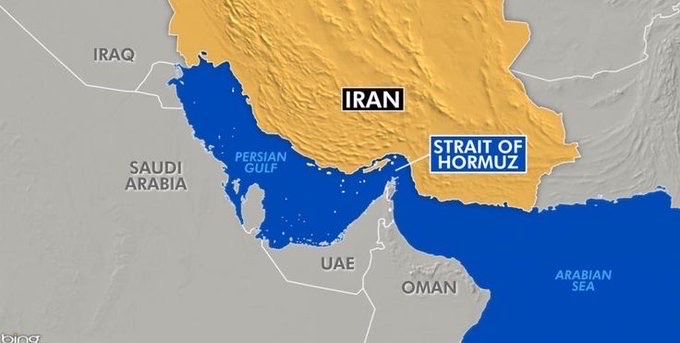
Strait of Hormuz
This passage alone carries about 20% of global oil transportation.
Once obstructed, the impact is not regional, but a global liquidity contraction.
The current situation is a double squeeze:
The first layer is blocked exports
Iran cannot smoothly export crude oil through the Strait of Hormuz.
The second layer is exhausted internal space
Storage only has 12–22 days left. Once the tanks are full—it's not "earning less," but "must stop production."
This brings a rarely discussed outcome:
When storage is full, Iran's choice is not to continue selling, but to be forced to shut down production capacity.
This will cause a "non-linear contraction" on the supply side, not a gradual decline.
At the same time, external variables are also piling up:
Ukraine's strikes on Russia's refining system continue
→ Tuapse refinery attacked again
→ meaning the other end of the global supply chain is also being weakened
Add geopolitics on top:
Donald Trump is dissatisfied with Iran's proposal, US-Iran negotiations are stalled
This means there is no "quick relief" path in the short term.
What the market sees now is:
Oil prices rising
But what hasn't been fully reflected is:
The supply chain is being compressed in three directions simultaneously
Transportation (Hormuz)
Production (Iran's storage ceiling)
Refining (Russian facility damage)
There's also a very critical real-time signal:
The Japanese tanker Idemitsu Maru is attempting to cross the strait
This is not ordinary shipping behavior, it's a "risk test."
If successful, it means the blockade has loopholes
If it fails, it means the blockade is enforceable
And the market will quickly reprice the risk premium based on this result.
Putting all factors together, a clear structure emerges:
If the blockade continues
→ Iran is forced to cut production
→ Global supply contraction accelerates
If the blockade escalates
→ Maritime shipping risk premium rises
→ Oil prices not only rise, but volatility also increases
If negotiations continue to fail
→ This is not a short-term event, but entering a "structural risk phase"
What really needs attention is not how much oil prices rose today, but:
The supply chain has begun "synchronous failure."
This situation is not common in history—
Usually, it's a single-point shock
Now it's multiple points tightening simultaneously
The next most critical variables are only two:
Whether the Strait of Hormuz remains under control
And whether Iran's storage truly hits the ceiling and begins forced production shutdowns
Once these two conditions are met simultaneously, the market will face not "price increases," but a "supply gap."
The question becomes straightforward:
Do you think this is a short-term geopolitical fluctuation, or is it evolving into a new cycle of energy supply shock?
The copyright of this article belongs to the original author/organization.
The views expressed herein are solely those of the author and do not reflect the stance of the platform. The content is intended for investment reference purposes only and shall not be considered as investment advice. Please contact us if you have any questions or suggestions regarding the content services provided by the platform.
