

Is there potential in AI+ quantitative trading: Finally got the quantitative script running and triggered the first trade

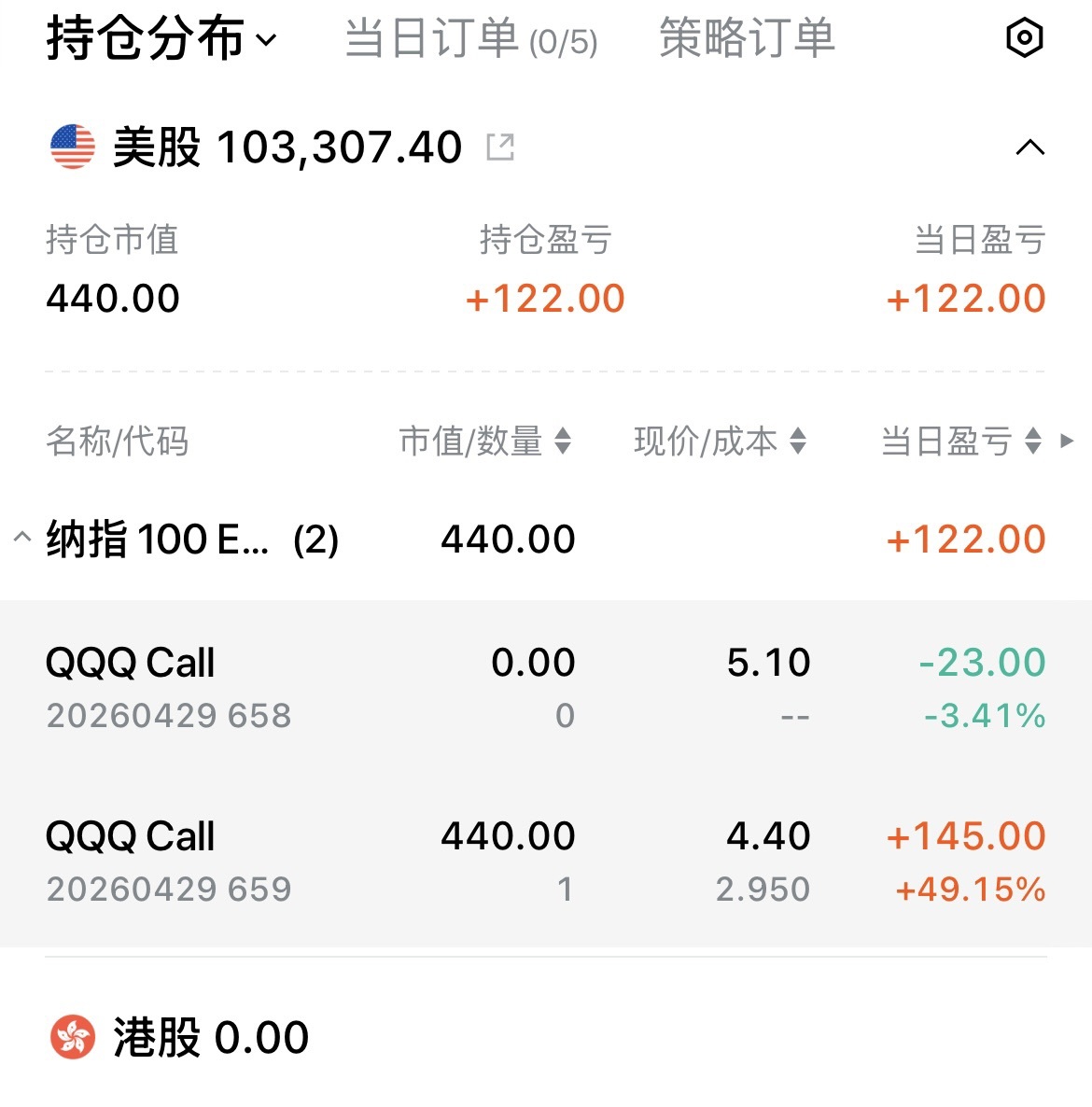
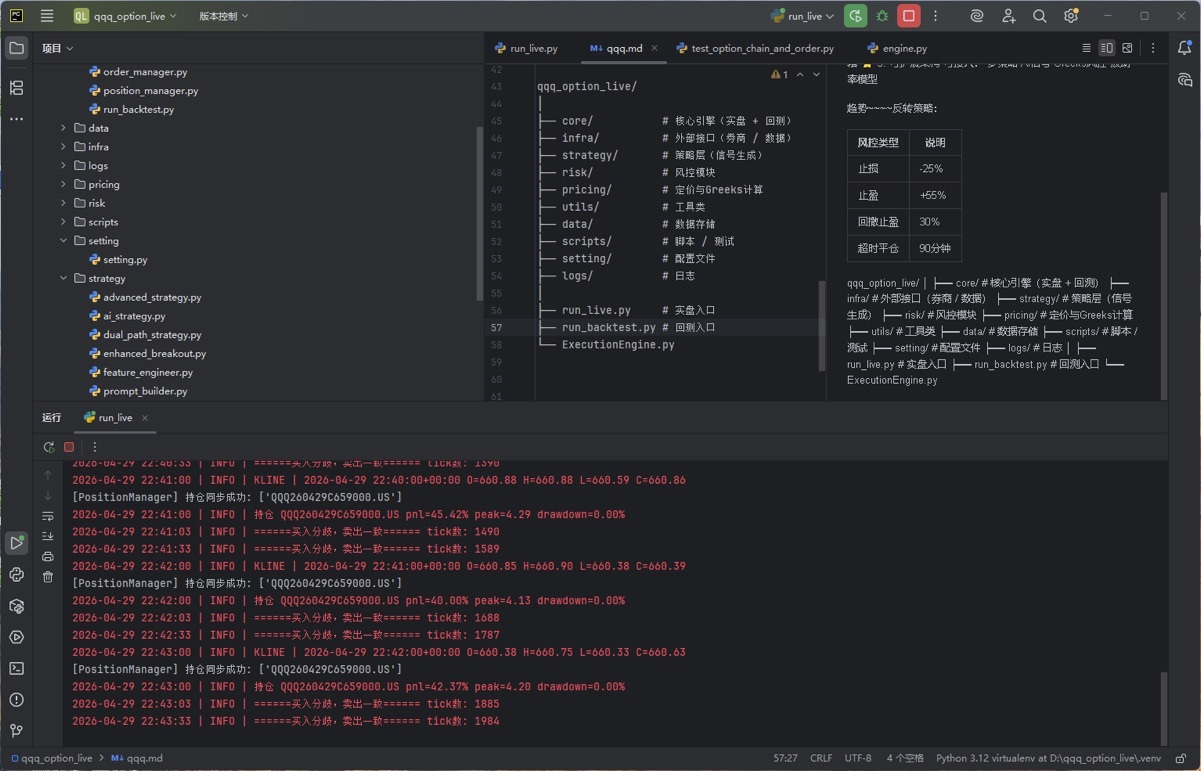
$NVIDIA(NVDA.US) $Invesco QQQ Trust(QQQ.US) $Tesla(TSLA.US) $Microsoft(MSFT.US) $Alphabet(GOOGL.US) $Seagate Tech(STX.US) $Intel(INTC.US) After N rounds of parameter tuning and debugging the official SDK, I've manually built an AI-assisted QQQ 0DTE options quantitative trading system. Finally got the paper trading to run and triggered the first order from the quantitative strategy.
The reason for building this is simple, inspired by an excellent Longbridge community member @热血青年. The advantage of quantitative trading is to avoid those persistent pitfalls in manual trading:
1. When averaging down against the trend, always thinking "it'll bounce back if it drops just a little more," but you've already fallen into the averaging down trap, buying more as it falls further, until your account balance is devoured by the increasing position.
2. When profitable, greed for more, watching profits turn from paper gains to givebacks, or even from profit to loss.
3. The hardest to overcome is the unwillingness to stop loss, and then the price quickly rebounds after you stop out, leaving you chasing the high and getting trapped again.
4. Severe time decay of options in the late night, waking up to find them worthless.
The essence of these problems is, ultimately, emotional traps—fear, greed, wishful thinking. Each emotion can distort judgment at critical moments, making one lose rationality in market volatility. For example, buying $500 worth doesn't cause me psychological stress, and it's easy to double it. But once I increase the position size, a 30-point fluctuation makes me question my life choices and whether I'm right.
The best part of a quantitative strategy is its complete detachment from emotion. It won't average down against the trend, won't get greedy for profits, and won't harbor wishful thinking. It only strictly executes preset rules. Of course, being quantitative doesn't guarantee profitability itself; it's just the executor. The quality of the strategy is the key to success or failure.
The core strategy of the current version is my "bullish trend reversal model" based on short-term trading experience. It captures breakout signals via 5-minute K-lines, overlays the MAS20 volume indicator, and when volume amplifies to a preset multiple, combines trend characteristics of high-point pullbacks or low-point rebounds, supplemented by MACD trend lines, to comprehensively judge entry timing.
Turning live trading experience into a quantitative strategy, letting AI generate preliminary code, the strategy layer is responsible for generating signals, the risk control module strictly manages stop-loss and take-profit, the pricing model calculates option value in real-time, and the core engine connects all modules to ensure instruction execution.
Getting the first step to run is just a good start. The strategy needs constant optimization, the system needs continuous iteration. The plan is to run two months of paper trading to tune parameters, download K-line data from the past two years for simulation backtesting, continuously optimize, and strive to switch to live quantitative trading for profit as soon as possible.
The copyright of this article belongs to the original author/organization.
The views expressed herein are solely those of the author and do not reflect the stance of the platform. The content is intended for investment reference purposes only and shall not be considered as investment advice. Please contact us if you have any questions or suggestions regarding the content services provided by the platform.
