

 03437 Return Rate
 Posts
PostsBehind the community's hard discount frenzy: When the tide recedes, who is swimming naked?

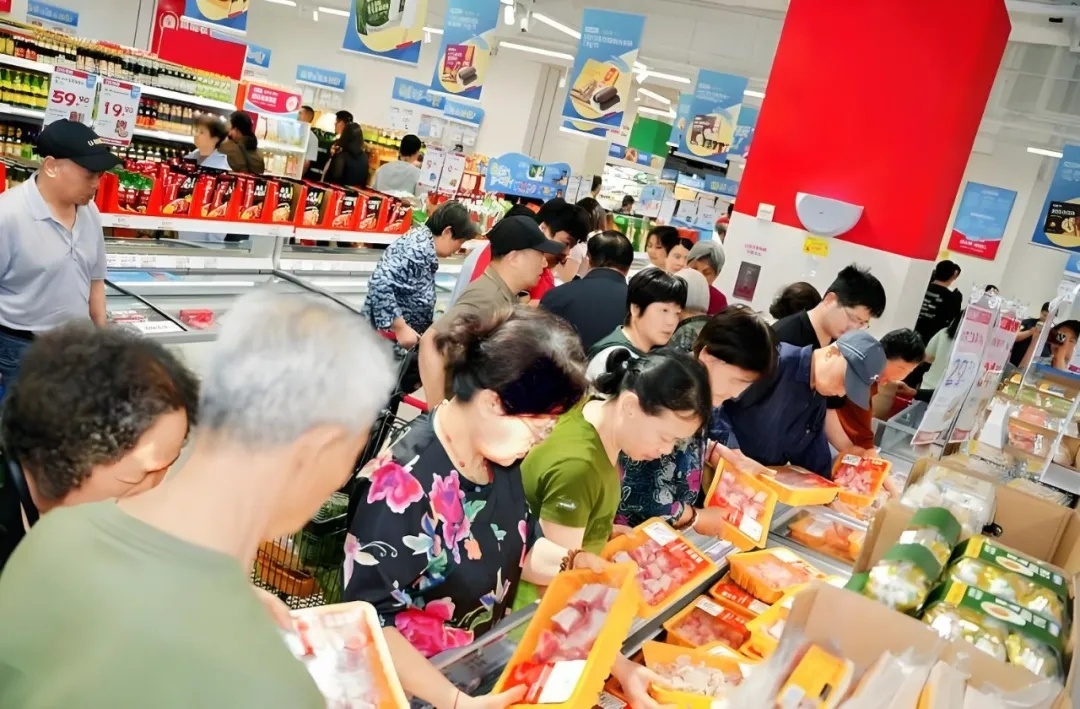
Against the backdrop of a sustained downturn in the retail industry, community hard-discount supermarkets have become the focus of capital and market attention.
From internet giants to traditional supermarkets, and even snack chain cross-border players, various players are entering the market, sparking a frenzied "land grab" movement.
However, behind this seemingly prosperous expansion lie deep-seated concerns such as limited market capacity, severe homogenization, and intensifying cutthroat competition.
Four Forces Rush In, Community Hard Discount Becomes a New Battleground
In recent years, the community hard-discount supermarket (hereinafter referred to as "community supermarket") sector has been heating up.
Unlike the massive scale and complex operations of traditional hypermarkets, community supermarkets adopt a "small but beautiful" format, focusing on residents' daily needs, emphasizing essential, high-frequency goods. With advantages like proximity to home, curated categories, low prices, and high cost-effectiveness, they have quickly won consumer favor.
Currently, the main players in the community supermarket space can be divided into four categories:
1. Internet-based: Represented by Hema's "Super Box NB," JD.com's discount supermarkets, and Meituan's "Happy Monkey." These new forces leverage their digital capabilities and supply chain advantages to rapidly replicate their models and expand aggressively. As of May 2026, "Super Box NB" has surpassed 500 stores nationwide, leading the sector.
2. Traditional supermarket-based: Established retail giants like Walmart, Wumart, Rainbow, and CR Vanguard, under pressure from hypermarket closures, are turning to community stores for transformation. After a successful pilot in Shenzhen, Walmart is vigorously developing its "Wojixian" private label; Wumart launched "Wumai Super Value," while Rainbow and CR Vanguard are also deploying community stores in Shenzhen.
3. Snack chain-based: Wanchen Group (parent of Haoxianglai) is deploying "Laiyoupin" and "Huishengjia"; Zhao Yiming opened "Money-saving Supermarket"; Three Squirrels established "Life Hall"; and Liangpinpuzi launched "Fresh Life" community stores. These companies, facing growth bottlenecks in their original businesses, are attempting to find a second growth curve through community supermarkets.
4. Foreign discount-based: Germany's ALDI has surpassed 100 stores in the Chinese market and continues to expand; the UK's Iceland Lab has also landed in Beijing, showing foreign confidence in China's community retail market.
Each of the four types of players has its own goals, collectively propelling community supermarkets into a phase of rapid development. However, beneath the frenzy, a rational examination of their growth logic reveals many warning signs.
Physical Boundaries and Demand Ceilings
The core service radius of a community supermarket is typically 1 to 2 kilometers, mainly covering residents in the surrounding neighborhood. Store sizes are mostly between 500 and 800 square meters, with SKUs (Stock Keeping Units) controlled between 1,500 and 2,000, emphasizing curation and efficiency. This model dictates that its market capacity has clear physical boundaries.
In first-tier cities like Beijing and Shenzhen, or high-density urban clusters like the Yangtze River Delta and the Greater Bay Area, the large consumer base can, for the short term, support the coexistence of multiple stores.
However, within the microcosm of a single street, a large residential community, or a few neighborhoods, the number of consumers is limited. When multiple brands flood the same area, store density increases rapidly, leading to a situation of "too many monks for the gruel."
More alarmingly, the proliferation of online shopping is diluting offline foot traffic. Instant retail platforms like Meituan's Xiaoxiang Supermarket have already covered multiple cities including Dongguan. Consumers are accustomed to ordering online and getting home delivery, further squeezing the living space for community supermarkets.
If community supermarkets maintain their current expansion pace over the next three years, many areas will see situations where "three stores stand side-by-side" or even "four stores compete for one street." At that point, consumers will no longer be scarce, and store profitability will face severe challenges.
The current prosperity of community supermarkets is largely built on the replication of a single model. Whether it's fresh produce, grains and oils, baked goods, or prepared foods, the product structures of various brands are highly similar. Although most companies are now focusing on private labels, slapping their own brands on goods, they still lack genuine differentiation and innovation in essence.
A veteran in the retail industry pointed out: "Community supermarkets look hot, but they actually don't make much money." The nature of this "tough business" lies in high turnover, low gross margins, and strong operational demands. As more and more players enter, the market will inevitably fall into price wars and promotional battles, eventually evolving into cutthroat competition.
History has provided cautionary tales. Shenzhen once saw real estate company Baoneng cross over to open community fresh produce supermarkets, which ultimately exited due to an inability to sustain profitability. In Dongguan, a large community's ground-floor retail space once simultaneously housed three Baiguoyuan stores, with only one surviving in the end. These cases warn us: the essence of community retail is a "neighborhood business," with limited brand loyalty. Price and convenience are the deciding factors. Once competition intensifies, brands lacking core barriers will be the first to be eliminated.
Franchise Risks and Supply Chain Dilemmas: Who Bears the Cost?
In terms of expansion strategy, some emerging brands may emulate snack chains by adopting a franchise model to quickly roll out stores. However, operating a community supermarket is far more complex than single-category retail, involving multiple challenges such as fresh produce preservation, inventory management, and supply chain coordination. For inexperienced franchisees, the risk of loss is extremely high if brand support is insufficient or the market environment deteriorates.
Ultimately, market risks may be transferred to franchisees, replaying the script of "the brand gets the hype, the franchisee foots the bill." Those with true risk resilience are the leading enterprises possessing strong supply chain integration capabilities, product R&D strength, and brand moats. For example, ALDI leverages its global sourcing system and over 90% private label share to achieve cost control and quality stability. Walmart has a natural advantage based on its accumulated supply chain network built over many years.
In contrast, regional small brands or new entrants, relying solely on imitation and low-price strategies, will find it difficult to build lasting competitiveness. When the tide goes out, brands lacking supply chain support will be the first to be exposed as "swimming naked."
The breakneck expansion phase for community hard-discount supermarkets will eventually pass, and the industry will enter a period of consolidation and differentiation. Future development trends will exhibit three main characteristics:
1. Coexistence of a head effect and regionalization: National brands will consolidate their positions through scale advantages, while regional brands, if they can deeply cultivate local supply chains and consumer needs, can also form a moat and achieve steady growth.
2. Supply chain becomes the core competitiveness: Simply "rebranding" is no longer enough to satisfy the market. Companies must possess product R&D, hit product creation, and supply chain integration capabilities to achieve true differentiation.
3. Operational efficiency determines survival: In a low-margin model, only through digital management, precise product selection, efficient distribution, and loss control can sustainable profitability be achieved.
Community supermarkets are not a "cure-all." They are a business requiring long-term investment and meticulous operation. For companies, steady progress is better than blind expansion. For investors and entrepreneurs, maintaining a clear head amidst the frenzy is even more crucial.
When consumers no longer pay for "new stores," when homogenized competition reaches its peak, only brands that truly understand community needs, possess supply chain strength, and have operational resilience will still stand tall after the wave recedes.
The copyright of this article belongs to the original author/organization.
The views expressed herein are solely those of the author and do not reflect the stance of the platform. The content is intended for investment reference purposes only and shall not be considered as investment advice. Please contact us if you have any questions or suggestions regarding the content services provided by the platform.
