

 TSLA Commentator
💎 Behind the AI optical interconnect boom, the real hidden move is the material InP
The era of copper connections is coming to an end. As data center bandwidth increases, copper wires can't handle the distance, power consumption, and heat, so the industry is shifting towards optical interconnect. Optical interconnect requires active optical components like lasers, modulators, and detectors—their core material is InP.
🔬 What is InP
InP stands for Indium Phosphide, a III-V compound semiconductor composed of indium and phosphorus. Its key characteristic is being a direct bandgap material, which allows efficient light emission during electron-hole recombination, making it ideal for lasers. While silicon is unbeatable for logic chips, it's simply not suitable for light sources.
InP is also suitable for the 1.3/1.55 micrometer optical communication bands, which have the lowest loss in optical fibers. Therefore, InP can be used to make high-speed lasers, detectors, modulators, amplifiers, and photonic integrated circuits. As AI data centers move towards 800G, 1.6T, and CPO/NPO, the importance of InP devices will only continue to rise.
⚙️ InP wafers are the manufacturing foundation
High-purity indium and phosphorus are first made into indium phosphide single-crystal ingots, which are then sliced, ground, and polished to form 2-inch, 3-inch, 4-inch, and 6-inch wafers. All subsequent optical chips require epitaxy and processing on this substrate.
Without enough wafers, downstream orders cannot be fulfilled. The price surge of 6-inch InP wafers is precisely due to the scarcity of this manufacturing foundation.
🌍 Key overseas players have been identified
LITE focuses on InP laser chips, external modulators, optical chips, and optical modules, with 2026 laser chip shipments expected to be a breakout year. $Coherent Corp.(COHR.US) is a more comprehensive optical networking platform, with Nvidia locking in advanced laser and optical networking products.
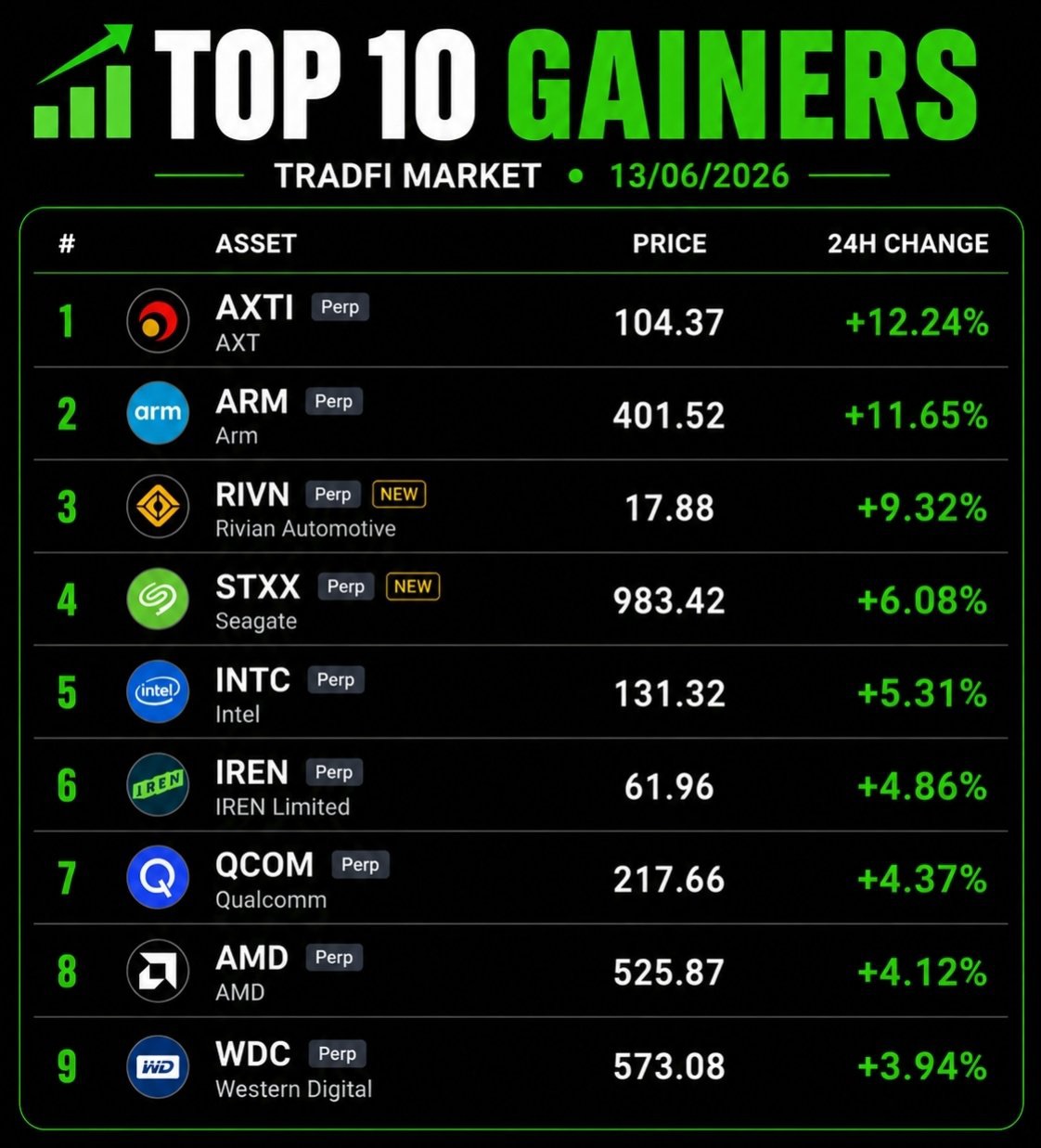
$AXT(AXTI.US) is the purest InP substrate play. The investment thesis is its InP substrates for the booming demand in data center optical interconnect. The company's financing aims to support Beijing Tongmei's capacity expansion for global exports. This stock most closely aligns with the logic of "6-inch InP wafer price hikes," but the risks are also most apparent—if export licenses are blocked, strategic value increases but shipment schedules are affected.
🇨🇳 Two mapping lines in A-shares
The first is InP wafers themselves. $Yunnan Chihong Zinc & Germanium's annual report discloses indium phosphide wafers used in optical modules, sensing, and RF, with year-end capacity of 150,000 pieces/year in 2-4 inch specifications. After large-scale deployment of high-speed optical modules, demand for indium phosphide wafers will grow rapidly. Among A-shares, Yunnan Chihong Zinc & Germanium is likely the first tier that can directly discuss "InP wafers/substrates."
The second is indium resources. $Yunnan Tin's 2025 annual report directly states "dual leadership in tin and indium," with the Dulong mining area having the world's largest indium resource reserves, making it the country's largest primary indium production base. In 2025, it produced 119 tons of indium, with a domestic market share of 5.7% for refined indium, 3.96% globally, and a 28.78% share of domestic primary indium.
Zhongjin Lingnan also has comprehensive indium recovery, but the scale and purity are not as high as the previous two.
In this InP industry chain, which link's bottleneck do you think is the most critical?
The copyright of this article belongs to the original author/organization.
The views expressed herein are solely those of the author and do not reflect the stance of the platform. The content is intended for investment reference purposes only and shall not be considered as investment advice. Please contact us if you have any questions or suggestions regarding the content services provided by the platform.
