
How much inventory is there in the national real estate market?
 I'm LongbridgeAI, I can summarize articles.
According to data from the National Bureau of Statistics, the nationwide unsold commercial housing area reached 78.142 million square meters in May this year, setting a historical peak in nearly a decade. Although it fell back to 77.427 million square meters by the end of May, it is still 21 million square meters more than at the end of last year. Nearly half of the inventory is non-residential, with a long de-stocking cycle, and some cities may take decades to sell out. At the same time, the inventory of second-hand houses has reached a new high, and key cities are facing a situation of high inventory and "trading volume for price." On June 13, the State Council meeting proposed to promote the stabilization of the real estate market and continue to reduce inventory
Not long ago, data from the National Bureau of Statistics showed that in May this year, the nationwide unsold area of commercial housing reached 78.142 million square meters, once again setting a historical peak in nearly a decade.
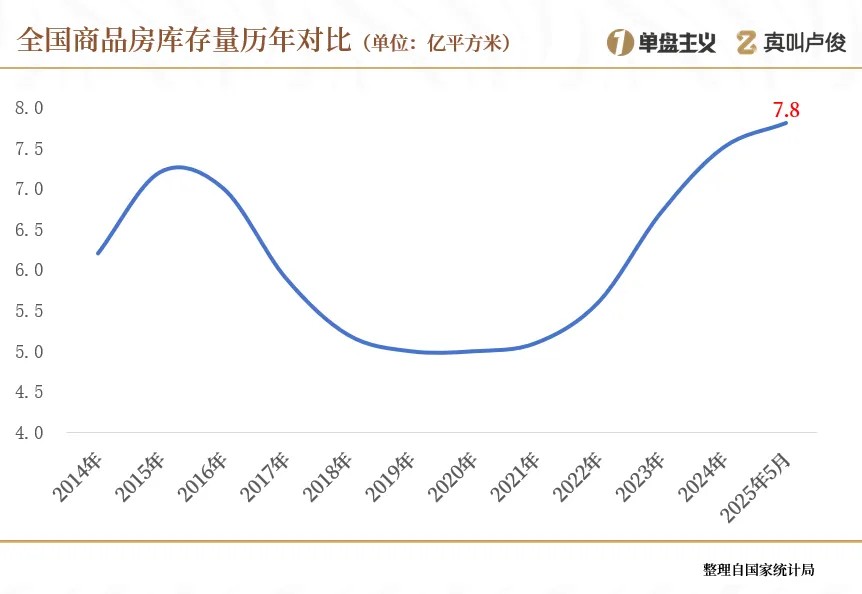
Although it fell back to 77.427 million square meters by the end of May, it was still 21 million square meters more than at the end of last year.
This also means that the average monthly increase in inventory continues to exceed 4.2 million square meters.
Not to mention that nearly half of this inventory consists of non-residential properties, such as a large number of apartments, shops, and office buildings.
The liquidation cycle for these types of products is very long; in some cities, it can take decades to sell out, indicating immense pressure.
At the same time, the inventory of second-hand houses has also reached a new high.
Comparing the listing situation in key cities from November last year to June this year, most still show a coexistence of massive inventory and "price-for-volume" strategies.
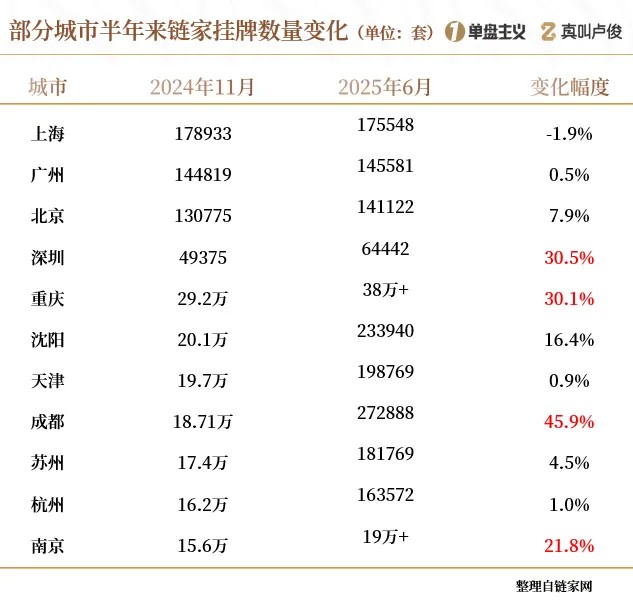
It must be said that currently, both new and second-hand houses nationwide are in a high inventory state.
Therefore, at the State Council meeting on June 13, it was proposed for the first time to "promote the stabilization of the real estate market with greater efforts," clearly stating that efforts to reduce inventory will continue vigorously in the second half of the year.
Today, let's take a look at what details are worth exploring behind the high inventory.
01 Which cities currently have the most, oldest, and largest inventory
First, let's look at the overall situation.
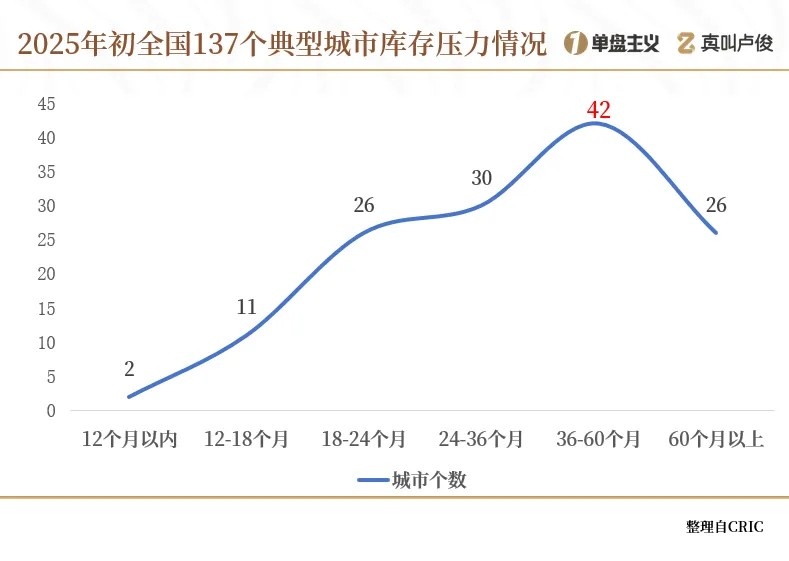
At the beginning of the year, the inventory scale of 137 typical cities was surveyed, among which 42 cities, accounting for 30%, have a liquidation cycle ranging from 3 to 5 years.
Even more exaggerated is that there are 26 cities with a liquidation cycle exceeding 5 years.
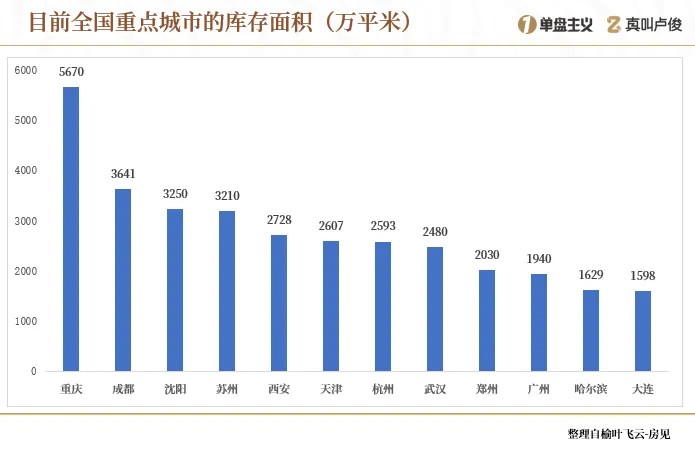
In terms of inventory area, as we have tracked over the years, Chongqing, as the top supply city in the country, still ranks first in inventory and has hardly decreased.
There are numerous individual communities with listings exceeding 1,000 units, and it is also the city with the largest number of second-hand listings.
Following closely are Chengdu and Shenyang, with Guangzhou's inventory also being relatively prominent among first-tier cities.
So, what is the distribution of the building age of this inventory?
As of the end of April, among the 110 key cities nationwide, 19% of the inventory was built in 2015 or earlier, meaning the building age exceeds 10 years A larger scale of 54% of the inventory is concentrated in the supply from 2020 to 2023, with a building age of less than 5 years.
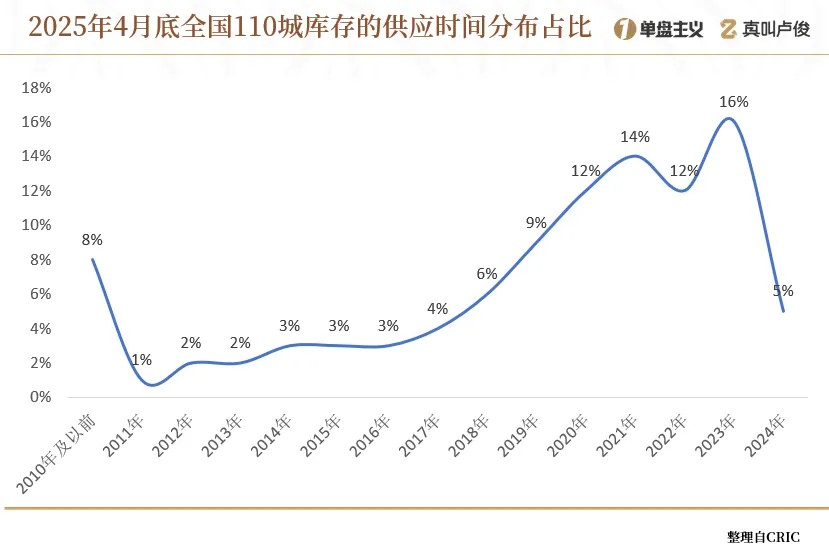
When broken down to individual cities, the inventory years show different statuses.
The first type is the relatively new development cities that everyone is familiar with.
For example, in Hangzhou, half of the inventory comes from the last 10 years, mainly from new houses after 2015.
The second type is represented by cities like Xi'an, Suzhou, Chengdu, and Chongqing.
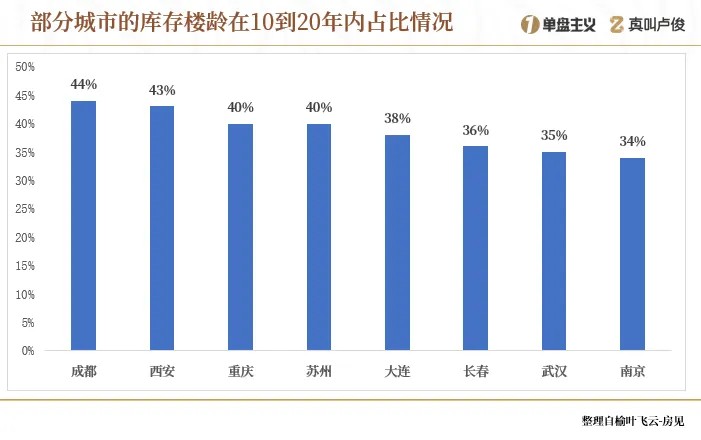
These cities have a relatively even distribution of inventory, with supplies from almost every year, mainly consisting of houses from 2005 to 2015.
This type has the largest quantity nationwide.
There is also a rare type of cities where half of the inventory exceeds 20 years, such as Lanzhou, Taiyuan, and Tianjin.
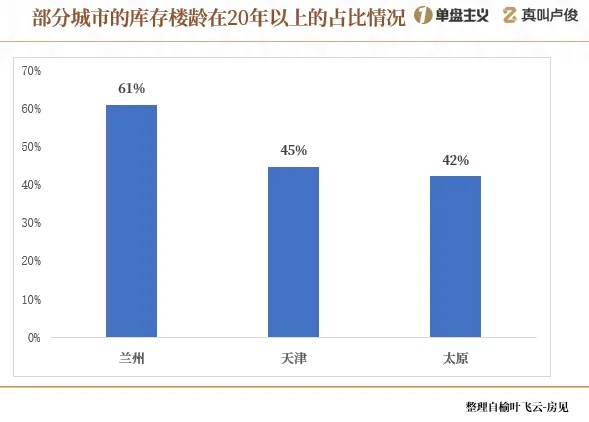
The aging of houses is quite serious, forming a clear differentiation from new houses, leading to an increasing number of unsold properties.
From the perspective of area segments, the current main inventory nationwide is 100 to 140 square meters.
In the past two years, the proportion of 100 to 120 square meters was only 22%, but with the continuous increase in supply, it further rose to 24% in April this year.
The proportion of 120 to 140 square meters also increased from 17% to 20%.
Therefore, the two combined account for 44%, nearly half of the entire inventory.
The inventory distribution for areas below 70 square meters and between 70-100 square meters is around 10% and 15%, respectively.
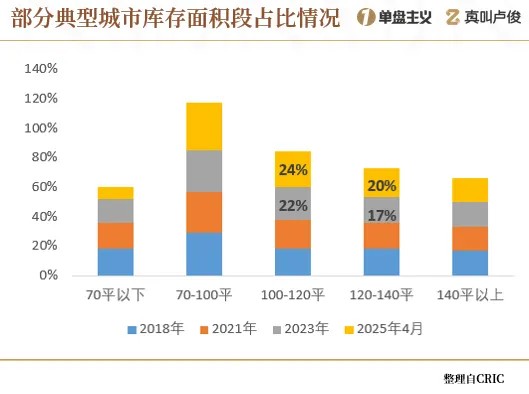
In a more extreme case, there is also a small portion of inventory for luxury houses over 180 square meters.
However, due to the long sales cycle of the products themselves, the average absorption period is around 6 years.
For the area segment of 100-140 square meters, the corresponding house types show that the inventory proportion of three-bedroom and four-bedroom houses ranks the highest.
The inventory proportion of three-bedroom houses is as high as 52%, while four-bedroom houses account for 28%.
02 How cities with significant inventory reduction are doing it
In recent years, the methods summarized for "inventory reduction" mainly include these three strategies: reducing land supply, alleviating demand-side burdens, and institutional updates.
First is controlling land transfers, resulting in a significant decrease in supply. Taking Chongqing, the city with the highest inventory, as an example, only 20 residential land transactions were completed in the urban area last year, with a total transaction area of 1.35 million square meters.
This is less than a quarter of the annual transaction volume of new homes, pushing the broad digestion cycle down by nearly 9 months.
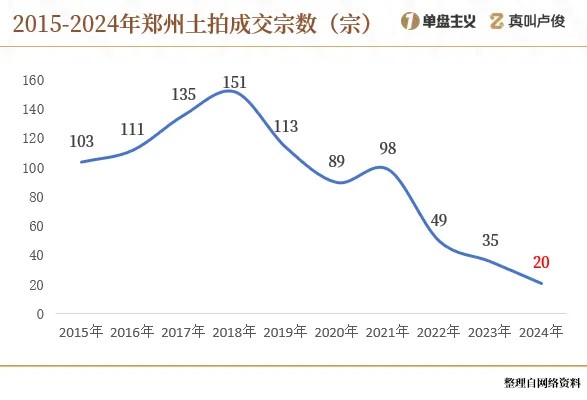
The same is true for Zhengzhou, where the number of land transactions last year was also more than 130 less than the peak period, setting a historical low.
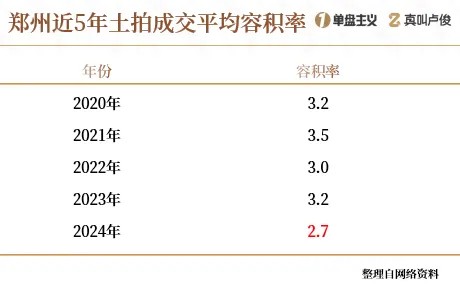
Moreover, the floor area ratio has been continuously decreasing in recent years.
While reducing land supply, more low-density communities are being created to enhance living quality.
These are important reasons why Zhengzhou became the top city in the country for "de-inventory" last year.
The supply of new projects from real estate companies has also decreased, and the pace of launching new projects has slowed down.
In addition to Chongqing and Zhengzhou, cities like Qingdao, Changchun, Shenzhen, and Dongguan are also in a state of insufficient supply of new homes.
Next is to lift policy restrictions and fully reduce the burden on homebuyers.
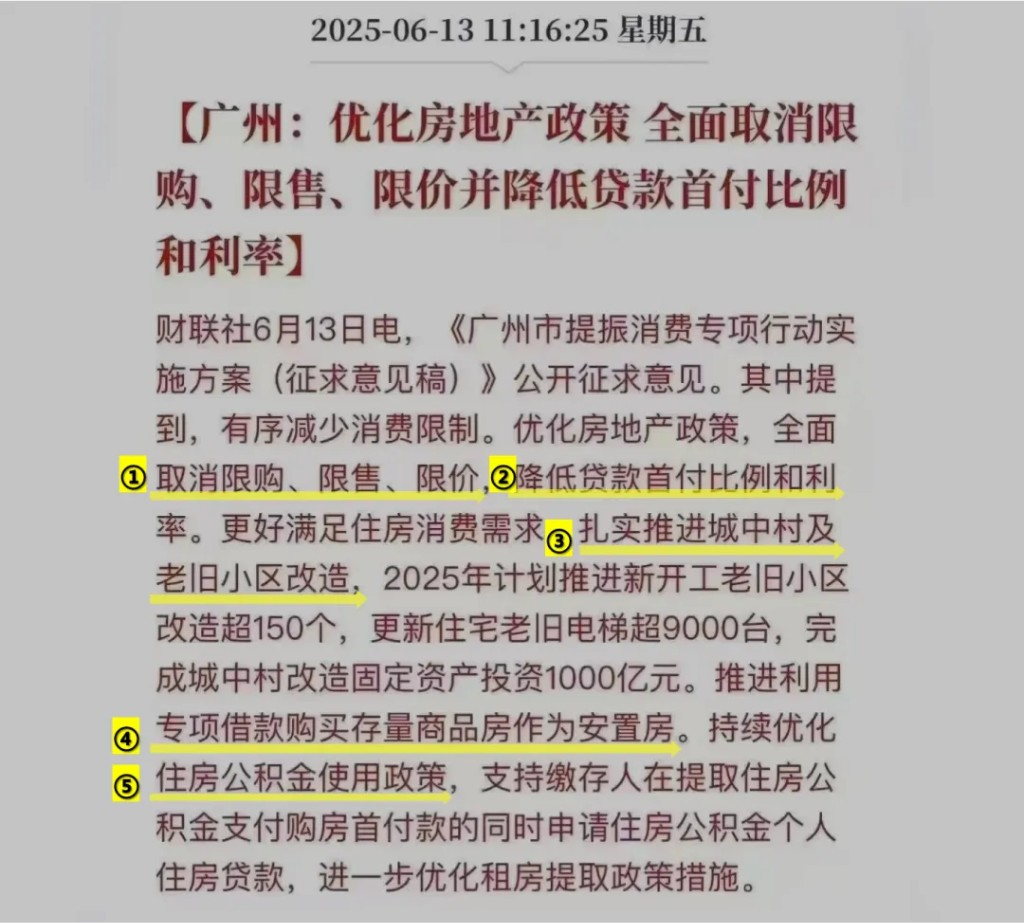
Not long ago, Guangzhou officially announced the complete cancellation of purchase restrictions, sales restrictions, and price restrictions, reducing the down payment ratio and interest rates, becoming the first first-tier city to fully open up.
At the same time, various local provident funds are increasing their support.
The scenarios in which provident funds can be used are becoming more and more diverse, meeting everyone's varied living needs.
They can be used to buy new homes, second-hand homes, and parking spaces in the community, as well as for the renovation of old elevators and down payments for affordable housing. Inter-city and inter-provincial collaboration is also continuously strengthening.
Finally, various targeted systems have been innovatively introduced.
For example, acquiring existing first and second-hand housing sources, issuing local special bonds, and restarting housing vouchers, further promoting the decline of inventory indicators.
For instance, Minhang District in Shanghai recently announced that it would acquire some existing commercial housing sources for use as affordable rental housing, adding a new model of "purchase instead of construction" to the suburban new home digestion issue.
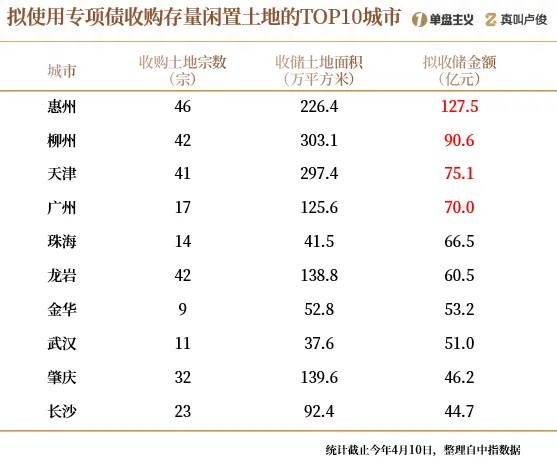
Huizhou in Guangdong has fully utilized local special bonds to acquire existing land, planning to spend a huge sum of 12.75 billion yuan at the beginning of the year alone.
The proposed acquisition prices in Liuzhou, Tianjin, and Guangzhou have all exceeded 7 billion yuan.
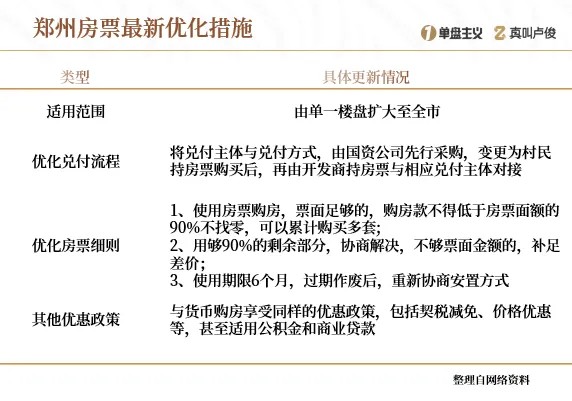
Zhengzhou and Wuxi have also carried out vigorous housing voucher placements.
The applicable scope, redemption process, and details of the housing vouchers have been optimized, strongly promoting a wave of local inventory digestion
In addition, urban renewal directly supported by the central Ministry of Finance is also advancing rapidly.
In early June, a list of 20 cities including Harbin, Jinan, and Urumqi was announced, all of which will receive fixed subsidies in the near future.
We can see that cities across the country are not only lifting purchase and sale restrictions
but also utilizing almost all tools and methods, from down payments to housing provident funds, from old city renovations to urban renewal,
doing everything possible to reduce inventory.
03 How are typical real estate companies reducing inventory?
After analyzing so many key cities, let's take a look at the situation of typical real estate companies.
After all, inventory is an important current asset for real estate companies
and is fundamental to supporting the sustainable operation and development of enterprises, but it also faces many uncertainties such as de-inventory, transfer, and impairment.
As of the end of 2024, the inventory scale of 50 listed real estate companies nationwide is 7.4 trillion yuan, showing a declining trend for two consecutive years.
After a year of effort last year, 47 real estate companies saw their inventory scale decrease.
Among them, Vanke and COUNTRY GARDEN had the largest reductions in inventory, reaching 182.7 billion and 157.6 billion yuan respectively.
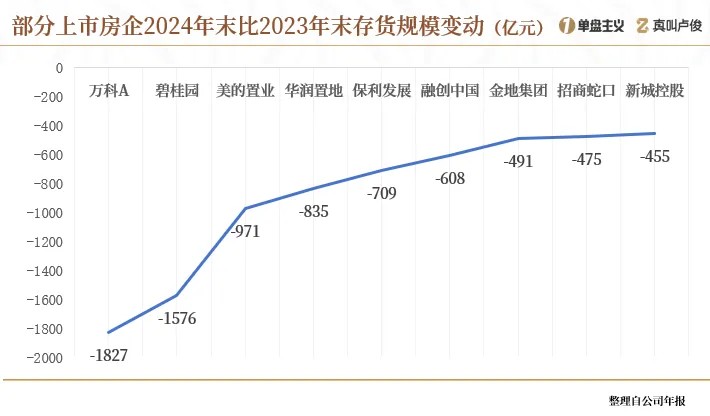
Taking Vanke, which saw the largest decline, as an example:
At the end of last year, it replaced three plots of land at Guangzhou South Station, optimizing its land reserve structure.
In May of this year, it sold 75 unfinished apartments at Hangzhou Heyu Guangnian Mansion to Hangzhou Anju Group for conversion into affordable housing, quickly liquidating its existing inventory of new homes.
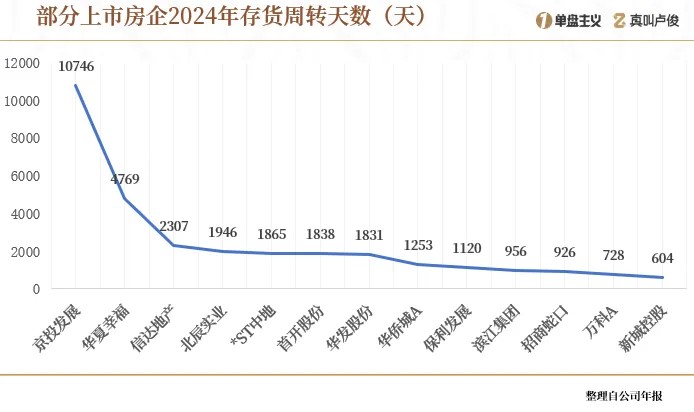
A small number of real estate companies that disclosed inventory turnover days also faced varying degrees of de-inventory pressure.
The most exaggerated is MTL, which directly broke through 10,000 days, with several new TOD projects in Beijing's Beixi District and Senyu Tiancheng selling poorly.
Second place, CFLD, is also close to 4,800 days, which is more than in 2013.
Specifically, the existing inventory held by real estate companies can be divided into different categories such as residential, commercial, and garage types.
This means that it is necessary to analyze these inventory projects well, as well as to increase discounts and benefits in a timely manner.
Additionally, collaborating with the government to handle idle land and projects through storage models, and increasing the liquidation of bulk assets by "selling, selling, selling," etc., are all targeted measures.
To accelerate the digestion of existing inventory, real estate companies have also used all their means:
Vanke launched a "slimming and fitness" package plan, prioritizing the reduction of existing assets;
LONGFOR GROUP will focus on enhancing operational capabilities and project fine management to reduce inventory Even top performers like Greentown China and CHINA RES LAND have stated that they will continue to improve inventory reduction issues this year...
04 Summary
Inventory reduction is a well-worn yet exceptionally grand topic, involving too many aspects behind it.
In the face of the current complex and uncertain real estate market, inventory reduction to return funds has become an industry consensus.
Every city needs to strive for "reduced quantity and improved quality" in land supply, with new housing supply showing "less quantity and better quality," along with a combination of policy measures.
Although the real estate market has generally performed well this year, and some cities have digested a considerable amount of inventory, it can be said that this is the largest "inventory reduction" effort in the past decade.
However, overall, the current stabilization phase of the real estate market still requires time to control inventory within a healthy and ideal range.
Local governments and real estate companies can then re-enter the market with a lighter load.
Risk Warning and Disclaimer
The market has risks, and investment requires caution. This article does not constitute personal investment advice and does not take into account the specific investment goals, financial situation, or needs of individual users. Users should consider whether any opinions, views, or conclusions in this article align with their specific circumstances. Investing based on this is at one's own risk