


Lei Jun's latest interview: Xiaomi has long given up on a quick victory

Xiaomi CEO Lei Jun stated in the annual speech on September 25 that Xiaomi has abandoned the pursuit of quick success and has transformed into a hardcore technology company. He reviewed Xiaomi's challenges and transformation, introducing new products such as the 3nm mobile phone chip and the SUV Xiaomi YU7's success. At the same time, he mentioned that the brand image has been affected by traffic accidents and emphasized that Xiaomi will focus on smart manufacturing, striving to win public trust
On September 25th at 7 PM, Xiaomi CEO Lei Jun delivered his sixth annual speech, themed "Change." Before the conference, Lei Jun shared a photo on Weibo wearing a T-shirt with the slogan "It's the age to take risks." He specifically took time during his speech to mention that this slogan was inspired by his 28-year friend, Vancl CEO Chen Nian, who has transitioned to live-streaming e-commerce. When Lei Jun spoke about this, Chen Nian, who was live-streaming on Douyin, was seen covering his face and crying.
In this year's speech, Lei Jun introduced the Xiaomi Xuanjie chip and shared stories behind Xiaomi's foray into car manufacturing. Since his first speech in 2020, Lei Jun's annual presentations have not only been a sharing of his personal thoughts but also a window into the challenges and transformation thoughts Xiaomi faces at specific stages of development.
On the digital front, Xiaomi has set various records: Xiaomi's financial reports and market value performance have been impressive, and the sales of its first SUV, Xiaomi YU7, have been strong after its launch: over 200,000 units were reserved in just 3 minutes, and the order volume exceeded 240,000 units within 18 hours. In May of this year, Xiaomi released its first self-developed 3nm mobile SoC chip, "Xuanjie O1," becoming the fourth company globally to achieve this capability.
However, Xiaomi's brand image has also been shaken by unexpected events. In March of this year, a traffic accident involving the Xiaomi SU7 in Anhui resulted in the unfortunate deaths of three passengers, leading to widespread industry concern regarding the safety of assisted driving systems. Subsequently, owners of the Xiaomi SU7 Ultra initiated rights protection actions on various social platforms regarding the hole-punched front hood.
Recently, Xiaomi recalled 117,000 units of the Xiaomi SU7. The Product Recall Technical Center of the State Administration for Market Regulation stated that some vehicles within the recall range may have insufficient recognition, warning, or handling of extreme special scenarios when the L2 highway navigation assist driving function is activated. If the driver does not intervene in a timely manner, it may increase the risk of collision, posing a safety hazard.
Although Lei Jun did not respond directly to this issue, he reflected on Xiaomi's development over the past five years during his speech, candidly sharing moments of anxiety and darkness he faced, and ultimately telling the story of how he "defied the odds," which undoubtedly signals his belief that Xiaomi can earn public trust through technological growth and transformation.
In a post-conference interview, Lei Jun stated: Xiaomi must firmly transition from an internet company to the new battlefield of intelligent manufacturing, transforming into a hardcore technology company. "A hardcore technology company is different from an internet company. The internet is opportunity-driven, while a technology company is mission-driven."
Not long ago, Xiaomi skipped the "16" naming and directly targeted the iPhone 17 generation, sparking widespread discussion online. "Today, everyone needs to re-evaluate Xiaomi phones; compared to the entire iPhone 17 series, there are many areas where we have surpassed," Lei Jun mentioned in the interview.
During the past five years of exploring the high-end market, Lei Jun stated that Xiaomi has gradually accumulated a methodology for high-end development. "We have three major leads: technology leadership, cognitive leadership, and aesthetic leadership. Every quarter, we organize discussions on the achievements in the high-end process, the difficulties encountered, or the pitfalls we fell into." "We still need to wholeheartedly learn from Apple, step by step, to get every detail right. Apple has a 360-degree approach, and they have put a lot of effort into every field. Right now, we might start by finding 10 breakthrough points, then 20 breakthrough points, and gradually cover more angles," Lei Jun said.
On Competing with Apple: Benchmarking Apple, Surpassing Apple
Question: The jump from Xiaomi 16 to 17 has sparked heated discussions. You mentioned that Xiaomi aims to fully benchmark the iPhone. How do you understand this statement and the name change?
Lei Jun: I was quite surprised by the public reaction to our renaming from Xiaomi 16 to Xiaomi 17. We have been making phones for 15 years, and many people still have some stereotypical impressions of Xiaomi, even stubborn views. Today, everyone needs to re-evaluate Xiaomi phones. I believe the product strength of this generation of Xiaomi phones is a generational upgrade, and compared to the entire iPhone 17 series, there are many areas where we have surpassed them.
Five years ago, we proposed benchmarking Apple, and first, it takes courage to dare to benchmark the world's number one. Only by benchmarking can you gradually get closer and eventually lead. In terms of battery technology, screen technology, and heat dissipation, we started using VC thermal plates five years ago. Today, our sensors, periscopes, and many calculations, including spatial stacking, have many innovations.
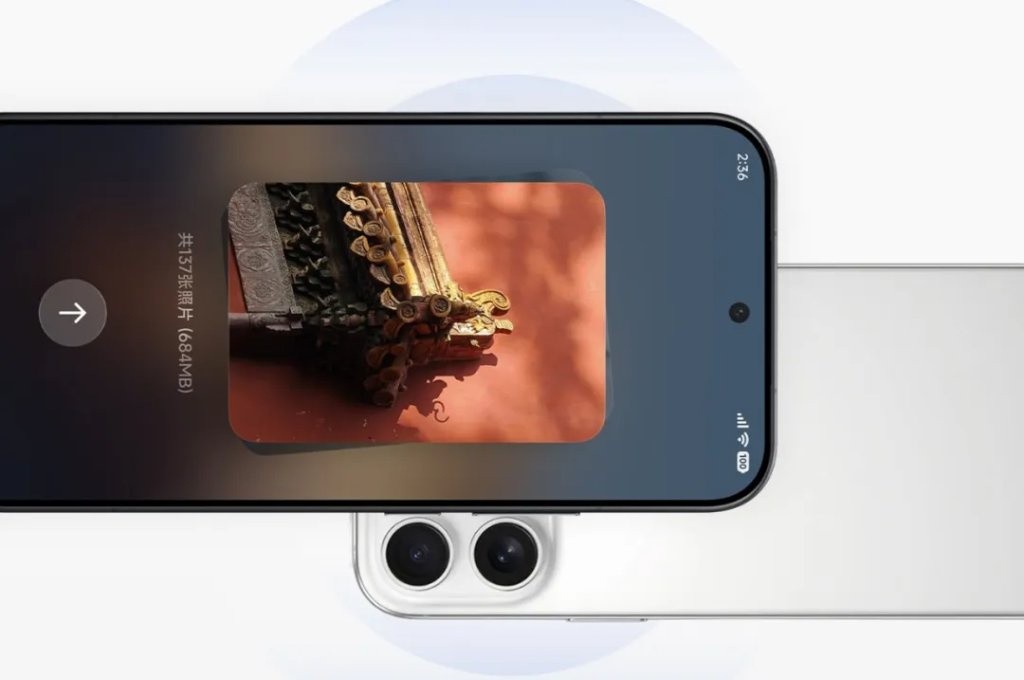
I want this renaming action to help everyone re-evaluate Xiaomi phones and express our determination to challenge the world's number one.
Question: In the long run, what direction and trend do you think the competition between Xiaomi and domestic phone manufacturers and the iPhone will take?
Lei Jun: Apple is a great company that requires every one of us to study diligently. I think the iPhone 17 series is selling very well, and the online reviews say "the toothpaste has been squeezed out." They have made significant progress compared to previous iPhones. But to be honest, in many technical fields, Xiaomi 17 is already leading, which is why we are confident in fully benchmarking.
Our competition with Apple may still be a long and painful process. We still need to wholeheartedly learn from Apple, step by step, to get every detail right. Apple has a 360-degree approach, and they have put a lot of effort into every field.
Right now, we might start by finding 10 breakthrough points, then 20 breakthrough points, and gradually cover more angles. Our proposal for comprehensive benchmarking is not just about matching key configurations and parameters; it is more about leading in technology and benchmarking Apple in more experiential aspects, even surpassing Apple.
On Improving Automotive Production Capacity
Question: What plans does Xiaomi have for improving automotive production capacity? What level of order fulfillment can be expected in the fourth quarter of this year? Lei Jun: Xiaomi's automotive factory has maintained a very good automation rate, and we are continuously upgrading technology, improving efficiency, and adjusting shifts. In just 2 months and 20 days, we delivered over 40,000 YU7 vehicles. Of course, there is still a huge gap between this and the demands of potential car owners, but we will continue to work hard to improve.
As of today, Xiaomi has been in the automotive industry for less than a year and a half. We delivered our first car on April 3rd last year, and I believe we have done quite well, but we are still far from meeting everyone's needs and expectations.
I tell my colleagues that having high standards and high requirements is a good thing; we should not always think of ourselves as newcomers to the automotive industry. I would like to explain that we are rapidly improving production efficiency.
Q: After the release of Xiaomi cars, the market and user feedback has been very enthusiastic, but it has also raised some doubts. What is your view on this?
Lei Jun: After the release of Xiaomi cars, we became one of the brands most heavily criticized online. We fully support the joint action by six ministries to combat fake reviews and negative public relations. We believe that the entire automotive industry needs a clean and positive environment to sustain development.
On High-End Development: It Requires Time to Learn Gradually
Q: Xiaomi has undergone significant changes in the past five years. What is your biggest change?
Lei Jun: When Xiaomi was founded 15 years ago, our mission was to create heartfelt, reasonably priced good products, allowing everyone in the world to enjoy the wonderful life brought by technology. When I entered the manufacturing industry 15 years ago, I wanted to use internet technology and methods to promote the popularization of technology.
Five years ago, we realized that smartphones had become widespread, and we were no longer in a scarcity era but had entered a stage of overcapacity and hoped for further upgrades. After reflection, we firmly proposed a high-end strategy, fully benchmarking against Apple, hoping to better meet user needs.
In fact, over the past five years, we have put a lot of effort into the high-end development of smartphones, learning many lessons through trial and error.
When we entered the automotive sector, we resolutely focused on high-end vehicles. In our second-quarter financial report released this year, you can see that the average price of Xiaomi cars, including tax, is 289,000 yuan, which is comparable to BBA prices.
So today, Xiaomi cars have entered the high-end segment, with the Ultra model priced at around 500,000 to 600,000 yuan, selling in significant volumes. I am increasingly convinced that as long as we invest effort into technological research and development, we have the opportunity to fully realize high-end development. After gaining experience in smartphones and cars, we are now promoting high-end development across all categories.
Q: What is the biggest challenge you have encountered in Xiaomi's high-end development process?
Lei Jun: Looking back over the past five or six years, the biggest pressure Xiaomi faced in its high-end development was in 2022. We were affected by the global economic environment and geopolitical issues, resulting in a 15% decline in performance, and in 2023, performance declined again by 3%. This pressure is enormous for a large company like ours This is our first time venturing into the high-end market, and we were quite nervous. We didn't expect to far exceed our expectations in the first year. Everyone thought that moving upscale would be easy, but then they fell into a pit, and gradually we have come to where we are today, so it has been a winding journey.
Q: During the process of Xiaomi's upscale push, the core audience has also changed. What efforts has Xiaomi made in this regard?
Lei Jun: Five or six years ago, we were a brand that leaned towards males. But today, nearly half of the users of Xiaomi cars are women, and the entire user structure has changed.
In the past five years of exploring the high-end market, we have gradually formed a methodology for upscale development. We have three main guiding principles: technology leadership, cognitive leadership, and aesthetic leadership. Every quarter, we organize discussions on what achievements we have made in the upscale process, what difficulties we have encountered, or what pitfalls we have fallen into. This process of moving upscale has been a step-by-step journey.
Talking about the automotive industry: Many car companies are feeling their way across the river like Li Auto
Q: You mentioned that in the high-end automotive market, Chinese cars are leading overall. What role does Xiaomi play in this?
Lei Jun: First, Xiaomi learns from traditional luxury cars in areas such as chassis technology, driving control, and performance, competing with Porsche. For over 100 years, all high-end cars have been tested on the Nürburgring track. Xiaomi is the first company to treat the Nürburgring as its home ground and seriously improve the chassis and driving control of its cars.
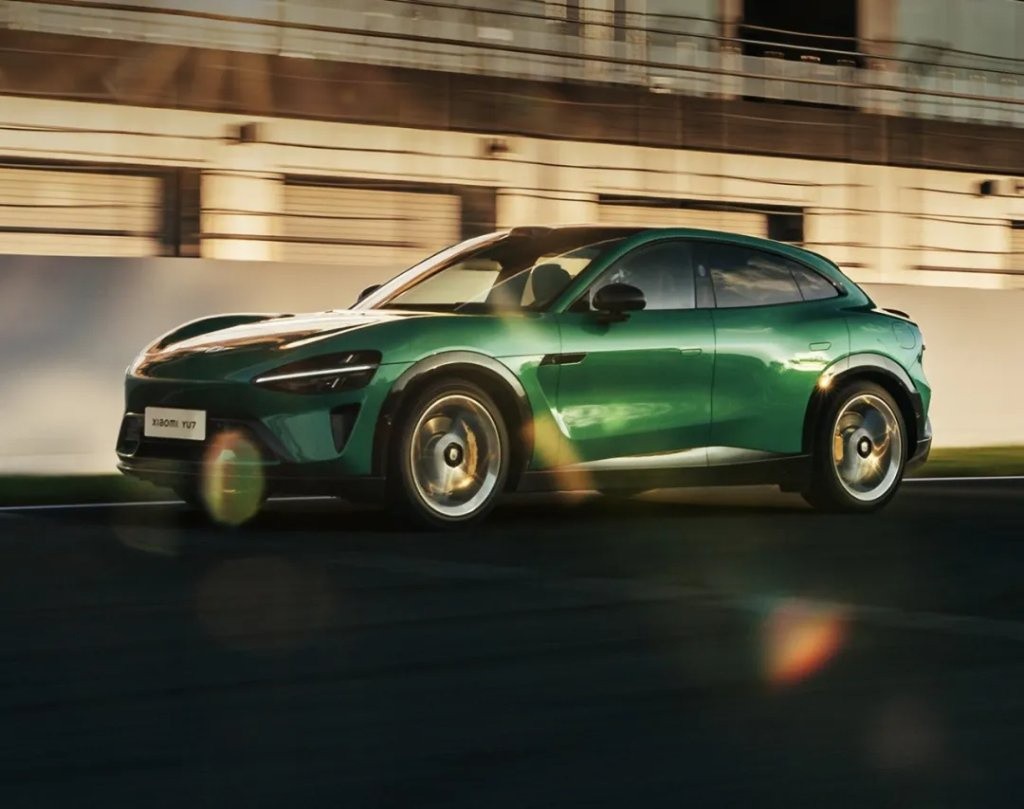
Xiaomi YU7 Source: Interviewee
Many people ask why your car runs so fast. This is the basic skill of making cars. Only under such extreme conditions can you make a good car. For the past 100 years, all car manufacturers have done this. Chinese car manufacturers are just starting to do this, so I believe that under Xiaomi's leadership, more and more cars will pay attention to driving control, chassis, and the mechanical quality of cars.
Second, the entire ecosystem of people, cars, and homes, including ecological interconnectivity and open cooperation, is also something new that Xiaomi brings to the market. Additionally, there is a strong emphasis on design. Xiaomi has already developed dozens of car paints and plans to create another 100 within three years. Why do mainstream models on the market have so few colors? Because they are simple, cost-effective, and quick. But we believe that the aesthetics of a car are also very important.
Q: Xiaomi has also opened the IoT interface for cars to all car companies. What progress has been made in cooperation between Xiaomi and these car companies?
Lei Jun: Xiaomi cars are newcomers, and we sincerely appreciate all the pioneers in the new energy vehicle industry. At the end of 2023, we paid tribute to all the pioneers in the industry in a very serious manner and sincerely thanked everyone for their contributions. As a newcomer, Xiaomi has benefited from many of the era's dividends. Therefore, from day one, we believe that Xiaomi has the responsibility to help the entire industry progress. We are beneficiaries, and we also need to give back to the entire industry.
So after we entered the automotive industry, we have always emphasized win-win cooperation. In the past year and a half, everyone should have seen that we have effectively promoted cooperation between industries Today, domestic cars are all making progress, and there is actually no need to make it look bad, plus this market is quite large.
Based on this, we are promoting the openness of IoT standards and protocols. Xiaomi's phone fast charging protocol is completely free, which allows more cars to better support Xiaomi phones, and more and more car manufacturers are forming alliances and cooperating with us.
Q: Tomorrow, Li Auto will launch the i6. You have a good relationship with the founders of Nio and XPeng. How do you evaluate Nio and XPeng after entering the car manufacturing industry?
Lei Jun: Shunwei and Xiaomi are fortunate to be early investors in Nio and XPeng. Although we did not invest in Li Auto early on, Li Auto is also a Beijing-based company, and we have a lot of cooperation. I greatly admire Li Xiang for his great contributions to the entire new energy vehicle sector. I believe Li Auto has pioneered the path of large space extended-range SUVs. Many people underestimate the value of product definition; many car manufacturers are crossing the river by feeling the stones, following Li Auto.
On Organization: It's Common for Executives to Argue
Q: What specific challenges did you encounter during the preparation of the two major projects of cars and chips?
Lei Jun: The problem I am facing right now is whether customized services will work out or not.
I am very fortunate that Xiaomi's internal decision-making culture is very democratic; everyone often argues fiercely, turning things upside down. I quite like this environment; I believe that only in such a decision-making environment can the boss avoid making mistakes easily.
If I were to make the decision alone, we would just go ahead with the (car) customized services. But in reality, their opposition is reasonable; there is not a single mass-market brand in the world that can do customized services well because it is really troublesome. If any aspect is not done well, users will definitely criticize you from head to toe.
Xiaomi also has a very inclusive culture that encourages you to try. As long as you can explain clearly and the risks are controllable, you can go ahead and try. Customized services are another hurdle Xiaomi faces in its high-end strategy today. I have talked about many internal disputes; some decisions take a year to argue over. We often hold co-creation meetings that last all day, arguing non-stop from morning till night. However, this co-creation atmosphere greatly enhances the accuracy of our decision-making.
If, five years from now, our customized services really become something that many high-end customers like, we will have basically succeeded. I don't even want to make money; not losing money would be considered a success. We have truly achieved experience equality for our customers.
On the Future: Long-term Continuous Investment
Q: In the next 3 to 5 years, has Xiaomi found any new solutions for sales growth?
Lei Jun: From a global perspective, the smartphone market is particularly competitive, and its competitive difficulty even exceeds that of the automotive industry. Apple, Samsung, and Huawei are all tech giants on this planet, and the Chinese market is the most intense market I have ever seen. The market shares of the six major players are quite balanced, each around 15%, with each taking the lead for two to three months. Our five peers are all remarkable companies.
Under such strong competitive pressure from peers, we have long given up the possibility of a quick victory. Two years ago, I set the goal of steadily increasing our market share by 1% each year, hoping to reach a 20% share in five years. Xiaomi is a long-distance runner; the longer the time, the stronger we become In the past 5 years, Xiaomi has undergone tremendous changes, and you can give Xiaomi another 5 years to see.
We need to learn from all our peers, but we also need to leave no stone unturned in every dimension and become hexagonal warriors. We will pay attention to every dimension and see where the differences with our competitors lie.

Q: In the Xiaomi 17 series, many domestic materials have been innovated. What arrangements does Xiaomi have for supply chain autonomy?
Lei Jun: Five years ago, we proposed to transform into smart manufacturing and become a hardcore technology company, with the core being capability-driven rather than betting on opportunities. It requires investment over 3, 5, or even 10 years, with continuous R&D, to truly achieve results.
I am increasingly confident in the entire Chinese industry. In the early days, we focused on innovation at the application level, which is a strength of Chinese companies. Next, we moved to innovation at the component and chip level, as well as materials and core component innovation. Today, the red luminescent main material we are discussing is the first time a Chinese domestic company has achieved the material level of O'Neill. In addition, our super pixels, battery technology, and so on are also developing rapidly.
All of this benefits from our long-term and continuous investment in core R&D for our mobile phone business. Our entire mobile department has more than 10,000 R&D personnel. We have spoken little about this in the past, but Xiaomi has put in a lot of effort.
The market has risks, and investment should be cautious. This article does not constitute personal investment advice and does not take into account the specific investment objectives, financial conditions, or needs of individual users. Users should consider whether any opinions, views, or conclusions in this article align with their specific circumstances. Investment based on this is at one's own risk
