


Coca Cola's Q3 revenue grew by 5% year-on-year, exceeding expectations, but sales in key markets such as North America stagnated | Earnings Report Insights

Coca Cola's Q3 net revenue grew by 5% to $12.5 billion, with organic revenue increasing by 6%, primarily due to a successful price mix increase of 6% and strong growth in health beverage products. However, unit case volume, which measures consumer demand, only slightly increased by 1%, and sales in the two core markets of North America and Latin America showed zero growth, indicating that high living costs continue to suppress consumer demand. The company reaffirmed its full-year performance guidance
Coca-Cola Company's latest quarterly results show that despite achieving better-than-expected revenue and profit growth through price increases and expanding its health beverage product portfolio, its global sales growth remains weak, particularly in key markets like North America, which have stagnated. This indicates that high living costs continue to suppress consumer demand.
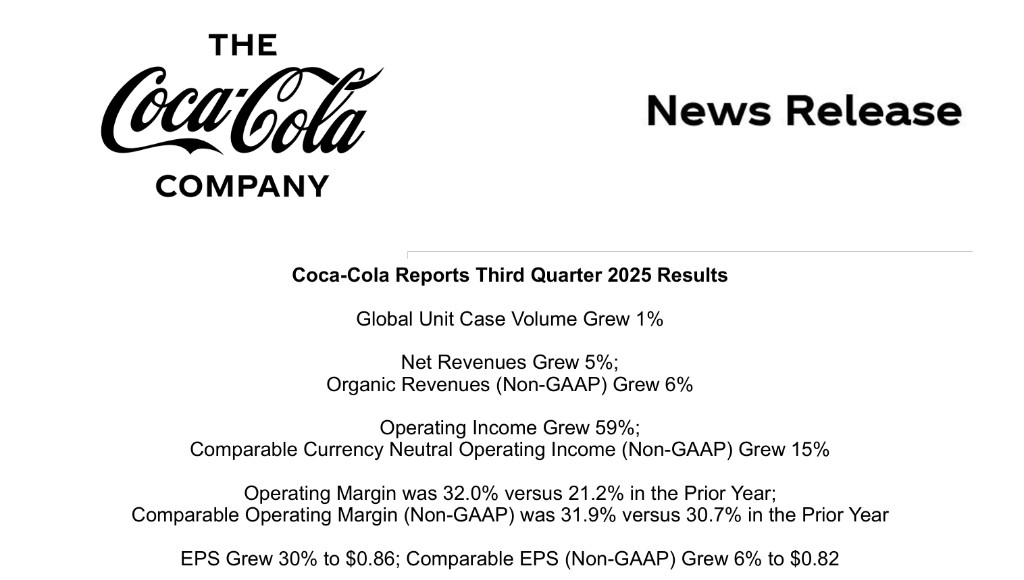
On Tuesday, the 21st, Coca-Cola Company announced its Q3 financial report:
- Q3 net revenue increased by 5% to $12.5 billion, with organic revenue growth of 6%;
- Operating profit margin reached 32.0% (last year 21.2%), but was mainly affected by the base effect of the 2024 fairlife goodwill impairment;
- Comparable EPS grew by 6% to $0.82, impacted by a 6 percentage point currency drag.
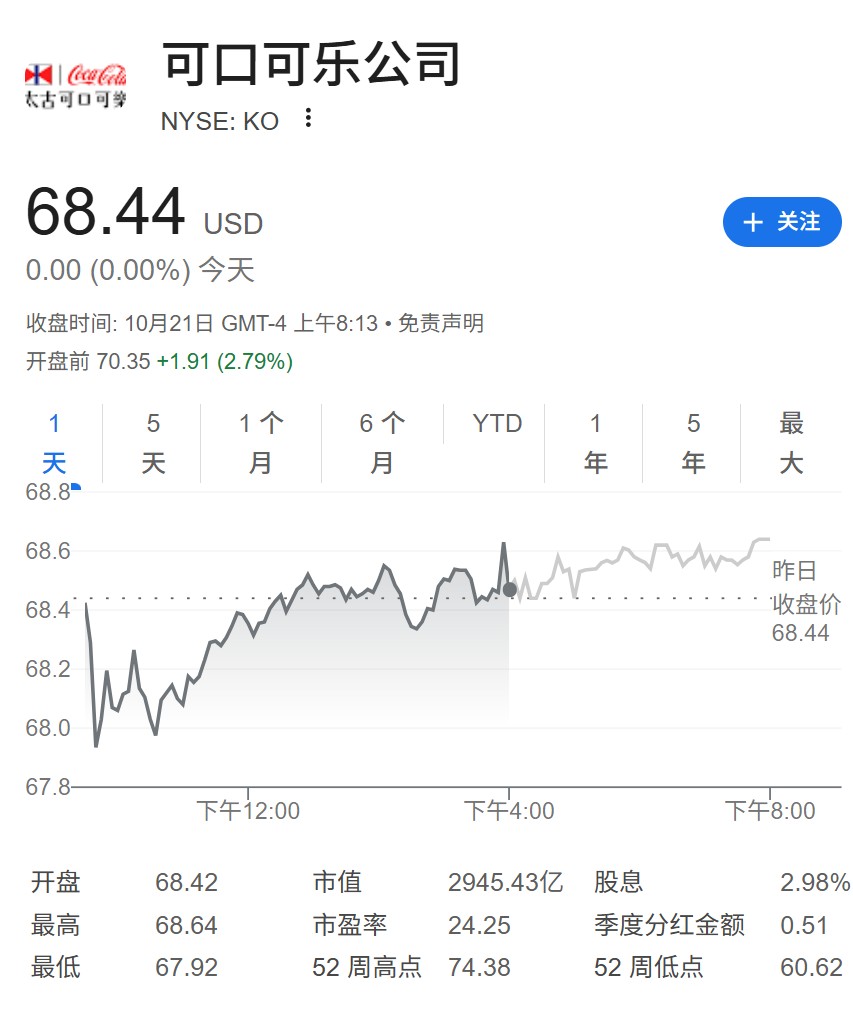
This performance growth was primarily driven by a 6% increase in product price mix, indicating that consumers are still willing to pay higher prices for Coca-Cola products. Additionally, strong performance in healthier product categories such as zero-sugar sodas, sports drinks, and bottled water helped offset the demand weakness for traditional sugary soft drinks. Following this news, Coca-Cola's stock price rose by 3.7% in pre-market trading.
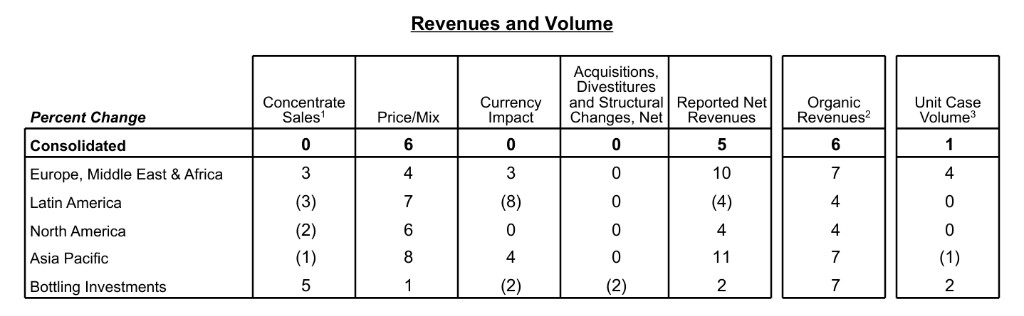
However, behind the impressive revenue figures, the unit case volume, a key indicator of real consumer demand, only slightly increased by 1%, and recorded zero growth in the two core markets of North America and Latin America. This suggests that despite the company's efforts to maintain growth through pricing strategies and product innovation, overall consumer demand remains weak.
Price Increase Strategy Works, But Sales Growth Lags
The financial report shows that Coca-Cola's performance in the third quarter exceeded market expectations. According to analyst forecasts compiled by LSEG, the company's adjusted earnings per share were 82 cents, higher than the expected 78 cents; adjusted revenue was $12.41 billion, slightly above the expected $12.39 billion.
The core driver of revenue growth is the successful pricing strategy. During the reporting period, the company's price mix increased by 6%, exceeding analysts' average expectations, indicating the company's ability to pass higher costs onto consumers. However, excluding the effects of price and currency, unit case volume only grew by 1%, reversing the decline seen in the previous quarter but still remaining at a low level.
Notably, in the key markets of North America and Latin America, sales growth has stagnated, both recording zero growth. Company executives previously stated that low-income consumers in the U.S. market are reducing their purchases of its products. Global sales growth is mainly driven by markets in Central Asia, North Africa, Brazil, and the UK
Health Product Portfolio Drives Growth
As consumers increasingly shift towards healthier choices, Coca-Cola's diversified product portfolio has become another key support for its performance. Data shows that consumer demand for traditional high-calorie soft drinks is weakening, while demand for healthy beverages is rising.
Specifically, in the third quarter, global sales of bottled water and sports drinks both achieved a 3% growth, while sales of coffee and tea categories grew by 2%. In contrast, sales of core carbonated soft drink categories remained flat. Sales of juice, value-added dairy products, and plant-based beverages shrank by 3%. In addition to the expansion of product categories, small-pack bottled and canned products have also played a positive role in driving sales against the backdrop of intensified competition in the supermarket channel and rising living costs.
Reaffirming Full-Year Guidance, Divesting Bottling Business
Looking ahead, Coca-Cola reaffirmed its full-year performance guidance, expecting comparable earnings per share to grow by approximately 3%, with organic revenue growth of 5% to 6%. For the upcoming year 2026, the company anticipates that currency fluctuations will have a slight positive impact on its revenue and comparable earnings. The company will provide a complete forecast for the next year in its fourth-quarter financial report.
Alongside the financial report, Coca-Cola's strategic adjustments are also ongoing. Reports indicate that one of the world's largest Coca-Cola bottlers has agreed to acquire a controlling stake in another company, which will create a bottling giant valued at approximately $2.6 billion in Africa. This is the latest step in Coca-Cola's divestiture of its heavy-asset bottling business, shifting towards a light-asset operating model; the company also sold its stake in the Indian bottling business this year
