
Transformer sector surges: AIDC's ultimate solution
 I'm LongbridgeAI, I can summarize articles.
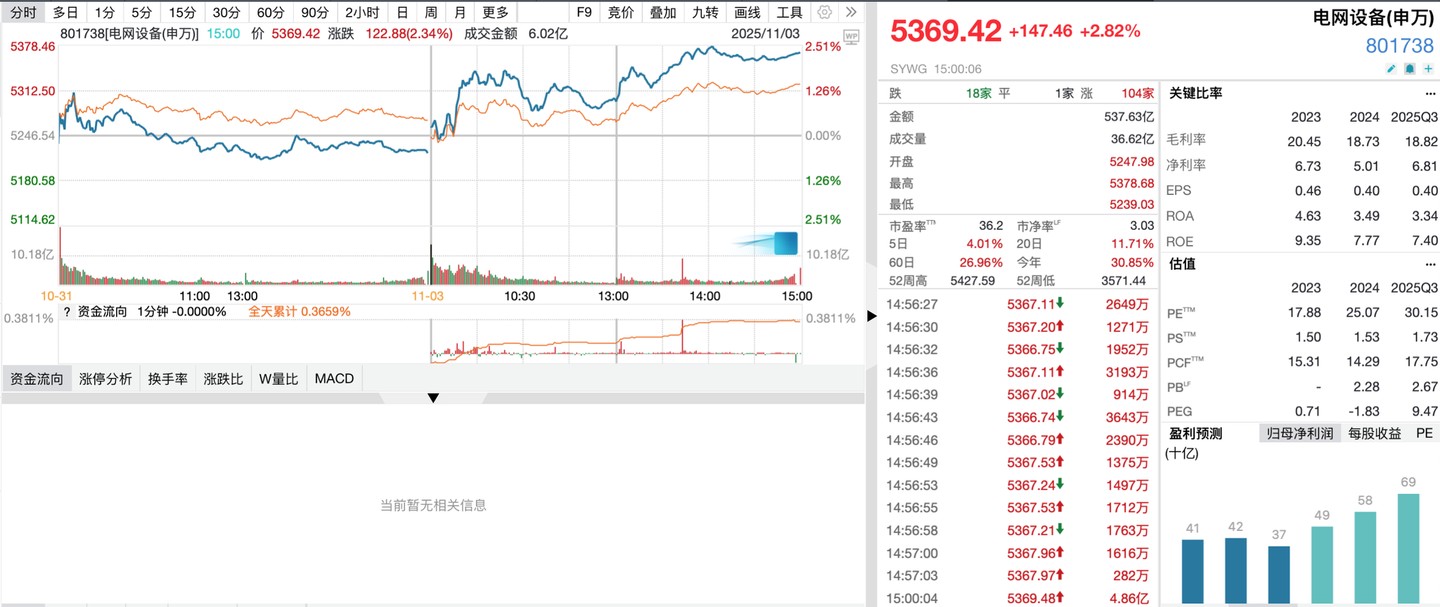
The transformer sector surged due to accelerated investment in AIDC infrastructure, with the electrical equipment sector rising by 2.8%. Stocks such as TBEA and JQH hit the daily limit, driven by high market expectations for AIDC power investments. The global capital expenditure forecast for data centers has been raised, and the release of the Rubin architecture HVDC in 2026 has also become an important catalyst. NVIDIA's 800V white paper further confirms the trend of power upgrades, promoting the coupled development of transformers and power supplies
Customs data shows that the transformer industry is achieving high growth both year-on-year and month-on-month!
With the accelerated investment in AIDC infrastructure in the fourth quarter, the high-growth transformer sector has become a bright spot in the market.
What industrial logic has yet to be fully explored?
Which leading enterprises have made significant overseas layouts?
Which targets are on the brink of explosive growth?
1. What happened? The transformer sector surged
The electrical equipment sector surged by 2.8%, becoming one of the best-performing industries in today's market. TBEA and JQH hit the daily limit, while XinTe Electric, Dongfang Electronics, WangBian Electric, Igor, and China West Electric saw significant gains.
What factors drove the surge in the transformer sector?
 Source: WIND
We found that the core reason remains the market's high expectations for AIDC infrastructure spending. Global capital expenditure expectations for data centers continue to be revised upward, continuously driving investment opportunities in AIDC power supply; in addition, the release of the Rubin architecture HVDC in 2026, along with the R&D progress of 800V HVDC and SST products by companies like Delta, Vertiv, and Eaton, serves as an important catalyst for the sector. The R&D progress of domestic companies in HVDC and SST products, their entry into overseas suppliers' supply chains, and the launch of domestic green electricity direct connection and AC/DC hybrid markets will also provide significant support for industrial development.
In the 800V white paper released by NVIDIA, industry leaders further confirmed the trend of upgrading primary power supplies to 800Vdc. Key points from the NVIDIA white paper are as follows: Currently, the primary power supply UPS for servers: 480Vac input, 480Vac output. The first step in future upgrades: adding a low-voltage rectifier + DC distribution + supercapacitor behind the UPS, equivalent to adding a pure new sidecar power rack behind the UPS, achieving 480Vac input and 800Vdc output;
The second step of the upgrade: Due to the functional overlap between the UPS and the HVDC sidecar power rack, the UPS is removed. Directly using 800V HVDC for power supply;
The third step of the upgrade: Coupling the transformer with the primary power supply. The previous path was 10KVac stepping down through a transformer to 480Vac, then through the primary power supply, outputting 800Vdc; now it aims to achieve 10KVac directly through a medium-voltage DC converter or SST, outputting 800Vdc.
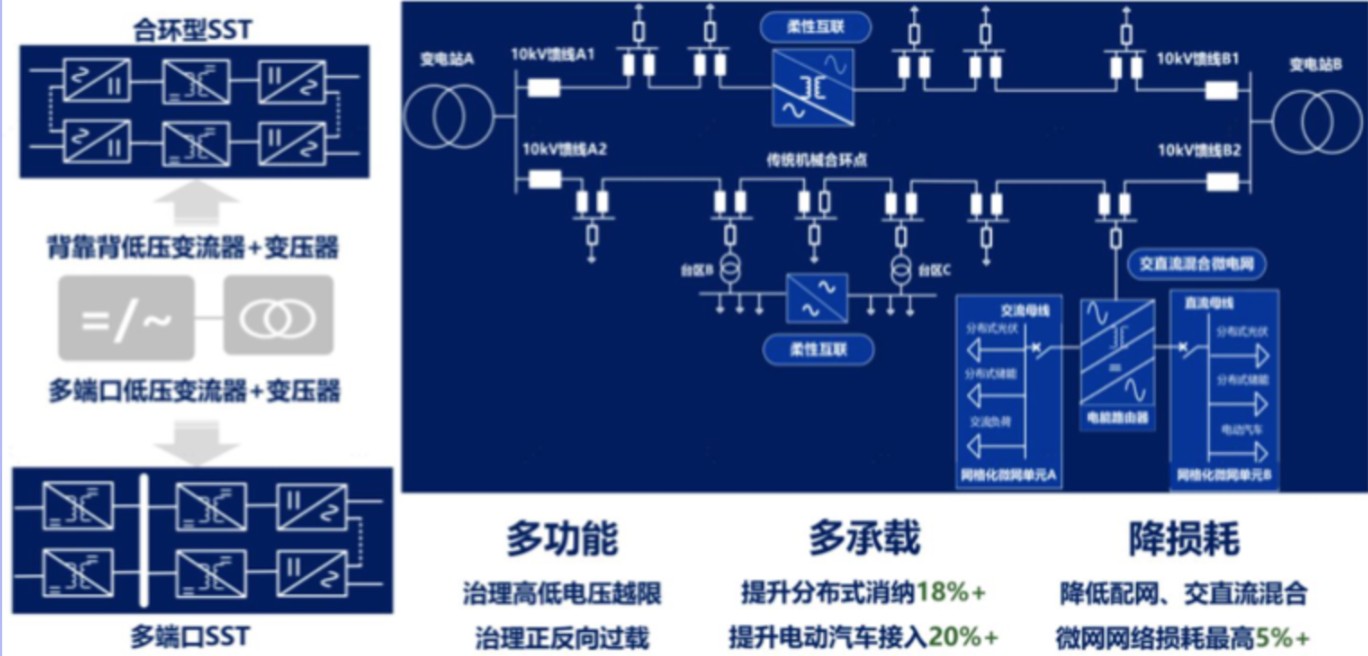
**NVIDIA's 800V solution has been long awaited, with UPS retrofitting upgrades, HVDC, and large DC/SST solutions all reflecting a major upgrade in overseas ICT, the evolution of system scale structure and value, and a significant opportunity in the power supply field. Solid-state transformers (SST) and energy routers (EER) currently serve as core devices in AC/DC hybrid distribution systems, featuring bidirectional energy flow, flexible flow regulation, controllable harmonic reactive power, and port fault isolation. Their application in microgrids, especially in AC/DC hybrid distribution systems, is crucial for improving grid operational efficiency and promoting the integration of renewable energy **
 Source: Weiguang Energy
II. Why is it important? AIDC Ultimate Solution
Considering the ultimate trend of overseas high-voltage direct current (HVDC), the upgrade plans for HVDC and UPS are expected to be the mainstream in the industry for a long time. The current DC penetration rate in the North American market is less than 5%, while the domestic penetration rate is 40%, indicating significant potential for growth, which is beneficial for companies going overseas to expand their business and secure large orders.
From the perspective of industry rhythm, the first step of the upgrade is expected to begin progress in the second half of 2026, with large-scale supply and application achieved in 2027; the second step of the upgrade will see little change, with large-scale implementation from 2027 to 2028; the third step of the upgrade, due to the high availability and reliability requirements of data centers, and the high difficulty and failure rate of high-voltage rectification, is expected to see progress only in 2029-2030.
CITIC Securities believes that there are four main areas that will directly benefit—
First, companies with rich project experience in the domestic market, such as Kehua Data, Kstar, and Zhongheng Electric;
Second, companies that have secured pre-research demands from NVIDIA, such as Megmeet;
Third, companies with rich technological reserves and potential OEM expectations, mainly Shenghong Co., Hezhong Electric, and Youyou Green Energy;
Fourth, related supporting companies. We are particularly optimistic about BBU direction for Nio Lithium Core; in the supercapacitor field for Siyuan Electric and Jianghai Co.; and in the transformer field mainly for Jinpan Technology, Igor, and Sifang Co.
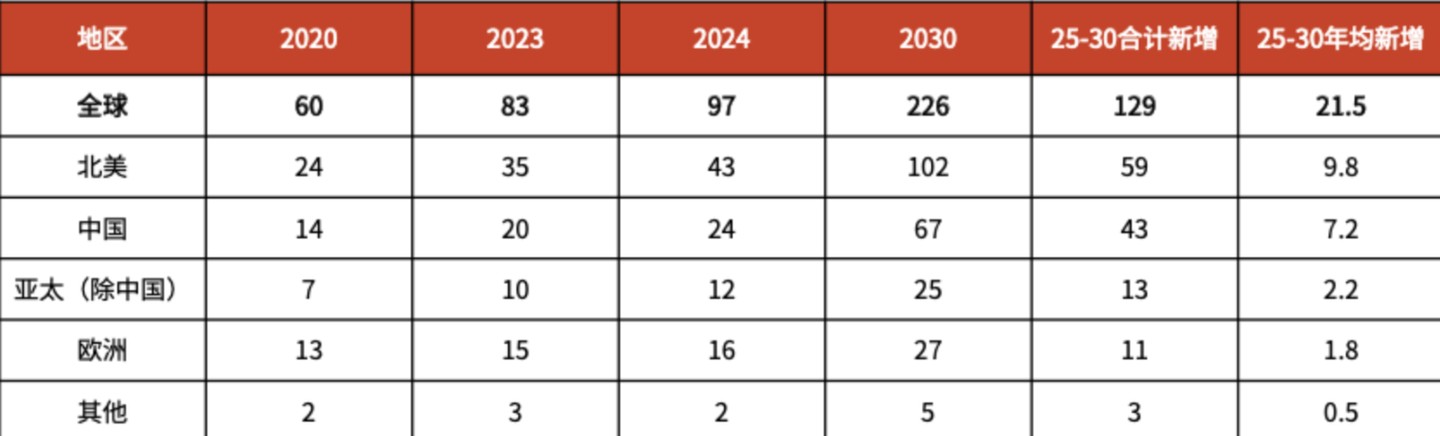
According to IEA statistics, the cumulative capacity of global data centers will reach 97GW in 2024 and will reach 226GW by 2030, with an annual new capacity of 21.5GW from 2025 to 2030 (14GW of new capacity in 2024), with China and the U.S. contributing significantly, averaging 9.8GW and 7.2GW of new capacity respectively from 2025 to 2030.
 Source: IEA, Guangda Securities
As we mentioned earlier in our channel article "Super Cycle of Power Grid Equipment: Europe and America Accelerate 'Catch-Up'", the export of domestic power equipment will face long-term investment opportunities, with three main logical points:
① The construction of AI data centers, the upgrade of existing infrastructure in Europe and America, and the integration of a high proportion of renewable energy will drive long-term, sustainable capital expenditures in power and grid;
② Leading overseas electrical equipment companies already have orders that are several times their annual revenue, making delivery efficiency difficult to guarantee;
③ Leading domestic companies are continuously deepening their penetration in niche markets, strengthening their overseas capabilities.
Therefore, we believe that the power equipment sector represented by transformers will gain strong industrial support in the upcoming 2-3 years of industrial waves.
3. What to Focus on Next? High Growth in Data and Market Share Patterns
In addition to technical trends, the fundamentals behind the data have also become an important reason driving the market.
On October 20, 2025, the General Administration of Customs released the export data for electrical equipment in September 2025. In September 2025, electrical equipment exports performed steadily, with a total export value of 8.647 billion yuan, a month-on-month increase of 9.17%, and a year-on-year increase of 48.97%. The cumulative export value from January to September reached 65.596 billion yuan, a year-on-year increase of 36.33%. In terms of sub-products, the high prosperity of transformer exports continues, with the African market leading, the European market showing a month-on-month high decline, while maintaining high growth year-on-year; 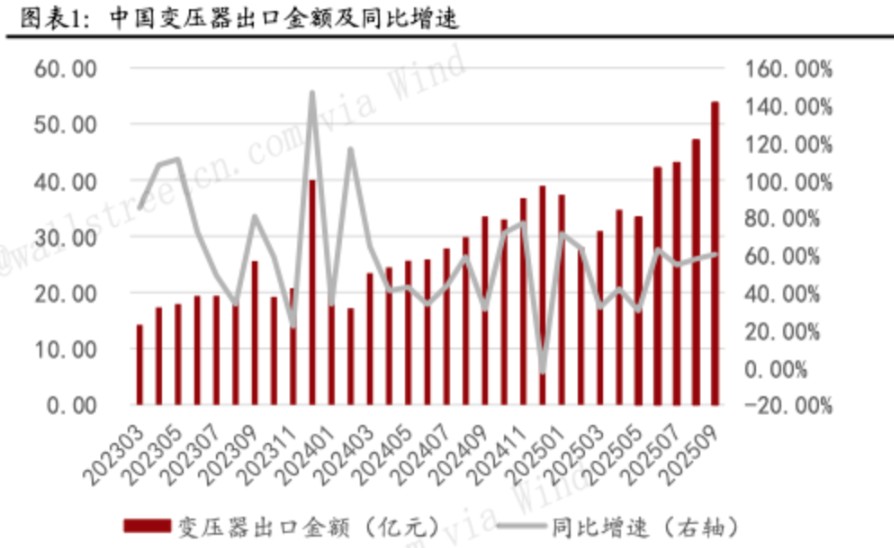
The continuous high prosperity of transformer exports, with the African market leading in year-on-year growth, showed strong performance in September, significantly rising month-on-month, and maintaining high growth year-on-year. In September 2025, China's transformer export value was 5.381 billion yuan, a month-on-month increase of 14.06%, and a year-on-year increase of 60.40%, reaching a recent high in export scale, with growth accelerating compared to August, continuing the high prosperity trend. The performance in Asia and Africa was outstanding, while North America showed a rebound. In September 2025, China's transformer export values to Asia, Africa, Europe, North America, and Latin America were 2.653 billion, 680 million, 1.160 billion, 320 million, and 524 million yuan, respectively, with year-on-year changes of +47.87%, +207.47%, +69.26%, +16.11%, and +52.77%. The export values to Asia, Africa, and Latin America showed remarkable performance, achieving high growth both year-on-year and month-on-month, with export values to Asia and Africa reaching recent highs; exports to North America showed a rebound with positive growth month-on-month; exports to Europe fell 23.1% month-on-month but maintained high growth year-on-year. The previously low growth rate in the U.S. region was due to tariff constraints, and we believe that after the Busan meeting, the export value to the U.S. market is expected to restore high growth trends. 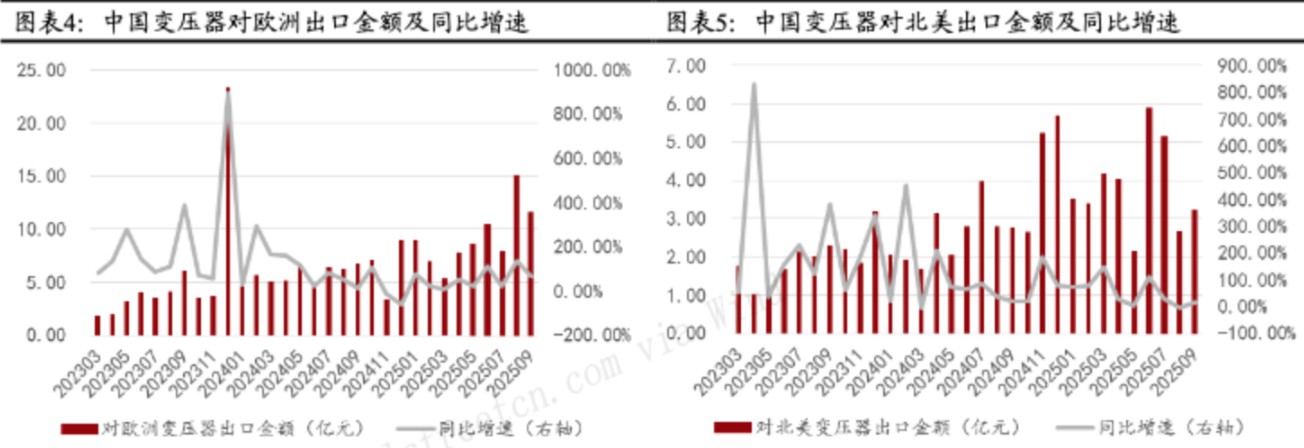
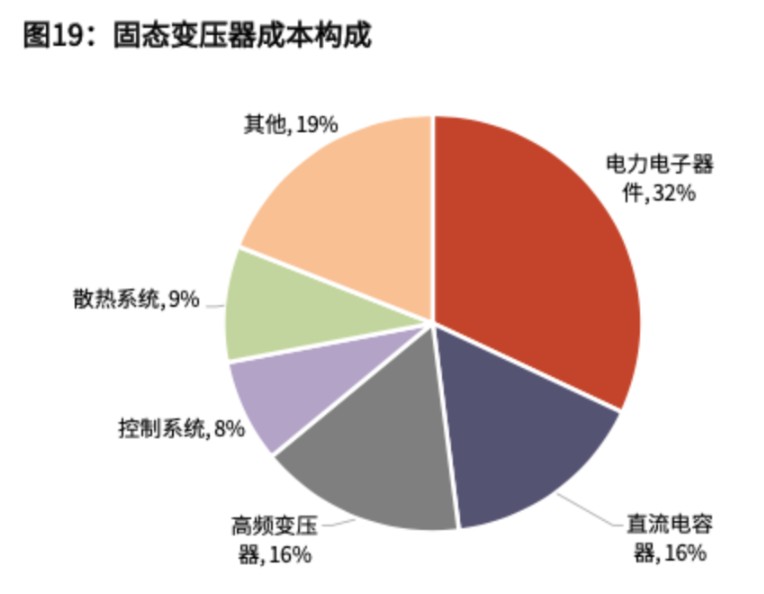
Everbright Securities dissects the cost composition of solid-state transformers, with the main components as follows——
① Power electronic devices: approximately 32% of total costs, which are the core part of solid-state transformers. These devices are based on wide bandgap semiconductor materials such as silicon carbide (SiC) and gallium nitride (GaN), achieving power conversion through high-frequency switching, with their performance and cost directly affecting the overall efficiency and price of solid-state transformers.
② High-frequency transformers: approximately 16% of total costs. High-frequency transformers use new magnetic materials such as ferrite and amorphous alloys to achieve voltage conversion and electrical isolation through high-frequency electromagnetic induction, characterized by small size and high efficiency, but complex manufacturing processes and higher costs.
③ Control systems: approximately 8% of total costs. The control system is responsible for coordinating the operation of power electronic devices and high-frequency transformers, achieving functions such as voltage regulation, current control, and fault protection, with its reliability directly affecting the stable operation of solid-state transformers ④Cooling System: Accounts for approximately 9% of total costs. Due to the high operating frequency of solid-state transformers, they generate significant heat, requiring an efficient cooling system to ensure normal operation. Common cooling methods include air cooling and liquid cooling.
Risk Warning and Disclaimer
The market carries risks, and investments should be made cautiously. This article does not constitute personal investment advice and does not take into account the specific investment goals, financial situation, or needs of individual users. Users should consider whether any opinions, views, or conclusions in this article align with their specific circumstances. Investing based on this is at one's own risk