


Chinese EV stocks extend losses in Hong Kong as year-end sales momentum wanes

Chinese EV stocks, including Nio, Xpeng, Li Auto, and BYD, have seen consecutive days of declines in Hong Kong due to weaker year-end sales and tapering stimulus policies. Over 20 local governments have suspended or adjusted vehicle replacement subsidy applications. The decline in stock prices is attributed to reduced vehicle deliveries and adjustments in trade-in subsidies, impacting consumer sentiment and the auto market.
- Major EV makers have seen consecutive days of declines as year-end vehicle deliveries have been weaker than in previous years amid tapering stimulus policies.
- To date, over 20 local governments have suspended or adjusted vehicle replacement subsidy applications.
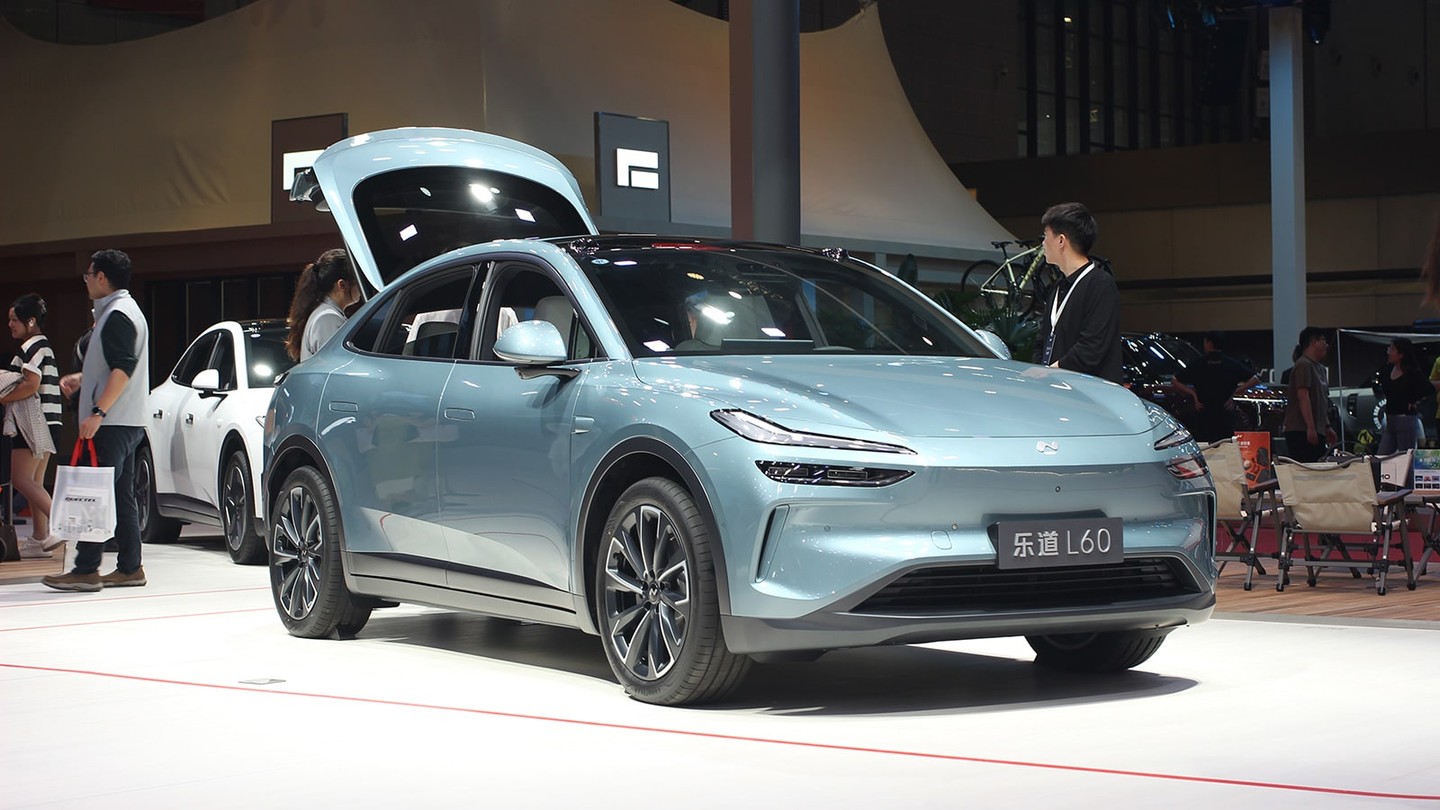
Hong Kong-listed Chinese electric vehicle (EV) makers have witnessed sustained stock price declines over several days, with year-end sales performance proving weaker than in prior years.
EV makers including Nio Inc (NYSE: NIO, HKG: 9866), Xpeng (NYSE: XPEV, HKG: 9868), Li Auto (NASDAQ: LI, HKG: 2015), and BYD (HKG: 1211, OTCMKTS: BYDDY) declined in early trading today, extending their multi-day slump.
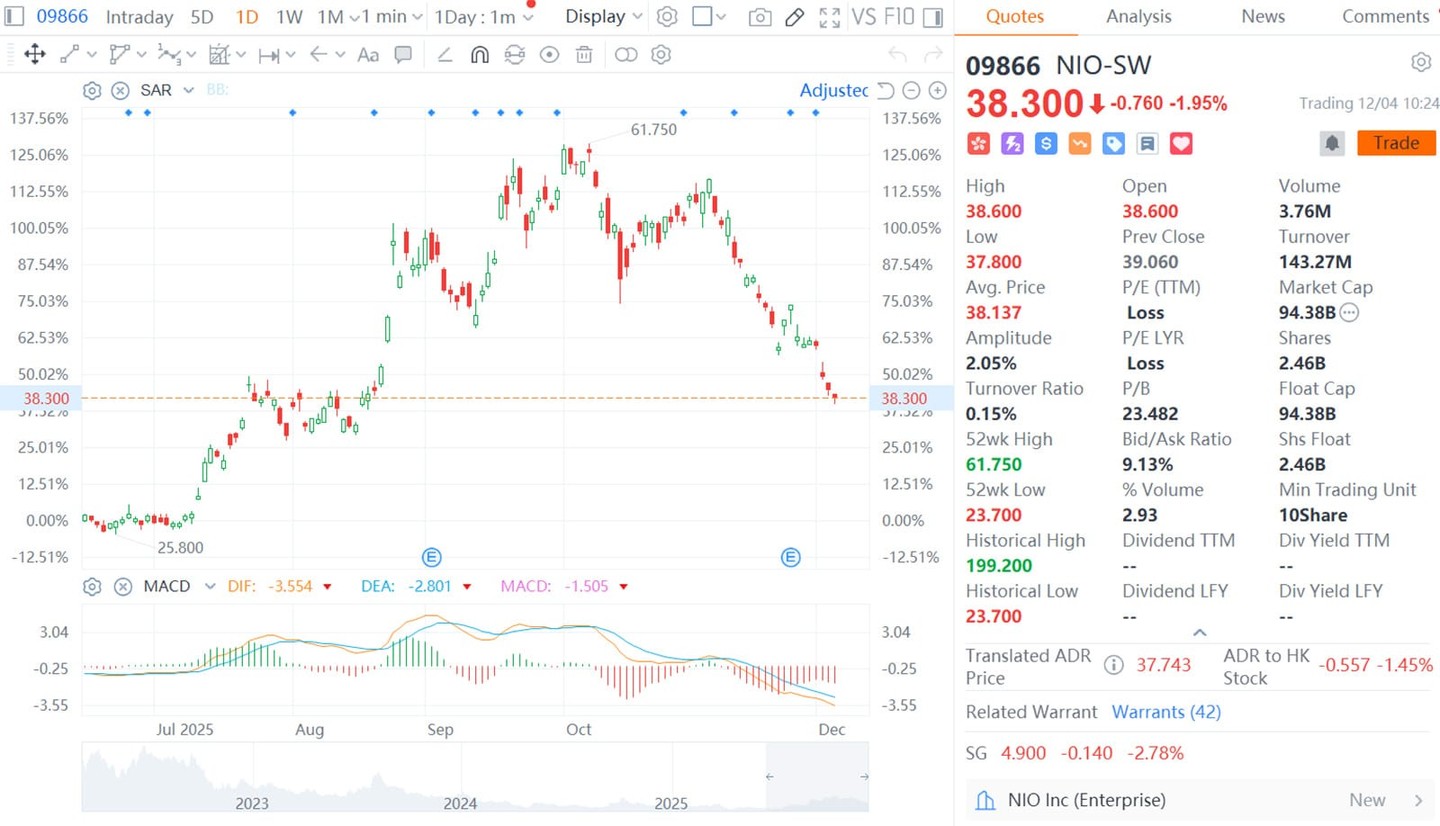
As of this writing, Nio was down 1.95 percent to HK$38.30 per share, extending its decline to a fourth consecutive trading day and hitting its lowest level since August 19. The company has fallen about 33 percent over the past month.
Join us on Telegram or Google News
Xpeng currently fell 1.99 percent to HK$73.85 per share, also marking its fourth consecutive trading day of declines and hitting a new low since August 4. Over the past month, it has dropped about 19 percent.
Li Auto was down 2.87 percent to HK$67.80 per share, marking its fifth consecutive trading day of losses and hitting a new low since late November 2022. The company has fallen about 17 percent over the past month, and down about 45 percent from its recent high in July.
BYD was currently down 1.12 percent to HK$97.05 per share, marking its second consecutive trading day of decline. Over the past month, the company has fallen about 2 percent.
Leapmotor (HKG: 9863) was down 1.13 percent, having declined about 11 percent over the past month.
These companies posted relatively strong deliveries last month but demonstrated weak momentum, especially compared to their robust year-end performances in previous years.
Nio delivered 36,275 vehicles in November, its second-highest monthly record. This represents a 76.31 percent year-on-year increase but a 10.20 percent decline from October.
Xpeng delivered 36,728 vehicles in November, up 18.88 percent year-on-year but down 12.58 percent from October.
Li Auto delivered 33,181 vehicles in November, marking a 31.92 percent year-on-year decline -- its sixth consecutive month of year-on-year contraction. This monthly figure represents a 4.45 percent increase from October's 31,767 deliveries.
BYD sold 480,186 NEVs in November, its highest monthly total this year. This represented a 5.25 percent year-on-year decline, marking the third consecutive month of year-on-year contraction, though it increased by 8.71 percent compared to October.
Leapmotor delivered 70,327 vehicles in November, a 75.08 percent year-on-year increase and a 0.05 percent rise from October.
The year-end delivery slump partly stems from tapering stimulus policies.
By mid-November, trade-in subsidies in most Chinese provinces had been adjusted, intensifying consumer wait-and-see sentiment and impacting the November auto market, noted the China Passenger Car Association (CPCA) in a December 2 report.
As China's fourth batch of RMB 69 billion ($9.8 billion) in national subsidies nears depletion, an increasing number of local governments have suspended or adjusted vehicle trade-in subsidies, Yicai noted in a report yesterday.
To date, over 20 municipal governments have suspended or adjusted applications for vehicle trade-in subsidies, the report noted.
Additionally, China's current new energy vehicle (NEV) purchase tax reduction policy will begin scaling back next year, potentially further impacting first-quarter sales.
($1 = RMB 7.0697)
