


Bank of China (SEHK:3988): Valuation Check After RMB 60 Billion Tier 2 Capital Raise

Bank of China completed a RMB 60 billion tier 2 bond issue to enhance capital and strategic flexibility. Despite a recent 4.65% share price drop, the bank shows a solid year-to-date return of 16% and a 1-year shareholder return over 30%. The stock is considered undervalued with a fair value of HK$5.26, suggesting upside potential. However, margin pressure and China's property sector stress could impact earnings. The bank trades at 5.9 times earnings, slightly above the sector average, indicating modest multiple risk.
Bank of China (SEHK:3988) has just completed a sizeable RMB 60 billion issue of write down tier 2 bonds. The move is aimed squarely at shoring up capital and giving the balance sheet more strategic flexibility.
See our latest analysis for Bank of China.
Even with the share price easing 4.65% over the last week, Bank of China still carries a solid year to date share price return of around 16%. Its 1 year total shareholder return north of 30% suggests momentum is still broadly constructive as investors warm to both earnings resilience and its strengthened capital position.
If this kind of balance sheet story has your attention, it could be a good moment to explore other established lenders and financial players alongside Bank of China using solid balance sheet and fundamentals stocks screener (None results)
With profits still edging higher, a sizeable capital top up and the shares trading at a hefty intrinsic discount, is Bank of China quietly undervalued here, or is the market already pricing in the next leg of growth?
Most Popular Narrative Narrative: 14.3% Undervalued
With Bank of China last closing at HK$4.51 against a narrative fair value near HK$5.26, the valuation case leans toward meaningful upside potential.
The strategic emphasis on high growth business segments including technology finance, comprehensive wealth management, and pension products, combined with prudent capital management and a stable high dividend payout, suggests the market may be underestimating the sustainability of future revenue and EPS growth.
Read the complete narrative.
Curious how steady, unspectacular growth assumptions can still justify a richer future earnings multiple than the broader Hong Kong banking sector? See which projections drive that gap.
Result: Fair Value of $5.26 (UNDERVALUED)
Have a read of the narrative in full and understand what's behind the forecasts.
However, sustained margin pressure and renewed stress in China’s property sector could quickly challenge the earnings trajectory that underpins that undervaluation story.
Find out about the key risks to this Bank of China narrative.
Another Angle on Valuation
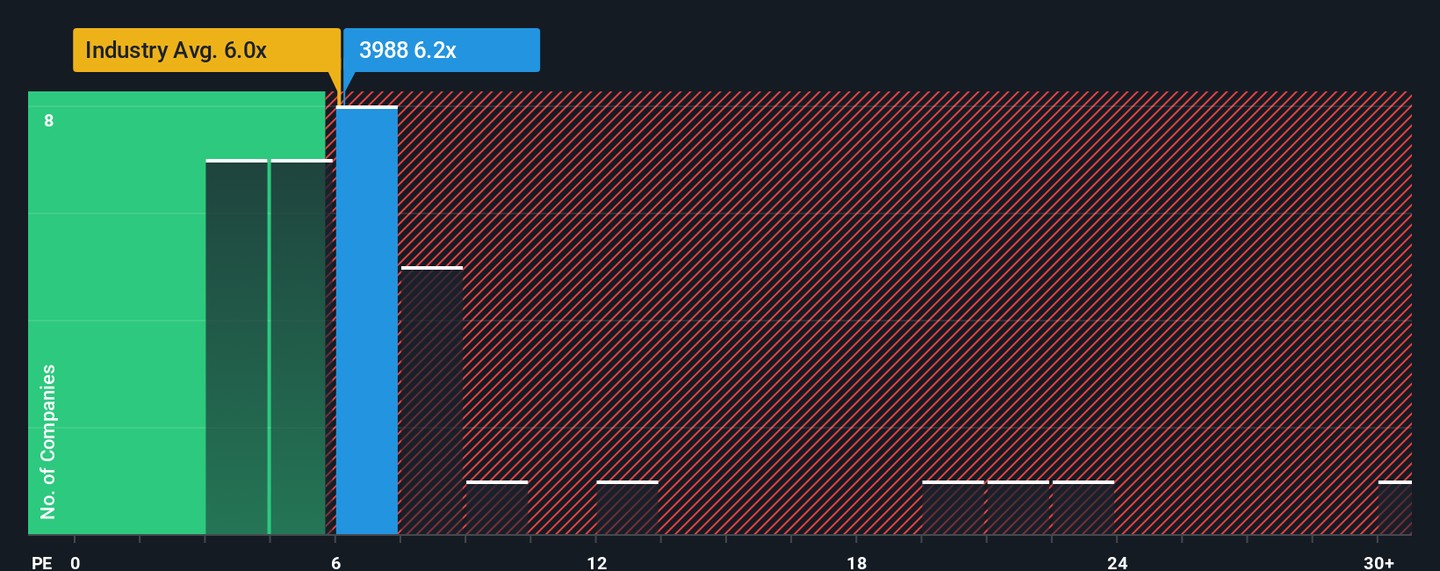
While narrative fair value points to upside, the basic price to earnings check is less generous. Bank of China trades on 5.9 times earnings, slightly richer than the Hong Kong Banks sector at 5.8 times, but below a fair ratio of 7.2 times. This leaves investors to weigh modest multiple risk against potential rerating.
See what the numbers say about this price — find out in our valuation breakdown.
Build Your Own Bank of China Narrative
If you are not fully aligned with this view or would rather lean on your own analysis, you can craft a fresh narrative in just a few minutes, Do it your way
A good starting point is our analysis highlighting 4 key rewards investors are optimistic about regarding Bank of China.
Looking for more investment ideas?
Before the next opportunity runs away from you, use the Simply Wall St Screener to line up focused stock ideas that match your strategy, risk appetite, and timeframe.
- Target dependable income by reviewing these 15 dividend stocks with yields > 3% that can potentially strengthen your portfolio with consistent, above market payouts.
- Ride structural growth trends by assessing these 26 AI penny stocks positioned to benefit from accelerating adoption of artificial intelligence across industries.
- Take advantage of market mispricing by scanning these 909 undervalued stocks based on cash flows where current prices may lag behind long term cash flow potential.
This article by Simply Wall St is general in nature. We provide commentary based on historical data and analyst forecasts only using an unbiased methodology and our articles are not intended to be financial advice. It does not constitute a recommendation to buy or sell any stock, and does not take account of your objectives, or your financial situation. We aim to bring you long-term focused analysis driven by fundamental data. Note that our analysis may not factor in the latest price-sensitive company announcements or qualitative material. Simply Wall St has no position in any stocks mentioned.
