
Concerns Over iPhone Prospects Fuel Wall Street Bearish Sentiment: Six Firms Issue Apple Sell Signals, Highest Since 2012
 I'm LongbridgeAI, I can summarize articles.
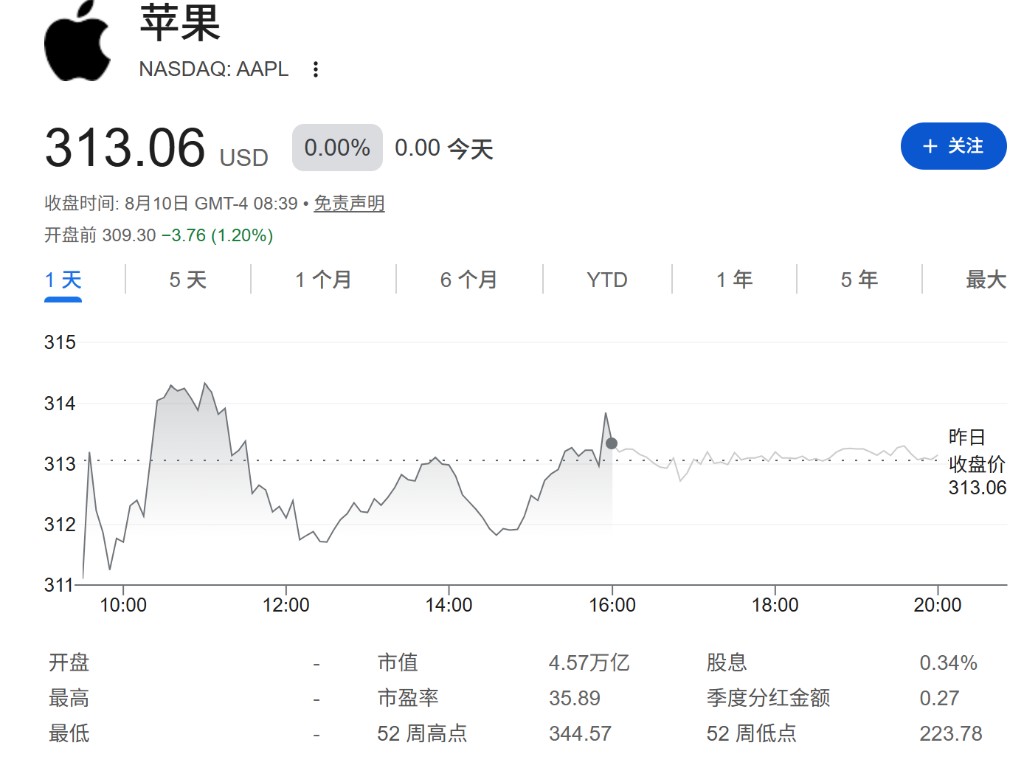
Wall Street's pessimism toward Apple is intensifying. Jefferies downgraded Apple to "Underperform" after supply chain data indicated the cancellation of the 20th-anniversary all-glass iPhone due to yield issues, and concerns that high pricing could relegate foldable screens to a niche market. The number of firms holding a "Sell" rating has reached six, matching the highest record since 2012, while the composite analyst rating hit a new low since 2019. Apple's stock fell 1.2% in pre-market trading on Monday, accumulating a decline of approximately 8% from recent highs
Wall Street's pessimistic sentiment toward Apple Inc. is accelerating.
Jefferies recently downgraded Apple stock to an "Underperform" rating, bringing the number of institutions holding equivalent "Sell" ratings to six. This matches the highest level recorded since 2012, reflecting deep-seated market concerns about the growth prospects of the iPhone.
In a research report, Jefferies analyst Edison Lee pointed out that supply chain investigations revealed Apple had canceled the 20th-anniversary all-glass iPhone model due to poor production yields. He believes that this signal indicates that Apple's difficulty in raising the iPhone's average selling price (ASP) through new form factors is far greater than expected. Jefferies simultaneously lowered Apple's target price from $285.56 to $263.66, while the stock closed at $313.33 last Friday.
Apple's stock fell 1.2% in pre-market trading on Monday, accumulating a decline of approximately 8% from recent highs. The direct trigger for this downturn was the weak sales guidance provided in Apple's earnings report for the previous quarter, where the company issued disappointing forecasts citing component shortages.
iPhone ASP Growth Path Blocked; Foldable Screens May Become Niche Products
The core logic behind Jefferies' downgrade points to a bottleneck in Apple's long-standing growth model, which relies on product form factor upgrades to drive ASP and gross margin expansion.
Edison Lee wrote in the report that the cancellation of the 20th-anniversary all-glass iPhone due to unmet production yield standards indicates that using new iPhone form factors to push ASP higher is "more difficult than expected." In this context, the foldable iPhone, expected to be released next month, "will become the only key driver for increasing ASP and profit margins in the coming years."
However, Edison Lee remains reserved about this "only driver." He pointed out that the sharp rise in the cost of core components, such as memory chips, will force the pricing of the foldable iPhone to be extremely high. "We still believe that such an expensive phone will be a niche product," making it difficult to shoulder the heavy responsibility of driving overall performance.
Sell Ratings Expand; Analyst Consensus Rating Hits Lowest Level Since 2019
Jefferies' downgrade is the latest example of the recent wave of bearishness against Apple on Wall Street. According to data compiled by Bloomberg, there are currently six institutions holding ratings equivalent to "Sell" for Apple, matching the historical high seen in 2012. Last month, KeyBanc Capital Markets was the first to downgrade Apple to "Underweight," citing concerns about both demand prospects and valuation levels.
From a broader analyst perspective, Apple's composite recommendation score (a comprehensive indicator of Buy, Hold, and Sell ratings) is currently just 3.88 out of 5, the lowest level since 2019. The proportion of analysts recommending a "Buy" has fallen below 60%, a figure that stands in stark contrast to other tech giants in the same category—over 90% of analysts recommend buying Microsoft, Amazon, and Nvidia.
In terms of stock price, Apple closed at $313.33 last Friday, down approximately 8% from recent highs, and slid further by 1.3% in pre-market trading on Monday. As the camp of sell ratings continues to expand and the logic for ASP growth comes under scrutiny, Apple's relative attractiveness to institutional investors is facing a systemic test.