
Wallace's parent company delisted from the New Third Board, raising food safety concerns amid reckless expansion
 I'm LongbridgeAI, I can summarize articles.
Huashi Foods is delisting from the New Third Board due to a long-term high debt-to-asset ratio and losses from subsidiaries, facing strategic contraction. The company previously relied on low-price expansion but is now transforming for survival. Despite the slowdown in expansion, Huashi still has over 19,000 stores. The family governance structure has raised concerns, with highly concentrated ownership potentially becoming a bottleneck for transformation. The coexistence of high dividends and high debt has led to external doubts about its financial condition
On the eve of the Spring Festival, the parent company of Wallace, Fujian Huashi Food Co., Ltd. (hereinafter referred to as "Huashi Food"), known for its "ten thousand store scale," quietly concluded its listing on the New Third Board. On February 4, Huashi Food announced that it had received a notice of termination of listing acceptance issued by the National Equities Exchange and Quotations. It is reported that the company was suspended from trading on January 23 and the temporary shareholders' meeting approved the termination on January 26.
Analysis indicates that Huashi Food's current debt-to-asset ratio has remained high for a long time, and its subsidiaries are suffering significant losses. This delisting is not accidental but a strategic contraction after being deeply trapped in a growth dilemma. This fast-food giant, which once relied on "low prices + expansion," is now facing a difficult transition from scale to survival.
Wallace's Parent Company Delists from the New Third Board
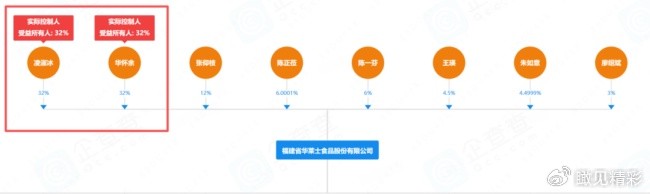
Public information shows that Huashi Food is the operating entity of the "Wallace" Western fast-food brand. Since its listing on the New Third Board in 2016, it has focused on the sale of fast food raw materials, frozen products, equipment, and brand authorization, deeply cultivating the sinking market with a high cost-performance strategy. Before the suspension on January 23, the company's board of directors had approved the proposal to terminate the listing on January 9. The announcement stated that this move aims to optimize governance, improve decision-making efficiency, and reduce compliance costs, allowing for a more focused development of its main business. It is noteworthy that Wallace expanded against the trend during the pandemic from 2019 to 2023. Although expansion will slow down starting in 2024, Wallace still maintains its position as the number one in the fried chicken and hamburger category with over 19,000 stores.
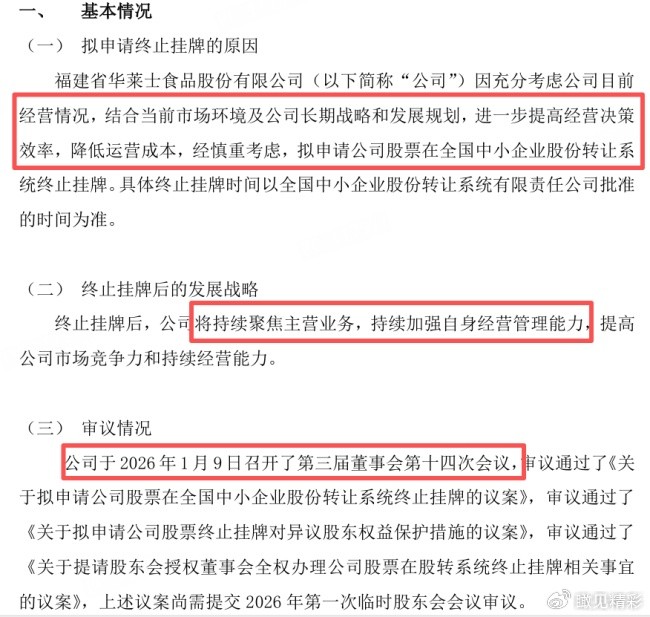
Accompanying the delisting discussions, the family governance structure of Huashi Food has drawn market attention. Qichacha disclosed that the actual controller, Hua Huaiyu, and his sister-in-law, Ling Shubing, together hold 64% of the shares, indicating a high concentration of ownership. Industry insiders have pointed out that the "brother + in-law" style of family control, while ensuring strategic execution efficiency during early expansion, may become an institutional bottleneck for transformation and upgrading as the number of stores exceeds 19,000 without external directors or other checks and balances.
In addition, the coexistence of high dividends and high debt has raised widespread doubts about Huashi Food. The company had a high dividend payout ratio in 2022, accounting for as much as 62% of the net profit attributable to the parent company. Although this has since decreased, the total debt has risen from 1.085 billion yuan in 2022 to 2.108 billion yuan in the first half of 2025, with the debt-to-asset ratio increasing to 73.7%. During the same period, other payables surged by 7457.33% to 106 million yuan, with the announcement stating that the main reason was the provision for payable dividends Against the backdrop of increasing debt pressure, large dividends to family shareholders with highly concentrated holdings have intensified external doubts about the true motives behind its delisting.
Industry insiders have analyzed: "Under the pressure of a highly concentrated equity structure, cash flow, and high debt, the company finds it difficult to obtain substantial capital support from the illiquid New Third Board, and instead has to continuously bear additional costs such as auditing, announcements, and governance norms. The management may prefer to return to a non-public form to avoid the increasingly rising compliance disclosure costs and regulatory constraints of the New Third Board market. At the same time, this move may allow them to leverage their market advantage with thousands of stores to allocate funds more flexibly and achieve more stable profits relying on the existing store network after breaking free from the constraints of the capital market."
Concerns over performance behind the extravagant marketing of 146 million
The delisting reflects the performance crisis of Huashi Food, which has been declining for years. Financial reports show that from 2022 to 2024, Huashi Food's revenue growth rate has been declining year by year, from 24.36% to 13.31%, with negative growth of 0.49% in the first half of 2025. In 2024, the company's selling expenses surged by 281.61% year-on-year, with brand promotion and marketing reaching as high as 146 million, accounting for 78%, indicating that high marketing investment has not effectively translated into revenue growth. The imbalance in cost-effectiveness directly impacts profitability, with net profit growth in 2024 plummeting from 58.99% in 2023 to 11.64%, and the decline in profit far exceeds the decline in revenue.
Analysis states that the "low-price for scale" strategy is dragging Huashi Food into a profitability dilemma. In the first half of 2025, its operating costs reached 4.345 billion yuan, with gross profit margin dropping from 6.61% in 2024 to 6.04%, and operating profit margin further compressed from 4% to 3.77%, with a profit margin of only 2.6%, significantly lower than the average profit margin level of 5% disclosed in the "2025 China Catering Total Financial Analysis Report." Although it gained market advantages through early-scale expansion, the continuous rise in raw material, labor, and logistics costs (with operating costs rising by 11.77% year-on-year in 2024) creates a stark contradiction between high costs and extremely low prices, severely compressing the profit margin per store.
The structural imbalance between revenue and advance payments also reflects the pressure on profit quality. In the first half of 2025, contract liabilities surged by 239.49% year-on-year to 1.674 billion yuan, which may indicate that the company is accelerating cash recovery through advance payment models, but the overall operating revenue of the company slightly decreased by 0.49%, with growth momentum significantly slowing down. Industry insiders point out that this structural imbalance of "slight revenue decline and high advance payment growth" reflects the company's weak growth in its main business, raising doubts about the sustainability of future revenue.
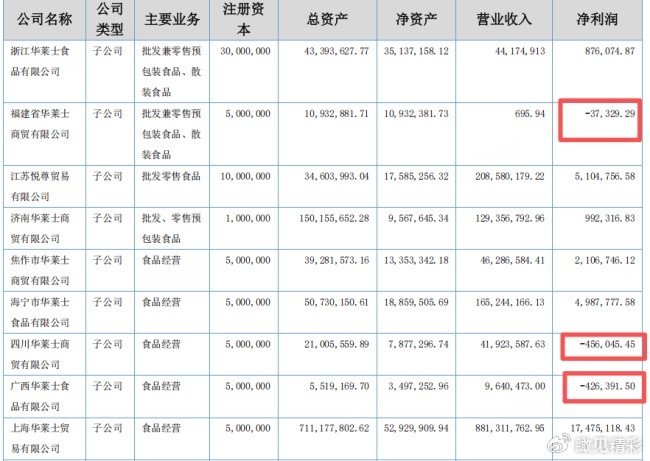
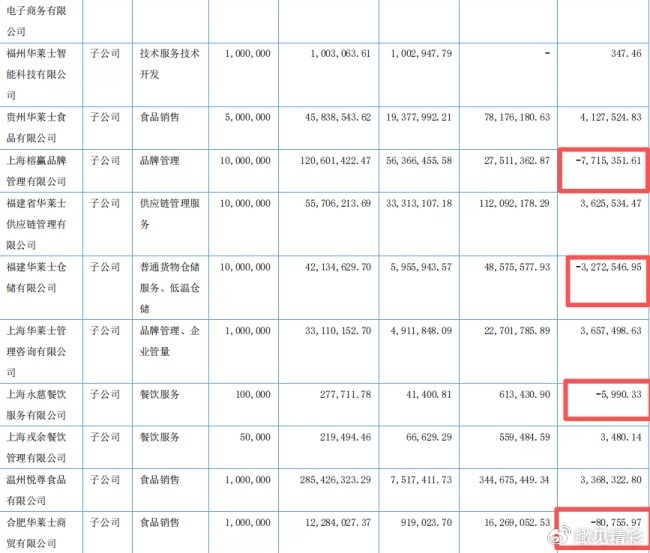
It is worth noting that although Huashi Food is still profitable, many subsidiaries are continuously losing money. From 2022 to 2023, the ratio of Huashi Food's net cash flow from operating activities to net profit attributable to the parent company was below 1, indicating poor cash flow quality. In the first half of 2025, among the 12 subsidiaries disclosed by Huashi Food, 7 were losing money, mostly regional entities responsible for warehousing and distribution. Some analyses suggest that these subsidiaries have weak self-sustaining capabilities and continue to rely on the parent company for "blood transfusions" against the backdrop of store expansion, exacerbating the already pressured cash flow of Huashi Food
Food Safety Crisis Under Rapid Expansion
In recent years, Huashi Food's "Wallace" brand has adopted an aggressive expansion strategy to capture market share, relying on a model of "direct sales + store crowdfunding + employee partnership" to accelerate store openings. According to data from Narrow Door Restaurant Eye, as of February 11, 2026, the total number of its existing stores reached 19,494, nearly matching the combined total of KFC and McDonald's (which was 21,466 at the time of publication), with a significant presence in lower-tier markets, where stores in third-tier cities and below account for as much as 55%.
However, media reports indicate that Wallace's low-price strategy and heavy focus on scale expansion have significantly compressed the profit margins of its stores, leading to frequent occurrences of cost-cutting and substandard practices.
Public information shows that in March 2025, several Wallace stores were found to be engaging in bulk violations, such as replacing expiration labels on expired meat and spoiled lettuce to continue selling them, using frying oil that had turned dark brown and was smoking after the third day, and having acid values exceeding standards by 60% in samples sent for inspection. Some stores were reported to have cockroaches in the kitchen and flies flying around, with staff ignoring hygiene issues, prompting regulatory intervention.
According to data summarized from Black Cat Complaints [Download Black Cat Complaints Client], as of February 11, Wallace had received a total of 13,765 complaints, with 95% of them tagged with food quality issues. In contrast, McDonald's, which also has nearly 10,000 stores, received far fewer complaints regarding food quality. Although Wallace's official response to food safety incidents is always to promise comprehensive rectification, actual implementation has consistently failed to effectively curb the recurrence of issues.
Regarding Wallace's development in recent years, industry insiders have pointed out that the case of Huashi Food serves as a warning to the entire restaurant industry that the path of "burning money for performance growth" is no longer viable. "The traditional growth logic of promoting sales through revenue is failing, and a heavy focus on expansion while neglecting governance will struggle to adapt to the current trend of quality and standardization upgrades in the restaurant industry. The continuous occurrence of food safety incidents also reminds consumers to view the brand's scale halo rationally; the number of stores does not guarantee quality."